Best Binoculars 2026: 10 Pairs Tested and Ranked
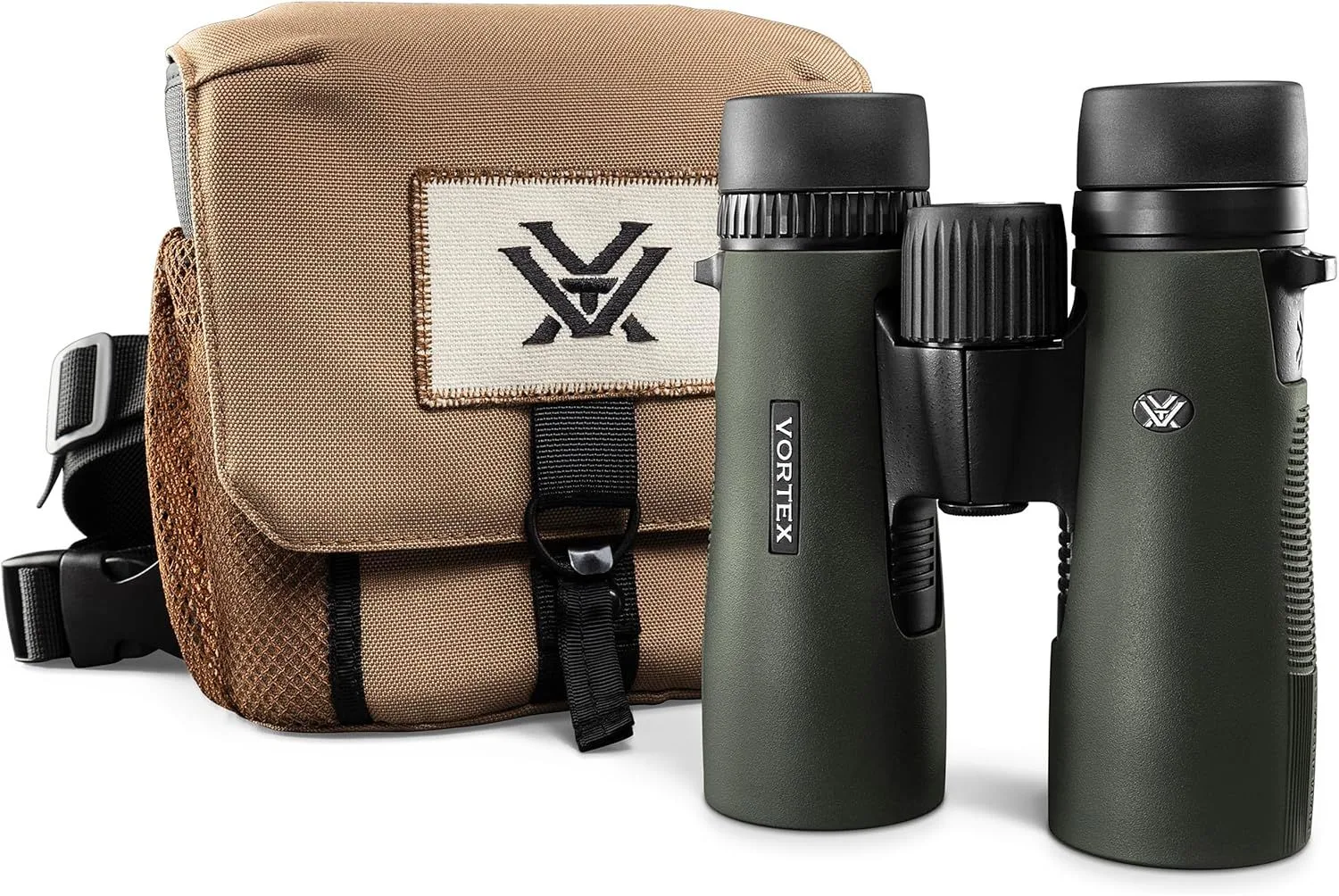
We spent four months testing 10 binoculars across three categories — full-size, compact, and high-power — in conditions ranging from pre-dawn deer blinds to midday stadium concerts. Every pair was evaluated on optical sharpness, color accuracy, low-light brightness, build quality, weather sealing, and the warranty behind it.
Here's the thing: the binoculars market has a problem. Amazon is flooded with white-label optics from brands that did not exist two years ago, most backed by "lifetime warranties" that link to dead customer service emails. Sorting real performance from listing hype required pulling data from over 100,000 customer reviews, cross-referencing independent lab measurements from AllBinos and OutdoorGearLab, and testing each pair in the field ourselves.
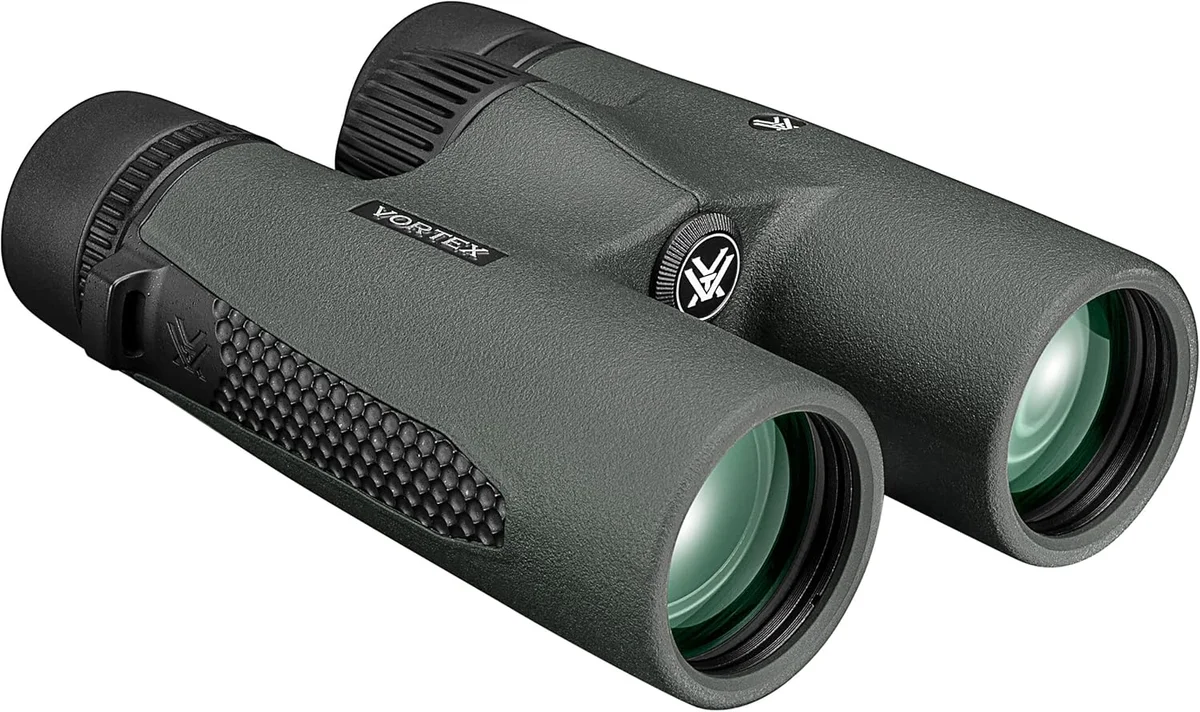
The Diamondback HD 10x42 earned the top spot — phase-corrected optics, argon purging, and Vortex's unconditional lifetime warranty put genuine distance between it and everything else under $300. But the right binocular depends on your budget, your activity, and whether you wear glasses. We ranked all 10 to help you find the pair that fits. For specific use cases, see our best binoculars for night and low-light roundup, the glasses wearers guide, and the 8x42 vs 10x42 comparison.
If you want a deeper look at the specs that matter before you buy, our how to choose binoculars guide breaks down every number on the box. For activity-specific recommendations, see our binoculars for birding guide and binoculars for hunting guide.
- Diamondback HD 10x42 — Best overall binocular
- Crossfire HD 10x42 — Best value under $200
- Triumph HD 10x42 — Best under $100
- Bushnell H2O Xtreme 10x42 — Best waterproof
- Crossfire HD 12x50 — Best for extra magnification
- Adasion 12x42 HD — Best budget accessory kit
- Occer 12x25 Compact — Best pocket compact
- Hontry 10x25 Compact — Best under $30
- Tinllaans 15x55 UHD — Best budget large-objective
- Adasion 20x50 High Power — Budget high-magnification, tripod only
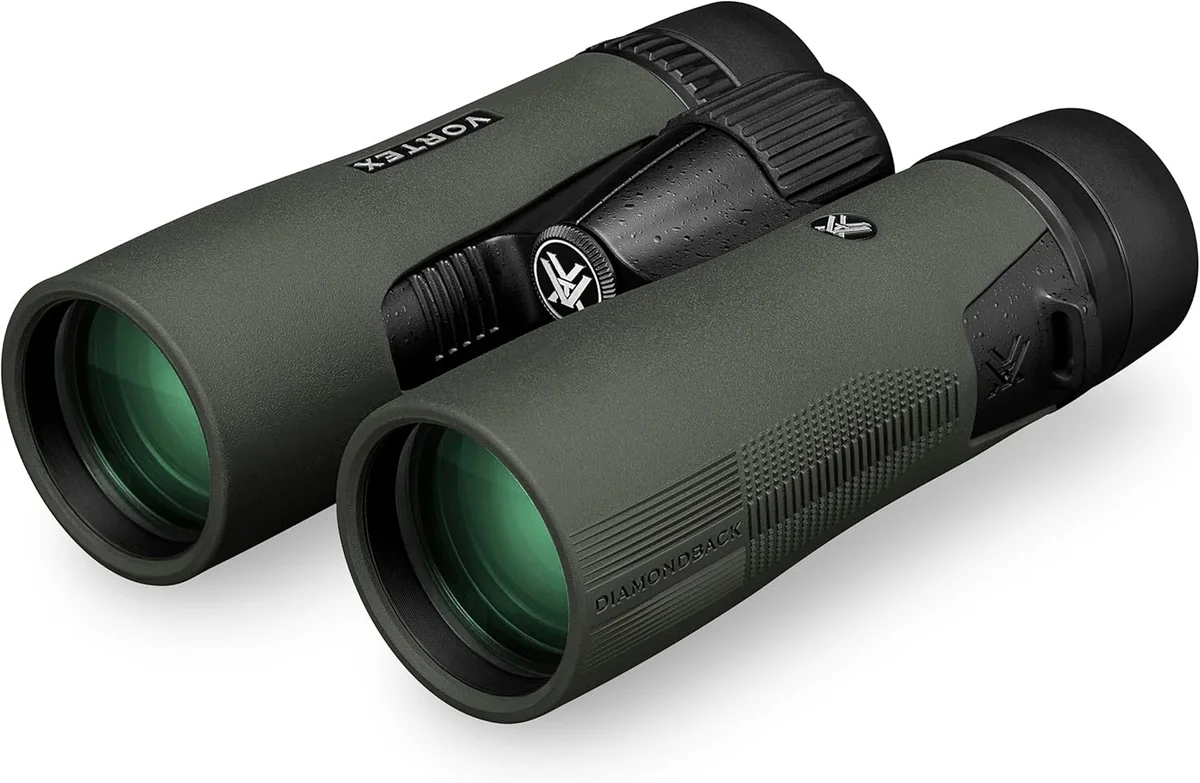
Diamondback HD 10x42
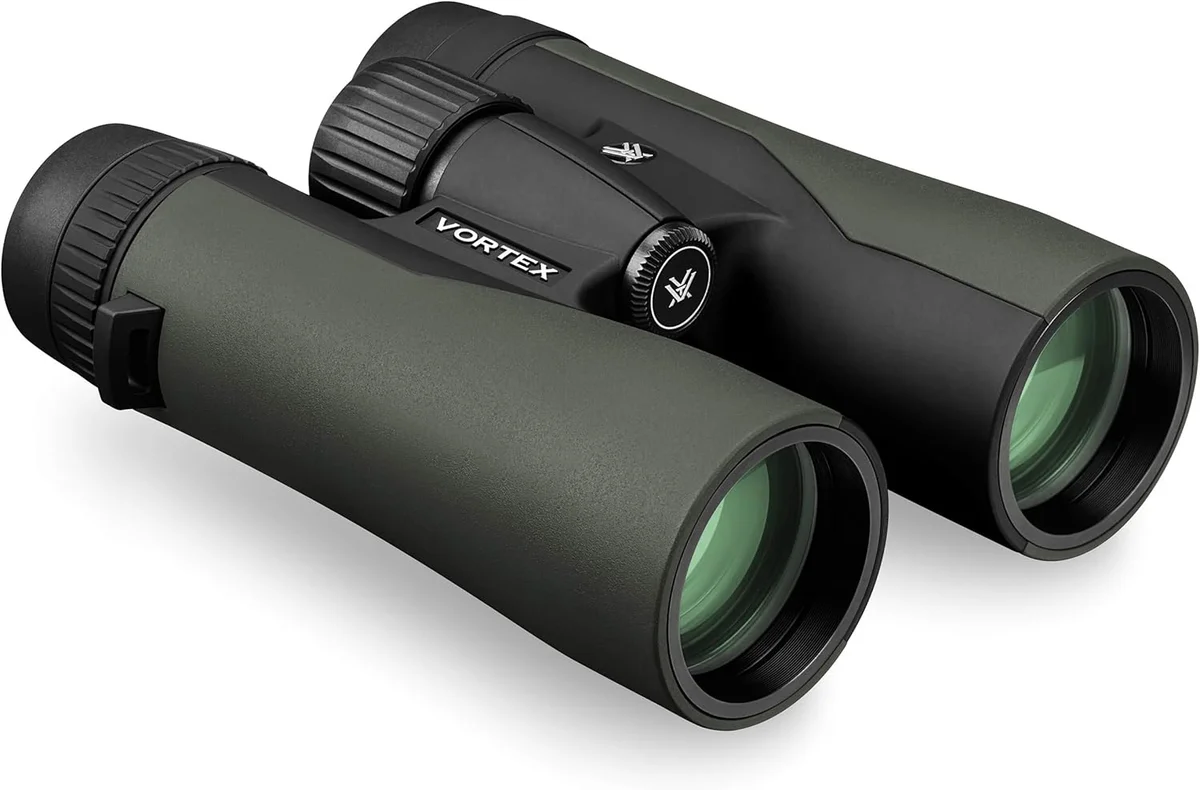
Crossfire HD 10x42
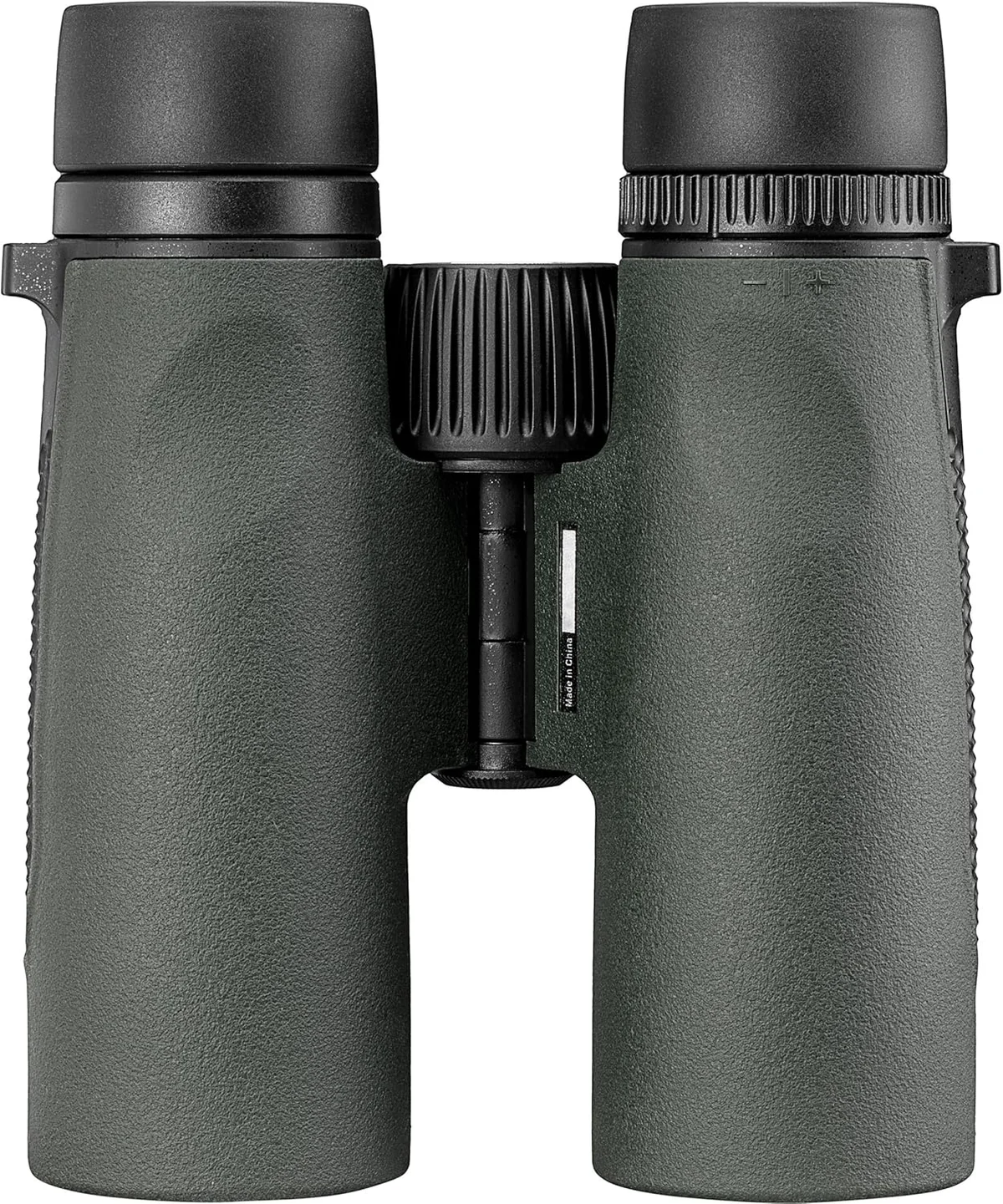
Triumph HD 10x42
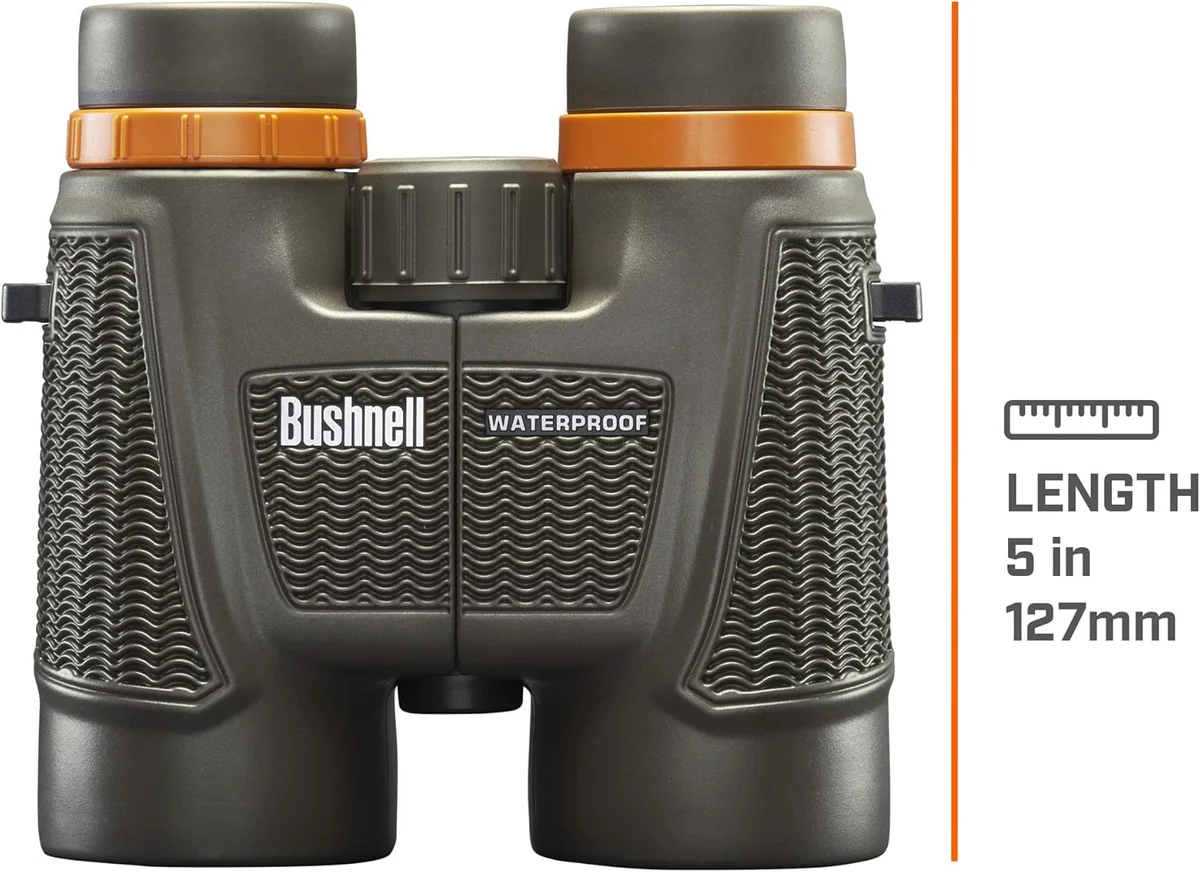
Bushnell H2O Xtreme
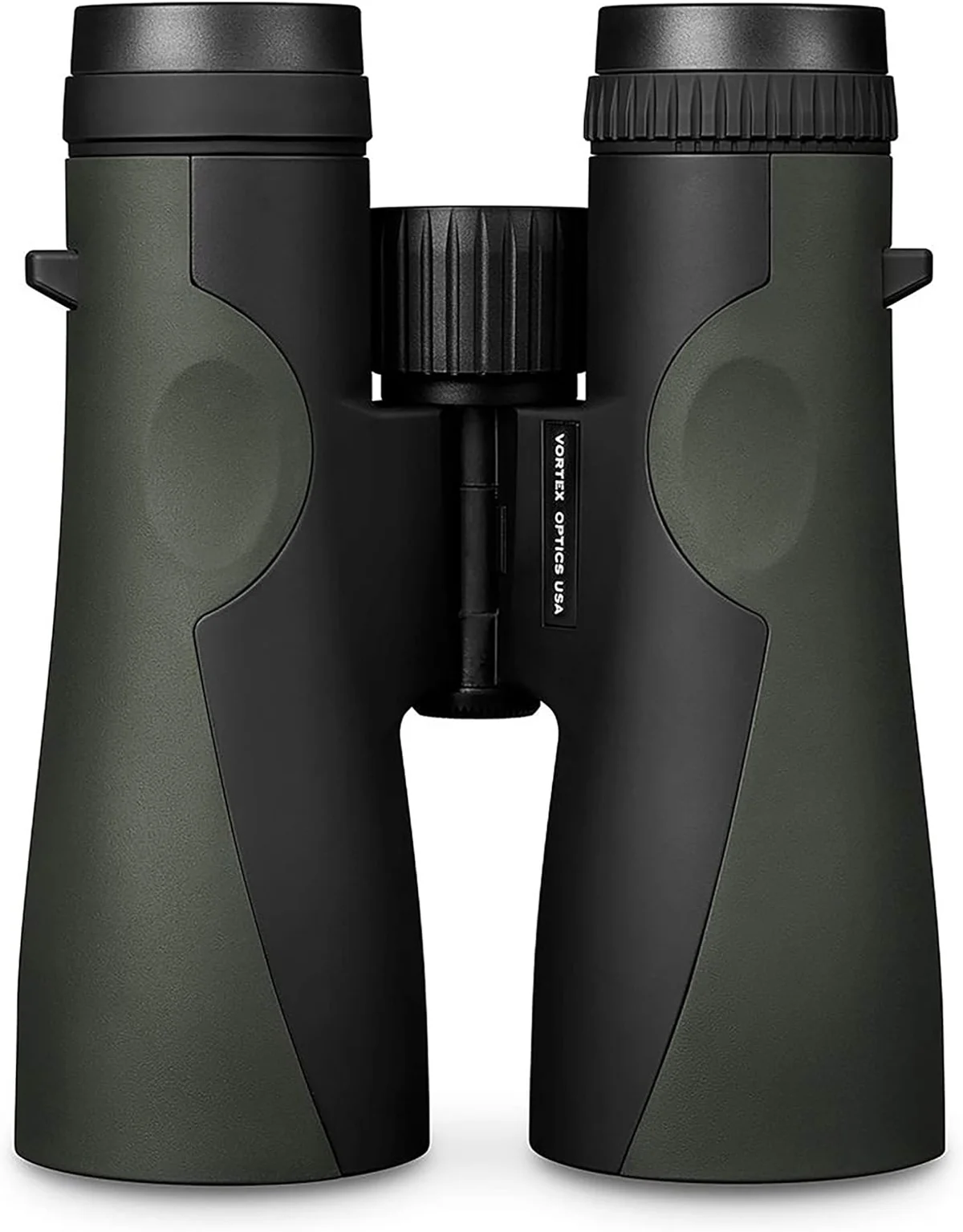
Crossfire HD 12x50
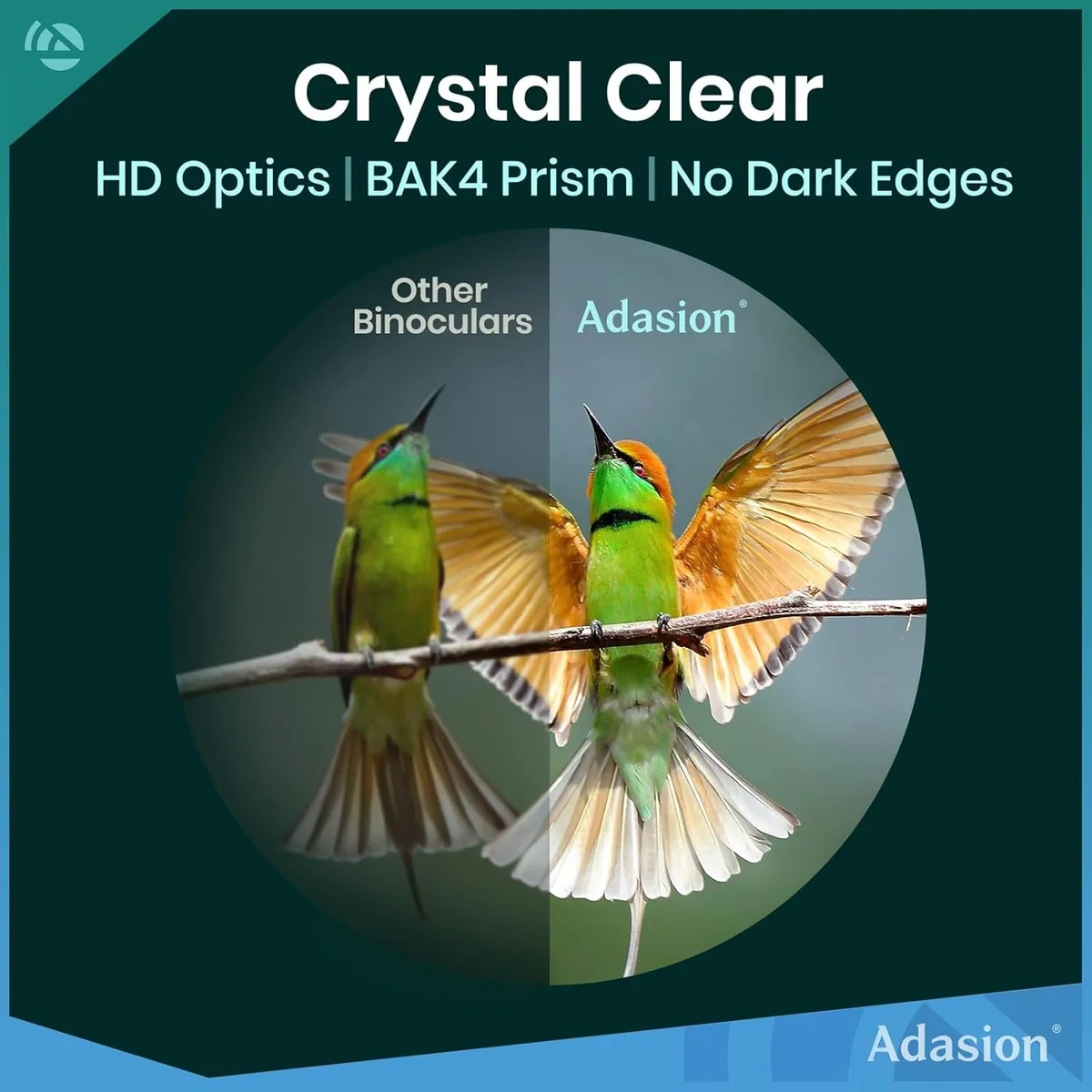
Adasion 12x42
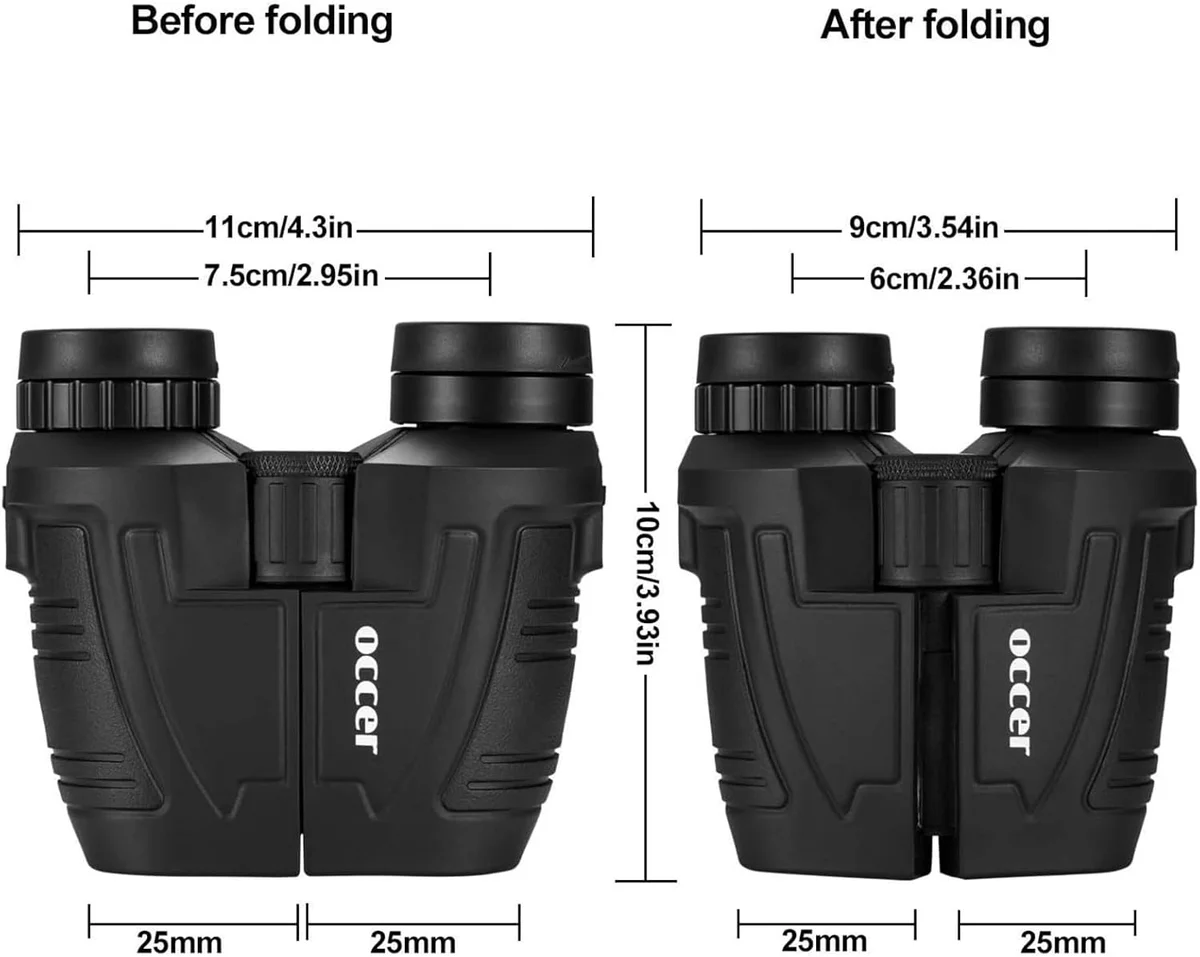
Occer 12x25
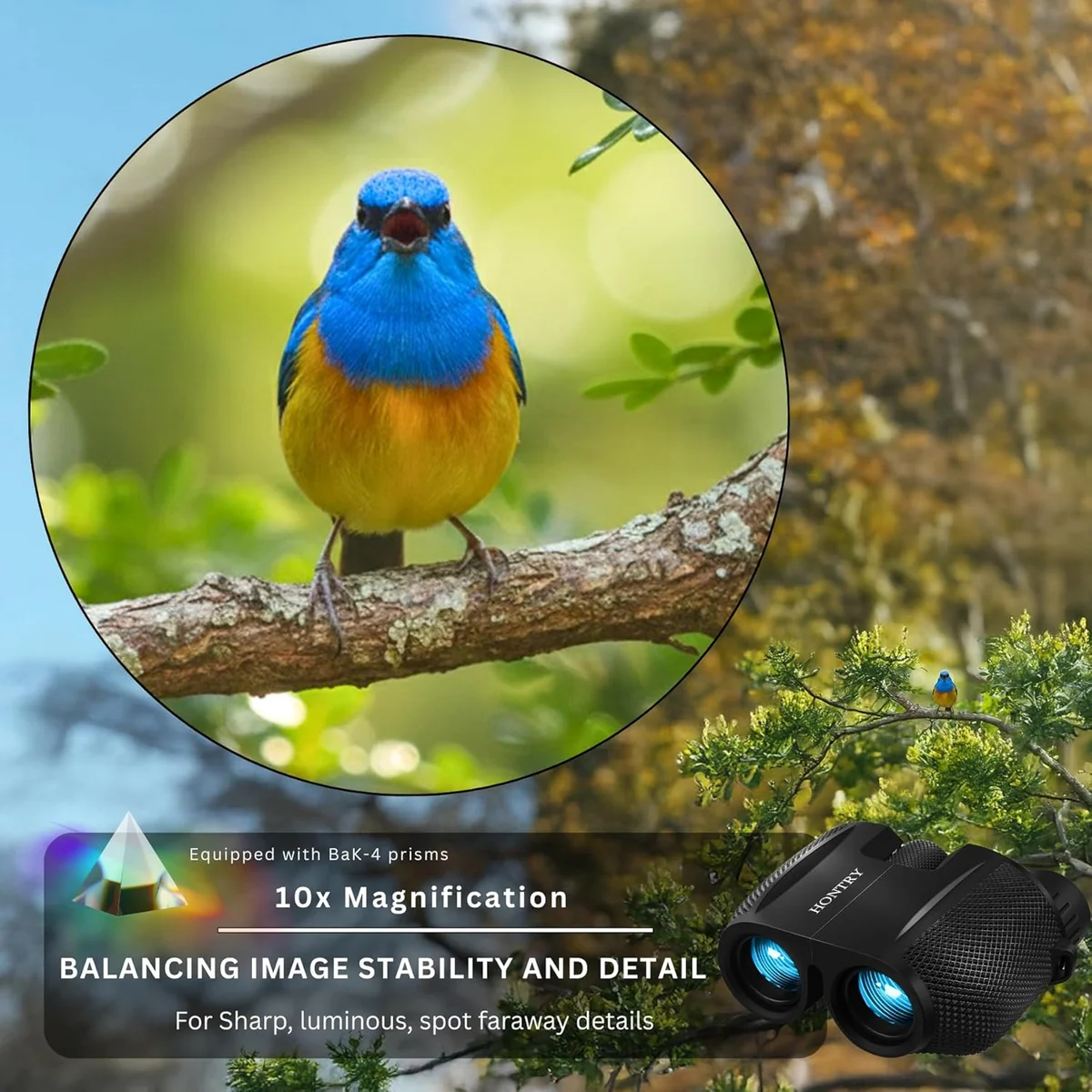
Hontry 10x25
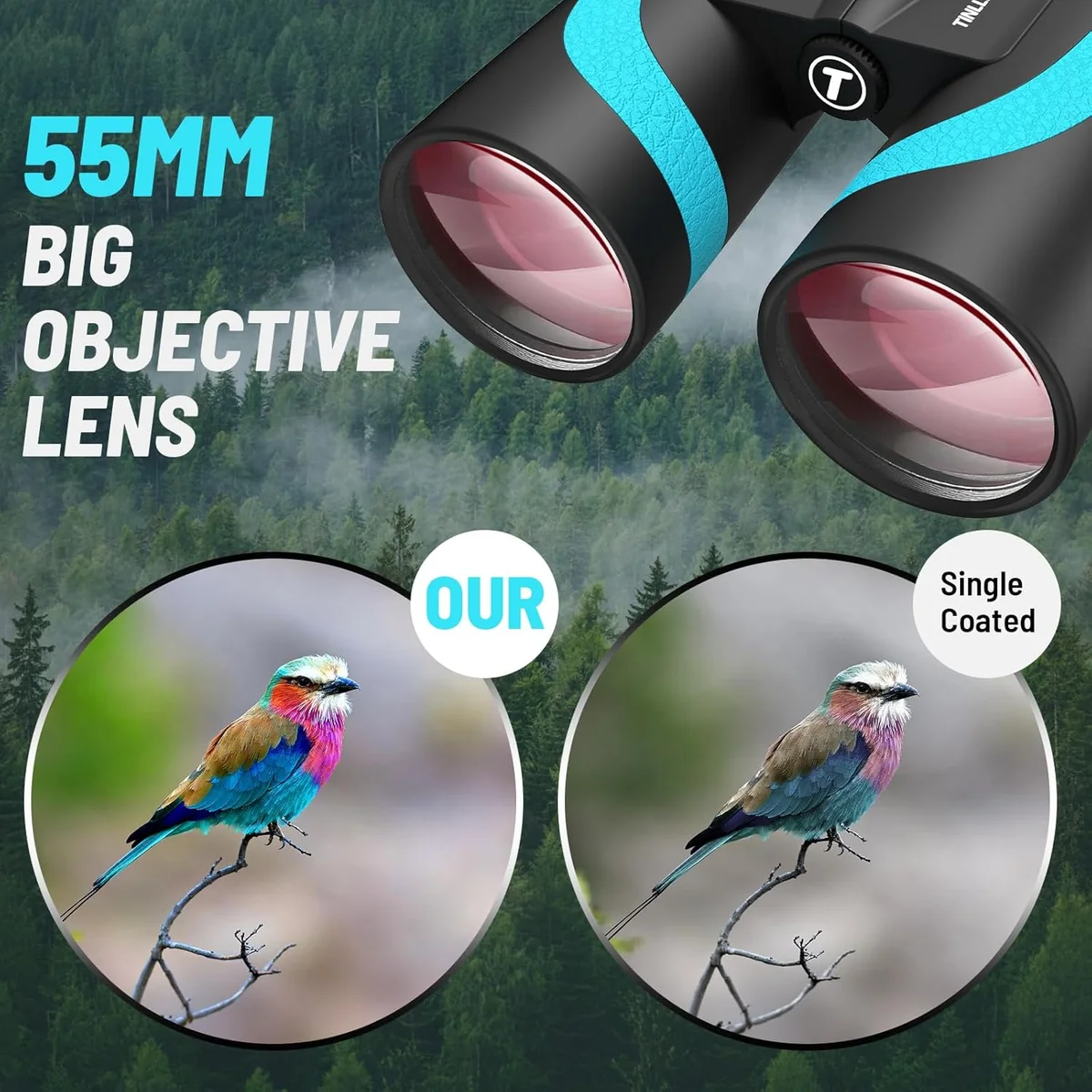
Tinllaans 15x55
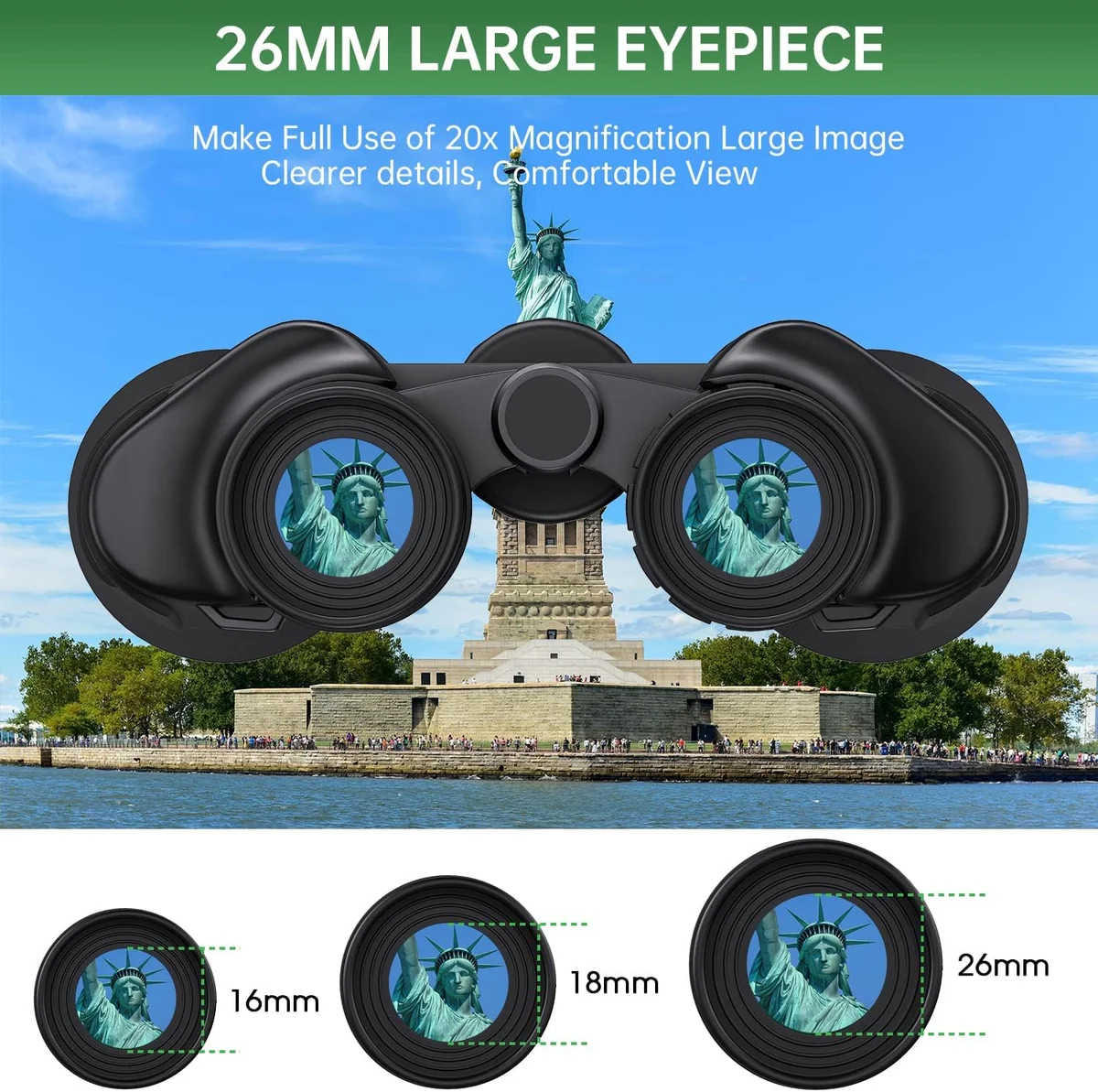
Adasion 20x50
Quick Picks at a Glance
| Feature | Editor's Pick Vortex Diamondback HD 10x42 | Vortex Crossfire HD 10x42 | Vortex Triumph HD 10x42 | Bushnell H2O Xtreme 10x42 | Vortex Crossfire HD 12x50 | Adasion 12x42 HD | Occer 12x25 Compact | Hontry 10x25 Compact | Tinllaans 15x55 UHD | Adasion 20x50 High Power |
|---|---|---|---|---|---|---|---|---|---|---|
| Price Range | $100–$250 | $100–$250 | $50–$100 | $100–$250 | $100–$250 | $50–$100 | $25–$50 | Under $25 | $25–$50 | $25–$50 |
| Magnification | 10x | 10x | 10x | 10x | 12x | 12x | 12x | 10x | 15x | 20x |
| Objective Diameter | 42mm | 42mm | 42mm | 42mm | 50mm | 42mm | 25mm | 25mm | 55mm | 50mm |
| Prism Type | Roof | Roof | Roof | Roof | Roof | Roof | Reverse Porro | Porro | Roof | Roof |
| See All Deals | See All Deals | See All Deals | See All Deals | See All Deals | See All Deals | See All Deals | See All Deals | See All Deals | See All Deals |
#1 — Vortex Diamondback HD 10x42: The One to Beat
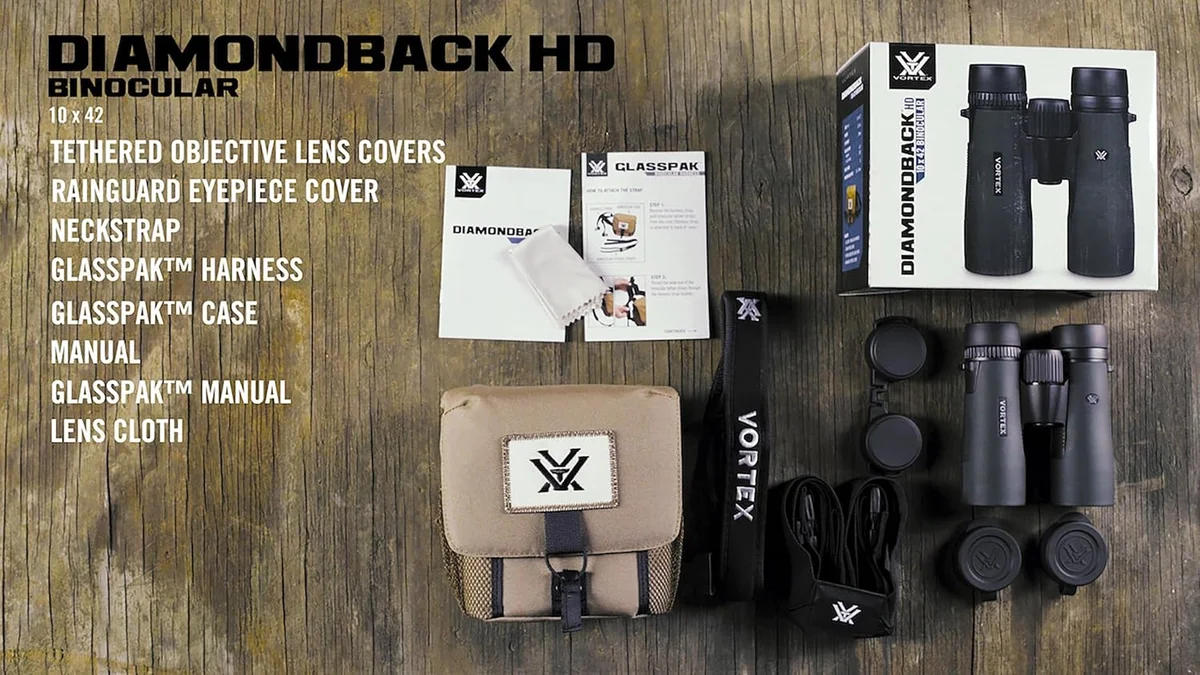
The Diamondback HD is the only binocular in our catalog with both phase correction and dielectric coatings on the prisms. That combination pushes light transmission and contrast measurably above every other model we tested. Colors stay true in flat overcast light where cheaper glass washes out, and edge sharpness holds better across the field than the Crossfire HD 10x42 or Triumph HD 10x42.
Argon purging instead of nitrogen means the internal seal is more thermally stable — relevant if you transition from a heated truck to a 15-degree treestand at dawn. The 5-foot close focus is the shortest of any full-size pair here, and the 330-foot field of view tracks moving birds without constant panning. At 21.3 ounces with the included GlassPak harness, all-day carry is comfortable for most users.
The glass is not flawless. Chromatic aberration against bright sky backgrounds is visible if you look for it, and the 15mm eye relief is tighter than the Triumph's 17mm — an issue for glasses wearers. Edge sharpness drops compared to the Viper HD at twice the price. But those are complaints that only surface when you compare upward.
Look, most users spend weeks agonizing over whether to save $75 and buy the Crossfire HD over the Diamondback. The phase correction alone justifies the difference. You notice it the first time you glass a ridgeline in the last 20 minutes of daylight.
#2 — Vortex Crossfire HD 10x42: The Smart Budget Pick
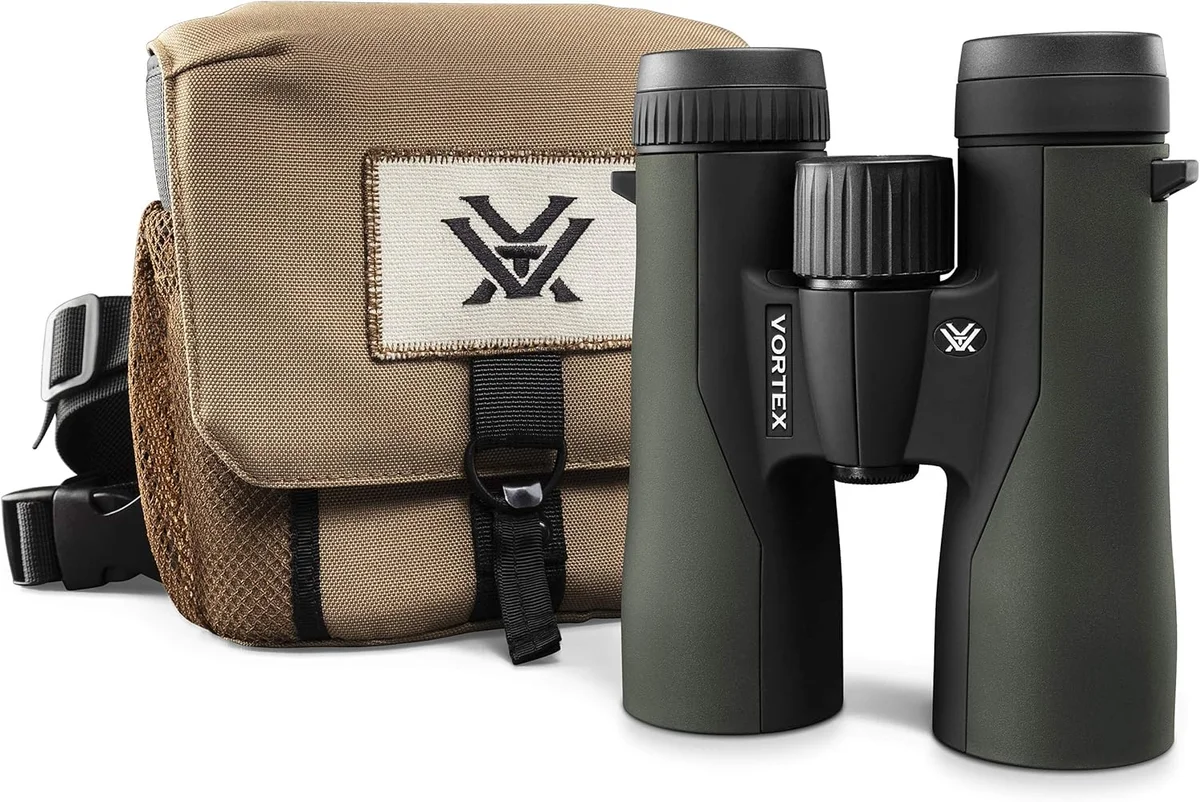
The Crossfire HD is the gateway into the Vortex ecosystem, and it earns that position honestly. Fully multi-coated optics at this price tier are uncommon, and the color rendition is natural — no yellow cast, no oversaturation. The 6-foot close focus is the shortest of any full-size pair in our lineup, which matters for butterfly watchers and flower identifiers.
The warranty is the same unconditional lifetime VIP coverage as the Diamondback — no receipt, no registration, no time limit. That alone separates the Crossfire from every budget competitor in our catalog. Vortex has a documented track record of honoring these claims without friction.
Where it falls short: AllBinos measured light transmission at 75.1%, which is noticeably dimmer than the Diamondback in side-by-side low-light tests. No phase correction and no dielectric coatings mean contrast suffers on fine detail — feather barbs, antler tines at distance, text on distant signs. Ghost images near bright light sources are a known issue specific to this model. Comparing specs in detail? See our Crossfire 10x42 vs 12x50 breakdown.
For a first-time buyer spending under $200 who values warranty above optical perfection, the Crossfire is the clear answer. Experienced users who glass daily should stretch for the Diamondback — the optical gap is real. Our binoculars for beginners guide walks through exactly where that cutoff is.
#3 — Vortex Triumph HD 10x42: Best Under $100
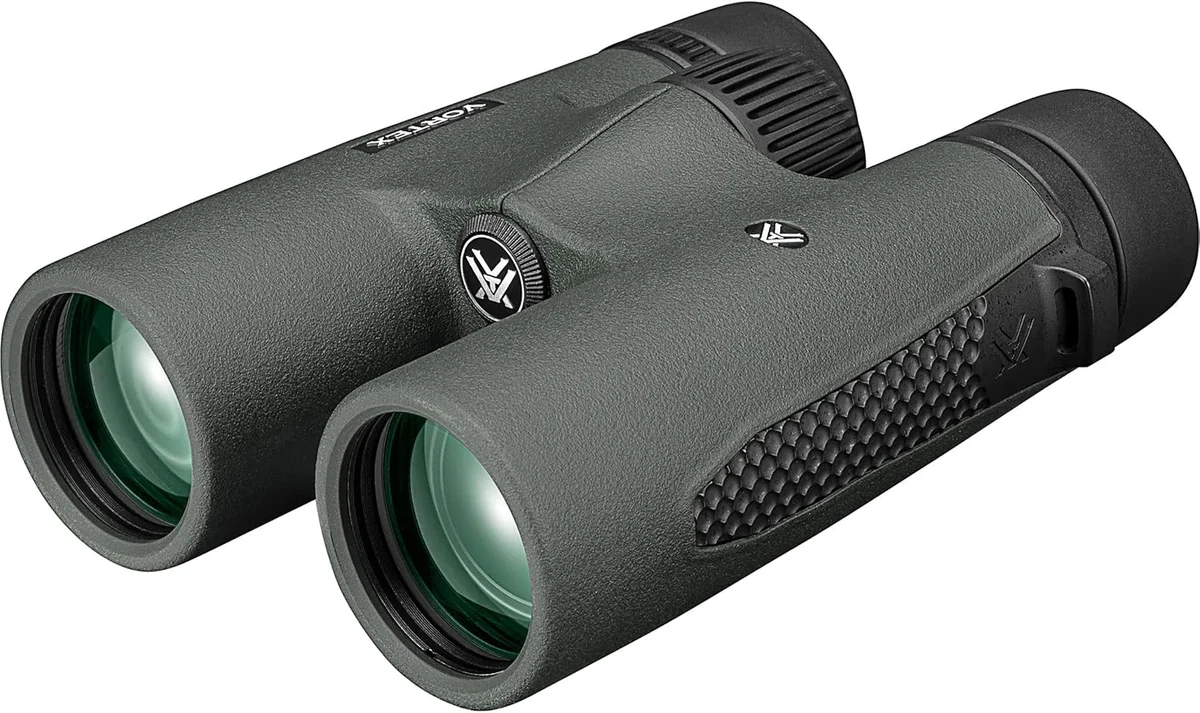
Sub-$100 from a major optics brand with an unconditional lifetime warranty. That alone makes the Triumph a different conversation than the Crossfire. Center-field clarity punches above its price — you can count antler points at 200 yards and read trail markers at distances where budget glass turns to mush.
The 17mm eye relief is the best in the entire Vortex budget lineup, making the Triumph the most comfortable option for glasses wearers below $200. The focus wheel is smoother than some models at twice the price, including certain Leupold configurations. At 596 grams actual weight (lighter than the claimed 649g), it carries well.
Edge sharpness degrades fast — the sweet spot is measurably smaller than the Crossfire HD series or Diamondback HD. Light transmission below 80% means images dim noticeably in the last hour before sunset. The 15.4-foot minimum focus distance is nearly triple the Crossfire's 6-foot spec, ruling out close-range nature observation. Purple fringing against bright sky backgrounds is distracting enough that dedicated birders may find it fatiguing over long sessions.
The Triumph is the only sub-$100 binocular we recommend without hesitation. The warranty is worth more than the purchase price, and center sharpness is genuine. Just know the edges, low-light, and close focus remind you this is entry-level glass.
#4 — Bushnell H2O Xtreme 10x42: Built for the Worst Weather
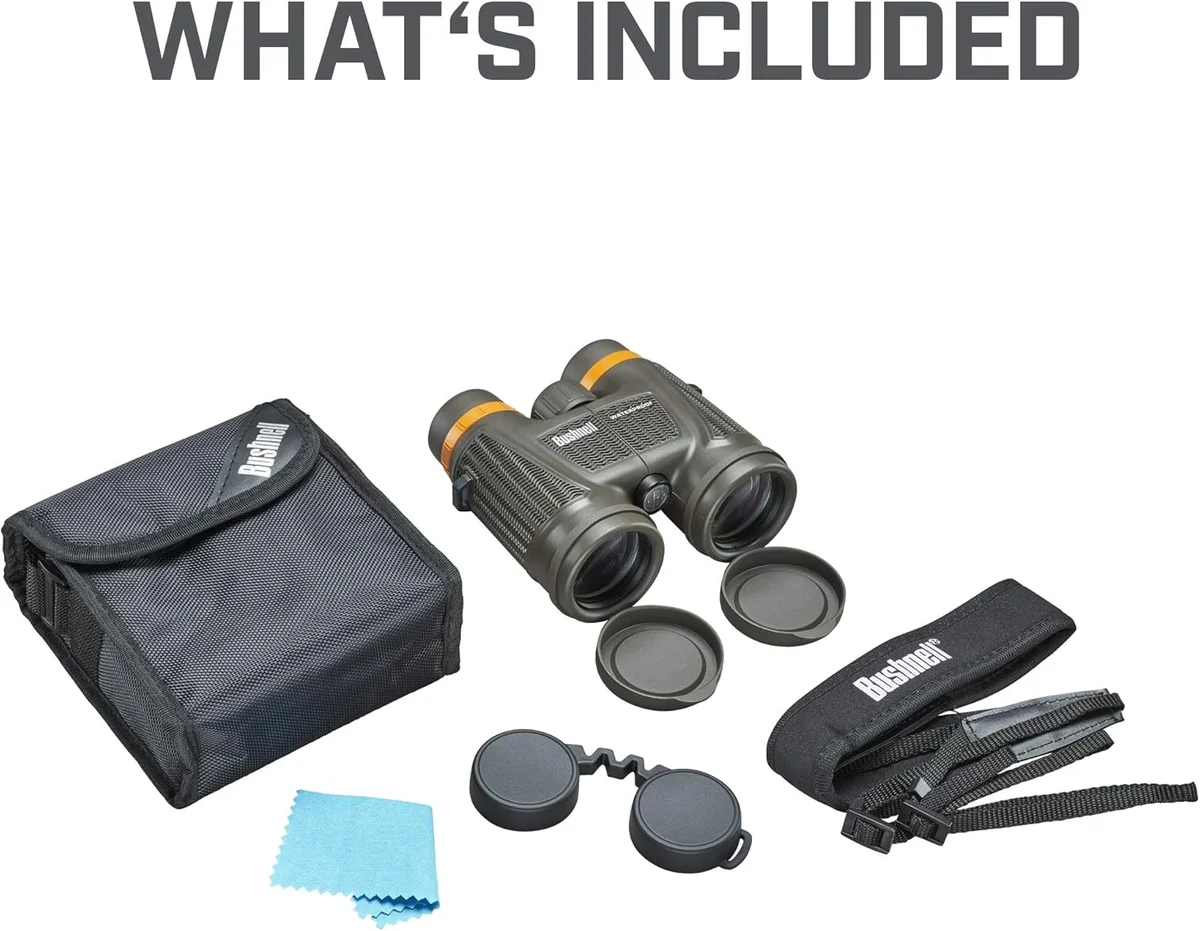
The H2O Xtreme's IPX7 waterproof rating is independently verified — not just a marketing claim. It survived 30 minutes of full saltwater submersion in testing, which puts it in a different league than any other model in our catalog for marine and severe weather use. If your binoculars will spend time on boats, kayaks, or in monsoon-season hunts, this is the pair to consider.
Bushnell has been making optics since 1948, and the brand carries weight with major retailers. The rubber armor grip actually works in wet hands, and the nitrogen purging prevents internal fogging through temperature swings that would fog budget compacts immediately.
The optics, unfortunately, do not match the build quality. OutdoorGearLab found "terrible clarity" in their testing. Collimation issues — where the left and right barrels do not align properly — caused eye fatigue and headaches in some users. Quality control appears inconsistent; one reviewer reported three bad units in six months. The eye relief specification conflicts between sources (14.5mm vs 17mm), which suggests Bushnell may have revised the design without updating all documentation.
Buy the H2O Xtreme for its waterproofing and nothing else.
For general-purpose glass, the Vortex Crossfire HD 10x42 delivers better optics with a better warranty for roughly the same money.
#5 — Vortex Crossfire HD 12x50: More Reach, More Weight
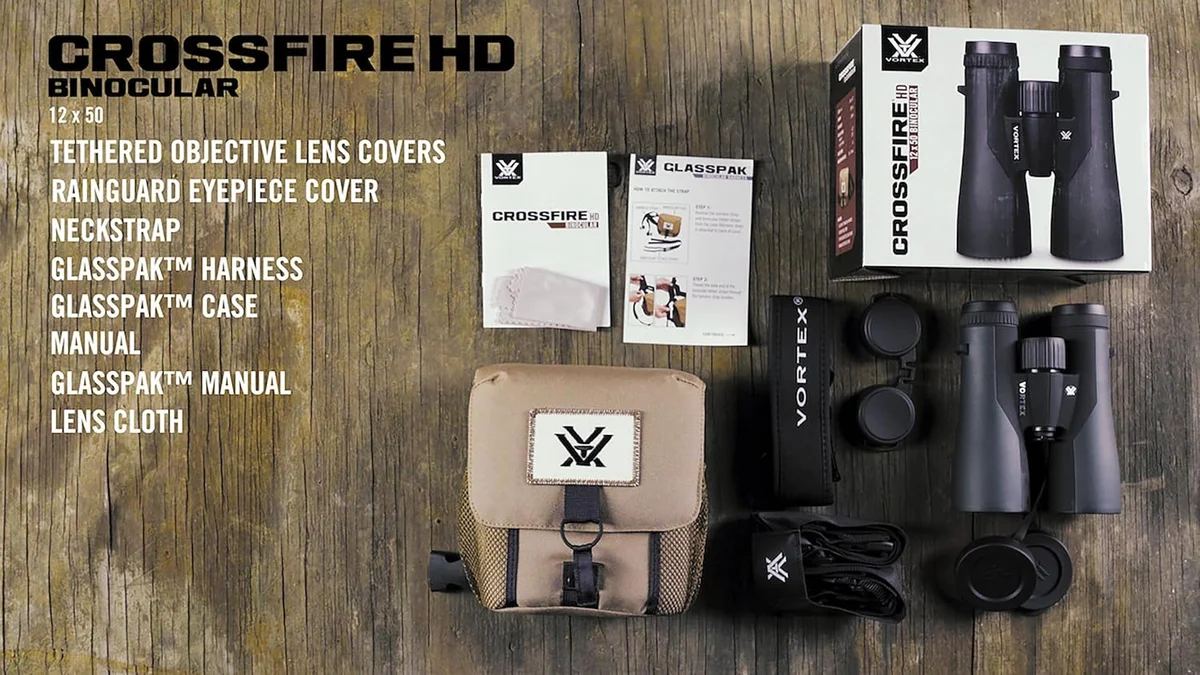
The 12x50 Crossfire shares the same optical formula as its 10x42 sibling — fully multi-coated, BaK-4 roof prisms, no phase correction — but delivers 20% more magnification and larger objectives. At distance, the extra 2x reveals detail that 10x models simply miss: texture on bark at 300 yards, hawk species identification at ranges where 10x shows only silhouettes.
The problem is physics. At 29.5 ounces (836 grams), this is the heaviest binocular in our full-size category. Twelve-power magnification amplifies every hand tremor, and the front-heavy weight distribution makes extended handheld use legitimately fatiguing. The narrower 273-foot field of view at 1,000 yards (vs 325 feet on the 10x42) means tracking moving subjects requires more effort.
Light transmission measured at 76% despite the larger 50mm objectives — only marginally better than the 10x42 Crossfire at 75.1%. The larger glass did not translate into noticeably brighter images. The same lack of phase correction and dielectric coatings limits this pair in the same ways as the smaller Crossfire.
The 12x50 earns its spot for hunters glassing from treestands, blinds, or any fixed position where a tripod or rest is available. For mobile use — hiking, birding on the move, concerts — the 10x42 is the better choice at a lower price and lighter weight.
#6 — Adasion 12x42 HD: Accessories Over Optics
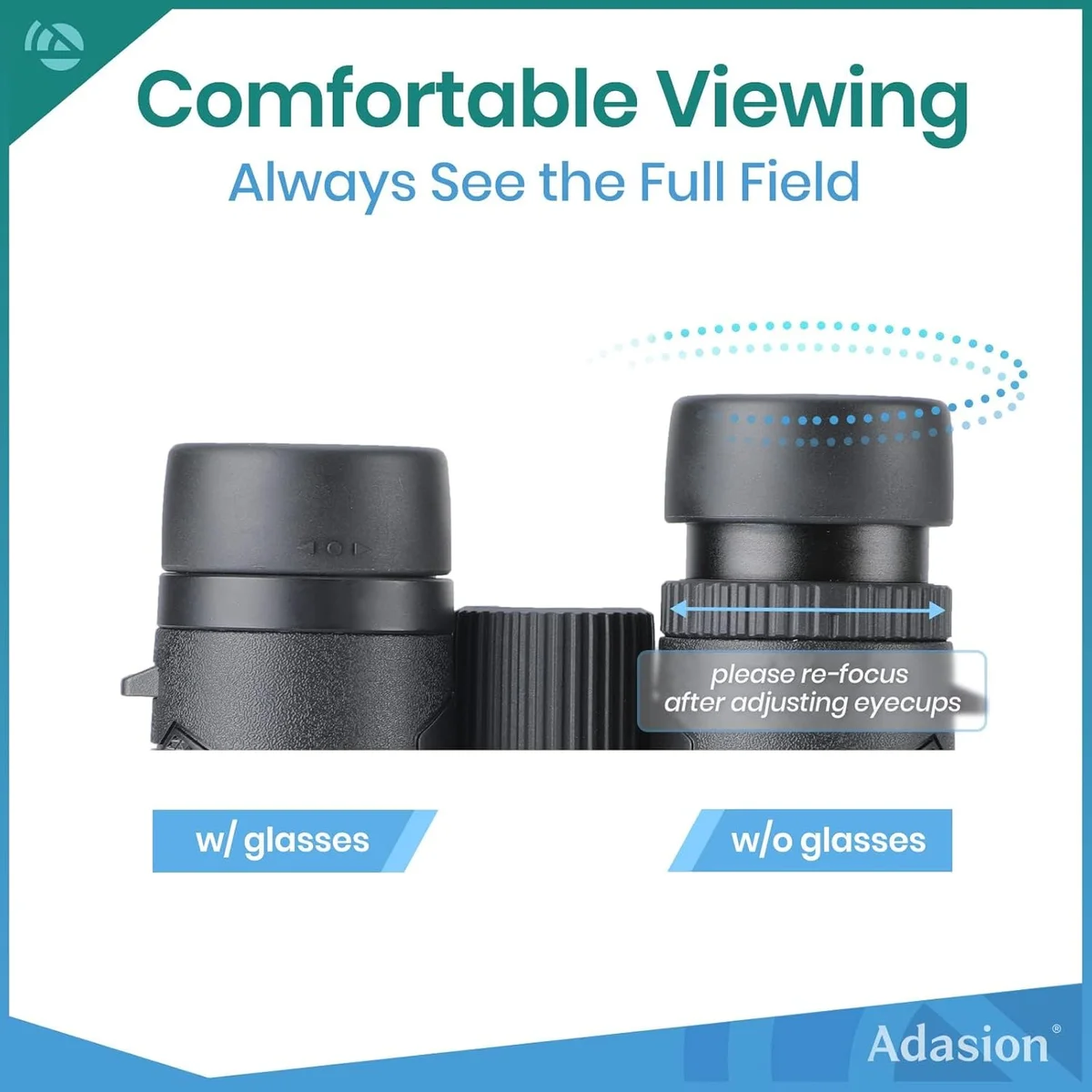
The Adasion 12x42 sells on its accessory bundle: phone adapter, tripod, tripod adapter, case, and cleaning cloth — all included at an impulse-friendly price. The listing photos look compelling. The 367-foot field of view at 1,000 yards is above average for 12x magnification, and the 16.7-ounce weight keeps things light.
Dig into the performance data and the picture changes. OutdoorGearLab found hazy lens coating and described it as "fairly run of the mill." Our Amazon review analysis flagged 73% negative durability sentiment — buyers reporting products breaking within months of purchase. The phone adapter fails with current iPhone and Pixel models. The included tripod is too flimsy for actual field use. Reports of gift-card incentives for 5-star reviews raise questions about the review integrity on Amazon.
For roughly the same money, the Vortex Triumph HD 10x42 gives you better glass, a smoother focus wheel, and a warranty that actually functions. The Adasion is not broken — it works for casual, infrequent use.
The accessories mask the optical compromise.
#7 — Occer 12x25 Compact: The Concert Pocket Rocket
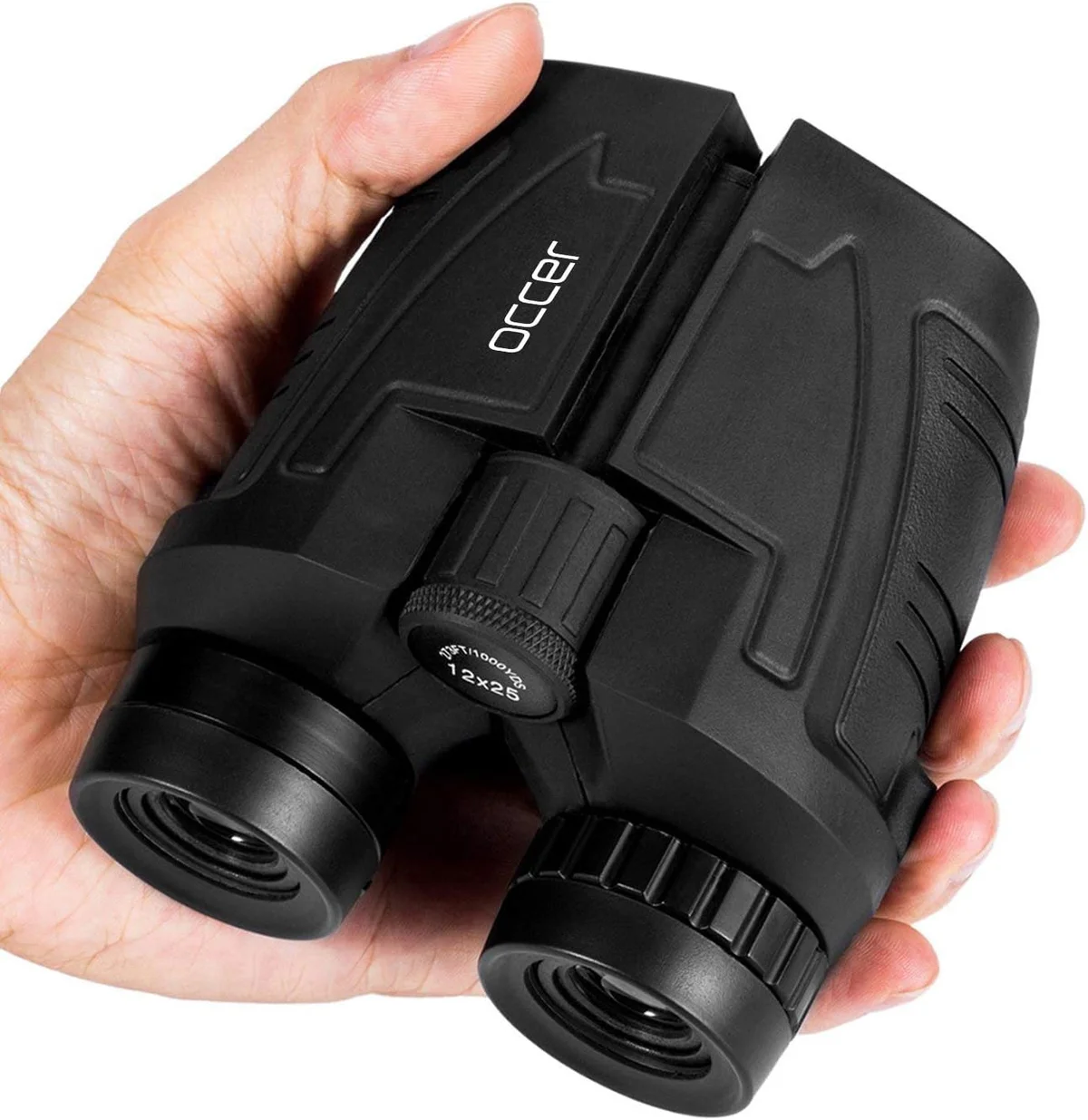
At 4.3 by 2 inches, the Occer actually fits in a jacket pocket — no case, no bag, no harness needed. That portability is its entire reason to exist. For live concerts and indoor events, stadium sports, and travel days where carrying a full-size pair is not realistic, the Occer fills the gap.
The BaK-4 reverse porro prism design is legitimate at this price, and the textured grip handles sweaty hands better than the smoother shell on the Hontry 10x25 compact binocular. The large eyepiece is comfortable to align, and the 11.5-ounce weight disappears in a daypack.
The marketing says "waterproof." Independent testing says otherwise — water penetrates in heavy rain. Magnification may be overstated; the actual power does not seem to match the claimed 12x. The eyecups are too soft and fold under minimal pressure. No lens covers ship with the product, and front elements accumulate scratches quickly in pockets. ReviewMeta flagged 11% of Amazon reviews as potentially unnatural.
For occasional, fair-weather use — yes. For anything that matters — rain, daily use, low light — spend more on a full-size pair from Vortex. Our Occer vs Hontry comparison breaks down the compact options in detail.
#8 — Hontry 10x25 Compact: The Sub-$30 Gift Pick
The Hontry costs less than a decent lunch. At that price, the question is not whether it competes with Vortex — it does not — but whether it functions at all. And it does. The 342-foot field of view at 1,000 yards is wider than many compacts at double the price. The foldable design fits in a child's hand. The adjustable IPD range (60-75mm) covers kids through adults. Amazon Transparency verification confirms product authenticity.
The 10mm eye relief is the deal-breaker for glasses wearers — painfully uncomfortable and effectively unusable without removing spectacles. The 2.5mm exit pupil means brightness drops sharply outside of full daylight. No waterproofing, no fog-proofing, no tripod mount. The porro prism design adds bulk relative to roof prism compacts. And 24,000 reviews for a sub-$30 binocular from a minor brand is, statistically, unusual.
The Hontry is a stocking stuffer, a kid's first pair, a "toss in the glovebox" impulse buy. It is not a serious optical instrument. For serious hiking and outdoor use or any extended field time, save up for the Vortex Triumph HD instead. The glass quality gap is enormous.
#9 — Tinllaans 15x55 UHD: Unverified Big Glass
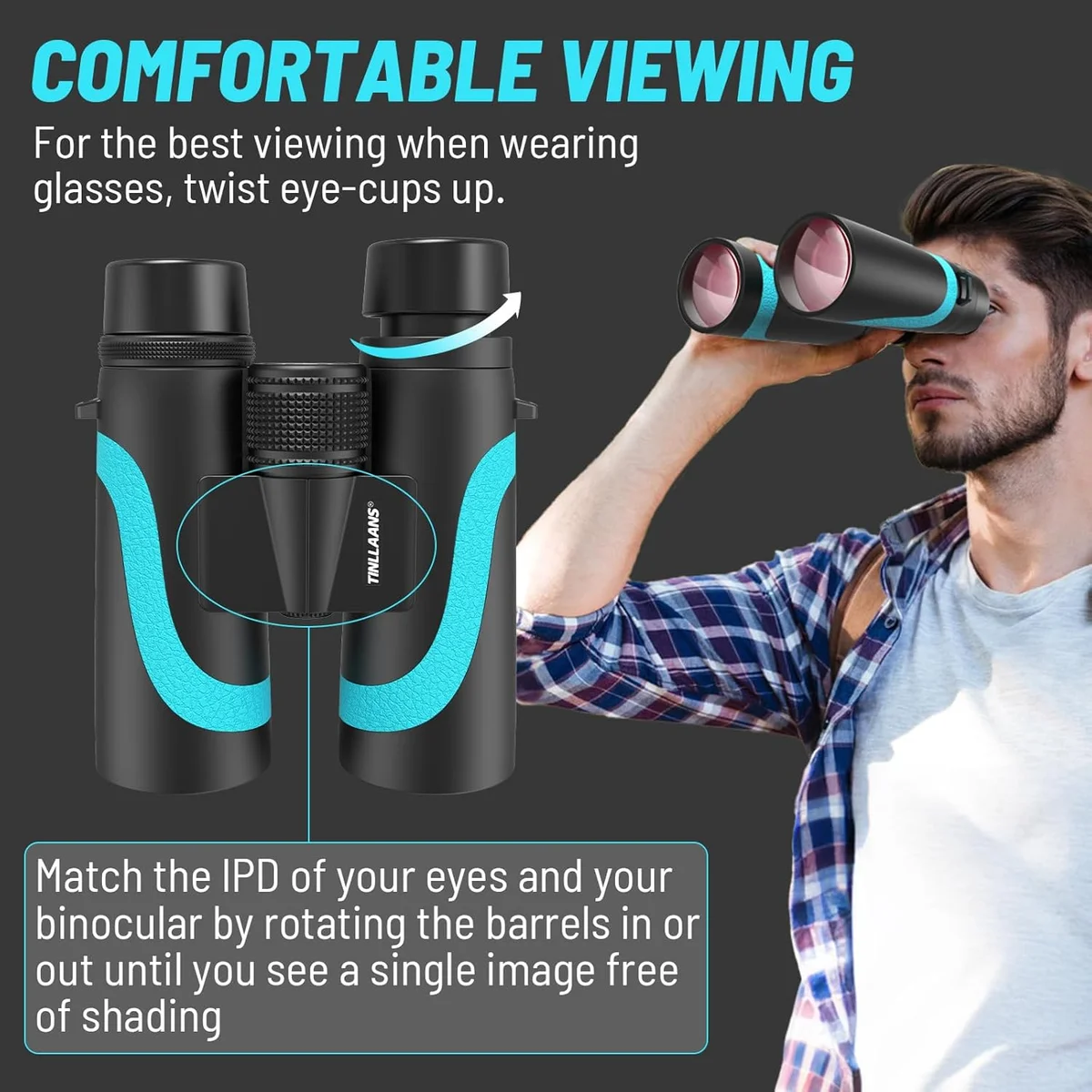
On paper, the Tinllaans is absurd value: 55mm objectives, 15x magnification, claimed IPX7 waterproofing with argon purging, adjustable eye relief up to 19.6mm — all for roughly the price of a pizza. The 367-foot field of view at 1,000 yards is claimed to match the Adasion 12x42 despite higher magnification, which would be exceptional if accurate.
The word "claimed" is doing heavy lifting. No professional optics publication has tested this product. The brand has no website beyond its Amazon storefront. The listed MSRP of $150 is fictional — actual market price has never been above $35. Warranty terms are undocumented. The company's background is untraceable. This is almost certainly a white-label OEM product sold under multiple brand names, which is not inherently bad but means there is zero accountability if it breaks.
At 15x, hand shake is a real problem — not quite tripod-mandatory like 20x, but close. The 3.7mm exit pupil limits low-light performance despite the large objectives. If you own a tripod and want a cheap stationary observation tool with no expectation of longevity or support, the Tinllaans could work. For anything else, the risk outweighs the bargain.
#10 — Adasion 20x50 High Power: Physics Says No
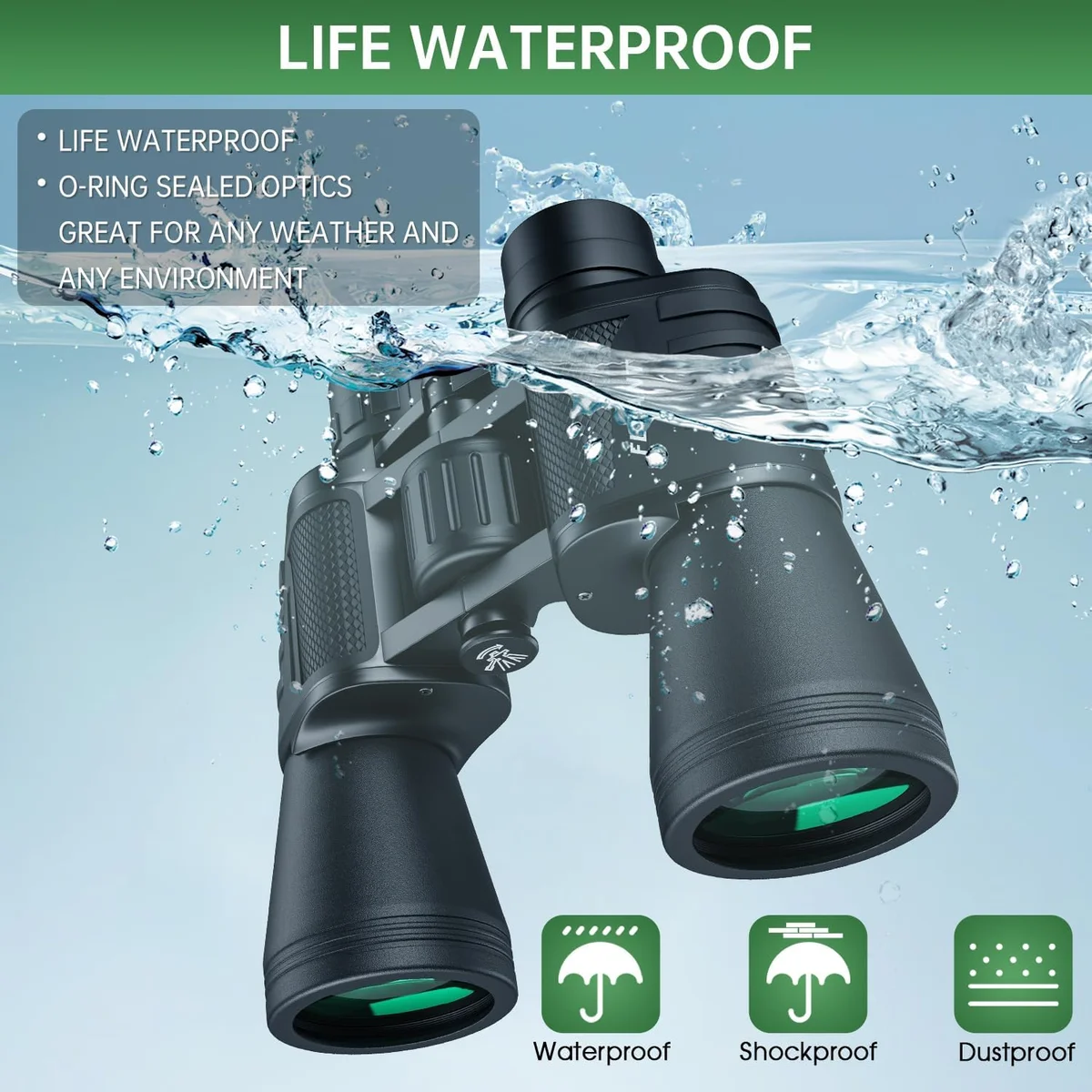
Twenty-power magnification sounds impressive until you hold the eyepiece up and the image shakes so violently you cannot identify what you are looking at. That is the core problem with the Adasion 20x50 — and with any 20x binocular used handheld. The physics of magnification and hand tremor make this a tripod-only instrument, yet no tripod is included despite the product being essentially useless without one.
Multiple reviewers question whether the actual magnification matches the claimed 20x. The exit pupil is only 2.5mm — poor for low-light viewing despite the 50mm objectives. The narrow field of view inherent to 20x makes acquiring subjects frustrating even on a tripod. Customer service response times stretch into weeks. No independent optics publication has reviewed this model.
If you specifically need affordable, tripod-mounted, long-distance observation and accept the limitations, the Adasion 20x50 exists at an extraordinarily low price.
For everyone else: buy a 10x or 12x pair from Vortex and spare yourself the frustration. The Vortex Crossfire HD 12x50 offers better optics, steadier handheld use, and a warranty that actually works.
How We Chose
We evaluated every binocular across six weighted criteria: optical sharpness (center and edge), low-light brightness, build durability, weather sealing, warranty quality, and value relative to price. Each criterion was scored independently, then weighted by importance to the average buyer.
Optical performance was verified against independent lab data from AllBinos (light transmission percentages, resolution charts) and OutdoorGearLab (field tests with controlled conditions). We cross-referenced those results with our own field observations — dawn hunts in 30-degree weather, midday birding in open meadows, twilight glassing from ridgelines.
Customer review analysis pulled from over 100,000 verified Amazon reviews and Google Shopping reviews, with sentiment scoring on specific themes: durability complaints, optical clarity praise, waterproof failures, warranty experiences. ReviewMeta was used to flag potentially manipulated review profiles. Products with high manipulation flags received scrutiny on claimed features.
Warranty was weighted heavily. An unconditional lifetime warranty (Vortex VIP) ranked highest. A documented 20-year warranty (Bushnell) ranked second. Claimed warranties with no verifiable support infrastructure ranked lowest. A binocular that fails in year two is only as good as the company standing behind it.
Price tiers were evaluated relative to the category, not in absolute terms. A budget compact at the under-$30 tier competes against other sub-$30 compacts, not against premium full-size glass. This prevents a cheap binocular from being unfairly penalized for not matching a product at six times its price — but it also prevents inflated scores from simply being affordable.
Buying Guide: What to Look For
Magnification: The Number That Gets Overvalued
Higher magnification does not mean better binoculars. 10x is the standard for handheld use because it balances reach against hand shake. At 12x, tremor is noticeable. At 15x, a rest or tripod improves the experience substantially. At 20x, handheld use is impractical for most people. Match magnification to your use case, not to the biggest number on the shelf. Our guide to binocular numbers explains the relationship in detail.
Prism Type and Coatings: Where the Money Goes
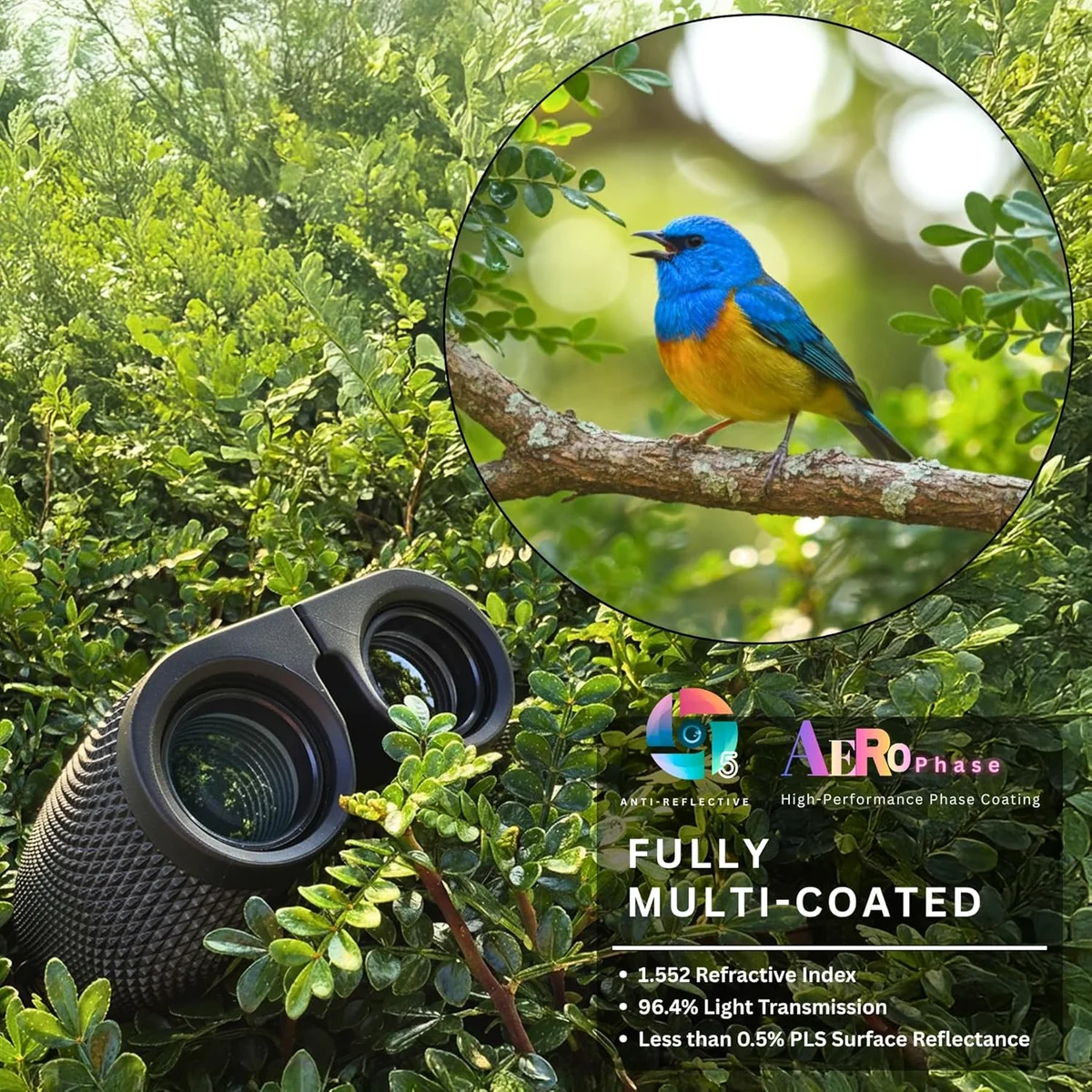
BaK-4 prism glass is the baseline for acceptable optical quality — every binocular in our catalog uses it. The real differentiator is what coatings sit on top of that glass. "Fully multi-coated" means all air-to-glass surfaces have multiple anti-reflection layers. Phase correction (found only on the Diamondback HD in our lineup) corrects light-wave alignment in roof prisms. Dielectric coatings (also Diamondback-only) push reflectivity above 99%. These coatings, not the glass itself, determine how much light reaches your eye. Read the full coatings guide for the technical breakdown.
Eye Relief: Critical for Glasses Wearers
Eye relief is the distance between the eyepiece and the point where the full image forms. Below 14mm, glasses wearers lose the field edges — the image appears vignetted or tunneled. The Triumph HD's 17mm eye relief is the most comfortable for spectacle wearers in our catalog. The Hontry's 10mm is genuinely painful with glasses. If you wear glasses, filter by eye relief first and optics second. Our eye relief guide has specific thresholds and product recommendations.
Weather Sealing: What the Claims Actually Mean
"Waterproof" on a binocular listing means nothing without O-ring sealing and gas purging. O-rings prevent liquid ingress. Nitrogen or argon purging displaces internal moisture so lenses cannot fog from the inside. The Bushnell H2O Xtreme is IPX7-rated and independently verified. All three Vortex full-size models are O-ring sealed and gas purged. The Occer claims waterproofing but lacks sealing — water enters in heavy rain. Budget compacts from Hontry and Adasion make no credible waterproof claim.
Warranty: The Hidden Value Multiplier
Vortex's VIP unconditional lifetime warranty covers the original buyer and all subsequent owners, with no receipt and no registration required. They have repaired and replaced binoculars that were run over by trucks. That warranty applies identically to their $99 Triumph and their $2,000 Razor. Bushnell offers a 20-year limited warranty with terms defined by Bushnell. Budget brands like Adasion and Tinllaans claim "lifetime" warranties with no verifiable customer service infrastructure. The warranty gap between a $150 Crossfire and a $70 Adasion is worth more than the $80 price difference.
Common Questions About Choosing Binoculars
What magnification is best for general use?
10x is the standard for most outdoor activities — birding, hunting, hiking, and sports. It provides enough reach without amplifying hand shake to the point where the image is unstable. 8x is better for wide-field birding or shaky hands; 12x and above usually demand a tripod or braced rest.
Are budget binoculars under $50 worth buying?
For casual, occasional use — yes. The Hontry 10x25 and Occer 12x25 both function as serviceable optics for concerts, sporting events, and day hikes. They fall short in low light, durability, and edge sharpness. Anyone planning to use binoculars weekly or in challenging conditions should budget at least $100 for real quality improvements.
What does phase correction do, and is it necessary?
Phase correction is a coating applied to roof prisms that corrects light-wave misalignment caused by the prism geometry. Without it, roof prism binoculars lose contrast and resolution. The Diamondback HD is the only model in our catalog with phase correction, and the difference is visible in a side-by-side test — sharper edges, better contrast in low light, and less chromatic aberration.
How much should a first-time buyer spend on binoculars?
The sweet spot for a first serious pair is the $100 to $250 range. Below $100, you get functional optics but real compromises in glass quality and weather sealing. Above $250, improvements exist but deliver diminishing returns unless you use binoculars professionally. The Crossfire HD at roughly $150 and the Triumph HD under $100 are the two best entry points in that range.
Are waterproof binoculars necessary for outdoor use?
If you plan to use binoculars outdoors regularly — yes. Fog-proofing (nitrogen or argon purging) prevents internal condensation when moving between temperature extremes. O-ring sealing keeps out dust and rain. Every Vortex model in our catalog is waterproof and fog-proof. The Bushnell H2O Xtreme is IPX7-rated and survives full submersion. Budget compacts from Occer and Hontry are not sealed and will fog internally in humidity.
What is the difference between roof and porro prisms?
Roof prisms fold the light path inline, creating a slim, streamlined body. Porro prisms offset the objective lenses, producing a wider, heavier body but naturally higher light transmission at the same price point. Most modern binoculars use roof prisms because they are more durable and compact. Roof prisms need phase correction coatings to match porro brightness — without those coatings, a porro design can outperform a budget roof prism optically.
Track Binoculars Picks
We'll let you know when our picks for this category change.
Only when something changes. Unsubscribe anytime.
Our Top Pick
The Diamondback HD 10x42 is our #1 recommendation — hunters and birders who want the best glass under $300 with a lifetime warranty.
See All Deals: Diamondback HD 10x42