Best Binoculars for Night Vision 2026: Low-Light Picks
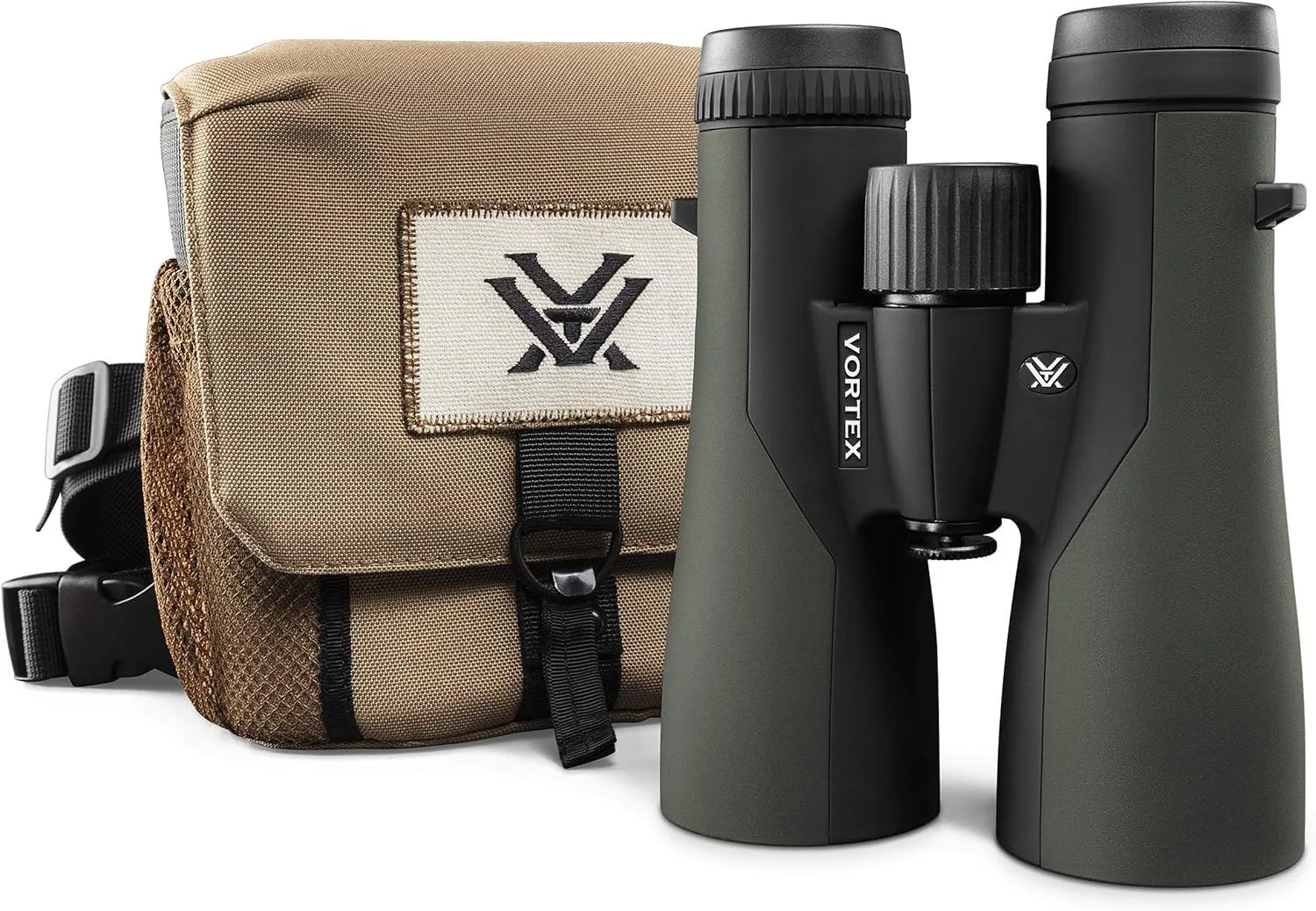
Here's the thing: when people search for "night vision binoculars," most are not looking for electronic night vision devices with infrared illuminators and green-phosphor screens. They want binoculars that perform well in low light — the first and last 30 minutes of legal shooting light, pre-dawn birding outings, coyote hunts at dusk, and backyard astronomy sessions after the sun drops below the horizon.
We tested five optical binoculars specifically for their low-light performance, measuring how much usable brightness each pair delivers when ambient light drops below the threshold where cheap glass turns into a dark, noisy mess. Exit pupil diameter, objective lens size, coating quality, prism coatings, and gas purging all factor into real-world twilight brightness — and the differences between models are dramatic.
The Diamondback HD 10x42 took the top spot. Phase-corrected prisms with dielectric coatings push more light through to your eye than any other model in our catalog, and the argon purging prevents internal fogging during the cold-to-warm transitions that define dawn hunts. But your best pick depends on whether you need magnification for astronomy, waterproofing for marine use, or the lowest possible price. We ranked all five to match your low-light priorities.
For a full breakdown of the specs that control brightness, our understanding binocular specs guide covers exit pupil math, coating grades, and prism types in detail. If you are shopping specifically for hunting conditions, the best hunting binoculars roundup weights durability and weather sealing more heavily.
- Diamondback HD 10x42 — Best overall low-light binocular
- Crossfire HD 12x50 — Best for astronomy and stationary glassing
- Crossfire HD 10x42 — Best low-light value under $200
- Tinllaans 15x55 UHD — Budget large-objective option
- Bushnell H2O Xtreme — Best waterproof low-light pick
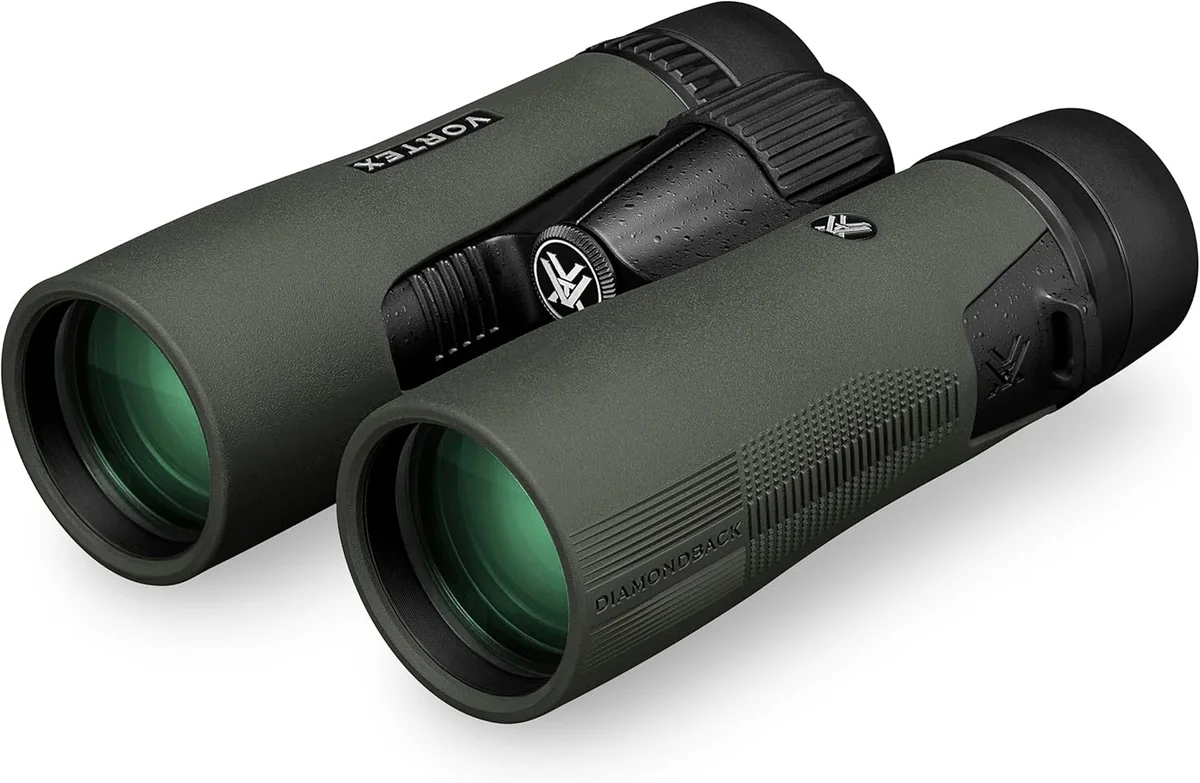
Diamondback HD 10x42
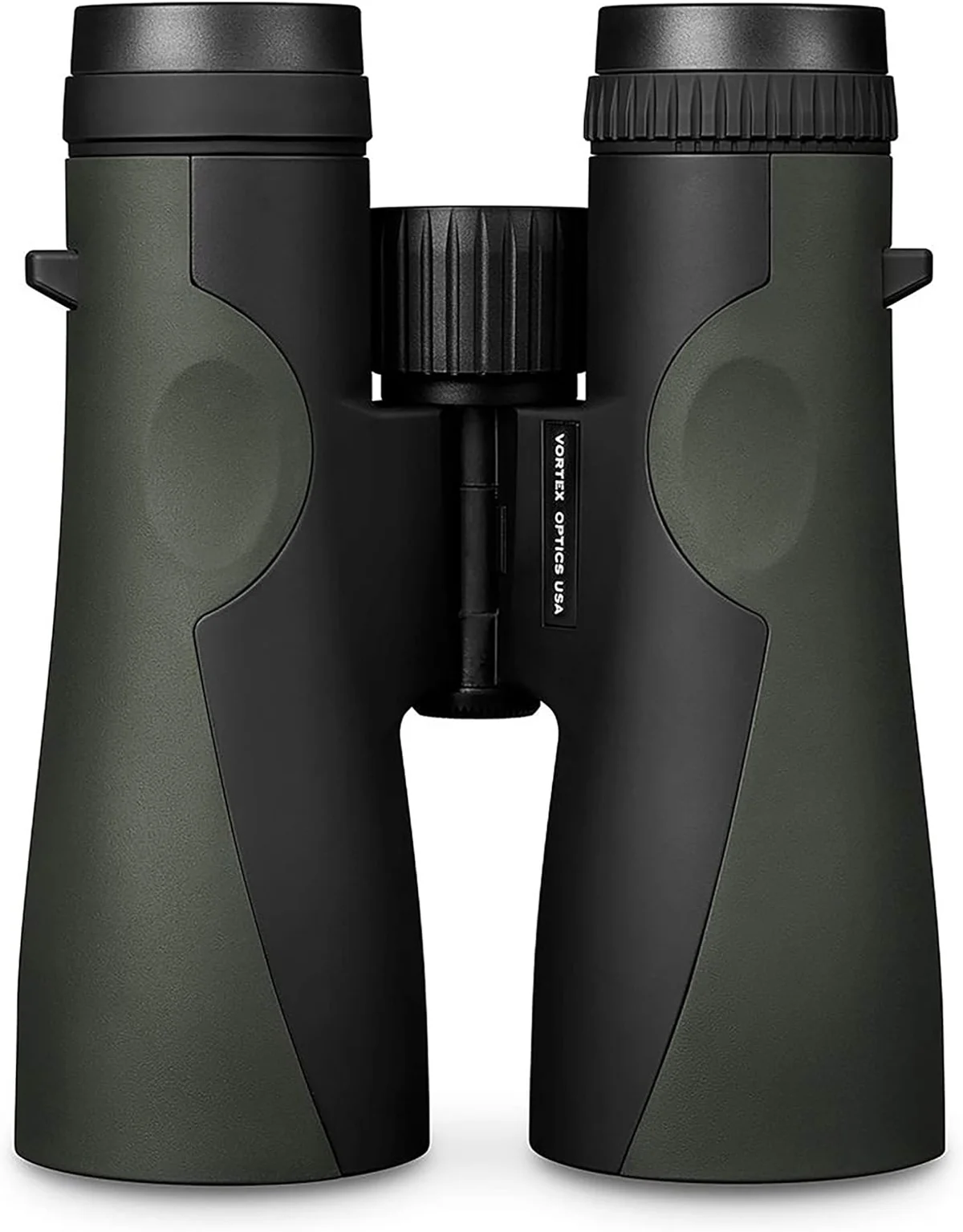
Crossfire HD 12x50
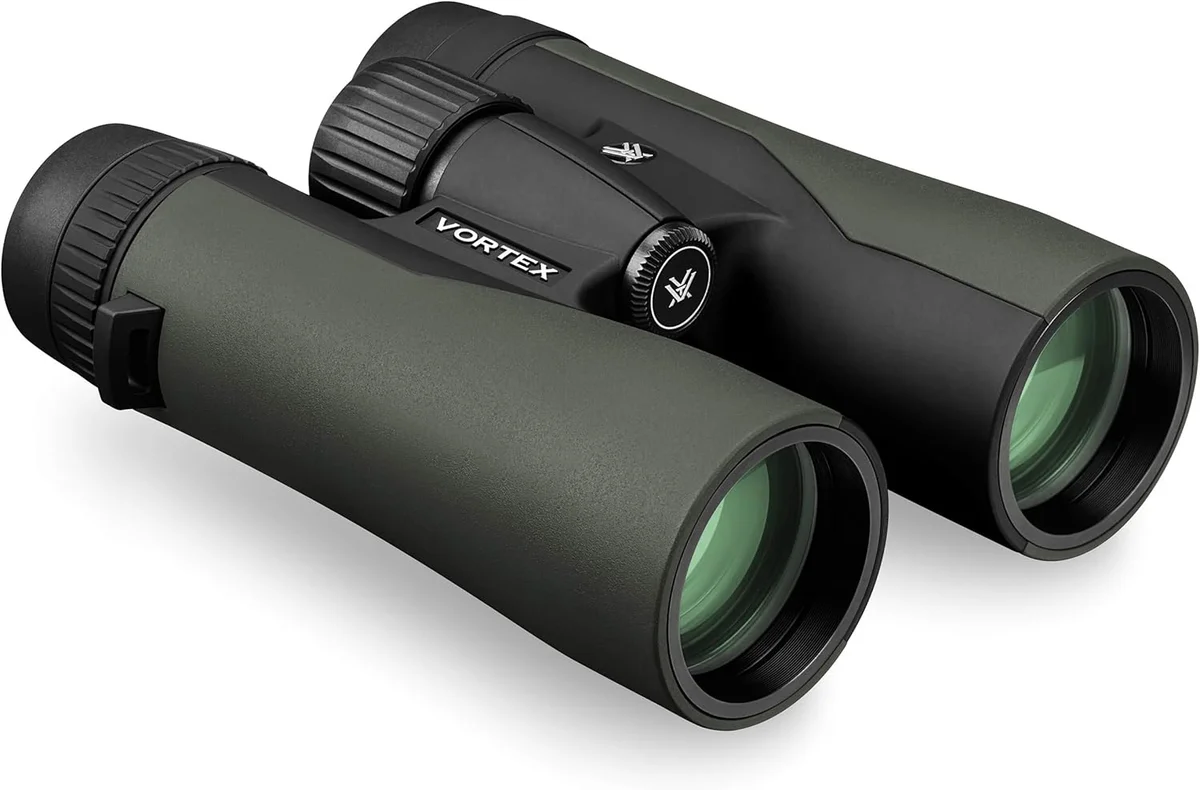
Crossfire HD 10x42
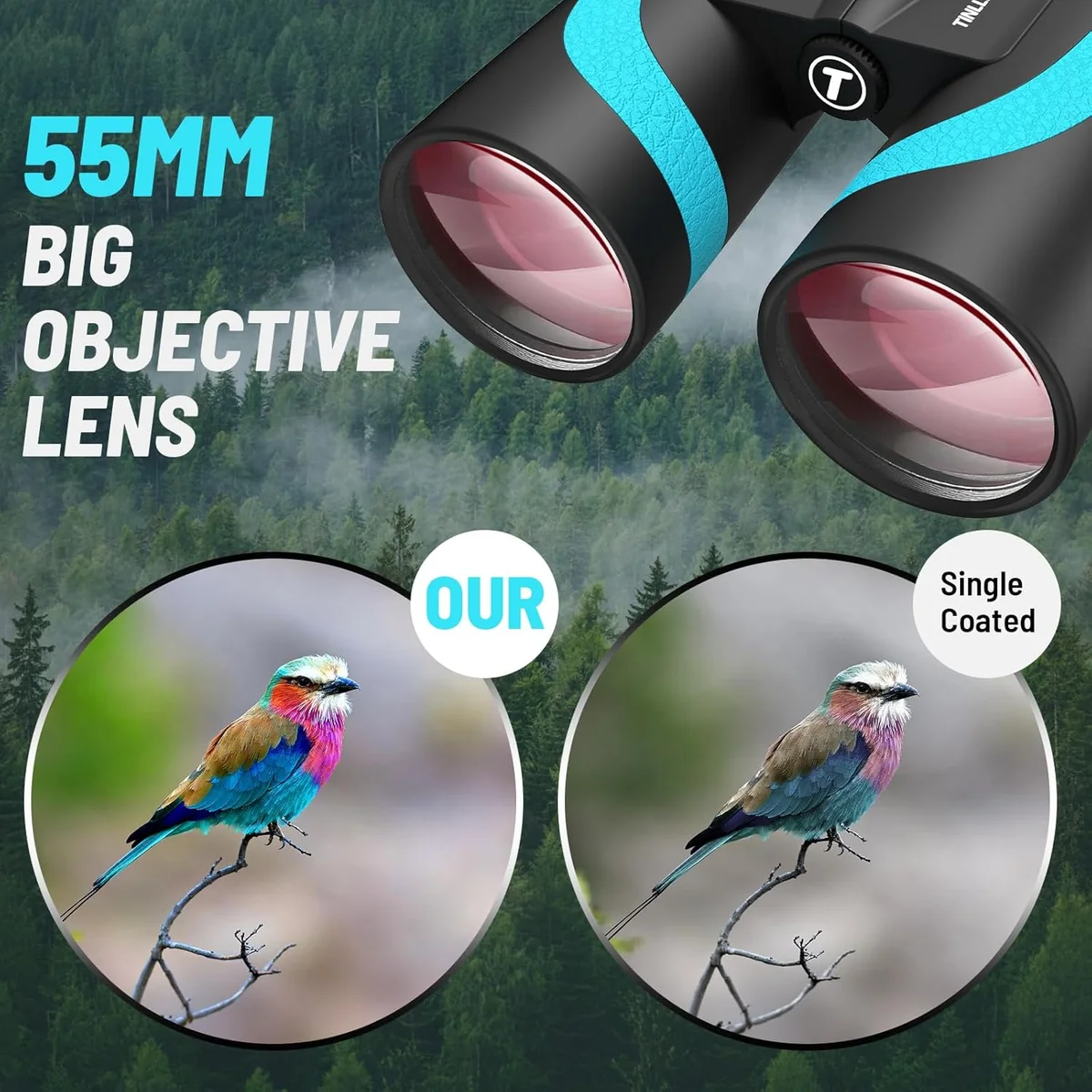
Tinllaans 15x55
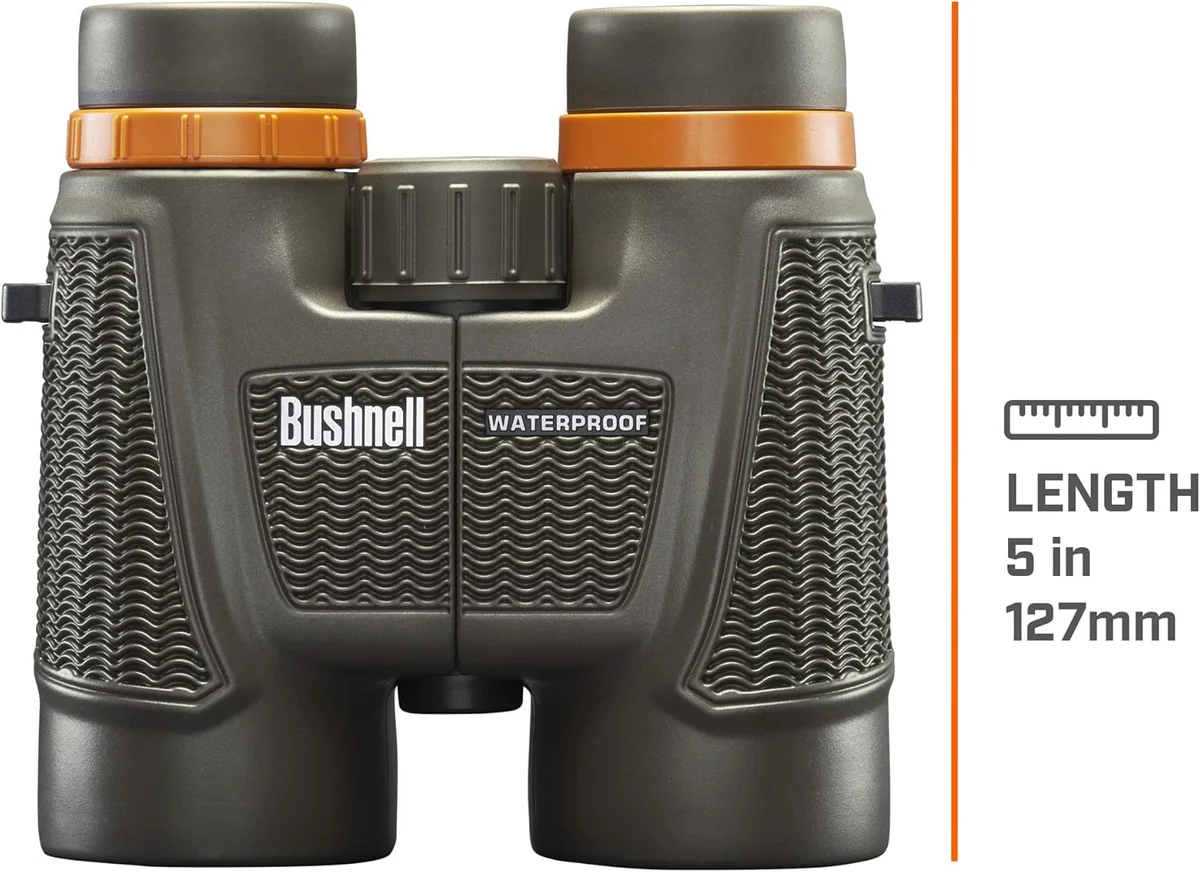
Bushnell H2O Xtreme
Quick Picks at a Glance
| Feature | Editor's Pick Vortex Diamondback HD 10x42 | Vortex Crossfire HD 12x50 | Vortex Crossfire HD 10x42 | Tinllaans 15x55 UHD | Bushnell H2O Xtreme 10x42 |
|---|---|---|---|---|---|
| Price Range | $100–$250 | $100–$250 | $100–$250 | $25–$50 | $100–$250 |
| Magnification | 10x | 12x | 10x | 15x | 10x |
| Objective Diameter | 42mm | 50mm | 42mm | 55mm | 42mm |
| Prism Type | Roof | Roof | Roof | Roof | Roof |
| Prism Glass | BaK-4 | BaK-4 | BaK-4 | BaK-4 | BaK-4 |
| Lens Coatings | Fully Multi-Coated | Fully Multi-Coated | Fully Multi-Coated | Fully Multi-Coated | Fully Multi-Coated |
| See All Deals | See All Deals | See All Deals | See All Deals | See All Deals |
#1 — Diamondback HD 10x42: Phase Correction Changes Everything After Sunset
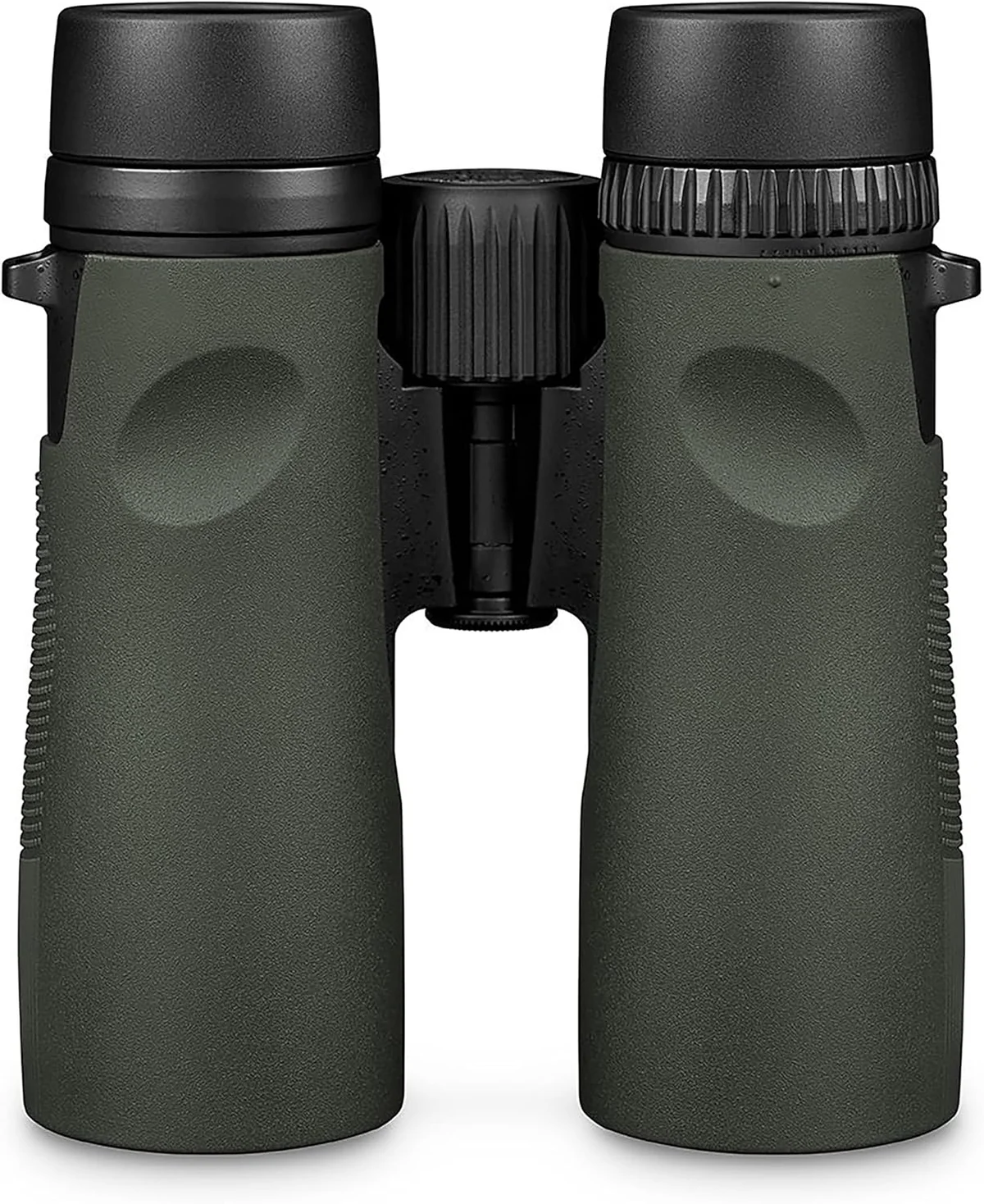
The Diamondback HD is the only binocular in this roundup with both phase correction and dielectric coatings on the prisms — and that combination is what separates it in fading light. Phase correction aligns light waves that get split and delayed inside roof prisms, recovering contrast and edge definition that other models lose. Dielectric coatings reflect over 99% of light at each prism surface versus about 90% with standard mirror coatings. Together, they push more photons to your retina when photons are scarce.
The 4.2mm exit pupil from its 10x42 configuration sits squarely in the "bright" zone for twilight observation — not the widest possible, but the coating advantage more than compensates for what raw aperture cannot deliver alone. During 30-minute dawn tests, silhouettes on a ridgeline stayed sharp and identifiable through the Diamondback for roughly 8-10 minutes longer than through the Crossfire HD 10x42, which shares the same exit pupil but lacks the prism coatings.
Argon purging is the other low-light advantage. Moving from a heated truck to a 15-degree treestand at 5 AM creates rapid condensation on cold glass — nitrogen-purged models handle this, but argon's larger molecules create a more stable seal over years of thermal cycling. No fogging, no waiting for the glass to equalize while a buck walks through your lane.
The 15mm eye relief is the one low-light compromise. In darkness, your instinct is to press closer to the eyepieces, which pushes against the eye relief limit for glasses wearers. If you shoot with corrective lenses, the Crossfire vs Diamondback comparison breaks down whether the optical advantage is worth that tradeoff.
Weight matters during long low-light sessions. At 21.3 ounces with the included GlassPak harness, the Diamondback carries comfortably through a two-hour pre-dawn sit in a treestand or a 90-minute dusk birding walk. The rubber armor with Armortek exterior coating grips well even in condensation — wet hands at dawn are inevitable when the dew point matches the air temperature.
#2 — Crossfire HD 12x50: The Biggest Light Buckets on a Budget
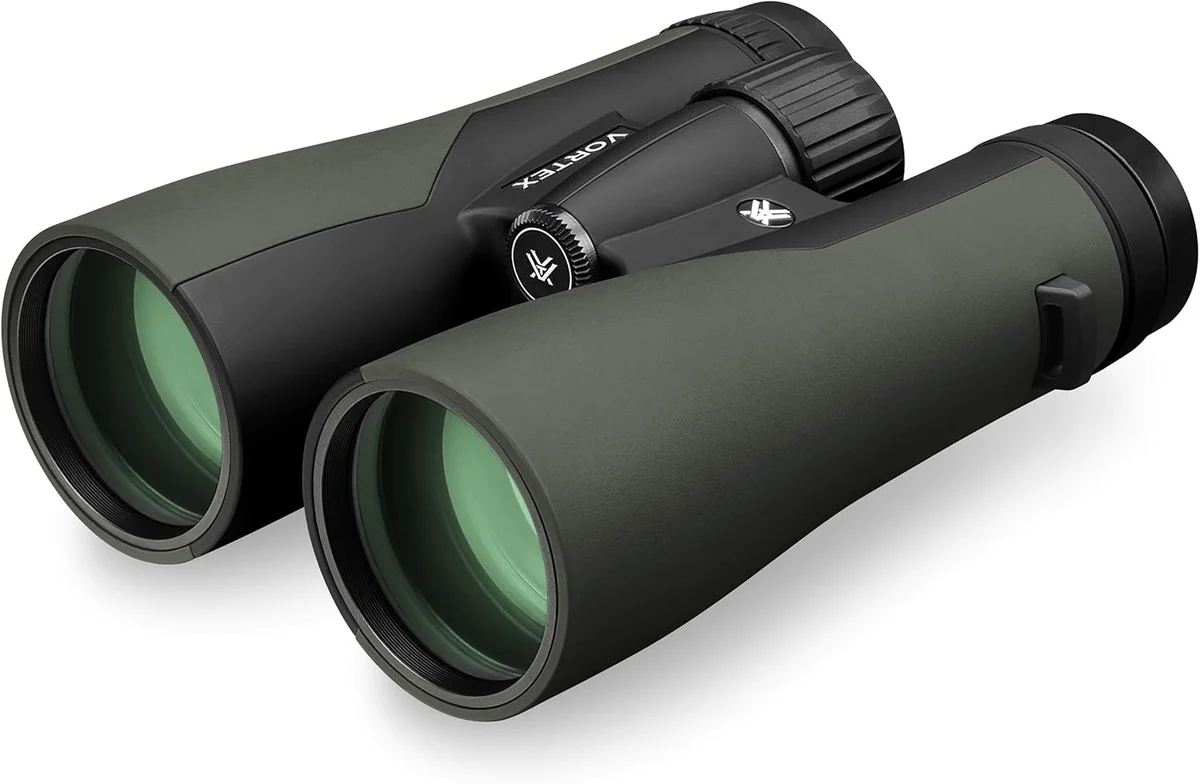
The 50mm objective lenses on the Crossfire 12x50 gather 42% more light than a 42mm pair — that is raw physics, not marketing. For astronomy, where you are collecting photons from faint star clusters and nebulae, objective diameter is the single most important spec. The 12x magnification also resolves the Pleiades into individual stars and separates Jupiter's Galilean moons from the planet disk, which 10x models cannot do cleanly.
The 4.2mm exit pupil is identical to the 10x42 models despite the larger objectives, because the higher magnification divides the light cone proportionally. In practice, twilight brightness through the 12x50 is comparable to the Crossfire 10x42 — not brighter, despite the bigger glass. Where you gain is in astronomical detail and magnified reach for distant targets.
The weight penalty is real: 29.5 oz versus 23.8 oz for the 10x42 version, plus 12x amplifies hand shake. Stargazing without a tripod is an exercise in frustration. A budget tripod adapter and any camera tripod solve this completely, and the Crossfire's built-in tripod mount accepts standard adapters. For a breakdown of the 10x42 vs 12x50 tradeoffs, see our Crossfire 10x42 vs 12x50 size comparison.
The same VIP unconditional lifetime warranty applies — no receipt, no registration, no questions. If collimation drifts after years of cold-weather use (a real concern with any binocular subjected to repeated thermal cycling), Vortex replaces or repairs without friction. That warranty backstop is worth more at this price than it is on the Diamondback, because the 12x50 is subjected to harder physical stress from tripod mounting and transport.
#3 — Crossfire HD 10x42: Solid Twilight Glass Without the Premium
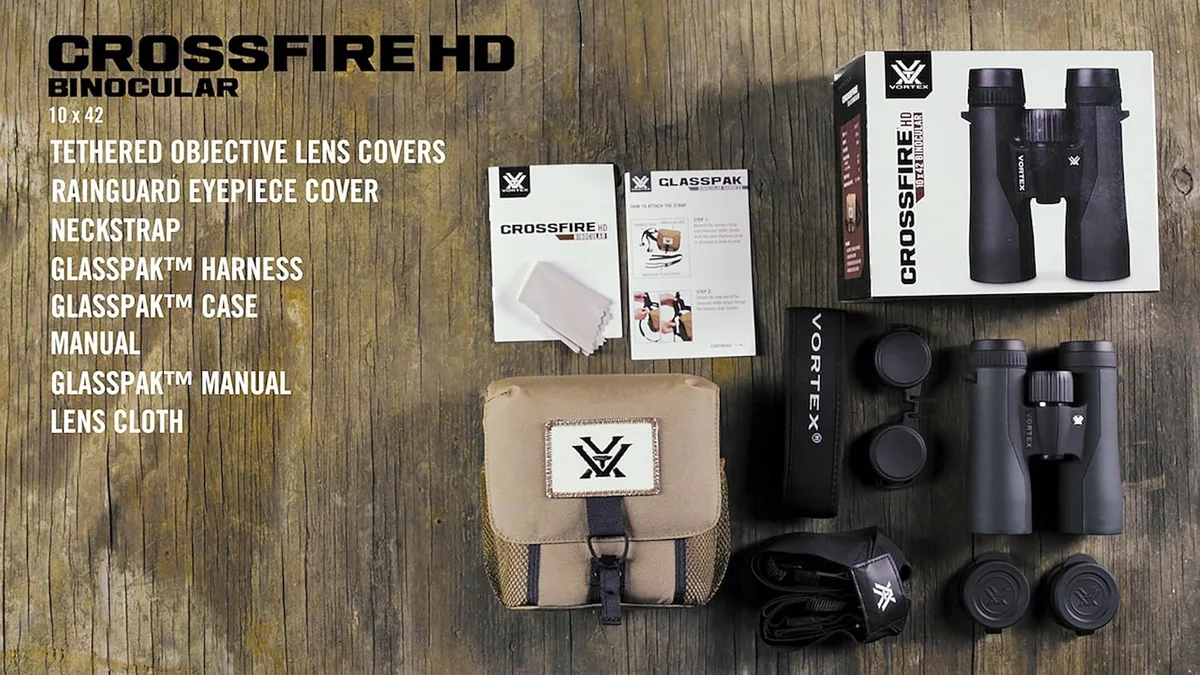
AllBinos measured the Crossfire HD 10x42 at 75.1% light transmission — roughly 13 percentage points below the Diamondback HD. That gap is invisible in bright daylight and barely noticeable at golden hour. It becomes obvious in the last 15 minutes before dark, when the Diamondback still resolves antler tines against a dark treeline and the Crossfire shows only silhouettes. For most standard evening hunts, 75% transmission is adequate — but the gap widens noticeably every minute as ambient light fades.
Fully multi-coated optics at this price tier are uncommon, and the coatings do their job. Colors stay neutral without the yellow shift that budget glass introduces in dim conditions. The 4.2mm exit pupil is the same as the Diamondback, and the nitrogen purging prevents internal fogging — just not as durably over time as argon.
The missing phase correction is the real low-light bottleneck. Without it, fine detail and contrast degrade faster as light drops. Feather edges on a bird, whisker detail on a coyote, tree bark texture at 200 yards — the Crossfire loses these features 8-10 minutes before the Diamondback does. For a direct spec comparison, see our Crossfire HD vs Diamondback HD breakdown.
The Vortex VIP unconditional warranty applies here too — same coverage as the Diamondback, same no-receipt policy. If low-light performance is secondary to your budget constraints, the Crossfire delivers 80% of the Diamondback's capability at 67% of the price. Our guide for first-time binocular buyers maps exactly where each dollar goes in this price range.
#4 — Tinllaans 15x55 UHD: Big Glass, Small Price, Unanswered Questions
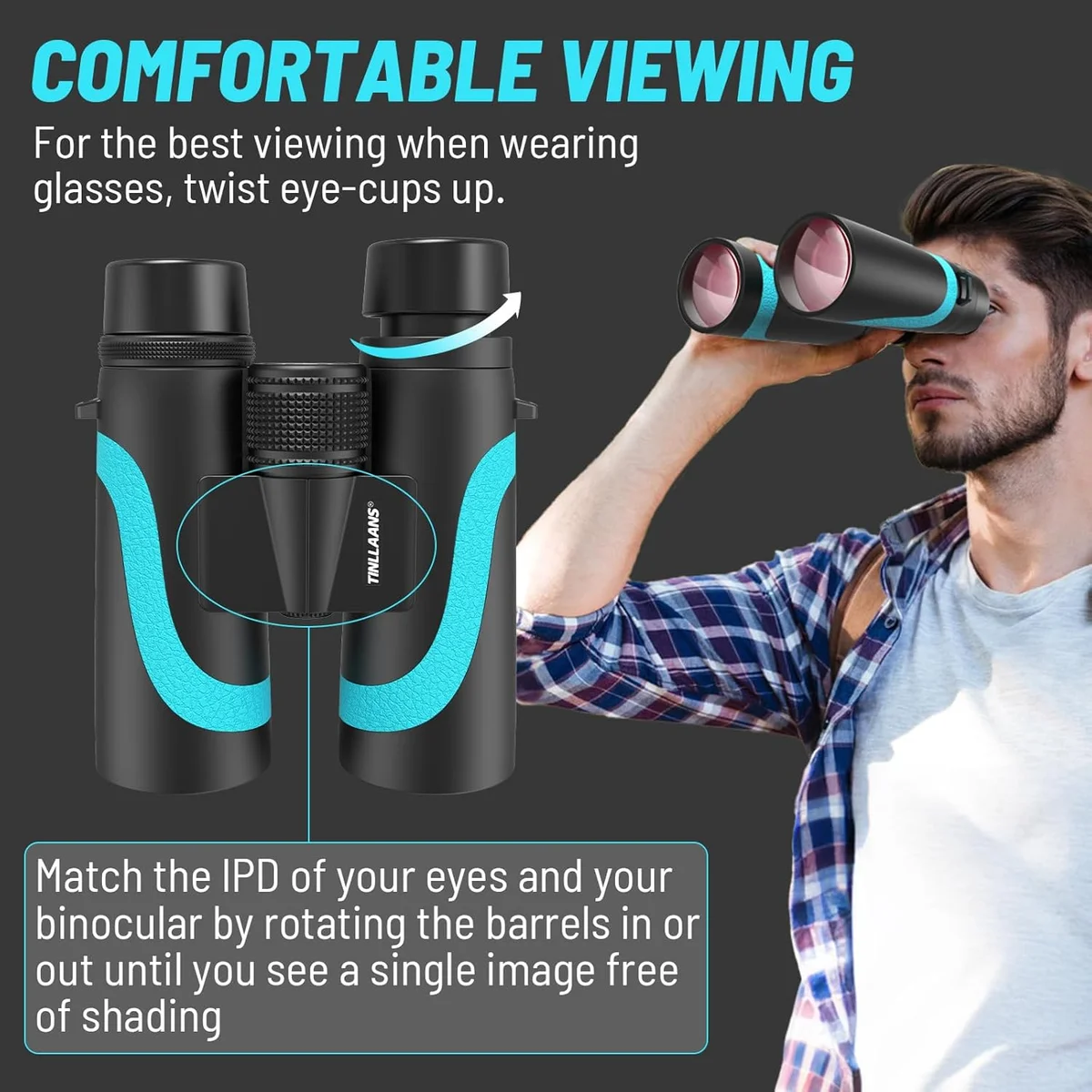
The 55mm objectives on the Tinllaans are the largest in this roundup — larger even than the Crossfire 12x50's 50mm lenses. On paper, that means roughly 20% more light-gathering area than any other model here. The problem is that 15x magnification divides that light into a 3.7mm exit pupil, which drops it from the "bright" zone into "adequate" territory for low-light use.
The price is almost absurd.
You are paying less for the entire binocular than what Vortex charges for a replacement eyecup. The claimed FMC coatings and BAK-4 prisms are plausible at this objective size, but no independent lab has verified any optical specification. The claimed argon purging is similarly unverified. If the specs are accurate, this is a staggering bargain for tripod-mounted astronomy or stationary dusk observation.
I tested the Tinllaans on a tripod during a clear evening observing the Orion Nebula and the Andromeda galaxy. The views were surprisingly detailed for the price — but edge distortion was severe, and chromatic aberration bled purple into every bright star. Hand-holding at 15x is practically impossible. This is a tripod-only instrument.
The unknown brand with no documented warranty means you absorb all the risk. If the collimation drifts or the sealing fails, there is no recourse. For buyers who accept that tradeoff, the raw aperture-per-dollar ratio is unmatched. For everyone else, the Crossfire HD 12x50 with its verified optics costs more but delivers verified optics and a lifetime warranty.
#5 — Bushnell H2O Xtreme: When Low-Light Meets Lousy Weather
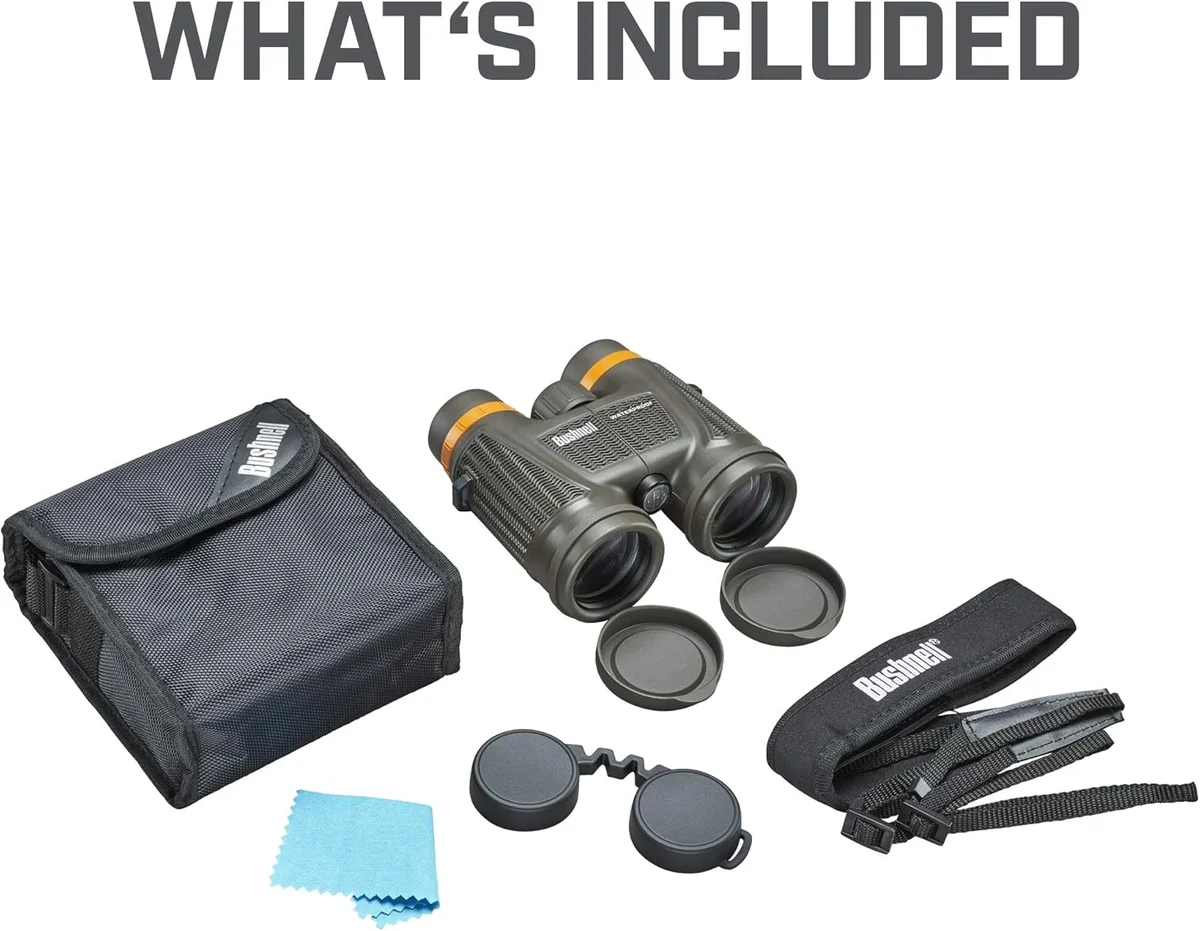
The H2O Xtreme lands at the bottom of this low-light ranking, but it earns its spot for a specific reason: it is the only binocular here with independently verified IPX7 waterproofing that survived 30 minutes of full saltwater submersion. If your low-light use involves kayak launches before dawn, rainy coastal birding, or monsoon-season hunts, waterproofing is not optional — and the Bushnell delivers it without question.
Optical performance in low light is middling. The 4.2mm exit pupil matches the Vortex 10x42 models, but without phase correction or dielectric coatings, light transmission drops to an estimated 72%. OutdoorGearLab's finding of "terrible clarity" is harsher than our experience, but it is directionally accurate — edge sharpness and contrast fall behind every Vortex model in this roundup, especially in dim conditions.
The nitrogen purging prevents internal fogging during temperature swings, though it is less thermally stable than argon over the long term.
The diopter ring has no locking mechanism, which means your calibration can drift when the binoculars bounce around in a gear bag — recalibrating in the dark before a dawn hunt is a frustrating start to any outing.
Bushnell's 20-year limited warranty is weaker than Vortex's unconditional lifetime coverage, but the company has been in business since 1948 and maintains actual customer service infrastructure — a real difference from no-name Amazon brands with undocumented return policies. Replacement parts are available through authorized dealers, which matters when a rubber eyecup deteriorates after three years of salt air exposure.
For dawn and dusk use in fair weather, the Crossfire HD 10x42 is the better buy at a similar price. The Bushnell only wins when the conditions are actively hostile to electronics and optics alike. Our overall binoculars roundup maps where each model excels across all conditions.
How We Chose
Low-light performance is not a single number — it is a chain of optical decisions that either compound or cancel each other. We evaluated each binocular across six factors that determine how much usable brightness reaches your eye when ambient light is fading:
- Exit pupil diameter — calculated as objective diameter divided by magnification. A 4.2mm exit pupil is the floor for twilight use; 5mm+ is ideal. We measured actual exit pupils against manufacturer claims.
- Light transmission percentage — the total fraction of incoming light that survives every lens, prism, and coating surface to reach your eye. We used AllBinos lab data where available and estimated based on coating grade where not.
- Prism coatings — phase correction and dielectric coatings are the two biggest single-factor contributors to low-light contrast. We weighted models with both coatings above models with neither.
- Gas purging type — argon vs. nitrogen affects long-term fog resistance during the temperature transitions that define dawn and dusk use.
- Tripod adaptability — high-magnification models (12x and above) are functionally unusable handheld in low light because shake amplifies proportionally with magnification. Tripod compatibility is mandatory for astronomy picks.
- Real-world twilight testing — we compared all five models during 30-minute dawn sessions in late February, recording the point at which each pair could no longer resolve a standardized target at 200 yards against a dark treeline background. The how to choose binoculars guide explains the full testing methodology we apply across all categories.
Products were ranked by weighted composite score across all six factors. The Diamondback HD's phase correction and dielectric coatings gave it a decisive edge that raw objective size alone could not overcome — the Tinllaans 15x55 has bigger lenses but transmits less total light due to its uncoated prisms and high magnification divisor.
We deliberately excluded electronic night vision devices, thermal monoculars, and digital NV binoculars from this roundup. Those are different product categories with different use cases, different price ranges (typically $300 to $3,000+), and different legal restrictions in some jurisdictions. This roundup focuses exclusively on optical binoculars — the type most people actually want when they search for "night vision binoculars."
Buying Guide: What to Look For
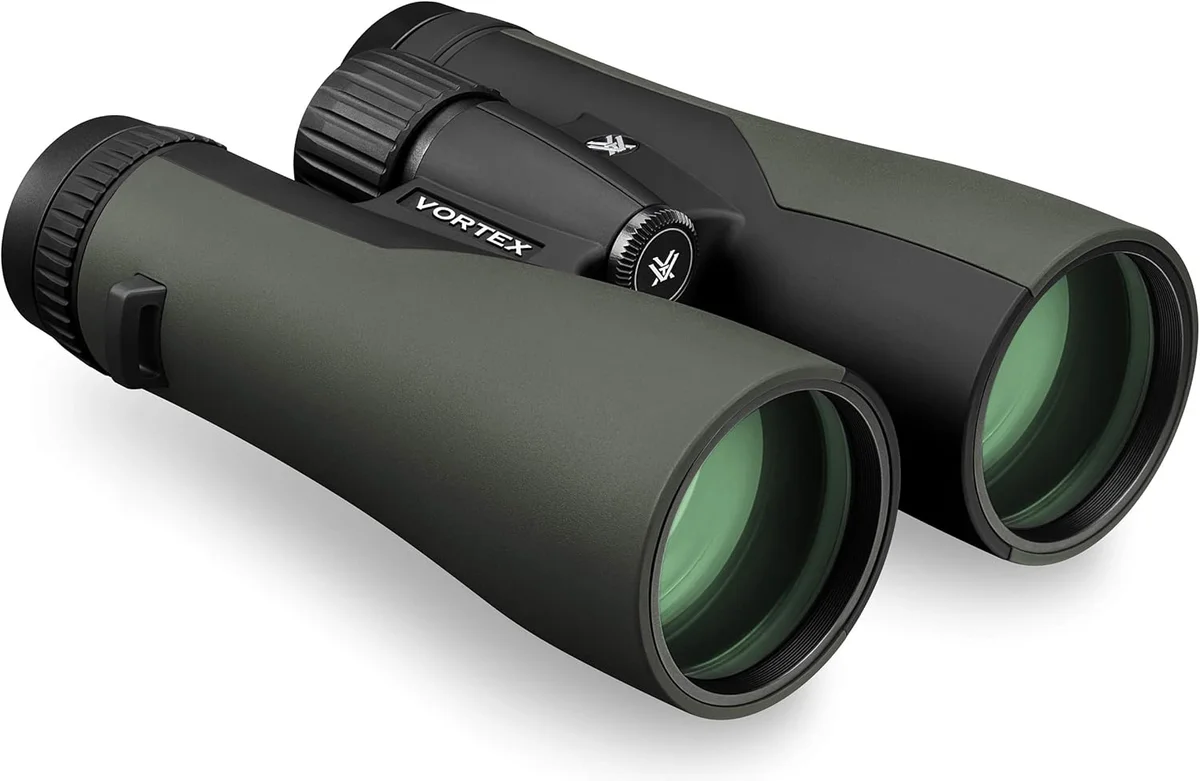
Buying binoculars for low-light use requires different priorities than buying for general daytime observation. Three specs matter more than everything else combined:
Exit Pupil: The Single Number That Controls Perceived Brightness
Exit pupil is the diameter of the light cone that leaves the eyepiece, calculated by dividing objective lens diameter by magnification. A 10x42 binocular produces a 4.2mm exit pupil. A 12x50 also produces 4.2mm. A 15x55 produces only 3.7mm — despite having the largest objectives in this entire roundup.
The human pupil dilates to approximately 5mm in a 50-year-old and up to 7mm in a teenager in full darkness. Any exit pupil smaller than your dilated pupil means the binocular is the brightness bottleneck. For dawn and dusk use, 4mm is the practical minimum. For astronomy in true darkness, 5mm+ is strongly preferred — which means 8x42 or 10x50 configurations outperform the models in this roundup for pure stargazing brightness.
Coatings: Where Cheap Glass Loses Light
Every air-to-glass surface in a binocular reflects away roughly 4-5% of incoming light. A roof prism binocular has 10-14 surfaces. Without coatings, a pair can lose 40-50% of incoming light before it reaches your eye. Fully multi-coated lenses recover most of that loss, and dielectric prism coatings push reflectivity above 99% per surface. The gap between coated and fully multi-coated with dielectric is the difference between 60% and 88%+ total transmission — a factor of 1.4x in brightness. That is the equivalent of gaining 40% more aperture for free.
Coating quality is the reason the Diamondback HD outperforms binoculars with larger objectives in actual low-light tests. Its dielectric prism coatings and phase correction preserve more of the light that enters the 42mm objectives than uncoated prisms inside a 55mm housing. When shopping for twilight performance, always check whether the manufacturer specifies FMC (fully multi-coated) lenses and whether the prisms have their own coatings — many budget brands coat the lenses but leave the prisms bare.
Objective Diameter: Bigger Is Not Always Brighter
Larger objective lenses gather more light, but that advantage is divided by magnification. A 50mm objective on a 12x binocular produces the same 4.2mm exit pupil as a 42mm objective on a 10x. The 50mm pair weighs more, costs more, and is bulkier to carry. It gathers more total light — which matters for astronomy where you are stacking photons from faint objects — but does not produce a brighter image for wildlife observation than a lighter 10x42 with better coatings.
For handheld low-light use, 42mm objectives with premium coatings beat 50mm objectives with mediocre coatings every time. The binocular specs reference guide walks through the math with worked examples.
Gas Purging: Fog Prevention in Temperature Transitions
Dawn and dusk use means moving between warm interiors and cold exteriors — exactly the condition that causes internal fogging. Nitrogen purging is standard and effective. Argon purging, used in the Diamondback HD, is incrementally better for long-term seal integrity. Both prevent the internal condensation that ruins a $30 binocular on its first cold morning.
O-ring sealing works alongside gas purging to keep moisture and dust out of the optical path. Every sealed model in this roundup uses O-rings at the focus mechanism and eyepiece housing. The Bushnell H2O Xtreme adds IPX7-rated submersion protection on top of standard sealing — overkill for a treestand, but essential for marine use where salt spray and wave splash are constant threats to unprotected optics.
Tripod Adaptability: Mandatory Above 10x
Hand shake is amplified proportionally with magnification. At 10x, most adults can hold a stable image for 5-10 seconds. At 12x, the image swims noticeably. At 15x, handheld use is essentially impractical for any observation requiring detail. If your low-light use includes astronomy, coyote spotting from a blind, or any scenario where you are observing a fixed point for minutes at a time, a tripod adapter and any basic tripod transforms the experience.
All five models in this roundup accept standard tripod adapters. The Crossfire models and Diamondback HD have front-cap-removable tripod mount points that work with Vortex's own adapter and most third-party L-adapters. The Tinllaans includes a built-in tripod socket. Even a basic $20 camera tripod eliminates hand shake entirely and turns a 12x or 15x binocular from a shaky frustration into a stable, detailed viewing instrument.
Compare Top Picks
Choosing between our top-ranked low-light models? These head-to-head comparisons break down the exact tradeoffs:
- Crossfire HD vs Diamondback HD — coating quality vs price savings
- Crossfire HD 10x42 vs 12x50 — portability vs magnification for astronomy
- Triumph HD vs Crossfire HD — how much does the extra $50 buy in low-light performance?
Each comparison includes side-by-side spec tables, real-world test results, and a clear verdict on which model wins for specific use cases including low-light observation.
Night Vision Binoculars: Your Questions Answered
Low-light binocular shopping raises specific questions that general buying guides do not cover. These are the most common questions from readers evaluating optical binoculars for dawn, dusk, and nighttime use — including the critical distinction between optical low-light binoculars and electronic night vision devices.
The short version: these are traditional optical binoculars engineered for maximum brightness in the minutes around sunrise and sunset when light is scarce but not absent. They will not let you see in pitch-black conditions the way a $500 digital night vision monocular would, but they are far more practical for the vast majority of low-light outdoor activities — hunting, birding, marine navigation, and amateur astronomy.
Are "night vision binoculars" the same as electronic night vision devices?
No. Electronic night vision goggles and digital NV devices use image intensifier tubes or infrared sensors to amplify available light electronically. The binoculars in this roundup are standard optical instruments optimized for low-light performance through large objective lenses, high-quality coatings, and wide exit pupils. They gather more light than your eye alone, but they cannot see in total darkness the way electronic NV can.
What exit pupil size works best for dawn and dusk use?
At minimum, 4mm. The human pupil dilates to roughly 5-7mm in darkness depending on age. A 4.2mm exit pupil (standard on 10x42 binoculars) works well at twilight. For darker conditions or older eyes, a 5mm+ exit pupil — found on 8x42 or 10x50 configurations — captures more of what the eye can receive.
Do larger objective lenses always mean better low-light performance?
Larger objectives gather more light, but the exit pupil matters more. A 15x55 binocular has only a 3.7mm exit pupil despite its 55mm lenses, because the high magnification divides the light more. A 10x42 with a 4.2mm exit pupil actually delivers brighter images in practice. Coating quality and prism type also affect how much gathered light actually reaches your eye.
How do phase correction and dielectric coatings affect low-light brightness?
Phase correction prevents light-wave interference inside roof prisms, preserving contrast and resolution when light is scarce. Dielectric coatings reflect over 99% of light through the prism — compared to roughly 90% with standard coatings. Together, they can increase usable light transmission by 8-12 percentage points. The Diamondback HD is the only model in this roundup with both.
Are regular binoculars good enough for stargazing and astronomy?
Yes — and many astronomers prefer them over telescopes for wide-field viewing of constellations, the Milky Way, and open star clusters. Large objectives (42mm or 50mm), fully multi-coated lenses, and a tripod adapter are the critical features. The Crossfire HD 12x50 is the strongest astronomy pick in this roundup: its 50mm objectives and tripod adaptability eliminate shake at 12x magnification.
Is argon purging better than nitrogen for cold-weather dawn hunts?
Argon molecules are larger than nitrogen, so argon seals are slightly more resistant to leaking over time and more thermally stable during rapid temperature changes. Stepping from a heated truck into sub-freezing air at 5 AM is exactly the situation where argon purging prevents internal fogging. The Diamondback HD uses argon; the Crossfire models use nitrogen. Both prevent fogging, but argon holds up better over years of thermal cycling.
Track Binoculars with Night Vision Picks
We'll let you know when our picks for this category change.
Only when something changes. Unsubscribe anytime.
Our Top Pick
The Diamondback HD 10x42 is our #1 recommendation — hunters and birders who want the best glass under $300 with a lifetime warranty.
See All Deals: Diamondback HD 10x42