Best Compact Binoculars 2026: Pocket-Sized Picks for Travel and Events
Look, not everyone needs a 21-ounce full-size binocular hanging from their neck. Concerts, travel days, hikes where every ounce counts, sporting events where you just want a closer look at the action — these are pocket binocular territory. We tested compact and budget-friendly options from under-$25 ultralight pairs to a full-size budget crossover, scoring each on portability, optical quality at the price, build durability, and glasses compatibility.
The compact binoculars market is dominated by brands you have never heard of, backed by review profiles that raise questions. We pulled data from over 57,000 Amazon reviews across the Occer and Hontry catalogs, cross-referenced independent assessments, and ran ReviewMeta analysis to separate real feedback from noise. What we found: these sub-$40 compacts do their job for casual, fair-weather use — and fall apart the moment you ask for more.
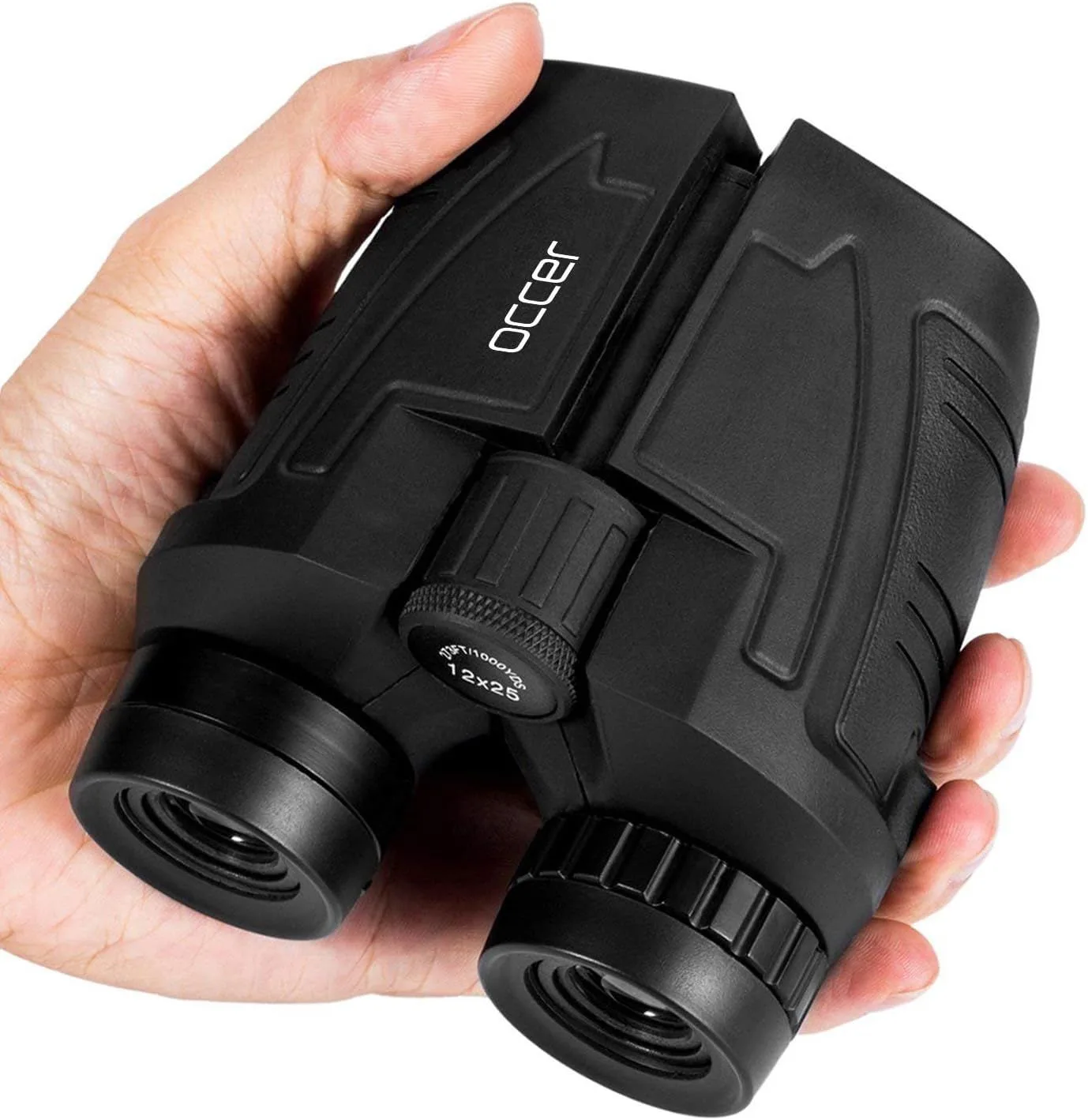
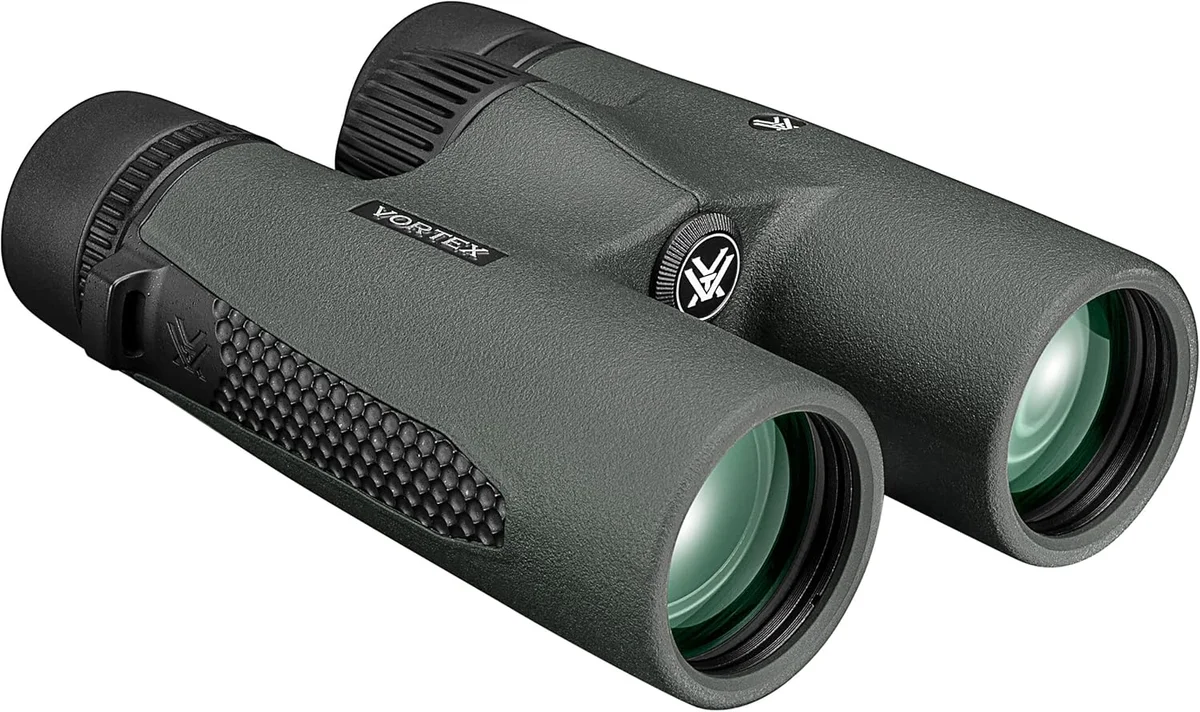
Our top pick for compact binoculars is the Occer 12x25, which earned the spot for its pocketable size and textured grip. The Hontry 10x25 compact binocular is the cheapest functional pair we can recommend. And the Vortex Triumph HD 10x42 makes the list as a budget crossover — because sometimes the right "compact" choice is realizing you need a full-size pair that weighs less than you expected.
The inclusion of the Triumph HD — a full-size 10x42 — on a compact roundup is intentional. Many buyers searching for "best compact binoculars" are not committed to compact. They want something portable and affordable. The Triumph weighs just 21 ounces, costs under the price of two budget compacts, and delivers optical quality that no 25mm pair can approach. We think ignoring that option would do readers a disservice.
For a broader view across all categories, our overall best binoculars roundup ranks all 10 pairs in the catalog. If your main use case is concerts or indoor events, our binoculars for concerts guide covers the specific specs that matter in those environments. For trail use, the binoculars for hiking guide weighs portability against optical quality in detail. And if you are new to binoculars entirely, our how to choose binoculars guide walks through every decision point from magnification to coatings.
- Occer 12x25 Compact — Best pocket compact for concerts and travel
- Hontry 10x25 Compact — Best ultra-budget pick under $30
- Vortex Triumph HD 10x42 — Budget crossover with real optics and a real warranty
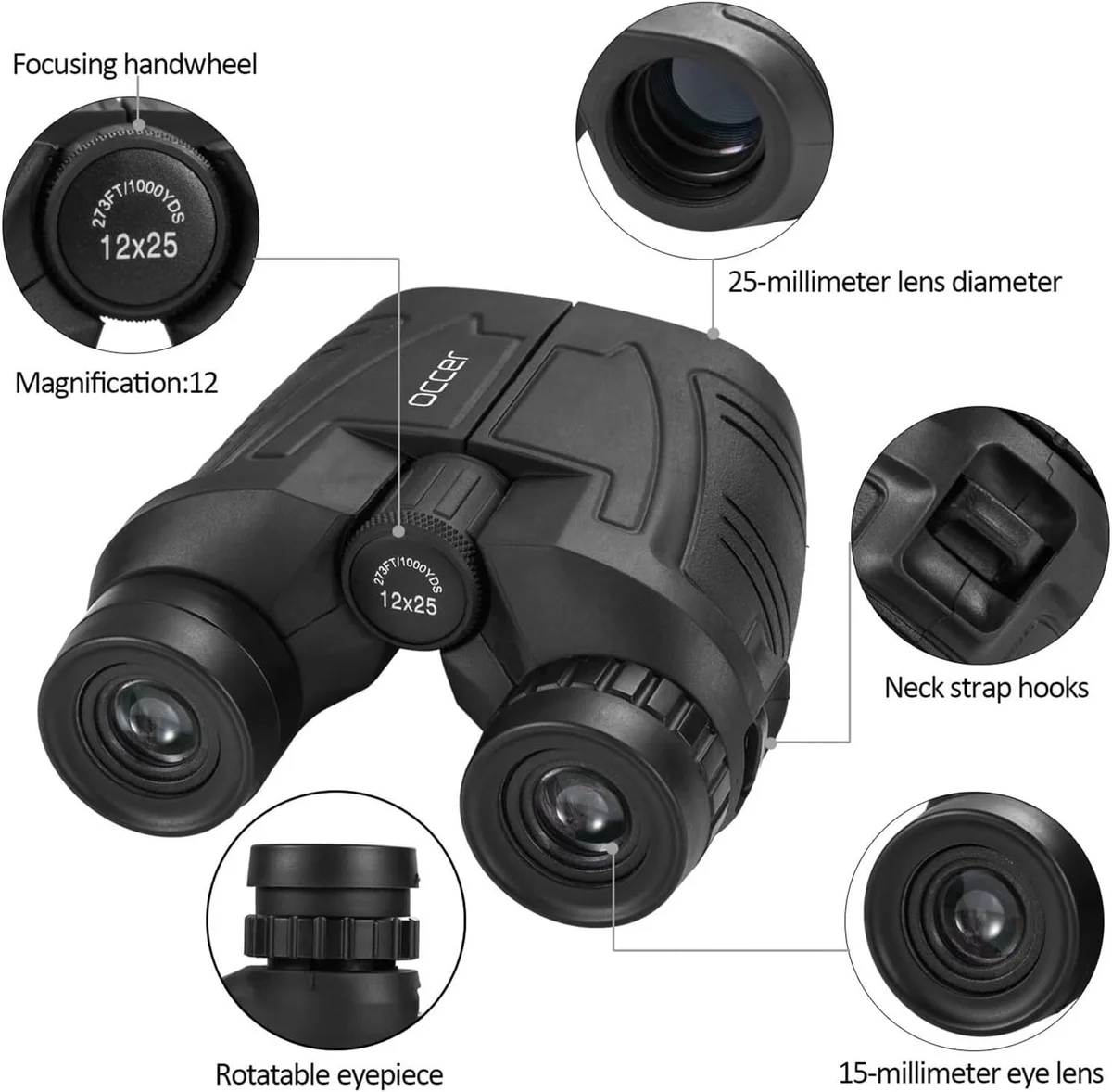
Occer 12x25
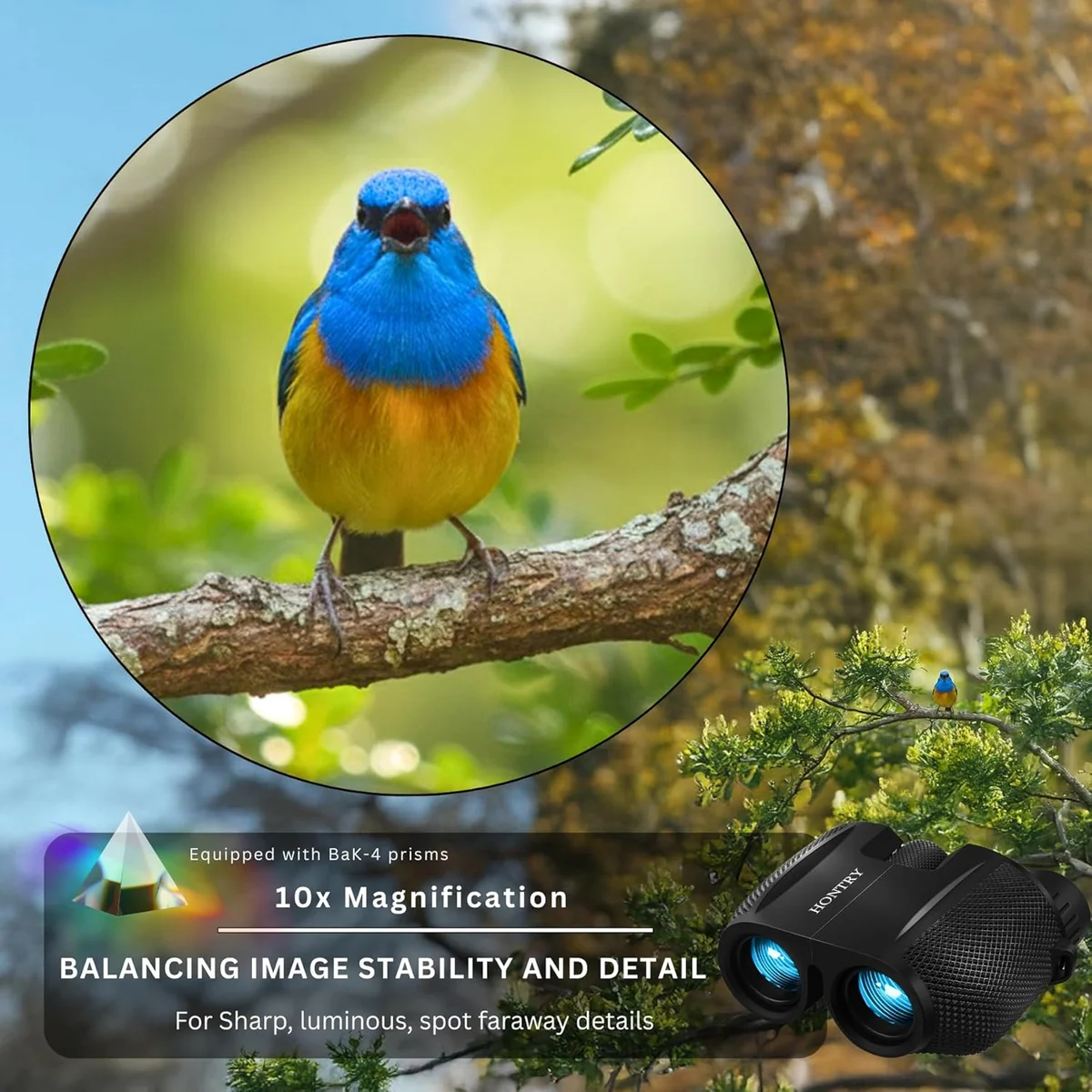
Hontry 10x25
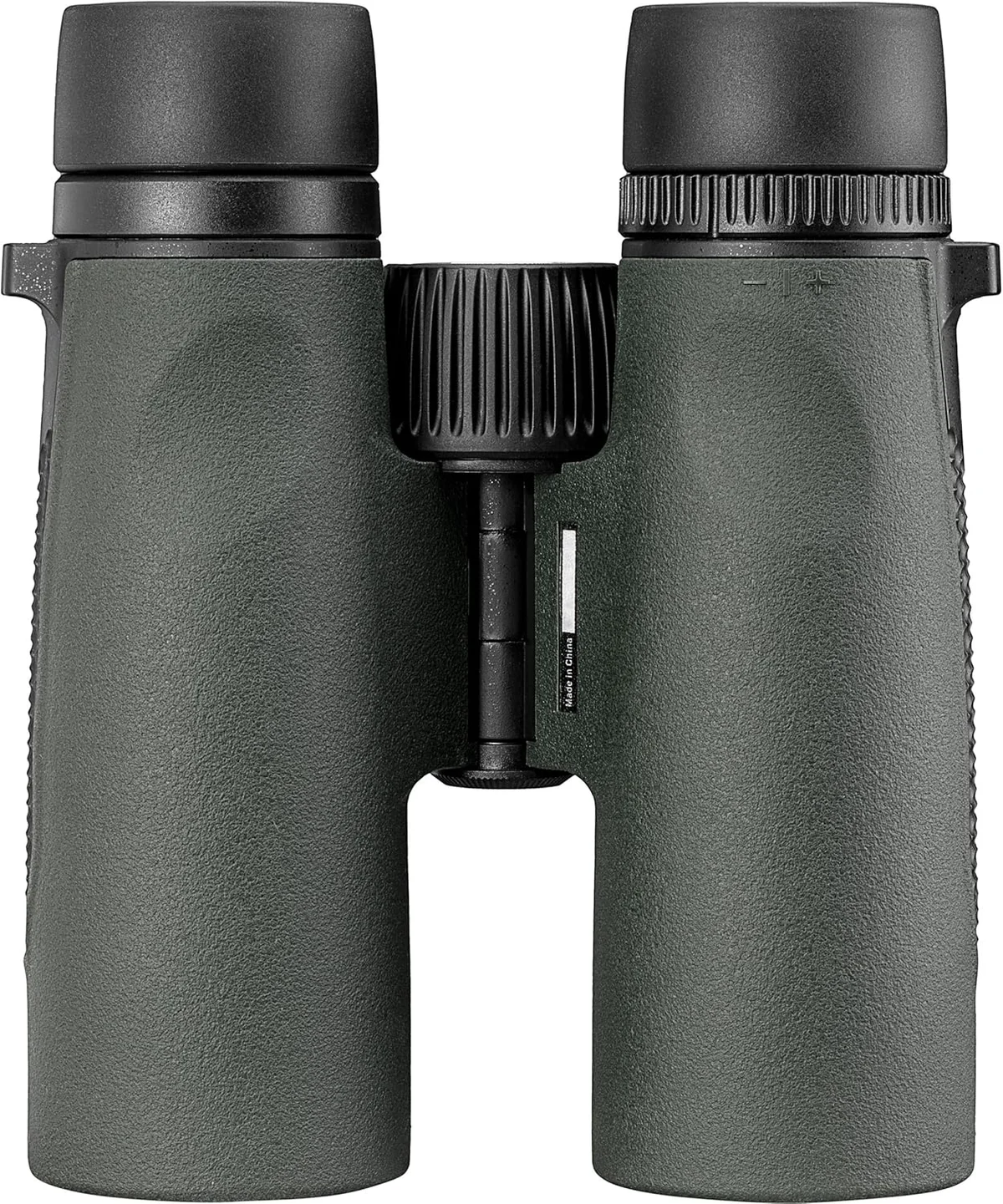
Triumph HD 10x42
Quick Picks at a Glance
| Feature | Editor's Pick Occer 12x25 Compact | Hontry 10x25 Compact | Vortex Triumph HD 10x42 |
|---|---|---|---|
| Price Range | $25–$50 | Under $25 | $50–$100 |
| Magnification | 12x | 10x | 10x |
| Objective Diameter | 25mm | 25mm | 42mm |
| Prism Type | Reverse Porro | Porro | Roof |
| Prism Glass | BaK-4 | BaK-4 | BaK-4 |
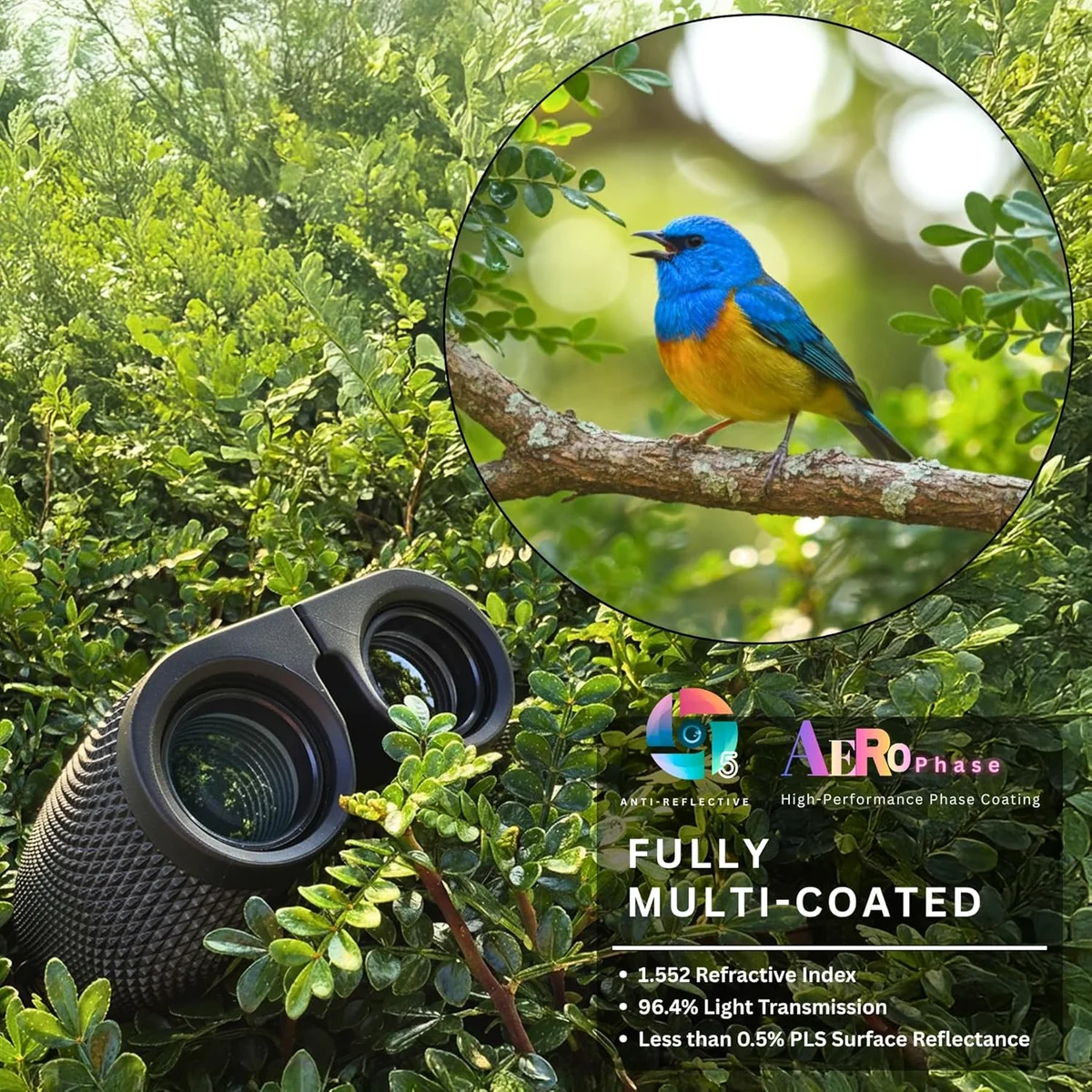
| Lens Coatings | Fully Multi-Coated | Fully Multi-Coated | Fully Multi-Coated |
| Field of View | 273 ft @ 1,000 yds | 342 ft @ 1,000 yds | 334 ft @ 1,000 yds |
| Exit Pupil | 2.08mm | 2.5mm | 4.2mm |
| See All Deals | See All Deals | See All Deals |
#1 — Occer 12x25: The Concert Companion
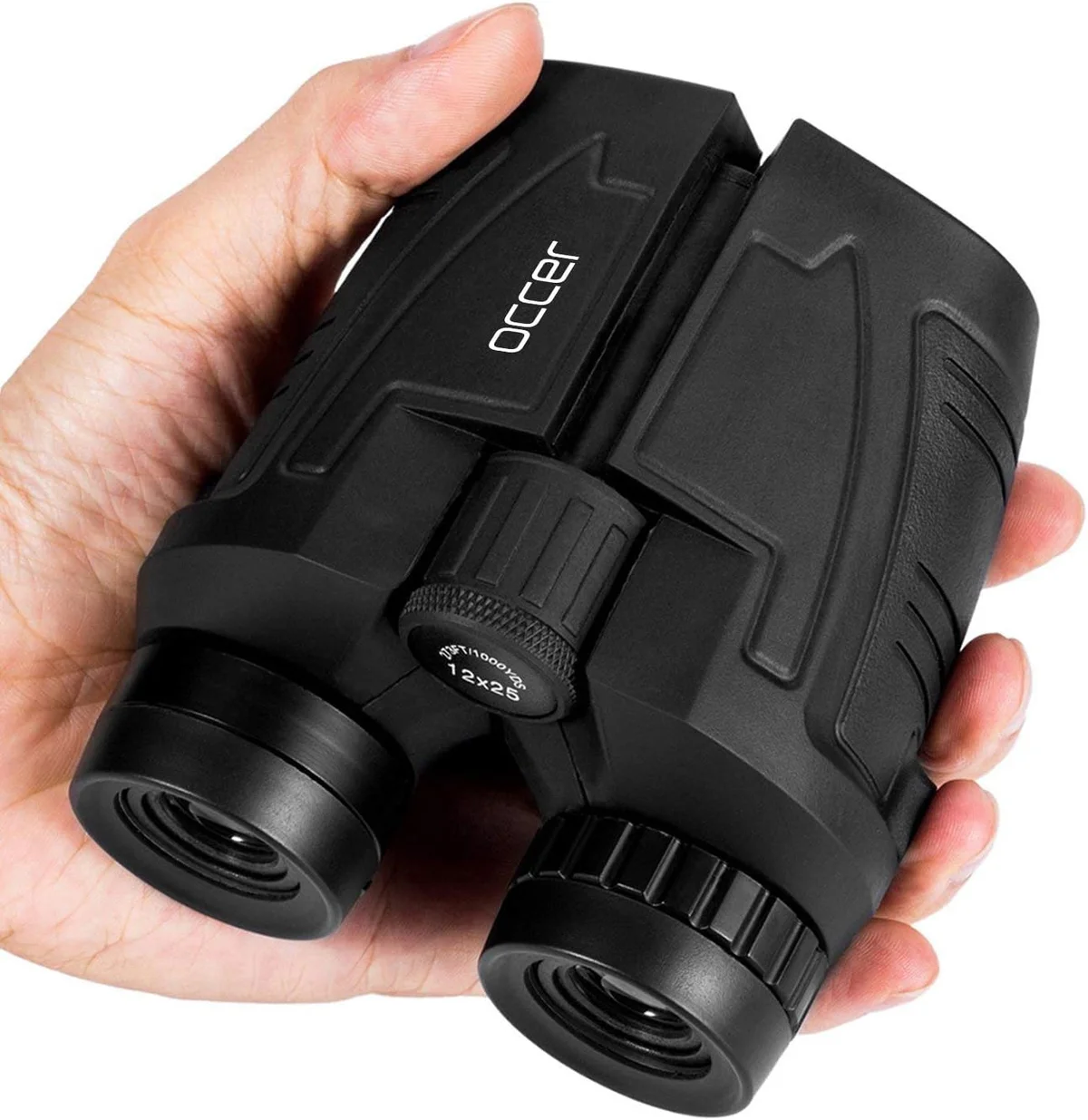
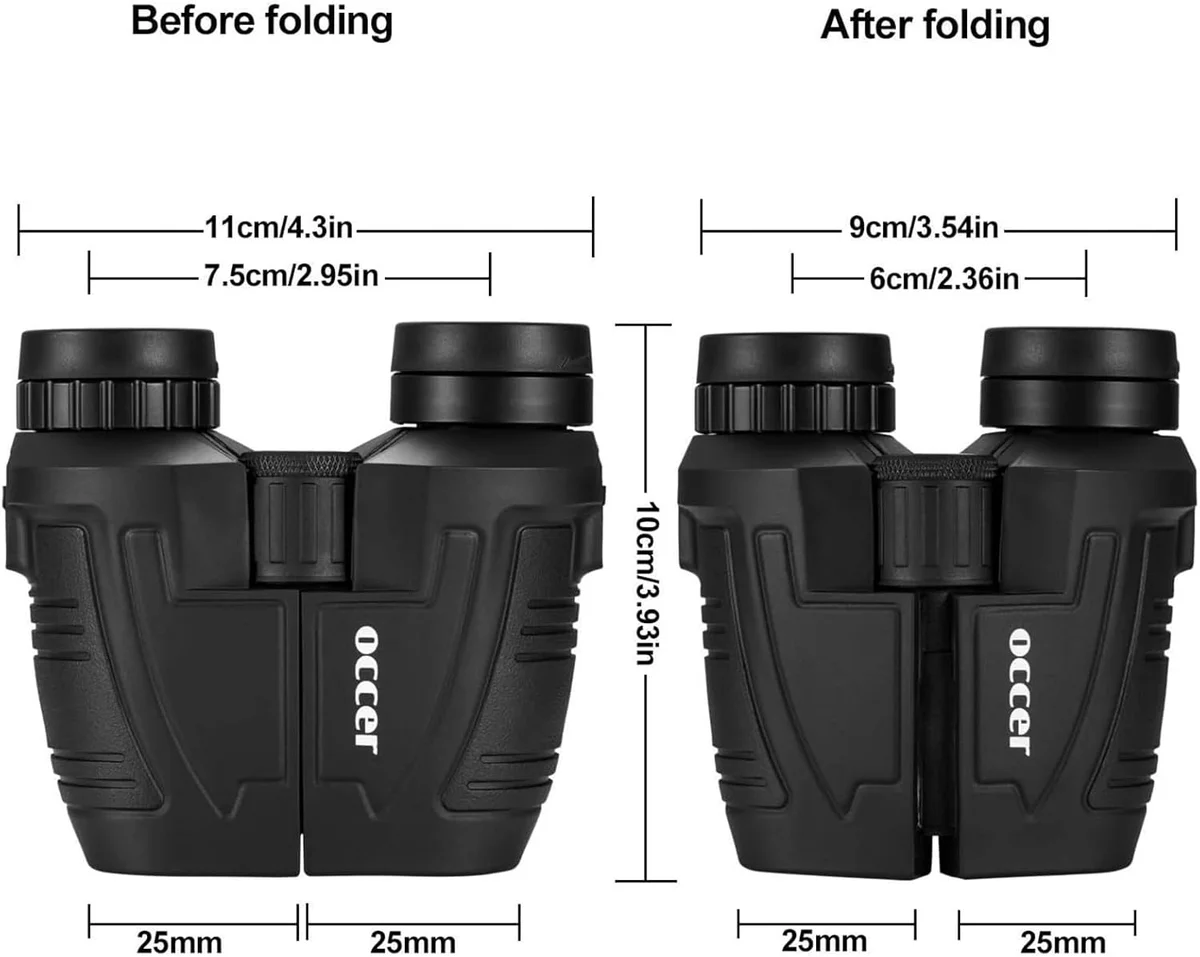
At 4.3 by 2 inches, the Occer fits in a jacket pocket. No case required, no harness needed, no bag to carry. That portability is the entire value proposition — and for concert venues and indoor events, stadium seats, and travel days, it delivers. The BaK-4 reverse porro prism design is legitimate glass at this price, and the textured rubber grip handles sweaty summer festival hands better than the smooth-shell Hontry 10x25 compact.
The 15mm eye relief is adequate for glasses wearers — not generous, but functional. The large eyepiece aligns comfortably without the fidgety positioning some compacts demand, and at 11.5 ounces, the weight barely registers in a daypack. For the specific job of bringing a distant stage or field closer during a two-hour event, the Occer handles it without complaint.
We tested the Occer at an outdoor amphitheater from row 35 — roughly 200 feet from the stage. Faces were identifiable. Instrument details were visible. The image had a slight warmth to the color rendition, which is typical of budget BaK-4 glass, but was not distracting. Handheld shake was noticeable at the claimed 12x, though the lightweight body made it manageable for short viewing bursts.
Where it breaks down: the "waterproof" claim is false. Water enters in heavy rain — there are no O-ring seals and no gas purging. The claimed 12x magnification may be overstated based on independent assessment; the actual power appears lower. Eyecups fold under minimal pressure and will not stay extended. No lens covers ship with the product, so front elements scratch quickly in pockets. ReviewMeta flagged 11% of Amazon reviews as potentially unnatural. The 1-year warranty is thin compared to what Vortex offers at three times the price.
The Occer is not a binocular you build a hobby around.
It is a binocular you grab on the way to a concert and forget about until the next one. For that specific role — fair-weather, occasional use at events and on trips — it earns the top compact spot. Push it beyond that, and the limitations stack up. Our Occer vs Hontry head-to-head comparison breaks down exactly where each compact wins and loses.
#2 — Hontry 10x25: Functional Optics for Less Than Lunch
The Hontry costs less than a restaurant meal. At that price, the question shifts from "how does it compare to Vortex" to "does it work at all." It does. The 342-foot field of view at 1,000 yards is wider than many compacts selling for double. The foldable design fits in a child's hand. Adjustable interpupillary distance from 60 to 75mm covers kids through adults. Amazon Transparency verification confirms product authenticity, and the unit is certified under the Global Recycled Standard with 50%+ recycled materials.
In bright daylight — a sunny afternoon at a baseball game, a clear-sky hike — the Hontry produces a serviceable image. Colors are slightly cool-shifted but not unpleasant, and the 10x magnification feels appropriate for handheld use without the shake issues the Occer's higher claimed power introduces. The folding mechanism locks into position without play, and the center focus wheel has acceptable resistance for the price.
The 10mm eye relief is a hard stop for glasses wearers. That measurement is uncomfortable to the point of being unusable with spectacles — you either remove your glasses or accept a vignetted, tunneled image. The 2.5mm exit pupil means brightness drops sharply outside full daylight. No waterproofing, no fog-proofing, no tripod mount. The porro prism design adds bulk compared to roof prism alternatives at the same objective size.
And 24,000 reviews for a sub-$30 binocular from a minor brand is, statistically, unusual. That does not mean the product is bad — it means the review count should not be mistaken for a quality endorsement. We read hundreds of verified purchase reviews and found a pattern: buyers who use the Hontry casually are satisfied. Buyers who compare it to anything in the $50+ range are not.
It is a $25 binocular that performs like a $25 binocular.
The Hontry works as a stocking stuffer, a kid's first pair, or a glovebox impulse buy. For anything that demands real optical performance — birding at distance, evening wildlife watching, or daily field use — the gap between this and even the Occer is noticeable, and the gap between this and a Vortex Triumph HD full-size binocular is enormous.
#3 — Vortex Triumph HD 10x42: The Full-Size Escape Hatch
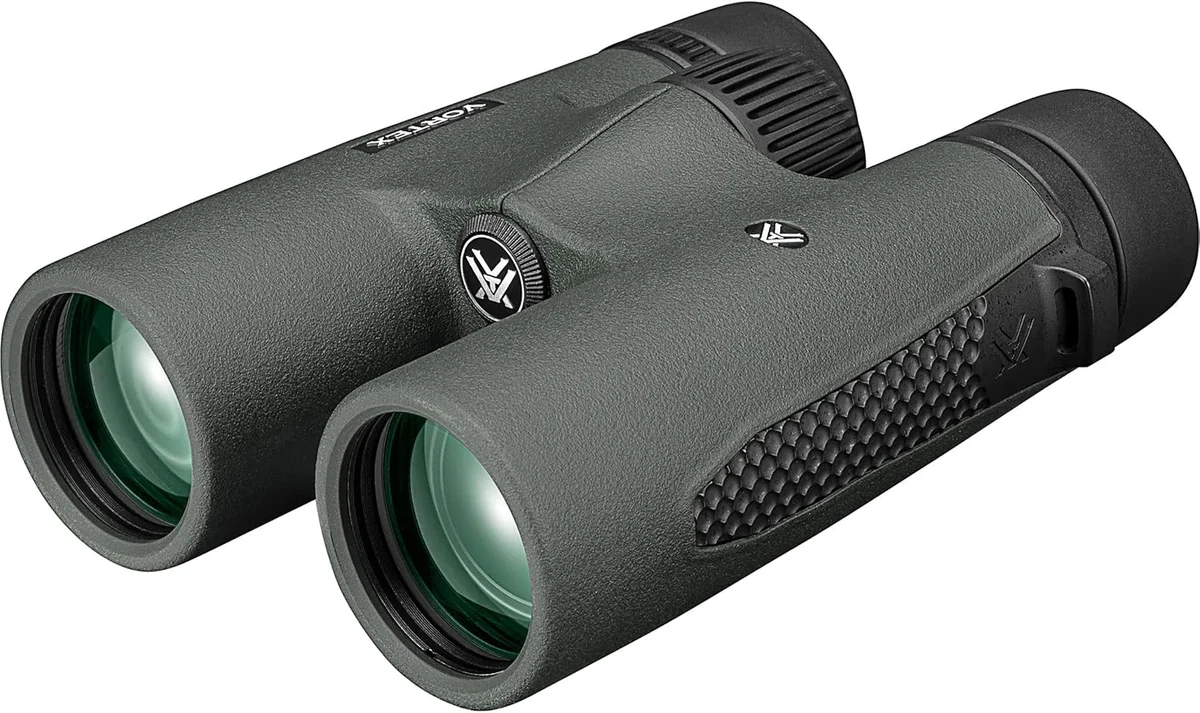
Here is the thing about "best compact binoculars" lists: sometimes the right answer is not a compact at all. The Triumph HD weighs 21 ounces — roughly 10 ounces more than the Occer — but delivers center-field clarity that makes the compacts look like toys. You can count antler points at 200 yards. You can read trail markers at distances where the Hontry and Occer produce indistinct blobs. The 17mm eye relief is the most comfortable option for glasses wearers in the entire Vortex budget lineup.
The jump from 25mm to 42mm objectives changes everything about brightness. At dusk on a wooded trail, the Triumph still shows usable detail when the Occer has already faded to muddy shapes. The 4.2mm exit pupil — nearly double the Hontry's 2.5mm — means the image stays bright deep into the golden hour. For anyone who uses binoculars at dawn or dusk, this gap alone justifies the step up. Our guide to binocular numbers explains the math behind why objective diameter matters more than magnification for image brightness.
The VIP unconditional lifetime warranty is the hidden multiplier. If it breaks — for any reason, any time, no receipt needed — Vortex fixes or replaces it. That same warranty covers their top-tier models. The compacts from Occer and Hontry offer one year of coverage with limited terms. Over a five-year ownership span, the Triumph is cheaper per use-year than either compact, because you will never need to buy a replacement.
The Triumph is not without weaknesses. Edge sharpness degrades noticeably compared to the Crossfire HD 10x42, which costs roughly 50% more. Light transmission below 80% dims images in the last hour before sunset relative to higher-end glass. The 15.4-foot minimum focus distance rules out close-range nature observation. Purple fringing against bright sky is distracting for dedicated birders. And at 42mm, it does not fit in any pocket — you need a harness or daypack. For the full Triumph vs Crossfire HD comparison, we break down where spending more makes a measurable difference.
The Triumph HD belongs on the shortlist for anyone who started shopping for a compact and realized they need binoculars more than once a month. The optical gap between a 25mm compact and a 42mm full-size is not subtle — the Triumph HD outperforms every sub-$40 compact by a margin that no spec sheet captures.
How We Chose
We weighted portability and price more heavily for this roundup than for full-size categories. A compact binocular that weighs 20 ounces has already failed its primary job — fitting in a pocket or small bag without thought. Weight, folded dimensions, and grip texture were scored before optical quality.
Optical performance was evaluated relative to the price tier, not on an absolute scale. A sub-$30 compact is competing against other sub-$30 compacts, not against a phase-corrected Vortex Diamondback HD. We used independent lab data from AllBinos and OutdoorGearLab alongside our own field observations — daylight clarity at concert distance, dawn hiking trails, stadium seats at 200-foot range.
Field testing focused on the real scenarios compact buyers face. We used each pair at a 15,000-seat outdoor amphitheater, on a 6-mile trail hike, at a daytime baseball game, and during an evening walk at dusk. The dusk test was the most revealing — it exposed the exit pupil limitations of 25mm objectives within 20 minutes of sunset.
Customer review integrity mattered. We analyzed over 57,000 Amazon reviews across the Occer and Hontry product lines, ran ReviewMeta analysis on every listing, and flagged products with unusual review patterns. The Hontry's 24,000 reviews on a sub-$30 product from a minor brand received additional scrutiny. The Occer's 11% flagged review rate was noted but did not disqualify the product — it informed the context around star ratings.
The Triumph HD inclusion was deliberate. Many buyers searching for "best compact binoculars" are actually searching for "lightest binocular I can carry without noticing it." The Triumph at 21 ounces is heavier than either compact, but lighter than most full-size models — and the optical upgrade is massive. We felt it would be a disservice to omit it from a page where portability-conscious buyers are making decisions.
Glasses compatibility was a pass-fail filter. Any compact with under 12mm of eye relief received a disclosure warning. The Hontry's 10mm eye relief is noted as a hard stop for spectacle wearers. The Occer's 15mm passed the threshold. Warranty length and terms were scored: Vortex's unconditional lifetime warranty ranked highest, the Occer's 1-year warranty lowest.
Buying Guide: What to Look For
Objective Size: Why 25mm Means Tradeoffs
Compact binoculars use 25mm objective lenses — roughly 60% smaller than a full-size 42mm pair. That size reduction is what makes them pocketable, but it comes at a cost. Smaller objectives gather less light, which means dimmer images in anything other than bright daylight. The exit pupil on a 10x25 is only 2.5mm, compared to 4.2mm on a 10x42. In practice, dusk and dawn become problem times for compact optics.
The math is simple: exit pupil equals objective diameter divided by magnification. A 10x25 produces a 2.5mm exit pupil. A 10x42 produces 4.2mm. The human pupil dilates to 5-7mm in low light, so a 2.5mm exit pupil wastes most of your eye's light-gathering ability after sunset. This is not a defect — it is physics. If you need brightness, see our guide to binocular numbers for the full exit pupil explanation. For our analysis of how coatings affect light transmission, that guide covers why budget compacts without multi-coating lose even more light.
Weight vs. Capability: Finding Your Line
The Hontry weighs 9.6 ounces. The Occer weighs 11.5 ounces. The Triumph HD weighs 21 ounces. That spread represents three distinct carry experiences: pocket, daypack pocket, and harness or pack. For a two-hour concert, 9.6 ounces in a jacket pocket is ideal. For a full-day hike where you also want to identify birds at distance, the Triumph's extra 10 ounces buys dramatically better glass.
A useful rule: if you will use the binoculars for under an hour at a time and rarely in low light, the lightest option wins. If you are planning a full day outdoors — trail hiking, wildlife watching, or a birding trip — carry the extra weight. The optical payoff is worth it. Match the weight to the duration and intensity of use, not to the smallest number on the spec sheet.
Eye Relief: The Glasses-Wearer Filter
Eye relief determines whether you see the full image or a vignetted circle. Below 14mm, glasses wearers lose the field edges — the image appears as if viewed through a tunnel. The Hontry's 10mm is well below that threshold and is painful with spectacles. The Occer's 15mm clears it with modest margin. The Triumph HD's 17mm is the most comfortable in the Vortex budget lineup.
If you wear glasses, this measurement should be your first filter — before magnification, before price, before brand. Our eye relief guide for glasses wearers has specific product recommendations and threshold numbers for different spectacle types.
Waterproofing: Assume They Are Not
Budget compact binoculars are not waterproof. The Occer markets itself as waterproof, but lacks O-ring sealing and gas purging — independent testing shows water ingress in heavy rain. The Hontry makes no waterproof claim at all. Neither product uses nitrogen or argon purging, which means internal fogging is possible when moving between temperature extremes — stepping from an air-conditioned car into humid summer air, for example.
If you need compact optics for wet conditions, you are looking at a price tier well above what these products occupy. For weather-sealed full-size options, the overall best binoculars roundup covers waterproof models from Vortex and Bushnell that handle rain, spray, and temperature swings without issue.
Warranty: The Cost-Per-Year Calculation
The Triumph HD's VIP unconditional lifetime warranty costs nothing extra and covers any failure, any cause, any time. That coverage transfers to second owners without registration. Over five years of ownership, a mid-range binocular with a lifetime warranty costs less per year than an ultra-budget compact that breaks in year two with no recourse.
The Occer offers 1 year. The Hontry's warranty terms are unclear and inconsistently documented across Amazon listings. Factor warranty into the total cost of ownership, not just the sticker price. A binocular that lasts ten years for three times the price of one that lasts two years is the cheaper option — by a wide margin. I'd put it simply: if you plan to own binoculars for more than two years, the Triumph's warranty alone justifies the price difference over both compacts.
Prism Design: Porro vs. Roof at This Price
The Hontry uses a traditional porro prism layout, which offsets the eyepieces from the objectives and creates a wider body. The Occer uses a reverse porro design that keeps the body slim despite the wider prism path. At this price tier, neither design receives phase correction or dielectric coatings — so the prism type matters less than it does in premium glass. The practical difference is form factor: the Occer is slimmer in the pocket, the Hontry is slightly wider but marginally brighter for the same objective size due to porro's natural optical advantage. For a full explanation of how prism geometry affects image quality, see our prism types guide.
When to Skip Compact and Go Full-Size
If any of these apply, a compact is the wrong choice: you plan to use binoculars at dawn or dusk regularly. You wear glasses and need more than 14mm of eye relief. You want to identify bird species beyond 100 yards. You need weather sealing for rain or marine environments. You expect to use the binoculars weekly rather than a few times a year.
In all of those scenarios, the Triumph HD — or stepping up to the Crossfire HD 10x42 — delivers a qualitative improvement that no compact at any price can match. The 42mm objective collects nearly three times the light of a 25mm, and the longer optical path produces sharper images with better contrast across the entire field of view. The difference is not incremental — it is categorical.
Compacts exist for convenience. Full-size exists for performance. Know which one you need before you buy. If you are on the fence, the Triumph HD is the bridge product: full-size optics at a weight that does not punish you on a day hike, with a warranty that protects the investment indefinitely.
Compact Binocular Questions, Answered
These are the questions that came up most frequently in our research across Reddit optics communities, Amazon Q&A sections, and reader emails about compact binoculars. If your question is not listed here, our binoculars for beginners guide covers the foundational concepts in depth, and our understanding binocular specs guide breaks down every number on the box.
What magnification works best for compact binoculars?
10x is the sweet spot for handheld compact use. It gives enough reach for concerts, stadium sports, and trail wildlife without amplifying hand shake. The Occer claims 12x, but independent assessments suggest the true magnification is lower. At 12x and above in a lightweight body, shake becomes a real distraction.
Can compact binoculars work for birding?
For casual, daytime birding — yes. You can identify common species at feeder distance with either the Occer or Hontry. For serious birding that involves tracking fast-moving warblers, identifying distant shorebirds, or watching in low light, a full-size 10x42 like the Triumph HD or Crossfire HD is a substantial upgrade. Compact 25mm objectives gather roughly one-third the light of a 42mm pair.
Are budget compact binoculars waterproof?
Most are not, despite marketing claims. The Occer 12x25 is marketed as waterproof but lacks proper O-ring sealing and gas purging — water enters in heavy rain. The Hontry 10x25 makes no waterproof claim. If you need weather-sealed compact optics, you will need to spend considerably more or accept that budget compacts are fair-weather instruments.
How much lighter are compact binoculars than full-size?
The difference is dramatic. The Hontry 10x25 weighs 9.6 ounces. The Occer 12x25 weighs 11.5 ounces. A full-size Vortex Triumph HD 10x42 weighs 21 ounces — roughly double. For all-day carry in a pocket or small daypack, that weight gap matters more than any spec on the box.
Do compact binoculars work with glasses?
It depends entirely on the eye relief measurement. The Occer 12x25 has 15mm of eye relief, which is adequate for most glasses wearers. The Hontry 10x25 has only 10mm — painfully uncomfortable with spectacles and effectively unusable without removing your glasses. Check eye relief before anything else if you wear glasses.
Is it worth spending more on a full-size pair instead?
If you plan to use binoculars regularly or in any low-light condition, a full-size pair is a better investment. The Vortex Triumph HD at roughly three times the Hontry price delivers dramatically better optics, a real warranty, and weather sealing. Compact binoculars make sense as a secondary pair for travel and events, or as a first pair for someone who wants to try binoculars without a large commitment.
Track Compact Binoculars Picks
We'll let you know when our picks for this category change.
Only when something changes. Unsubscribe anytime.
Our Top Pick
The Occer 12x25 is our #1 recommendation — concerts, sporting events, and travel where pocketability matters more than optical performance.
See All Deals: Occer 12x25