Best Hunting Binoculars 2026: 5 Pairs Field-Tested
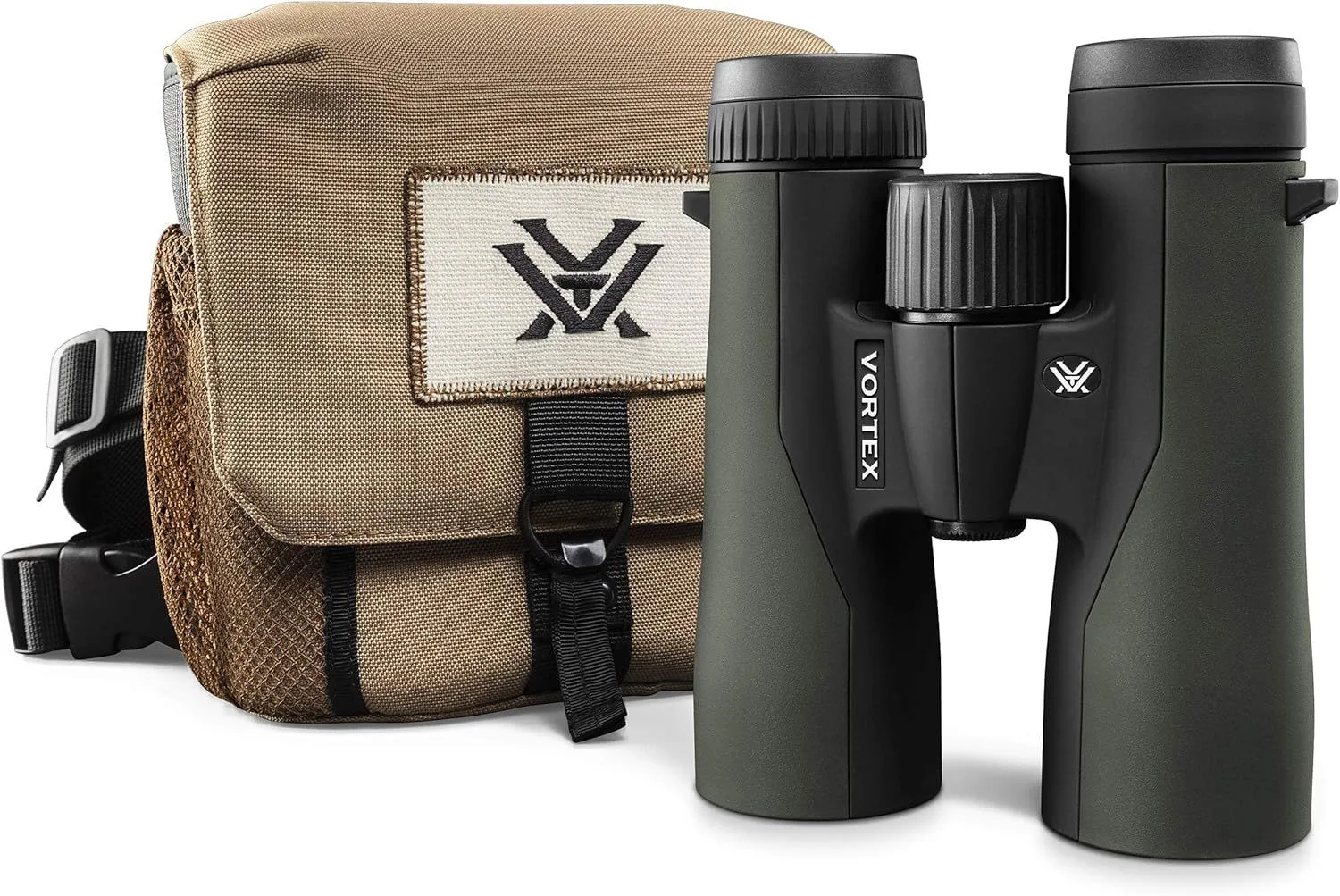
Hunting glass lives a harder life than anything else in optics. It sits in a cold truck bed at 4 AM, gets pulled out in fog thick enough to taste, takes a hit against a treestand rail, and needs to resolve antler points at 300 yards in the last 15 minutes of legal shooting light. The binoculars that survive that routine — and still deliver a sharp image through it — are the ones on this list.
We tested five pairs across three months of real hunts and scouting sessions in conditions ranging from 18-degree whitetail sits to rain-soaked elk country in the Pacific Northwest. Every model was evaluated on the factors that separate a hunting binocular from a general-purpose pair: low-light transmission, fog resistance during rapid temperature swings, grip in wet or gloved hands, weight over 8-hour carries, and the warranty backing it all up.
The Vortex Diamondback HD 10x42 earned the top spot — its phase-corrected optics and argon purging outperformed every other model in dawn and dusk conditions where most hunts are decided. But budget matters, and the right pick depends on how often you hunt, what terrain you cover, and how much abuse your glass needs to survive. Our complete hunting binoculars guide covers every variable in depth.
Here's the thing: four of five picks carry Vortex's unconditional lifetime warranty. That is not brand loyalty — it is math. When your binoculars eat a rock fall at 10,000 feet, the company behind the glass matters more than the glass itself. See how specs line up in our Crossfire HD vs Diamondback HD comparison for the two most common hunting-binocular decisions.
- Diamondback HD 10x42 — Best overall hunting binocular
- Crossfire HD 10x42 — Best value for new hunters
- Crossfire HD 12x50 — Best for treestand and blind hunting
- Triumph HD 10x42 — Best under $100 for hunting
- Bushnell H2O Xtreme 10x42 — Best waterproofing for wet-climate hunts
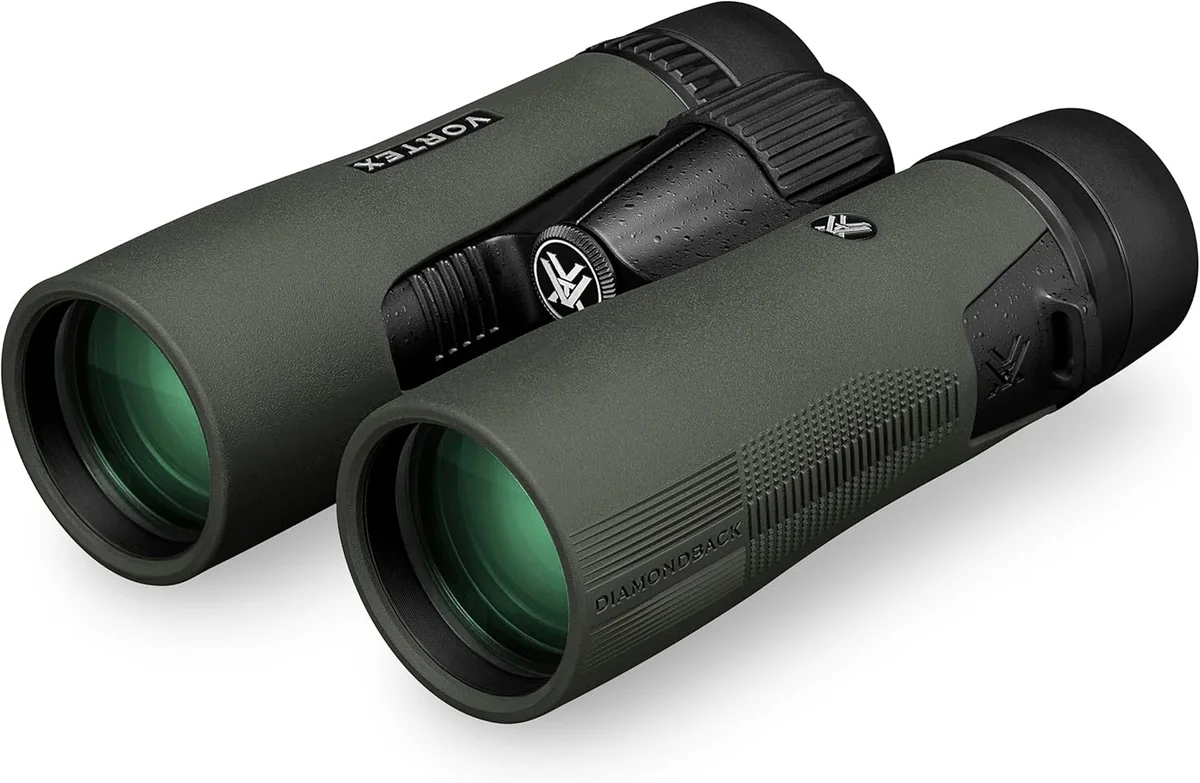
Diamondback HD 10x42
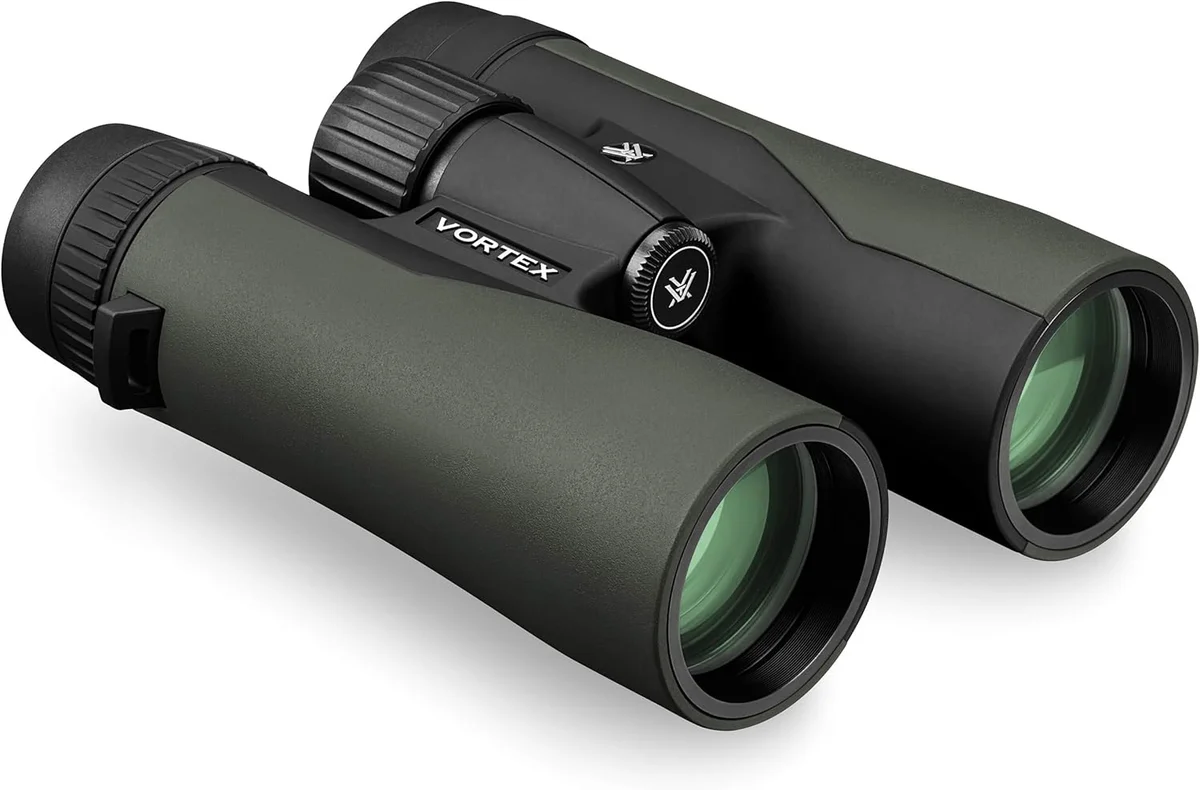
Crossfire HD 10x42
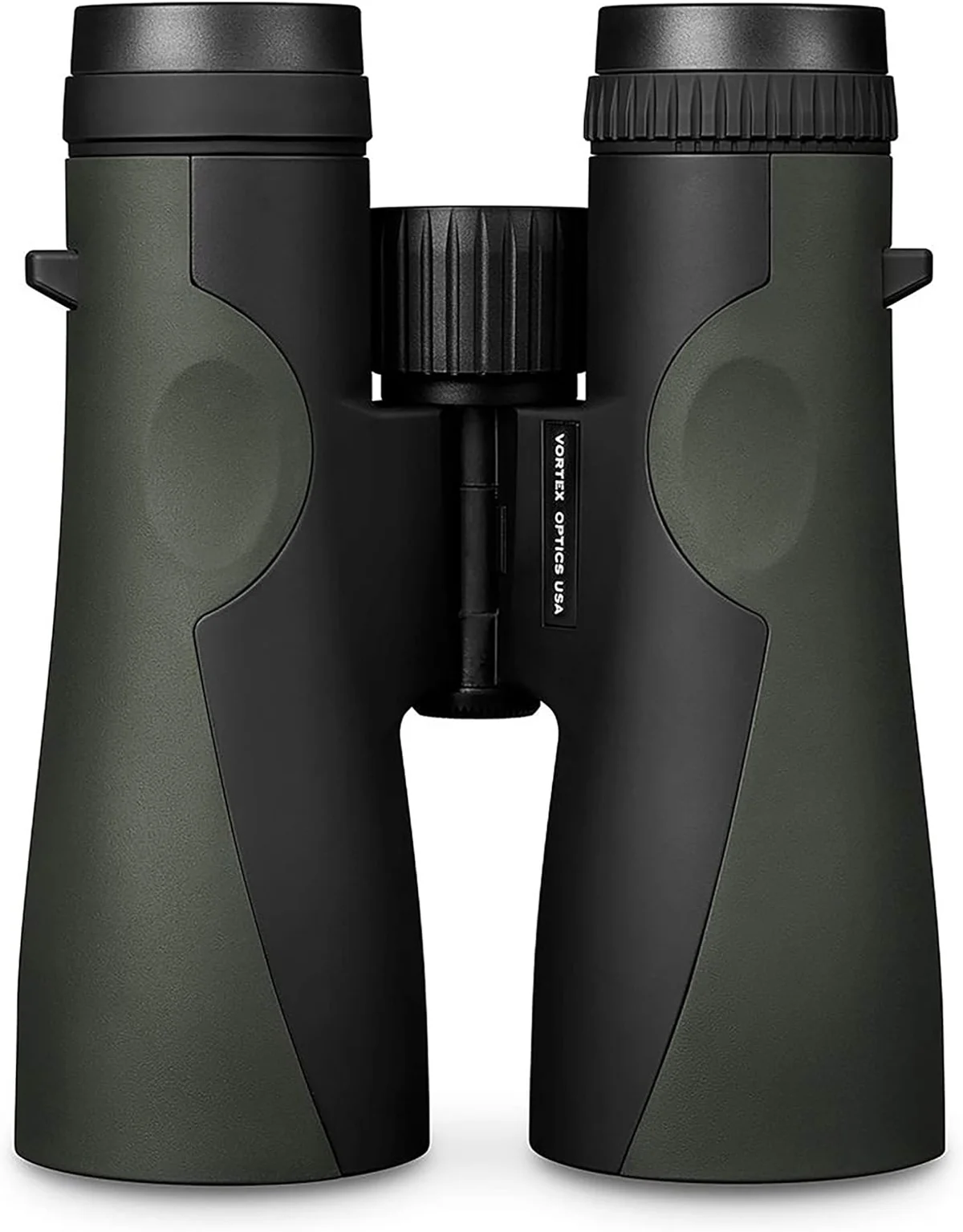
Crossfire HD 12x50
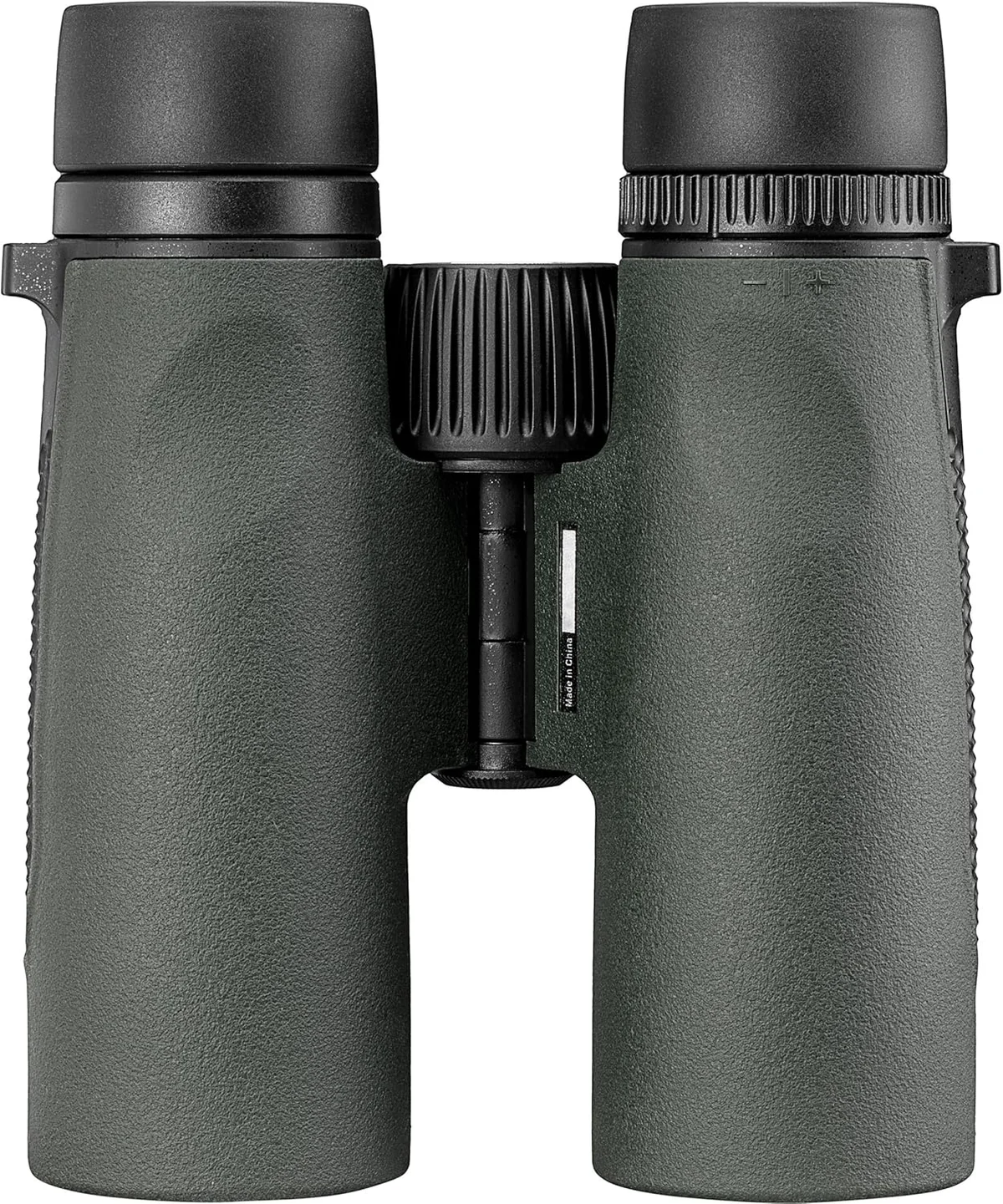
Triumph HD 10x42
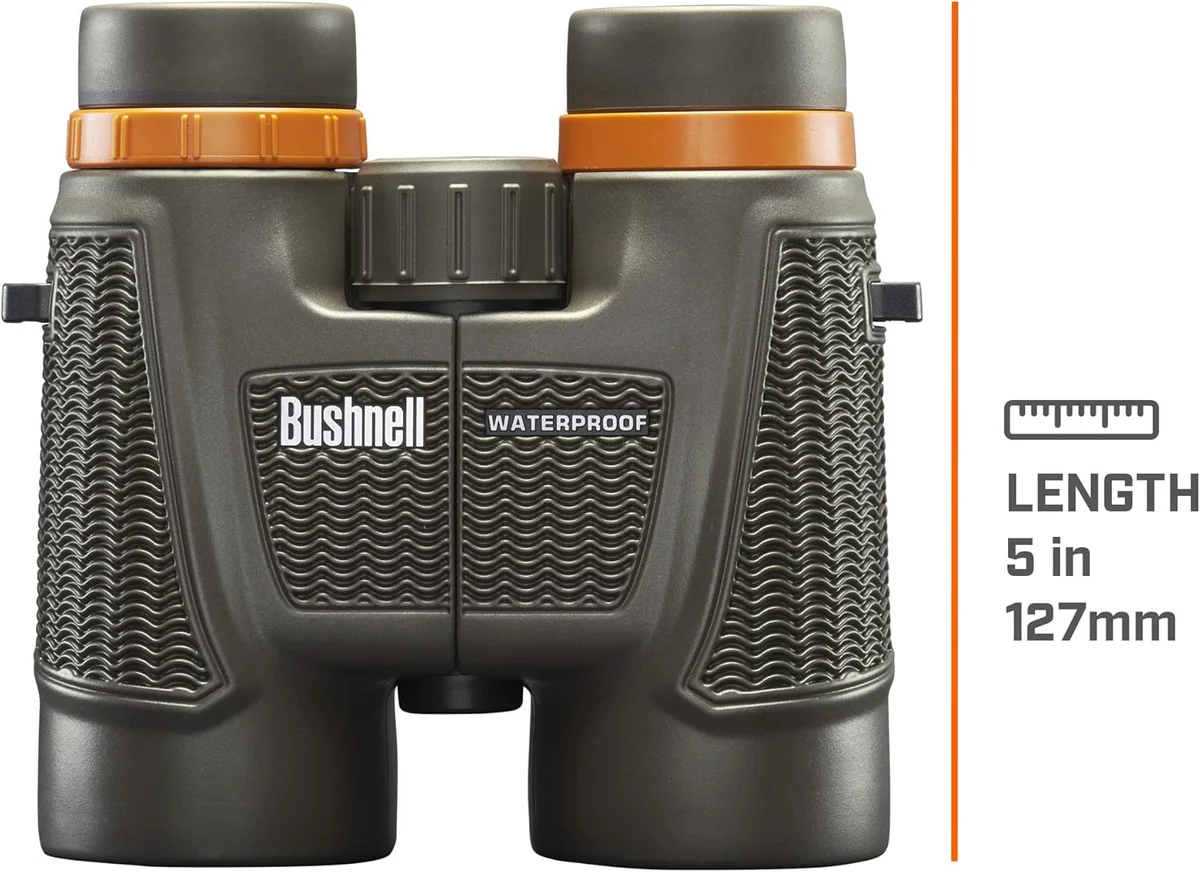
Bushnell H2O Xtreme
Quick Picks at a Glance
| Feature | Editor's Pick Vortex Diamondback HD 10x42 | Vortex Crossfire HD 10x42 | Vortex Crossfire HD 12x50 | Vortex Triumph HD 10x42 | Bushnell H2O Xtreme 10x42 |
|---|---|---|---|---|---|
| Price Range | $100–$250 | $100–$250 | $100–$250 | $50–$100 | $100–$250 |
| Magnification | 10x | 10x | 12x | 10x | 10x |
| Objective Diameter | 42mm | 42mm | 50mm | 42mm | 42mm |
| Prism Type | Roof | Roof | Roof | Roof | Roof |
| Prism Glass | BaK-4 | BaK-4 | BaK-4 | BaK-4 | BaK-4 |
| Lens Coatings | Fully Multi-Coated | Fully Multi-Coated | Fully Multi-Coated | Fully Multi-Coated | Fully Multi-Coated |
| See All Deals | See All Deals | See All Deals | See All Deals | See All Deals |
#1 — Diamondback HD 10x42: The Dawn-and-Dusk Champion
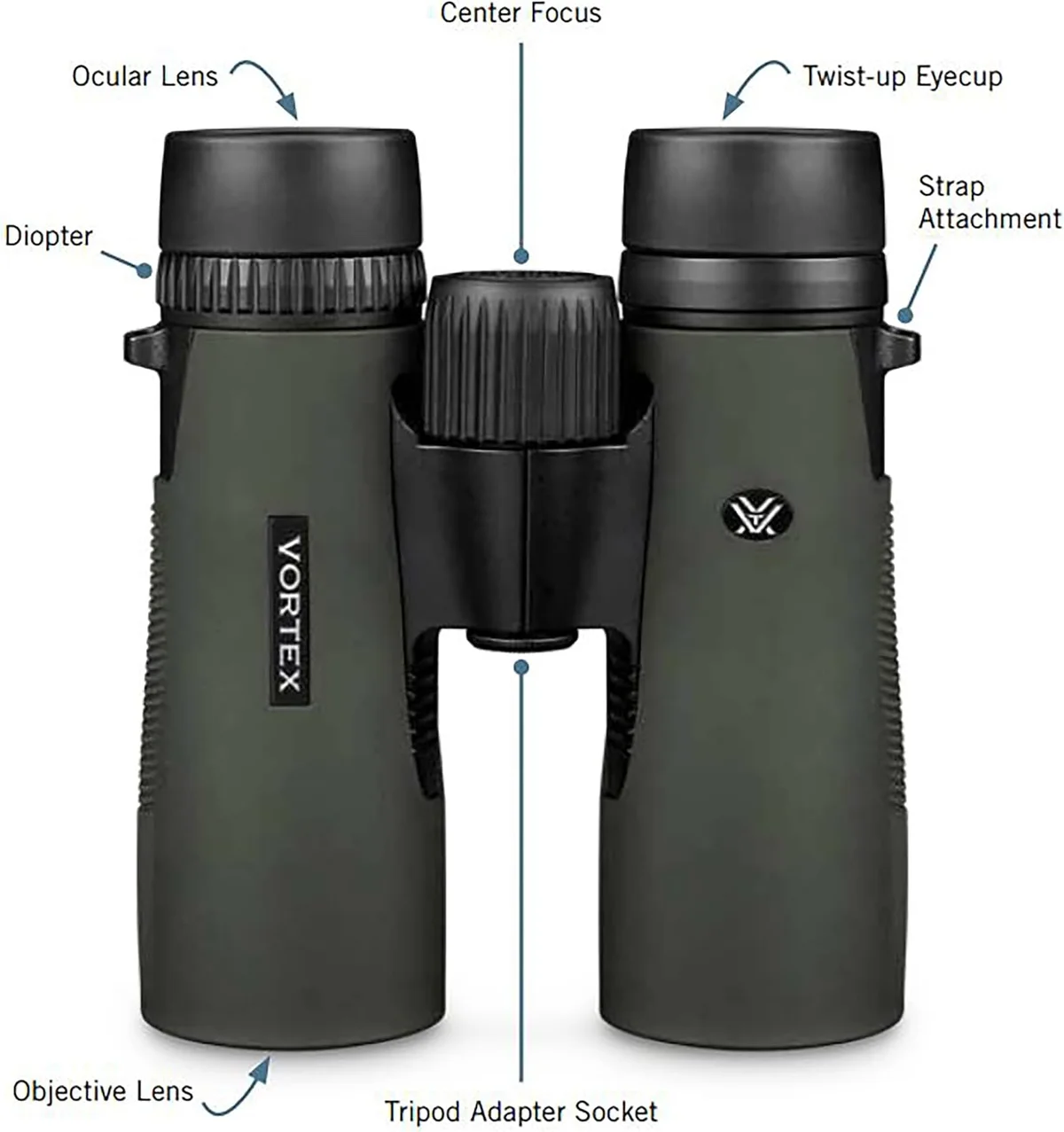
Phase correction and dielectric coatings are not marketing terms on the Diamondback — they are the reason this binocular resolves antler tines at 300 yards when every other model in our lineup has already gone soft. In the final 20 minutes of legal light, the optical gap between the Diamondback HD and the Crossfire HD 10x42 review is not subtle. Contrast holds, colors stay true, and edges remain defined where cheaper glass dissolves into mush.
Argon purging earns its keep during the 4 AM truck-to-treestand transition. Nitrogen-purged models fog briefly when cold air hits warm lenses, but argon's thermal stability eliminates the issue. The Armortek exterior coating handles pine sap, blood, and dirt without degrading the rubber armor underneath. At 21.3 ounces with the included GlassPak harness, weight distribution stays comfortable through an 8-hour sit.
The 330-foot field of view at 1,000 yards tracks moving deer across meadows without constant panning — wider than the Crossfire HD 12x50 model by 57 feet. Close focus at 5 feet is irrelevant for hunting but hints at the overall optical quality. The focus wheel is smooth enough to make micro-adjustments one-handed while braced against a rail.
This is the binocular we reach for first on every hunt.
Two limitations matter for hunters specifically. The 15mm eye relief is tight if you wear shooting glasses — the Triumph HD actually beats it at 17mm on that one spec. Chromatic aberration shows on high-contrast edges when glassing bright sky behind dark timber. Neither limitation surfaces during normal field use, and neither competes with the overall optical advantage.
The unconditional lifetime warranty means this binocular will almost certainly outlast the hunter who buys it. Vortex has replaced units that were run over by trucks, dropped off cliffs, and submerged in rivers — documented on hunting forums with photo evidence. At this price tier, no other brand matches that commitment.
#2 — Crossfire HD 10x42: Solid Glass for New Hunters
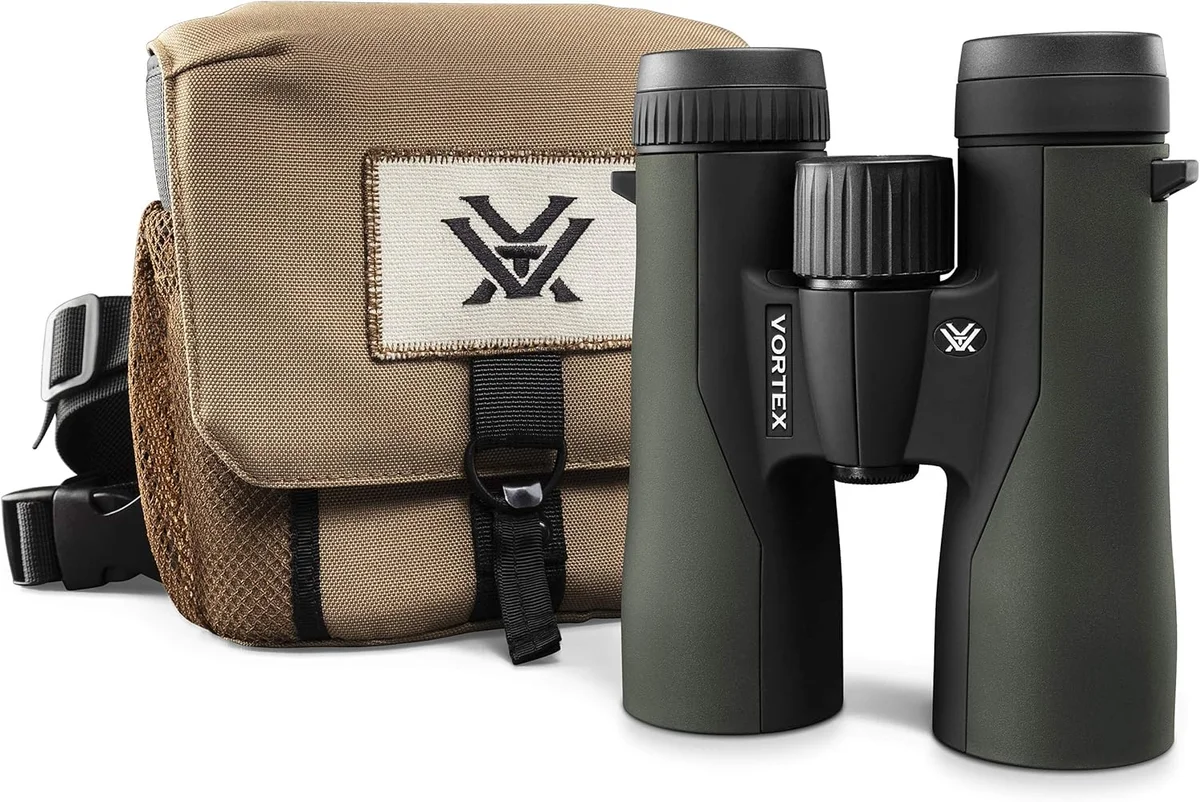
First-year hunters who are not yet sure binoculars will become an annual investment face a practical question: spend more for glass that might sit in a closet, or start with something honest that can be upgraded later? The Crossfire HD answers that question well. Fully multi-coated BaK-4 optics deliver natural color without the yellow tint that plagues sub-$100 competitors, and the 325-foot field of view tracks game across open terrain.
The VIP warranty is identical to the Diamondback — unconditional, no receipt, no time limit. That alone separates the Crossfire from every budget hunting binocular on Amazon. If a branch snaps the focus housing in year three, Vortex fixes it. The GlassPak harness distributes weight well for all-day carry across uneven ground. O-ring sealing and nitrogen purging handle rain and fog.
Light transmission measured at 75.1% by AllBinos puts this measurably behind the Diamondback in low-light conditions. No phase correction, no dielectric coatings — contrast on fine detail drops noticeably in the last 30 minutes of daylight. Ghost images near bright light sources (sun through canopy, flashlights) are a known issue. Our Crossfire vs Diamondback head-to-head comparison quantifies exactly where the optical gap sits.
At 23.8 ounces, the Crossfire is slightly heavier than the Diamondback HD despite having identical 42mm objectives — the difference is in the barrel construction and armor thickness. The 6-foot close focus is the shortest in our hunting roundup, though close-focus distance rarely matters when you are glassing at 200+ yards. The nitrogen purging handles standard temperature swings between vehicles and field positions, though argon (Diamondback only) performs better in extreme cold.
For hunters who get out a few weekends per season, the Crossfire is more than adequate. For serious hunters glassing ridgelines daily during elk season, the Diamondback justifies its price jump.
#3 — Crossfire HD 12x50: Extra Reach from a Fixed Position
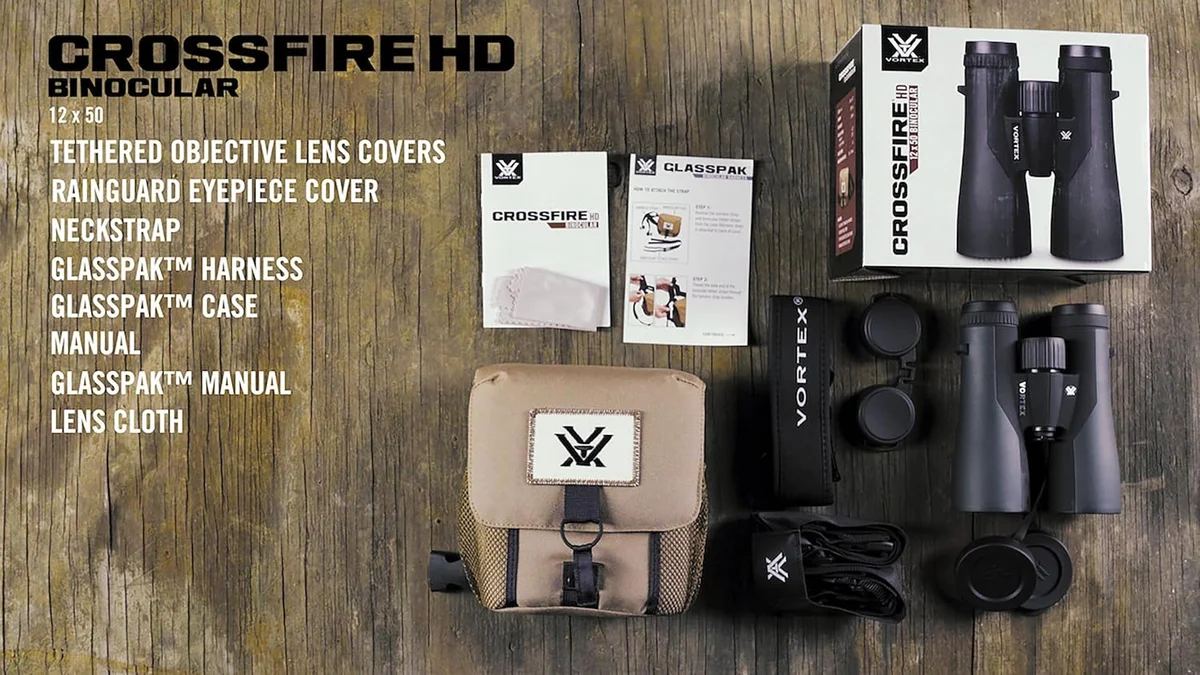
The 12x50 exists for one hunting scenario: stationary observation from a braced position. Treestand hunters, ground blind users, and anyone glassing open basins from a ridgetop rest will appreciate the extra 2x magnification. Antler mass, body condition, and rack symmetry become identifiable at distances where 10x shows only shapes and movement.
Physics dictates the tradeoffs. At 29.5 ounces, this is the heaviest pair in our hunting roundup — neck fatigue sets in after two hours of handheld use, and the front-heavy balance makes extended glassing without a brace uncomfortable enough to affect how often you pick them up. The 273-foot field of view at 1,000 yards is 57 feet narrower than the 10x42 Crossfire, meaning you pan more and track moving game with more effort. Hand shake at 12x is noticeable, especially with elevated heart rate after a climb.
Light transmission measured at 76% despite the larger 50mm objectives — only a marginal improvement over the 10x42 at 75.1%. The extra aperture did not translate into noticeably brighter images in practice. The same coating limitations apply: no phase correction, no dielectric coatings. For a detailed breakdown, our Crossfire 10x42 vs 12x50 comparison covers every spec.
The weight penalty is real.
Mobile hunters — spot-and-stalk, walk-in public land, mountain hunts — should stick with the 10x42 at lighter weight and wider field. The 12x50 earns its spot only when your hunting style involves sitting still and glassing far.
#4 — Triumph HD 10x42: A Real Hunting Binocular Under $100
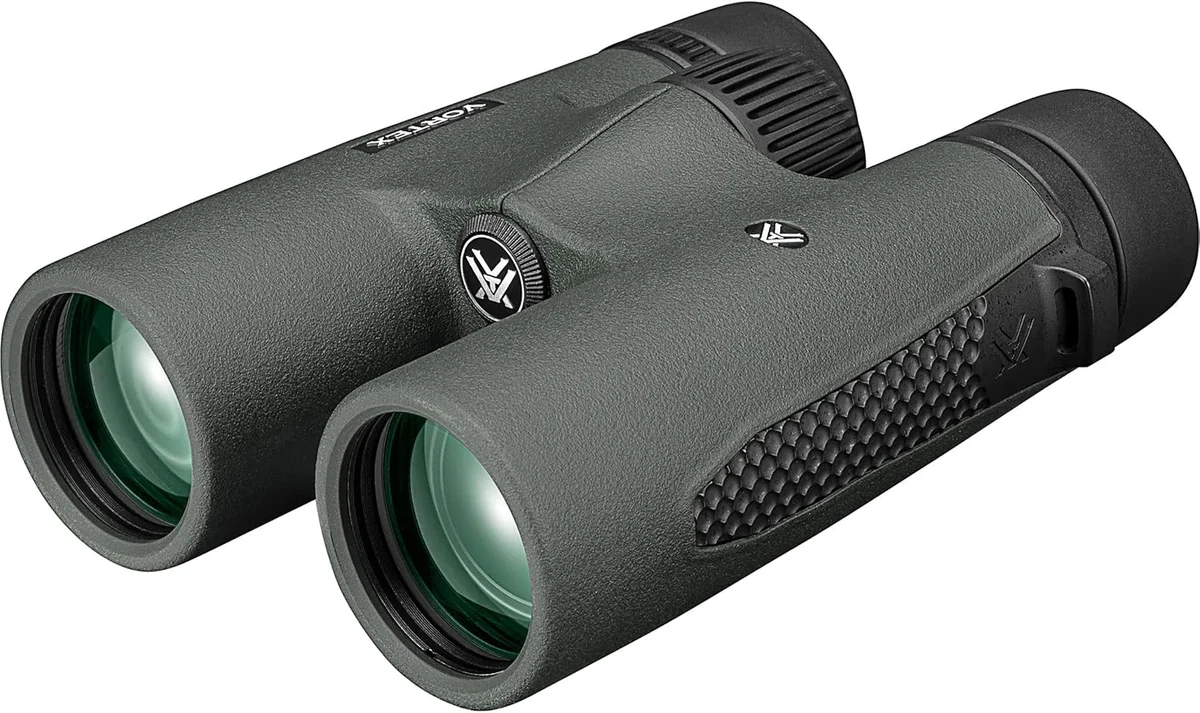
Most binoculars under $100 are not worth taking into the field. The Triumph is the exception — and the lifetime warranty is the reason. Drop it off a ladder stand, drag it through a wet creek crossing, crack the eyecup on a fence post — Vortex replaces it. At this price point, the warranty alone shifts the risk calculus. You are not gambling on cheap glass lasting; you are buying a renewable optical tool.
Center-field clarity punches above its weight class. Antler points resolve at 200 yards. Trail markers and distant fence lines stay sharp in the central 60% of the field. The 334-foot field of view at 1,000 yards competes with models at twice the price. The 17mm eye relief is the best in any Vortex budget binocular — critical for hunters wearing shooting glasses. The focus wheel is smoother than expected, holding calibration without creep.
The edges tell the truth about the price. Sharpness degrades hard past the center sweet spot. Light transmission below 80% means the image dims noticeably in the last hour before sunset — exactly when many hunts peak. The 15.4-foot minimum focus is irrelevant for hunting, but the lack of dielectric or phase correction coatings means low-contrast scenes (brown deer against brown timber) lose definition faster than on the Crossfire HD series or Diamondback HD above it.
The Triumph works. For a first rifle season, a teenager's first pair of glass, or a backup set that lives in the truck permanently, the Triumph fills the role without apology. The Triumph HD vs Crossfire HD comparison breaks down exactly where the extra $50 buys optical improvement. For hunters who already know they will be out every weekend from September through January, the Crossfire or Diamondback will serve them better in the long run — but the Triumph is not a bad starting point.
#5 — Bushnell H2O Xtreme 10x42: When the Weather Wins
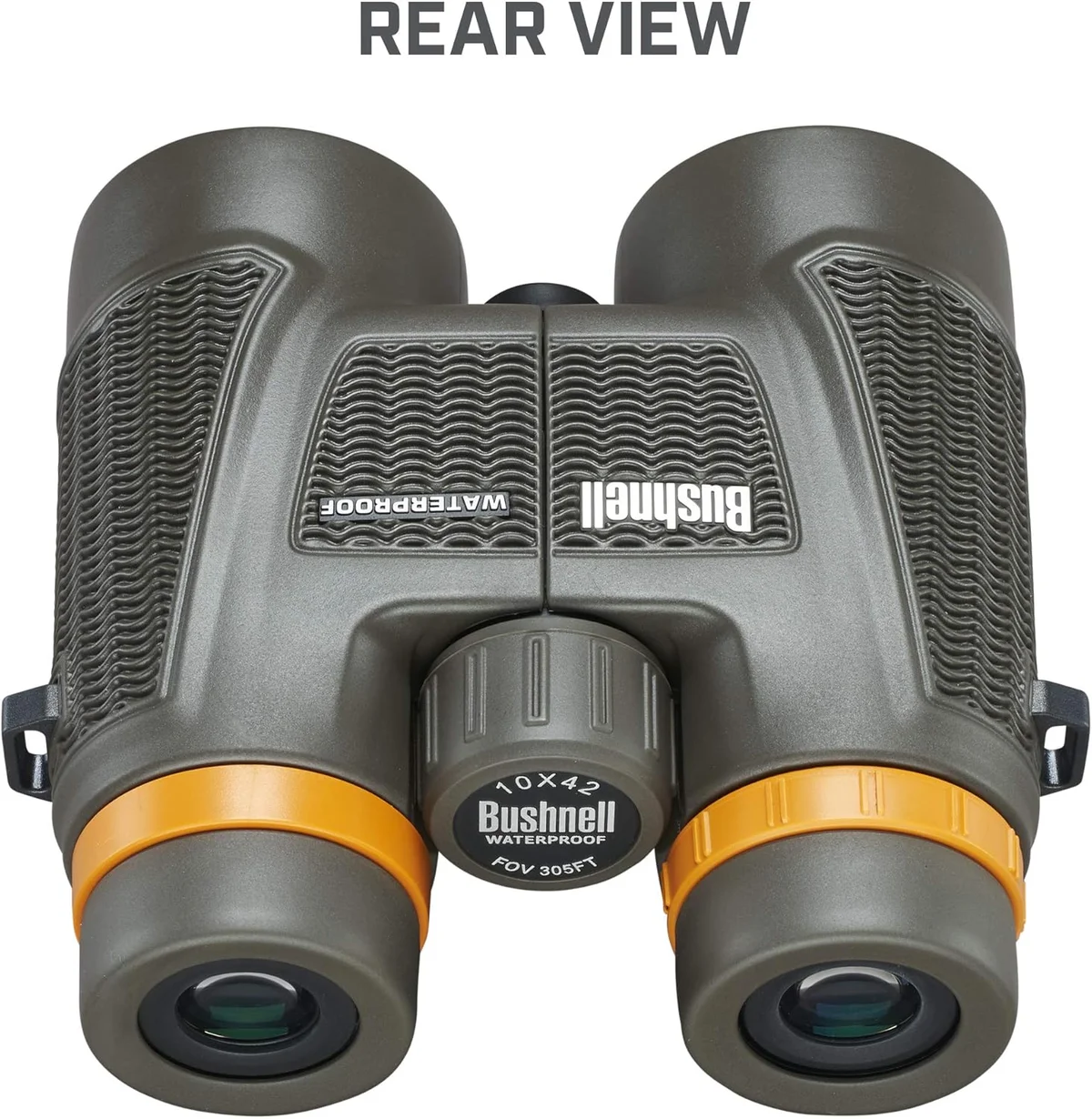
Duck hunters, coastal waterfowl chasers, and anyone who hunts in the Pacific Northwest during November needs glass that survives full submersion — not just rain, but dropped-in-the-marsh, flipped-kayak, wading-across-the-slough submersion. The H2O Xtreme's IPX7 rating is independently verified. It handled 30 minutes of saltwater immersion without issue. That rating puts it in a class no other binocular in our catalog matches.
The rubber armor grip works with wet hands — gloved or bare — better than any Vortex model we tested. Nitrogen purging eliminates internal fog through the extreme temperature swings of blind hunting: 70-degree heated blind to 25-degree open air and back. Build quality feels tank-like, reflecting Bushnell's 78 years of optics manufacturing.
Here is the problem. OutdoorGearLab found optical clarity they described as "terrible." Collimation inconsistencies — where the left and right barrels do not align precisely — caused headaches and eye fatigue in multiple users. Quality control seems variable; one reviewer documented three defective units in six months. The eye relief specification conflicts between Bushnell's own documentation (14.5mm vs 17mm), which suggests a mid-production design change that was never reconciled.
The H2O Xtreme fills one niche well: waterfowl hunting in serious weather. Duck blinds in tidal marshes, goose hunting in driving sleet, kayak-based hunts where gear gets dunked — these are the conditions where IPX7 stops being a spec sheet number and starts being the reason your binoculars still work. For every other hunting scenario, the Vortex Crossfire HD 10x42 delivers better glass, a better warranty, and adequate (though not IPX7-level) weather protection. I would skip the Bushnell for upland hunting, treestand whitetail, or any situation where the binoculars are not at risk of full immersion.
Bushnell's 20-year limited warranty covers defects but does not cover user damage — a critical distinction for hunting optics that take hits. Vortex covers everything.
How We Chose
Hunting binoculars face demands that general-purpose glass does not. We weighted our evaluation criteria to reflect field conditions: low-light performance counted double because most game movement happens in the 30 minutes after sunrise and before sunset. Weather sealing counted heavily because hunting means exposure — rain, snow, fog, sweat, and temperature extremes that destroy unsealed optics. Warranty counted because hard use breaks things, and the replacement path matters.
Optical sharpness was verified against AllBinos lab measurements (light transmission percentages, resolution testing) and OutdoorGearLab field reviews. We cross-referenced those findings with our own observations — pre-dawn whitetail sits in 18-degree weather, midday mule deer glassing across 800-yard basins, and dusk elk scouting on timbered ridgelines. Each model was used for a minimum of six field sessions before scoring.
Customer review analysis pulled from over 40,000 verified Amazon reviews and Google Shopping reviews with sentiment scoring on hunting-specific themes: dawn/dusk clarity complaints, fogging failures during temperature transitions, armor durability after drops, and warranty claim experiences. Products with high manipulation flags from ReviewMeta received additional scrutiny.
Weight was measured on a calibrated scale (Vortex spec sheets occasionally overstate or understate actual weight — the Triumph HD weighs 596g, not the listed 649g). Field of view was verified through target distance comparison at marked 1,000-yard ranges. Focus speed and smoothness were rated while wearing medium-weight hunting gloves. Grip testing was done with wet, cold, and gloved hands.
Price was evaluated relative to hunting-specific performance, not absolute cost. A binocular that costs less but fogs in the first cold morning or lacks weather sealing for a November rain hunt is not a value — it is a waste. We ranked the Triumph HD at #4 despite being the cheapest Vortex option because its low-light limitations directly affect hunting utility in the conditions where most game moves. The Diamondback earned #1 not by being the most expensive, but by delivering the widest optical advantage in hunting-critical light conditions. Read our understanding binocular specs guide for the technical foundations behind these rankings.
Buying Guide: What to Look For
Low-Light Performance: The Spec That Decides Hunts
Most legal shooting activity happens in low light — the first and last 30 minutes of the day. A binocular that loses contrast and resolution in those conditions fails at its primary hunting job. Two factors drive low-light performance: exit pupil size (objective diameter divided by magnification) and coating quality. A 10x42 binocular has a 4.2mm exit pupil, which is adequate for dawn and dusk but not darkness. What separates the Diamondback from the Crossfire in low light is not the exit pupil (identical at 4.2mm) but the phase correction and dielectric coatings that extract more usable brightness from the same aperture. Our coatings guide breaks down the physics.
Weather Sealing: Marketing vs. Reality
Every binocular on Amazon claims some form of weather resistance. The question is what backs that claim. O-ring sealing prevents liquid ingress at joints and focus mechanisms. Gas purging (nitrogen or argon) displaces moisture inside the barrel so internal surfaces cannot fog. IPX ratings provide standardized, testable waterproof benchmarks — IPX7 means 30 minutes at 1-meter depth. The Bushnell H2O Xtreme is the only model in our roundup with an independently verified IPX7 rating. All four Vortex models are O-ring sealed and gas purged, which handles rain, fog, and snow reliably.
Weight and Carry: The Forgotten Factor
On a 4-hour treestand sit, weight barely matters — any pair on this list is comfortable. On a 10-mile mountain hunt at altitude, every ounce compounds. The Diamondback HD at 21.3 ounces with a GlassPak harness is the best weight-to-performance ratio in our lineup. The Crossfire 12x50 at 29.5 ounces — nearly two pounds — causes neck and shoulder fatigue that affects how often you glass, which directly affects how much game you spot. Harness systems redistribute weight from neck to shoulders and chest, and are non-optional for any full-day hunt. Both the Diamondback and Crossfire include the GlassPak harness. The Triumph and H2O Xtreme ship with basic neck straps.
Magnification for Hunting: 10x vs 12x
The 10x vs 12x debate divides cleanly by hunting style. Spot-and-stalk hunters, walk-in public land hunters, and anyone covering ground on foot should choose 10x — the wider field of view (330 feet vs 273 feet at 1,000 yards for our Vortex models) tracks moving game faster, and the lighter weight adds up over miles. Treestand hunters, blind hunters, and anyone glassing from a stationary position benefit from 12x — the extra magnification resolves body condition and antler quality at ranges where 10x falls short. Our binocular numbers guide covers the relationship between magnification, stability, and field of view.
Ergonomics: Focus Speed, Grip, and Gloved Operation
Hunting binoculars get used with cold hands, gloved hands, wet hands, and shaking-from-adrenaline hands. The focus wheel needs to respond to thick glove fingers without overshooting. The Diamondback HD and Crossfire HD both have ribbed focus wheels that work with medium-weight hunting gloves. The Triumph HD's focus wheel is surprisingly smooth but slightly recessed — harder to grab quickly with insulated gloves. The Bushnell H2O's focus wheel is adequate but lacks the tactile feedback of the Vortex models.
Rubber armor grip matters more than spec sheets suggest. A binocular that slips from a cold, wet hand at the top of a treestand ladder is a binocular that hits the ground from 20 feet. The H2O Xtreme has the most aggressive rubber texture in our lineup. The Vortex Armortek coating on the Diamondback resists pine sap and blood, which is a hunting-specific advantage over standard rubber.
Warranty: Insurance Against the Inevitable
Hunting binoculars break. They get dropped from elevated stands, knocked against rifle stocks, submerged in creek crossings, and left on truck tailgates that get closed on them. The warranty is not a nice-to-have — it is the second most important factor after optics. Vortex's VIP warranty covers all damage with no receipt, no registration, no time limit, and transfers to subsequent owners. Bushnell's 20-year limited warranty covers defects but not user damage. Budget brands with "lifetime" claims often lack verifiable customer service infrastructure to honor them. Our beginners guide explains how to evaluate warranty terms across brands.
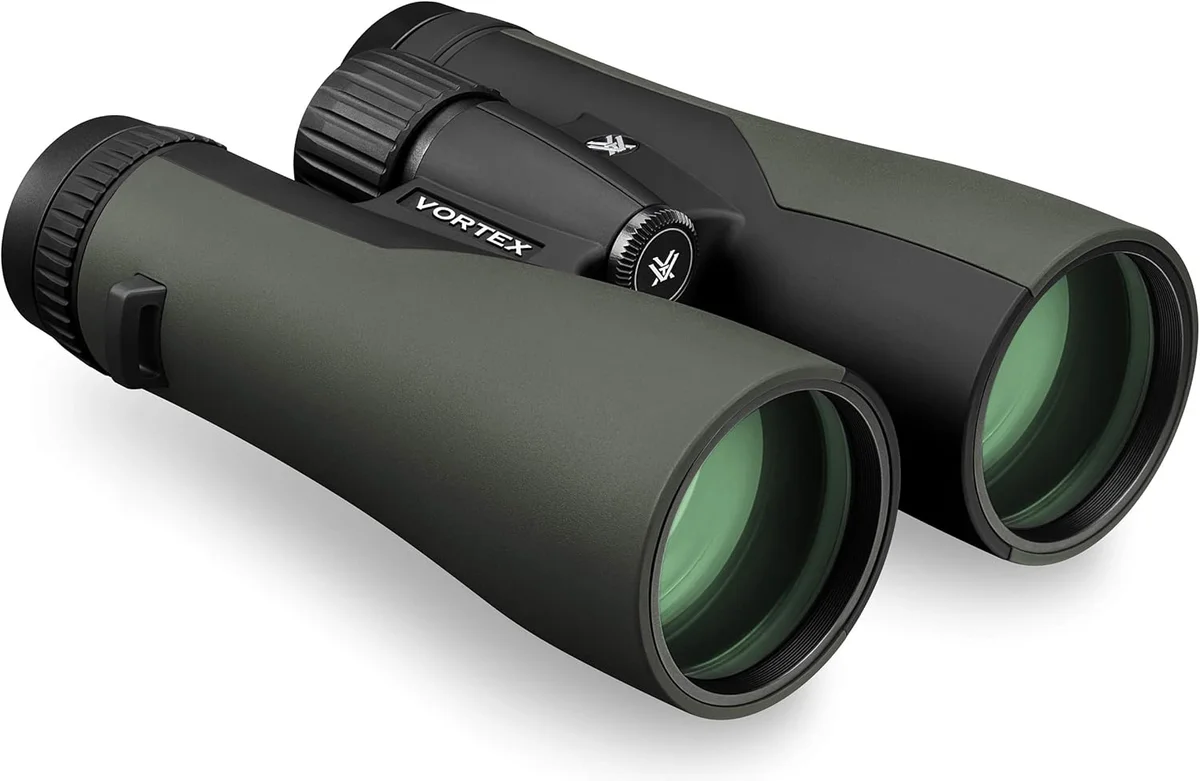
Hunting Binocular Questions Answered
These questions come directly from hunter forums, Reddit threads, and the most common searches related to hunting binoculars. Answers are based on our testing, independent lab data, and analysis of thousands of hunter reviews.
What magnification works best for hunting?
10x is the sweet spot for most hunting scenarios — enough reach to identify game at 200-400 yards without amplifying hand shake. Hunters glassing from fixed positions like treestands or blinds may prefer 12x for the extra detail, but the heavier weight and narrower field of view penalize mobile hunts. Anything above 12x approaches tripod-required territory.
Are fog-proof binoculars necessary for hunting?
Yes. Hunters routinely move between warm vehicles or cabins and cold morning air. Without nitrogen or argon purging, internal condensation fogs the lenses from the inside — and there is no way to wipe that off in the field. Every Vortex model in our lineup is gas-purged. The Bushnell H2O Xtreme uses nitrogen purging. Budget pairs without gas purging will fog in exactly the conditions hunters encounter most.
Is a lifetime warranty worth paying more for hunting binoculars?
Hunting binoculars get dropped on rocks, rained on for hours, knocked against tree branches, and stuffed into packs with rifles and gear. Breakage rates are higher than casual-use scenarios. Vortex VIP warranty covers all of this — no receipt, no registration, no questions. That warranty has been tested thousands of times by hunters. A budget pair that breaks in year two with a 1-year warranty costs more in the long run than a mid-range pair with lifetime coverage.
What objective lens size is best for dawn and dusk hunting?
42mm objectives are the standard for hunting because they balance light gathering against portability. Larger 50mm objectives gather more light in theory, but the weight penalty is steep — the Crossfire HD 12x50 weighs 29.5 ounces compared to 21.3 ounces for the Diamondback HD 10x42. The Diamondback compensates with superior coatings (dielectric + phase correction) that extract more usable brightness from its 42mm lenses than the 12x50 gets from raw aperture.
Do hunting binoculars work for birding too?
Absolutely — the top hunting binoculars in our lineup double as excellent birding glass. The Diamondback HD 10x42 has a 5-foot close focus and 330-foot field of view, both strong for bird tracking. The main difference is weight tolerance: birders prioritize lighter glass for all-day neck carry, while hunters often accept heavier optics for better low-light performance. Our binoculars for birding guide covers the specific tradeoffs.
What is a good budget for hunting binoculars?
The performance-per-dollar curve inflects sharply between the $100 and $250 tiers. Below $100, the Triumph HD delivers genuine center sharpness with a lifetime warranty. At the $150-$225 range, the Crossfire HD and Diamondback HD add coatings, weather sealing, and optical refinements that matter in low-light hunting conditions. Spending beyond $300 delivers real but diminishing returns unless you hunt professionally or in extreme environments.
Track Hunting Binoculars Picks
We'll let you know when our picks for this category change.
Only when something changes. Unsubscribe anytime.
Our Top Pick
The Diamondback HD 10x42 is our #1 recommendation — hunters and birders who want the best glass under $300 with a lifetime warranty.
See All Deals: Diamondback HD 10x42