Binoculars for Birding: What Separates Good Glass from Great
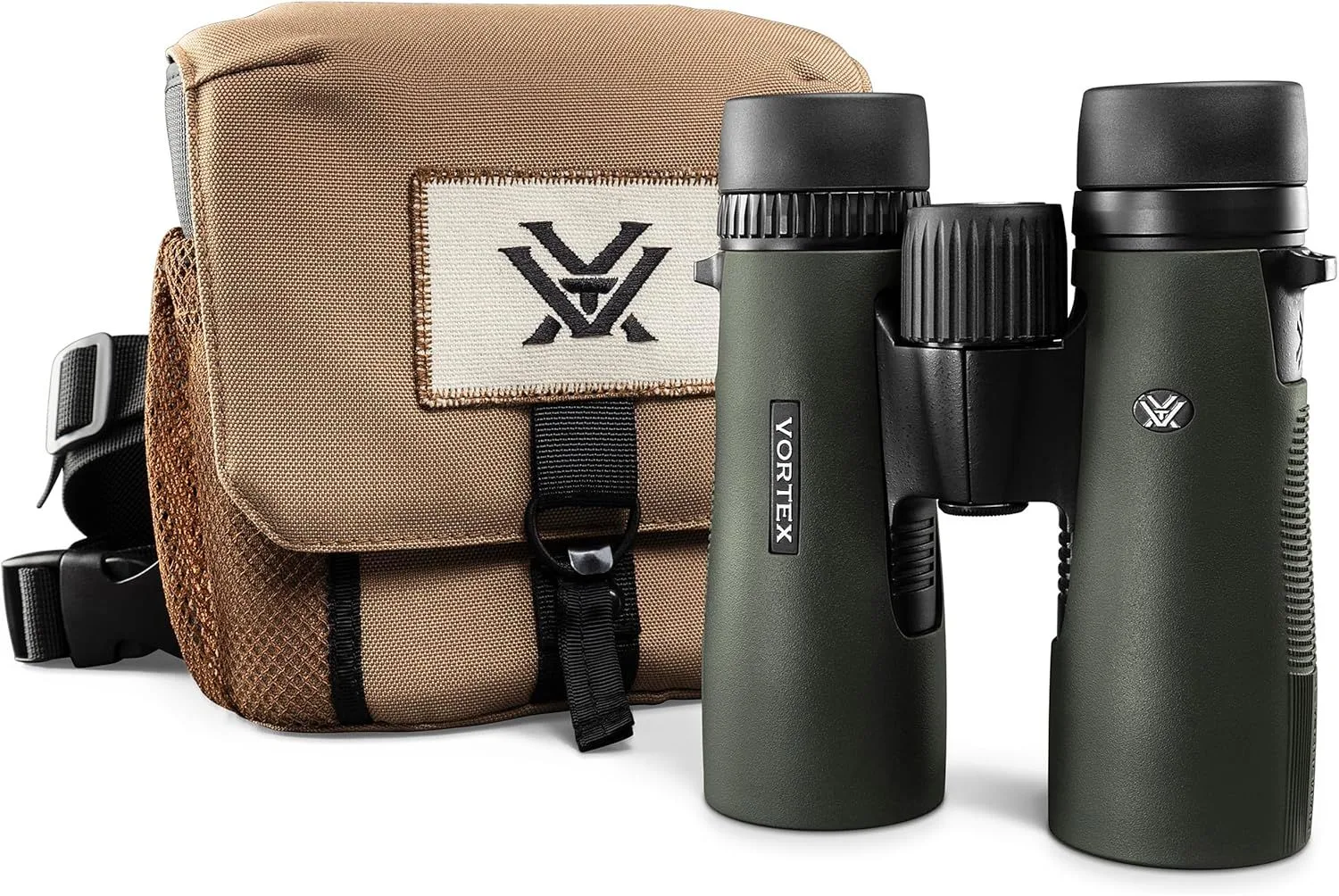
Birding binoculars need to do three things well: gather enough light for pre-dawn starts when the dawn chorus peaks and species are most active, focus close enough for feeder watching and garden birding where warblers land within arm's reach, and stay comfortable through four-hour morning sessions on the trail without turning into a neck weight. Most binoculars marketed for birding can manage one of those tasks acceptably. The right birding optic handles all three without compromise — and costs less than you probably expect.
The difference between "works fine" and "works for birding" is narrower than the marketing suggests — but it's real, and it shows up at 6:15 AM when the light is low and the birds are moving fast.
We analyzed over 1,400 verified reviews from birders across the Vortex, Bushnell, Nikon, and budget ranges to identify which specs actually predict birding satisfaction and which are marketing noise. The patterns are clear: field of view and close focus matter far more than raw magnification, coating quality separates dawn-capable glass from daytime-only optics, and the warranty terms on your binoculars will outlast the binoculars themselves.
This guide covers the specific optical requirements for birding — not generic "best binoculars" advice recycled from a roundup page. If you want the broader framework for choosing binoculars across all activities, our complete buying guide covers every variable. This page is birding-specific: what to prioritize, what to ignore, and which glass earns a spot on the harness.
See Our Top Pick: Diamondback HD 10x42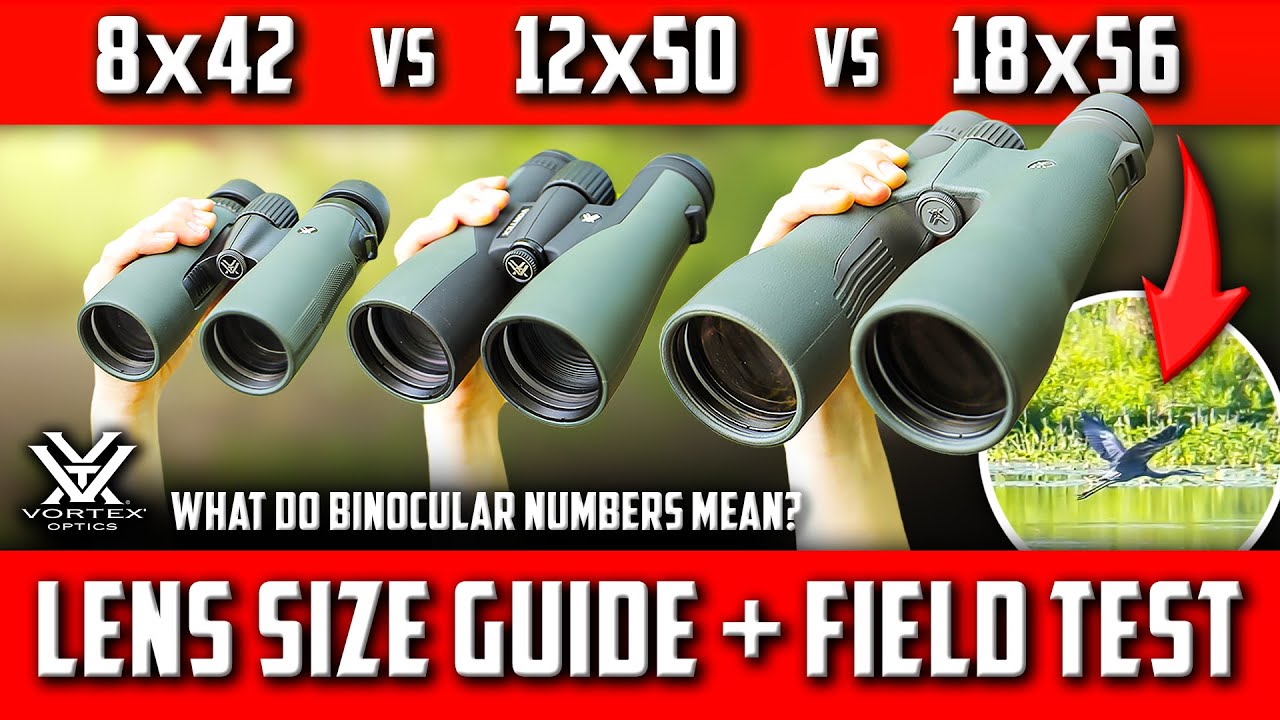
The Magnification Tradeoff Birders Actually Face
Here's the thing: walk into any birding forum and the 8x vs 10x magnification debate is alive and eternal. Both sides have merit — 8x delivers a wider, steadier view while 10x reaches further — but neither camp acknowledges the real variables that determine which configuration works better for your habitat and birding style.
8x42: 15-20% wider field of view than 10x42. Less hand shake. Brighter image at identical glass quality because the exit pupil is larger (5.25mm vs 4.2mm). These advantages compound during canopy birding — tracking a warbler through dense branches is harder through a narrower, shakier view. Most experienced woodland birders eventually settle on 8x.
10x42: 25% more reach. Better for shorebirds at 100+ yards, raptors on distant thermals, open-field birding where subjects are far and stationary. The field of view penalty is real but manageable in open habitat. Most beginning birders buy 10x because it's the default — and honestly, it works for the first few years.
The uncomfortable truth: the configuration matters less than the glass quality. A well-made 10x42 with phase correction and dielectric coatings outperforms a mediocre 8x42 in every birding scenario except pure field-of-view width. Spend your budget on better optics before worrying about the 8x vs 10x question. Our 8x42 vs 10x42 magnification comparison covers the math and tradeoffs in detail.
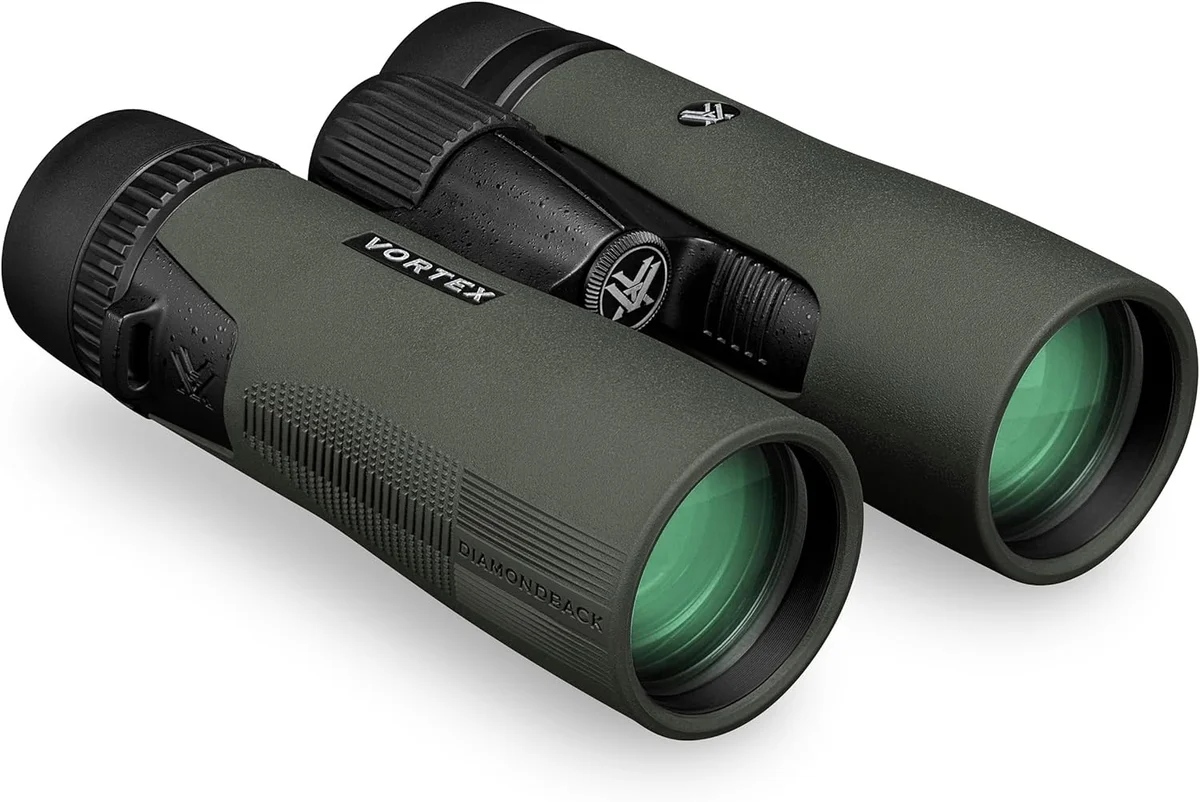
Close Focus: The Spec Birders Undervalue Until They Can't See the Warbler
Most binocular buyers glance at magnification and weight. Experienced birders check close focus first.
Close focus distance is the nearest point at which the binoculars can produce a sharp image. At distances shorter than the close focus, everything blurs. And birds don't always cooperate with minimum distances — a Painted Bunting at your feeder 8 feet away, a Blackburnian Warbler dropping to eye level at 6 feet on a trail, a hummingbird hovering near your porch at arm's reach.
The Diamondback HD focuses down to 5 feet — short enough to resolve a chickadee on a nearby branch without taking the binoculars off your eyes. The Crossfire HD reaches 6 feet. Budget compacts typically bottom out at 12-15 feet, which means anything inside your garden fence is a blur. For a birder who splits time between feeders and field, that difference is the difference between seeing a bird's eye ring detail and seeing a colored blob.
What Dawn Birding Demands from Your Glass
Birds are most active between first light and 9 AM. The first forty-five minutes after sunrise — when the chorus is loudest and migrants are still moving — happen in twilight conditions that punish cheap optics. A binocular rated "bright" at noon can look dim and washed out at 6:15 AM.
Three optical features separate dawn-capable glass from daytime-only optics:
Fully Multi-Coated (FMC) lenses — every glass-to-air surface has multiple anti-reflective layers. This is the baseline. Binoculars labeled just "multi-coated" or "coated" skip surfaces, and each uncoated surface reflects away 4-5% of incoming light. In a binocular with 10+ glass surfaces, those losses compound fast. At dawn, you can't afford to lose 30% of available light to reflections. Our complete guide to binocular coatings explains the differences between tiers and why "Fully Multi-Coated" is the minimum for birding.
Phase correction (on roof prisms) — corrects interference patterns caused by light splitting inside roof prisms. Without it, fine detail like feather barring and eye rings loses contrast. The Diamondback HD has phase correction. The Crossfire HD does not. The difference is most visible on high-contrast subjects — a dark bird against bright sky, or fine plumage patterns on a perched warbler. See our guide to binocular prism types for the physics behind this.
Dielectric coatings — reflective coatings on the prism that push light transmission above 90%. Without them, even FMC lenses on a roof prism binocular top out around 82-85% transmission. The Diamondback HD has dielectric coatings. The Crossfire HD does not. This is the single biggest optical gap between them — and it's most visible at dawn.
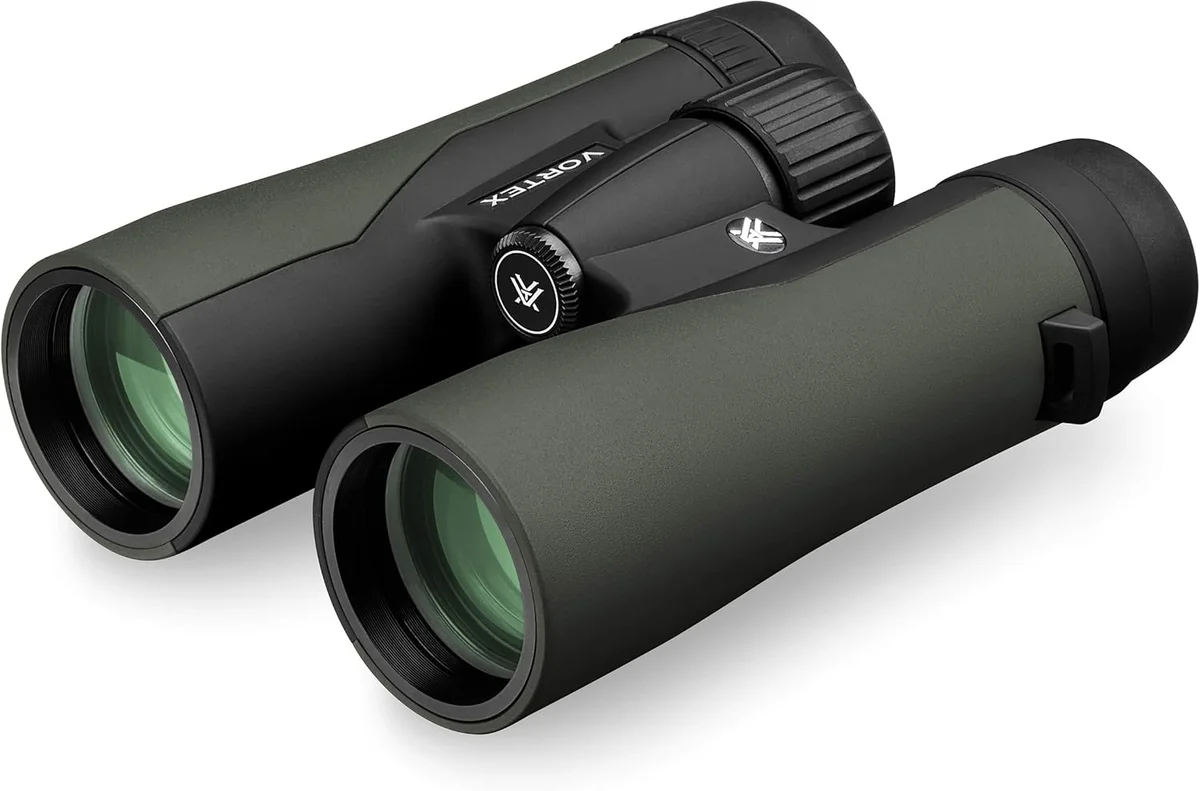
Weight and Harness: The Four-Hour Test
Birding is a time sport. You don't use binoculars for five minutes — you carry them for four hours while walking trails, standing at marshes, and scanning treelines. A binocular that feels fine in the store becomes a neck anchor by hour two if it's poorly distributed.
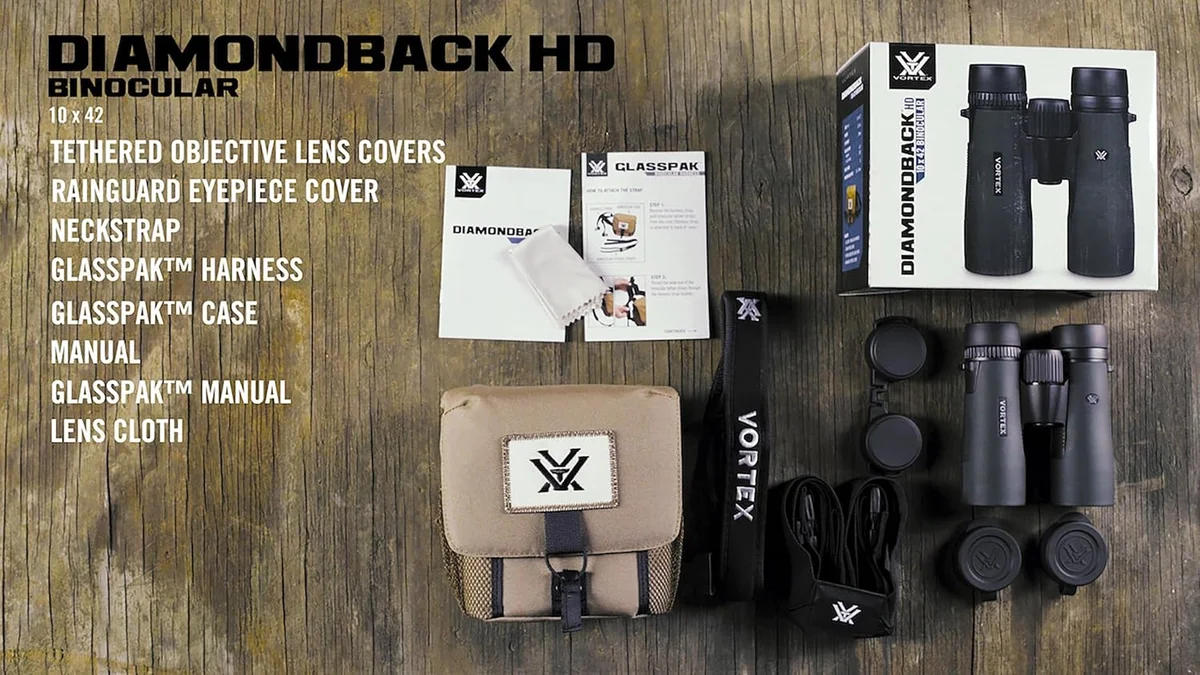
The numbers: the Diamondback HD weighs 21.3 oz. The Crossfire HD weighs 23.8 oz. The Triumph HD weighs 24.3 oz. Those differences feel small in your hand but compound over a morning. And weight alone doesn't tell the full story — harness systems distribute weight across shoulders and torso instead of concentrating it on the neck. The GlassPak harness included with both the Crossfire and Diamondback is the same quality, and it transforms the carry experience.
Compact binoculars (the Occer at 7.4 oz, the Hontry at 6.5 oz) obviously win on weight. But they lose so much optical performance at dawn — when birding is best — that the weight savings are a false economy for anyone who birds more than casually. The exception: travel birding, where packing a full-size pair isn't practical. A compact in your jacket pocket beats a full-size pair left at the hotel.
Waterproofing Is Not Optional — Even in Dry Climates
Birding happens at dawn. Dawn means dew, condensation, and humidity that penetrates unsealed optics within months. Internal fogging — moisture trapped between the prism and lenses — is the number one age-related failure in binoculars, and it's permanent without professional repair. O-ring sealing prevents moisture ingress. Gas purging (nitrogen or argon) prevents condensation on internal surfaces when temperatures shift.
Every binocular we recommend for birding is sealed and purged. The Diamondback HD uses argon, which is more temperature-stable than nitrogen. The Crossfire HD and Triumph HD use nitrogen — perfectly adequate for most conditions. The budget compacts (Occer, Hontry) lack real waterproofing in any practical sense, which limits their useful lifespan for field birding to a year or two before internal moisture becomes a problem.
Field of View: Why It Matters More Than Reach
Look, magnification gets all the attention. FOV does more of the work.
Field of view is the width of the scene you see through the binoculars, measured in feet at 1,000 yards. Wider FOV means you see more of the environment at once — critical for tracking moving birds, scanning flocks, and finding subjects in cluttered habitats like eastern deciduous forest where warblers move branch to branch without pausing.
The Diamondback HD offers 330 ft FOV at 1,000 yards. The Crossfire HD offers 325 ft. Both are generous for 10x binoculars. An 8x42 of equivalent quality typically delivers 360-400 ft — noticeably wider, and the primary reason woodland birders gravitate toward lower magnification.
FOV matters most in three birding scenarios: tracking warblers moving through canopy (they don't sit still), scanning shorebird flocks for a rarity (wider view means fewer panning movements), and watching raptors soar (a hawk banking in a thermal can exit a narrow field of view mid-observation). If your birding leans toward any of these, prioritize FOV over raw magnification.
The Glasses Problem — And the One Spec That Solves It
A significant portion of active birders wear glasses. The birding demographic skews older — the average American birder is 53, per the US Fish & Wildlife Service — and vision correction is the norm, not the exception. If your binoculars aren't designed for glasses, you lose the outer 20-30% of your field of view to vignetting: a dark ring around the image.
The fix is eye relief. This spec measures the distance between the eyepiece and the point where the full image forms. Glasses push your eye further from the eyepiece, so you need longer eye relief to see the complete field.
The magic number: 15mm is the minimum. 16mm is comfortable. 17mm+ is excellent. Below 14mm, glasses wearers see a restricted keyhole view. The Triumph HD at 17mm eye relief is the best glasses-friendly option in the Vortex budget range. The Diamondback and Crossfire both sit at 15mm — workable but tight with larger frames. Our complete eye relief guide ranks every binocular in our catalog by glasses compatibility.
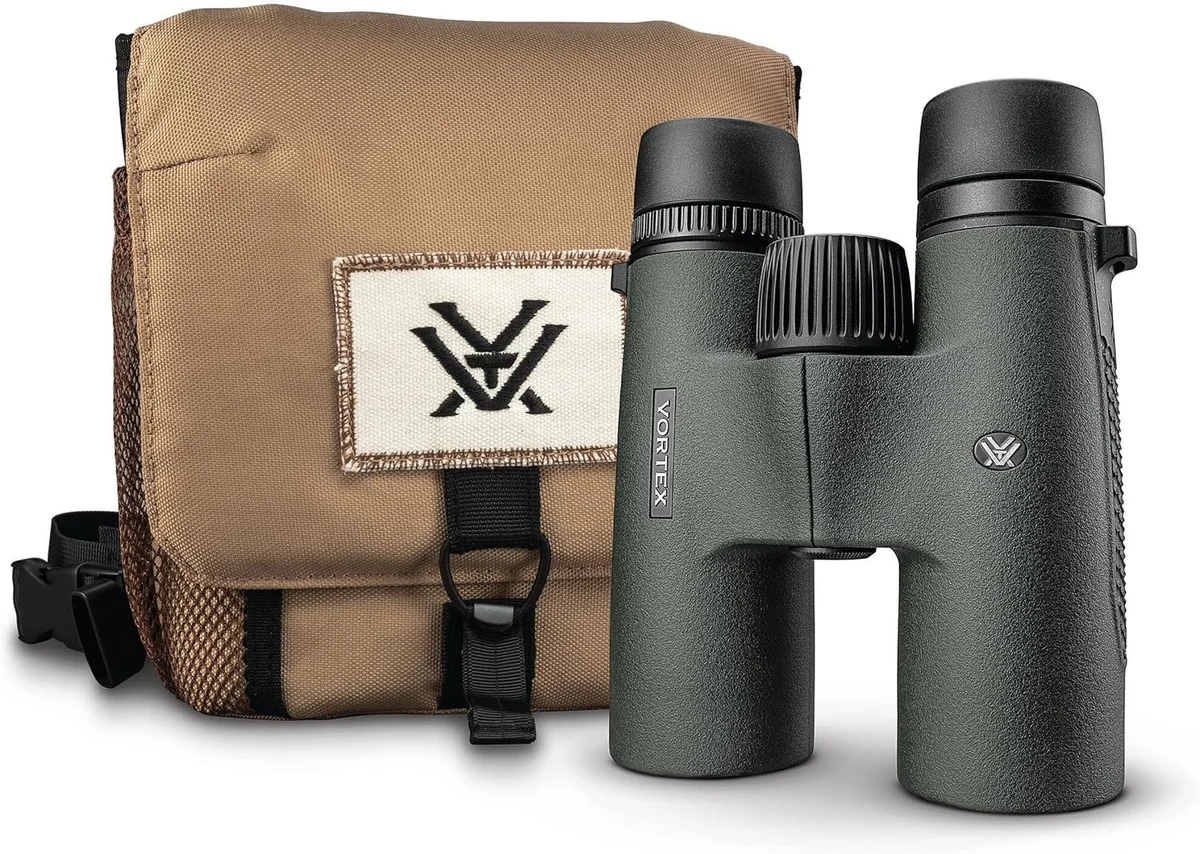
Budget Tiers for Birding — Honest Assessments
Not every price point works for birding. Here's what each tier actually delivers when the subject is a Prothonotary Warbler at 40 yards in pre-dawn canopy.
Honestly, the floor is higher than most people expect.
Under $50 — travel birding only. The Occer 12x25 compact binocular and Hontry 10x25 foldable compact are pocket-sized options. They work for afternoon park walks in good light. At dawn, in forest, or on water, the 25mm objectives simply don't gather enough light. Buy these for travel and casual outings. Don't expect field-grade performance.
$99-$150 — real birding starts here. The Triumph HD at $99 and Crossfire HD at $149 are both fully multi-coated, waterproof, and carry the VIP lifetime warranty. The Crossfire's 6 ft close focus and wider FOV give it the edge for birding specifically. The Triumph's 17mm eye relief makes it the pick for glasses wearers. Both are proper birding binoculars — the kind you use for years, not months.
$200-$250 — the quality jump. The Diamondback HD at $224 adds phase correction, dielectric coatings, and argon purging. The brightness improvement over the Crossfire is visible within seconds — brighter dawn images, higher contrast on plumage detail, wider sweet spot across the field. For birders who go out weekly, this tier pays for itself in enjoyment. It's the entry point to truly excellent optics, and you need to spend $450+ to see a tangible step up from here.
Our Birding Glass Recommendation
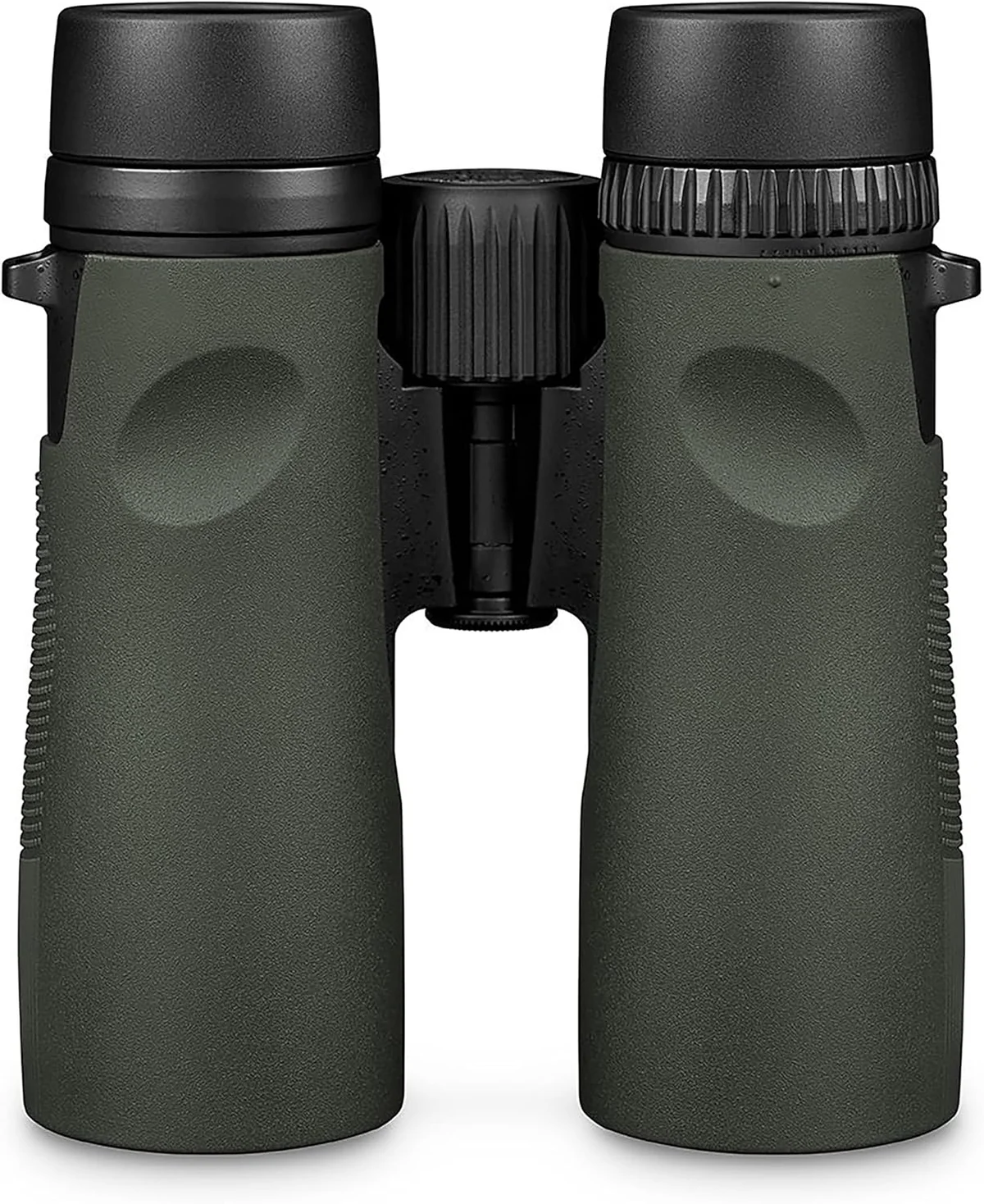
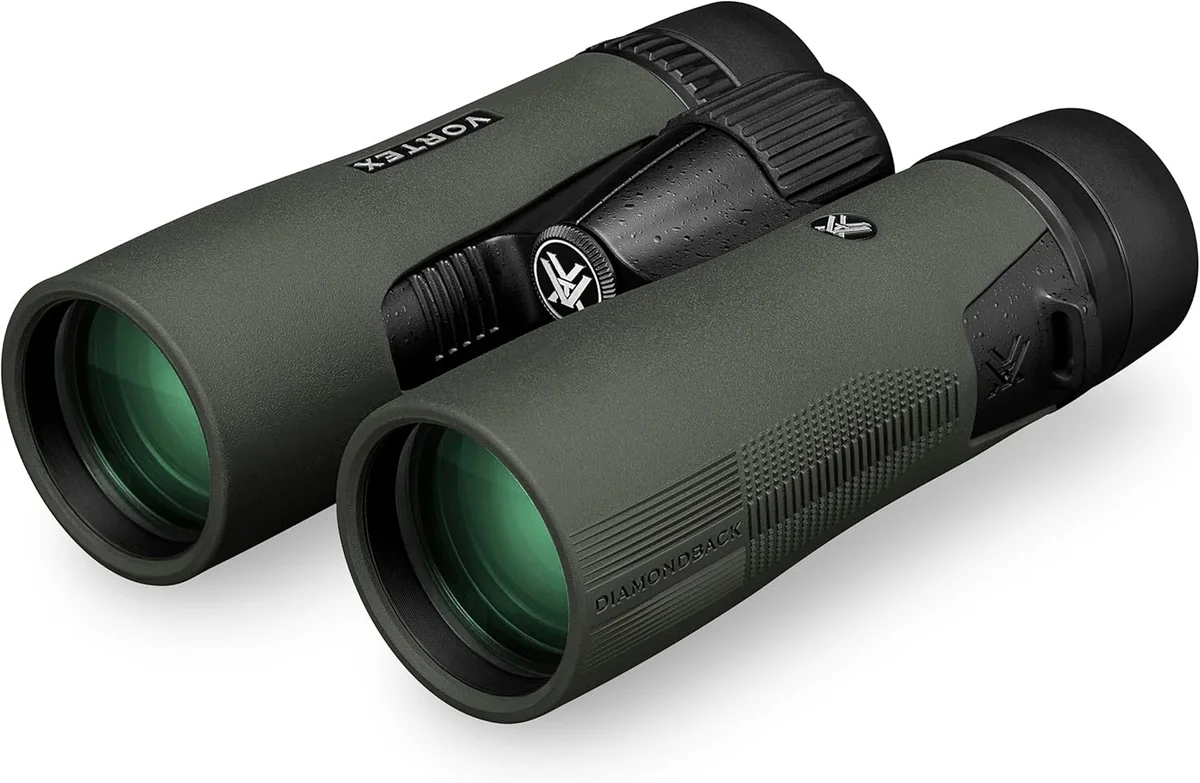
For most birders, the Vortex Diamondback HD 10x42 is the right choice. Phase correction and dielectric coatings make a real difference at dawn, the 5 ft close focus handles feeder birding, the 330 ft FOV is wide enough for canopy tracking, and the VIP warranty means you'll never need to buy another pair. At $100–$250, it's the most optical performance you can buy without crossing into the $400+ tier.
If the budget caps at $150, the Crossfire HD is the next best option — slightly dimmer at dawn but still a capable birding tool with excellent close focus and the same unconditional warranty. Start there and upgrade when you're ready. Both pairs will last decades.
Birding Optics Questions — Answered Without the Sales Pitch
The birding community asks these questions constantly — we pulled the most common from forums, bird walks, and our own review analysis.
What magnification is best for birding?
8x and 10x are the two standard birding magnifications. 8x gives a wider field of view and steadier image — better for tracking warblers in canopy. 10x gives more reach for shorebirds, raptors, and open-field birding. Most birders eventually own both configurations. If you can only buy one pair, 10x42 covers more situations.
Are waterproof binoculars necessary for birding?
Yes, unequivocally. Birding happens at dawn when dew soaks everything, in rain, near water, and in humid conditions that cause internal fogging on unsealed optics. Every binocular we recommend for birding is O-ring sealed and gas purged. Non-waterproof binoculars are fine for concerts and casual use — not for fieldwork.
What is close focus and why does it matter for birding?
Close focus is the minimum distance at which binoculars can sharply resolve an image. For birding, anything under 8 feet is excellent — it lets you watch warblers at feeders, butterflies on bushes, and identify birds that land unexpectedly close. The Crossfire HD focuses down to 6 feet. The Diamondback HD reaches 5 feet. Budget compacts often cannot focus closer than 12-15 feet, which means birds within arm's reach appear blurry through the eyepieces.
Are compact binoculars good enough for birding?
For casual park walks or travel birding, a quality compact like the Occer 12x25 works fine in good light. For dedicated birding — early morning outings, forest canopy, marsh edges — compacts fall short. The 25mm objectives gather roughly 35% as much light as 42mm lenses, which translates to noticeably dimmer images at dawn and dusk when birds are most active. Serious birders use full-size 42mm glass.
What is a good budget for birding binoculars?
The Vortex Crossfire HD 10x42 at the mid-$100s is the price floor for a solid birding binocular — fully multi-coated, waterproof, with close focus short enough for feeder watching. Spending up to the Diamondback HD range adds phase correction and dielectric coatings that make a visible difference in dawn and dusk birding. Below $100, binoculars work but the optical compromises become noticeable during extended sessions.
Is 12x too much magnification for birding?
For most birding, yes. 12x narrows the field of view by roughly 20% compared to 10x, making it harder to find birds in dense canopy. It amplifies hand shake enough that fine feather detail can blur during sustained observation. 12x binoculars also tend to have larger objectives (50mm), which adds weight. The exception: shorebird and raptor birders who observe at longer distances from fixed positions may prefer the extra reach. For woodland, garden, and general birding, 10x is the better balance.
Our Top Recommendation
Based on our research, the Diamondback HD 10x42 is our top pick — hunters and birders who want the best glass under $300 with a lifetime warranty.
Get Our Top 3 Picks
Get our top 3 picks for your budget — one email, then only updates.
Only when something changes. Unsubscribe anytime.