Binoculars for Hiking: What to Carry When Every Ounce Counts
Hiking binoculars face a constraint that birding and hunting glass don't: they have to earn their weight against everything else in your pack. A 24-ounce binocular competes directly with a liter of water, a rain layer, or an extra meal. The question is never "are binoculars useful on trail?" — they obviously are — it's whether the specific pair you're carrying justifies the ounces over the distance you're covering that day.
That tradeoff changes shape depending on how far you're going and what you want to see when you get there.
We analyzed reviews from hikers, thru-hikers, and trail runners across our full product range to identify which features matter on trail and which are dead weight — both literally and optically. The patterns are clear: most hikers overweight optical specs and underweight carry comfort. A mediocre binocular on your chest beats an excellent binocular buried in your pack. Our complete binocular buying framework covers the full picture. This guide narrows it to what works when you're moving.
See Our Top Pick: Occer 12x25
The Core Tradeoff: Compact Optics vs Full-Size Glass on Trail
This is the first decision every hiking binocular buyer faces, and the answer depends entirely on how you hike and what you want to see along the way. Compact and full-size binoculars are different tools built for different compromises — not better and worse versions of the same thing.
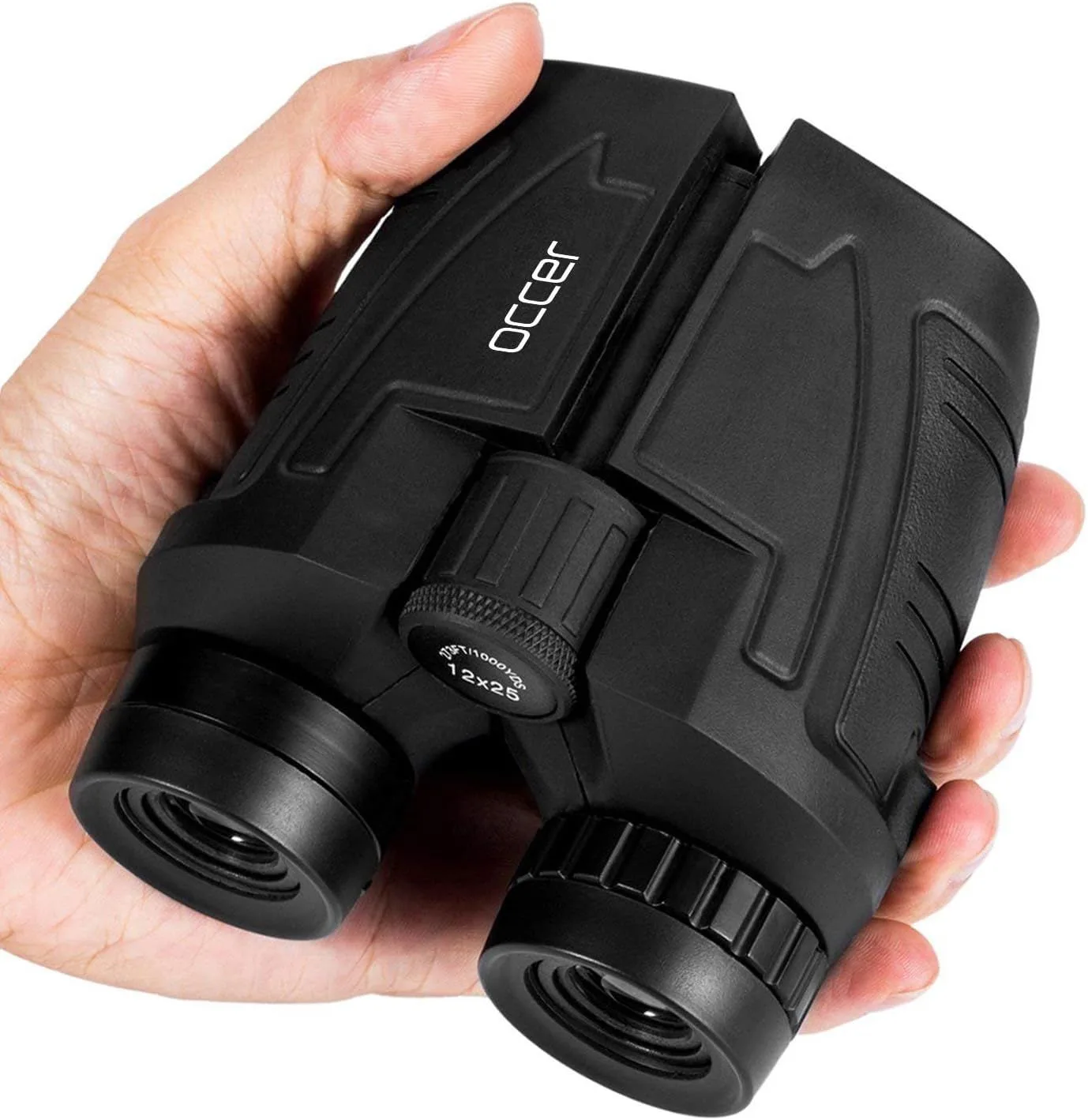
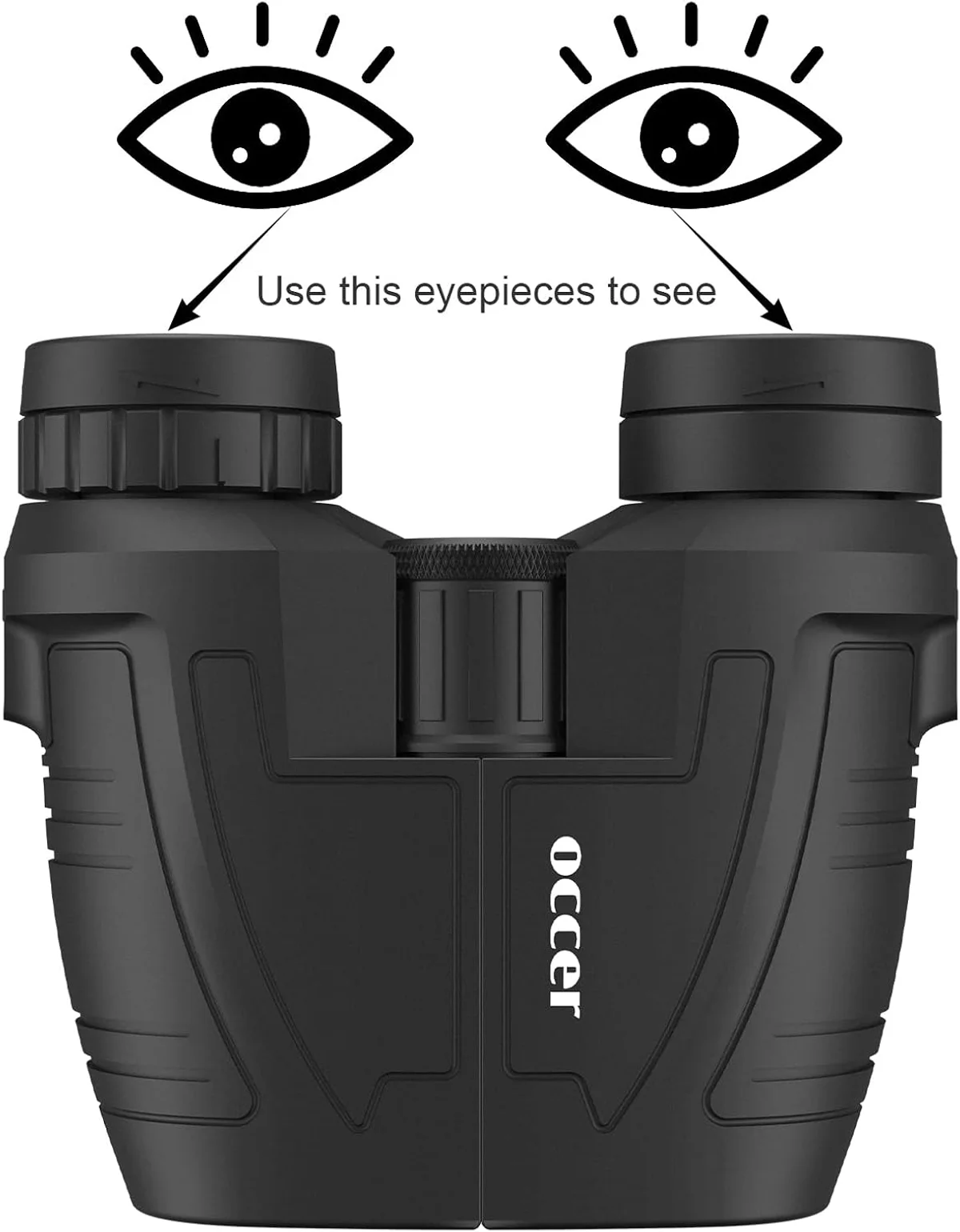
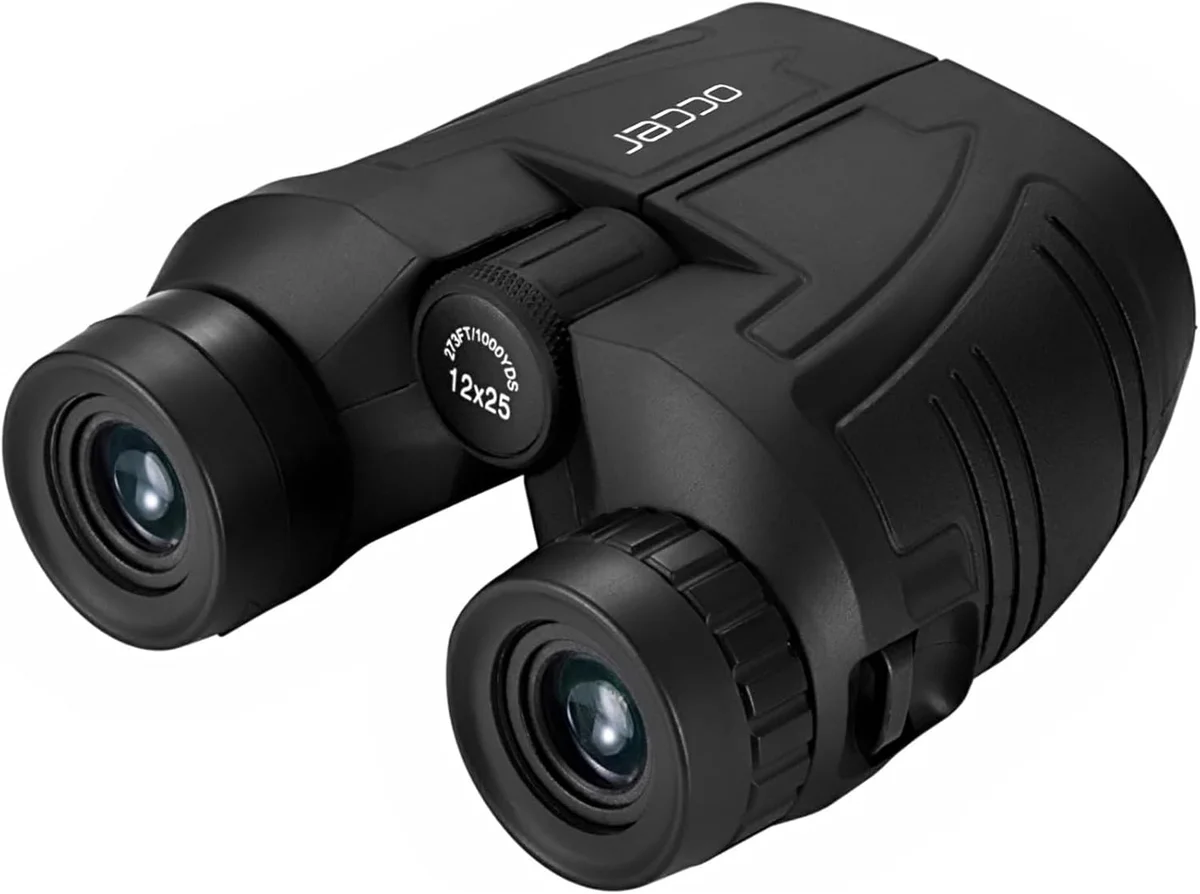
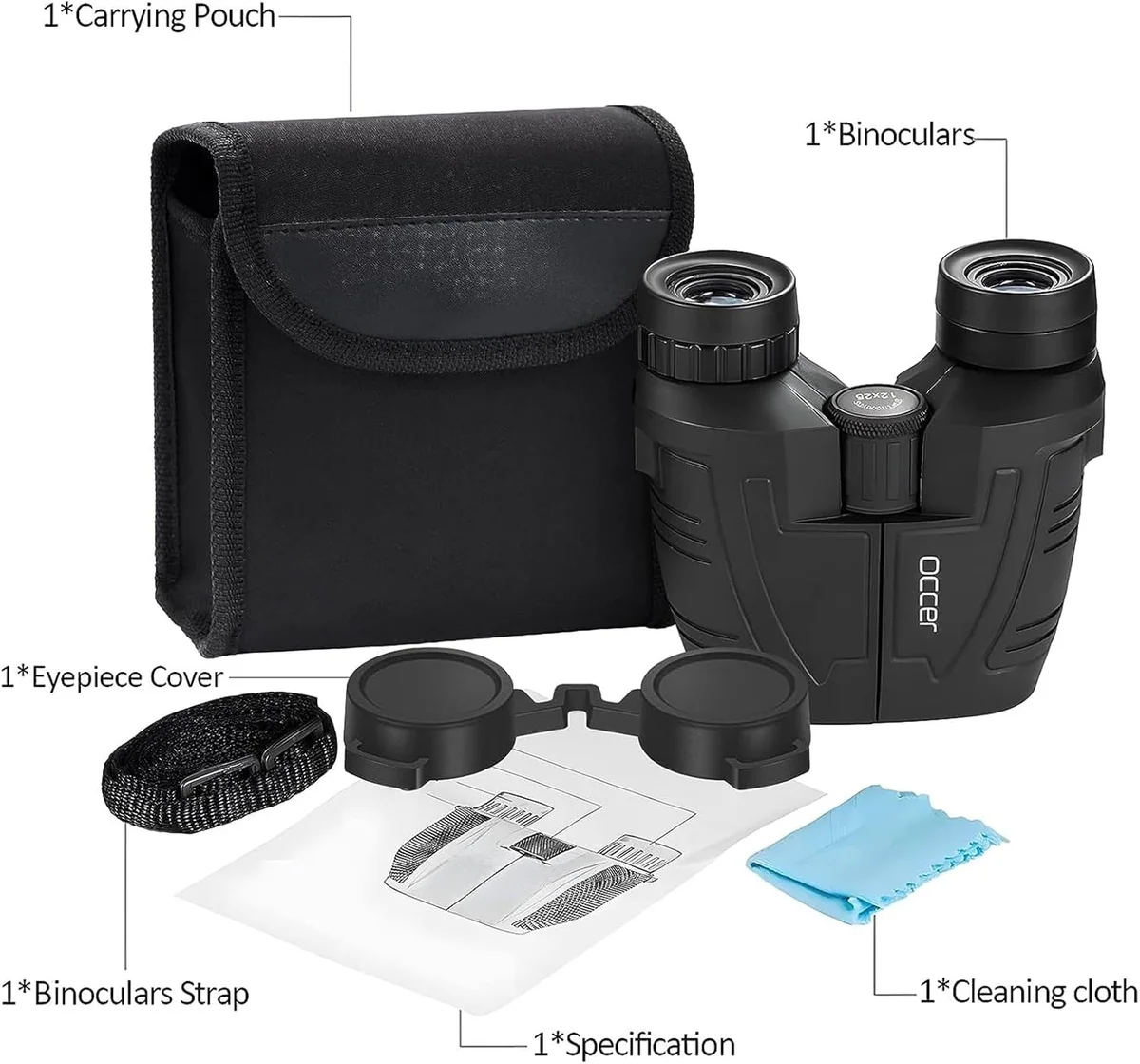
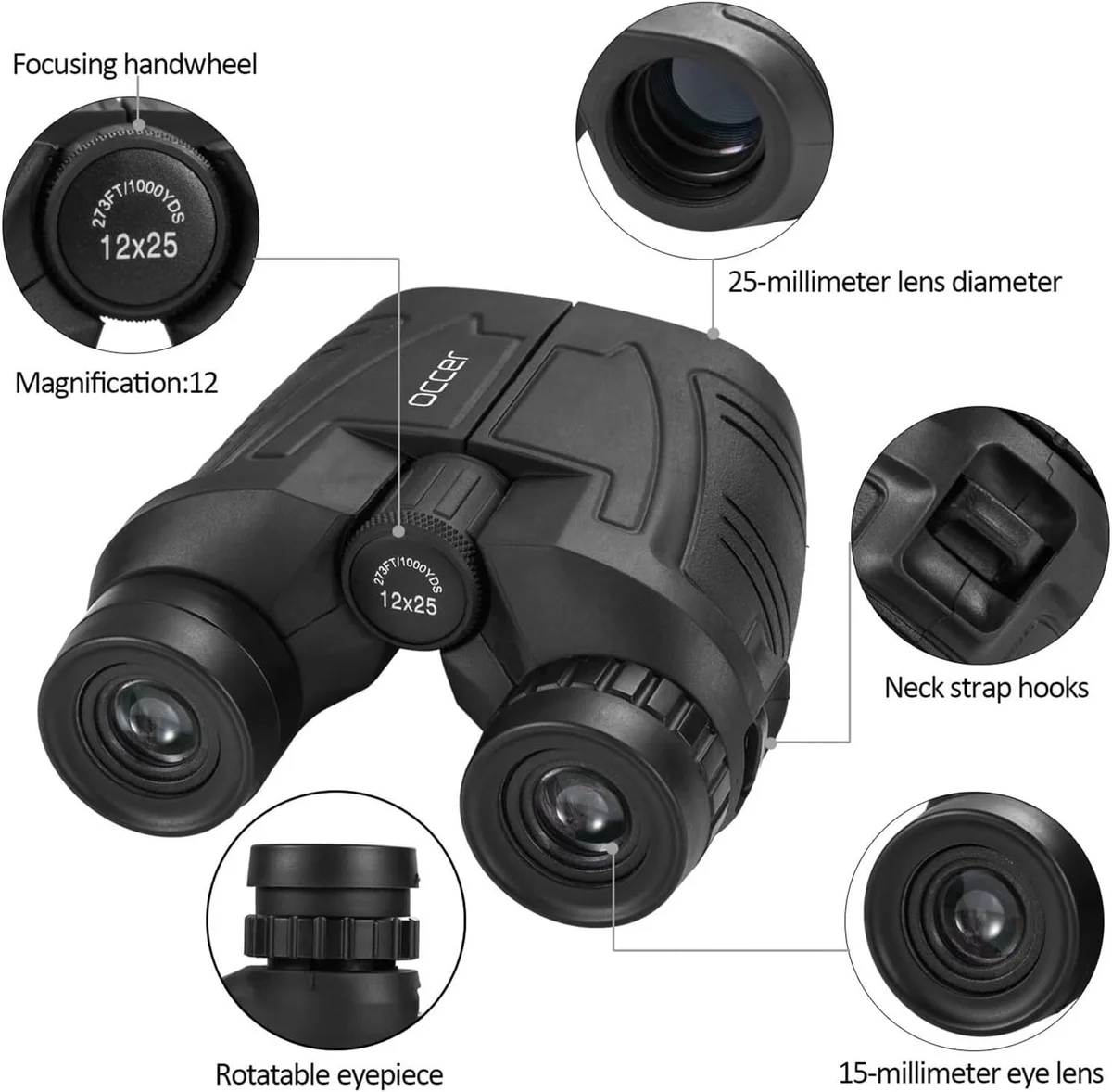
Compact binoculars (25mm objectives, 6-8 oz) fit in a jacket pocket or cargo pocket. The Occer 12x25 at 7.4 oz and Hontry 10x25 at 6.5 oz are light enough that you forget they're there — which means you actually carry them, which means you actually use them. The optical penalty is real: 25mm objectives gather roughly one-third the light of 42mm lenses, so dawn and dusk performance drops noticeably. In full daylight, the difference is smaller than you'd expect. For a hiker whose primary use is "I see something interesting, I want to look closer," a quality compact handles the job.
Full-size binoculars (42mm objectives, 21-24 oz) deliver measurably better images — sharper, brighter, with wider field of view and better edge performance. The Crossfire HD 10x42 at 23.8 oz and Diamondback HD at 21.3 oz are serious optics that also happen to be carried on trail. With a chest harness, the weight distributes well enough for 10-15 mile days. Without a harness, they become a swinging, bouncing annoyance within the first mile.
Honestly, most day hikers are better served by compacts. For birder-hikers willing to carry the weight, we recommend full-size glass on a harness.
Weight Math: What the Numbers Actually Mean on a 15-Mile Day
Gear weight isn't abstract on trail. It's cumulative, and it compounds with distance and elevation gain. Here's the real spread across our catalog:
The Hontry 10x25 at 6.5 oz adds less weight than a full Nalgene bottle cap. The Occer 12x25 at 7.4 oz is negligible. Both fold flat and ride in a pocket without bulk. You carry these without thinking about carrying them.
The Triumph HD at ~24 oz is roughly 1.5 pounds. The Crossfire HD at 23.8 oz is similar. The Diamondback HD at 21.3 oz shaves two ounces — small on paper, noticeable after 10 miles. All three demand a harness for comfortable carry. Without one, the binocular swings on the neck strap, bounces against your sternum on descents, and creates a hot spot under the strap that grows from annoying to painful over a long day.
For thru-hikers and ultralight backpackers counting grams, the Hontry at 184g is the obvious choice — it costs under $25, weighs nothing, and if it breaks or gets lost on trail, replacement is trivial. A thru-hiker who carries full-size binoculars for 2,190 miles is carrying approximately 40 additional pounds of cumulative weight over the length of the Appalachian Trail compared to carrying a compact. The math matters.
What Trails Actually Demand from Your Optics
Trail conditions test binoculars differently than a birding blind or a hunting treestand. The specific demands:
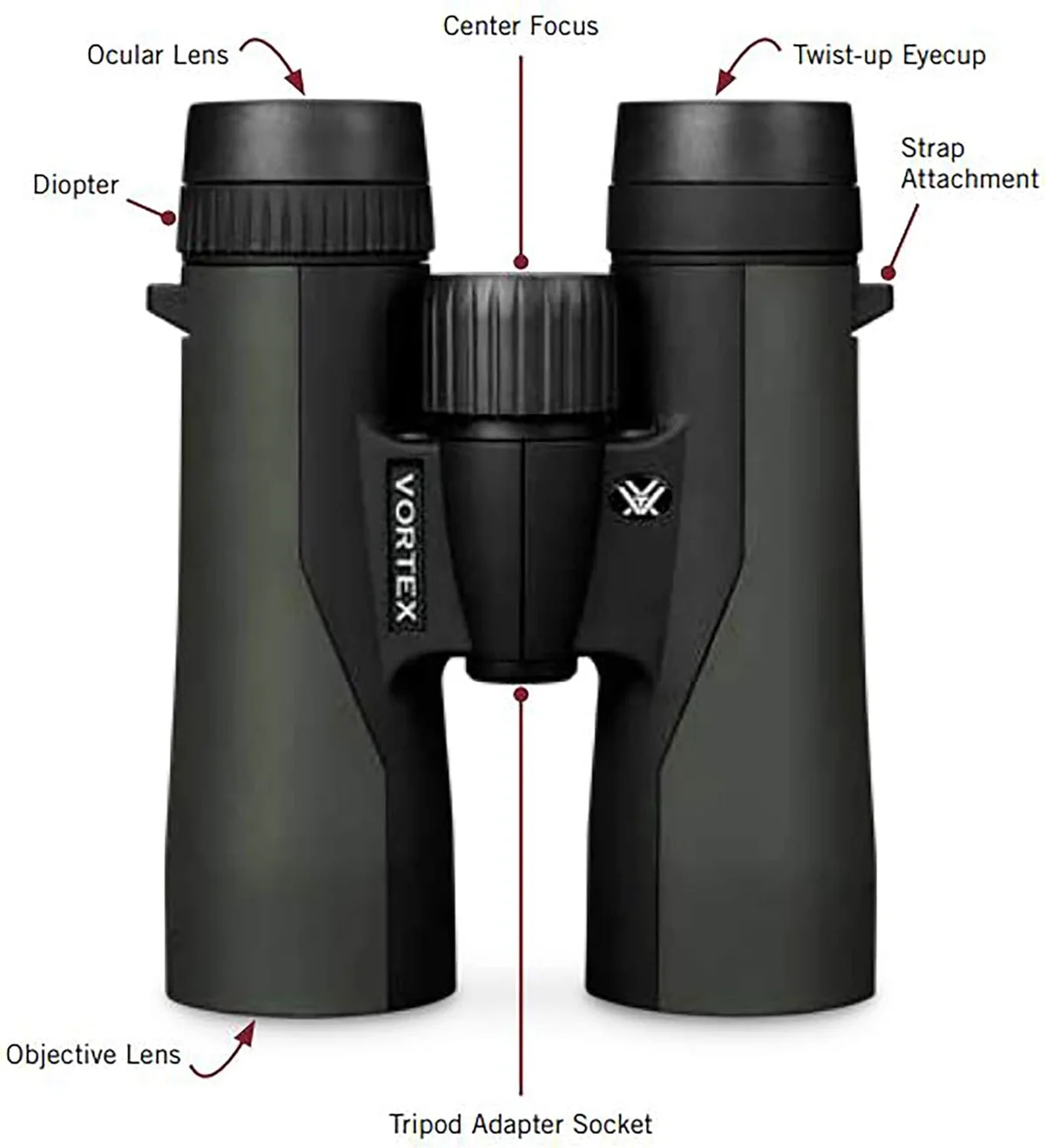
Shock resistance. Binoculars on trail get bumped against rocks, dropped from chest height onto dirt, and occasionally take a fall when you scramble over a boulder field. Rubber armor absorbs the everyday impacts. Internal collimation — the alignment between the two optical paths — is what breaks when a binocular takes a hard hit. Well-built binoculars (Vortex, Bushnell) hold collimation through normal trail abuse. Budget compacts with loose tolerances may develop double vision after a drop.
Weather resistance. Rain on trail isn't optional — it's inevitable over enough miles. O-ring sealed binoculars survive a downpour. Non-sealed binoculars risk moisture ingress that fogs internal surfaces and degrades coatings over time. The Crossfire HD, Diamondback HD, Triumph HD, and Bushnell H2O Xtreme are all fully sealed and gas-purged. The compact Occer and Hontry offer basic splash resistance but won't survive submersion or prolonged rain exposure.
One-hand operation. On steep terrain, one hand is often on a trekking pole or bracing against rock. Binoculars that require two hands to bring up, focus, and stow are harder to use in motion. The chest harness solves the deployment problem — grab and lift with one hand. Focus wheels that are smooth and accessible with a gloved finger help in cold weather. The Crossfire HD's focus wheel is among the best in this regard.
Close Focus on Trail: More Useful Than You'd Expect
Hikers tend to overlook close focus distance — the minimum distance at which binoculars produce a sharp image. On trail, close focus opens up a category of observation that magnification alone doesn't: wildflowers at 5 feet, a butterfly on a thistle at 8 feet, a warbler perched on a trailside branch at 10 feet. These encounters happen constantly and make the difference between a hike where you noticed birds and a hike where you identified them.
The spread across our catalog is wide. The Diamondback HD focuses down to 5 feet — close enough to resolve individual stamens on a wildflower without stepping off trail. The Crossfire HD reaches 6 feet. The Triumph HD bottoms out at 15.4 feet — more than triple the Crossfire's range. Budget compacts range from 3 feet (Occer) to 8 feet (Hontry), though the image quality at minimum focus is softer on compacts.
For hikers who stop at interpretive signs, pause at alpine meadows, and slow down near streams, close focus is not a niche spec. It controls how useful your binoculars are for the small things you encounter within arm's reach — which, on a good trail, happens more often than spotting distant wildlife on a ridge.
Optics You Don't Need on Trail (and Why the Marketing Pushes Them)
Binocular manufacturers market every model for every use case. Hiking-specific claims are especially inflated because the outdoor recreation market is massive. Here's what you can ignore:
Phase correction. This optical treatment matters at dawn and dusk for resolving fine detail on high-contrast targets — antler tines against bright sky, feather barring on a distant warbler. On a typical daylight hike, the contrast boost from phase correction is invisible to most users. It's a real technology with real benefits, but those benefits are weighted toward birders and hunters, not hikers. Don't pay extra for it unless you're also birding on your hikes. Our prism types explainer covers the technical detail.
Dielectric coatings. Same principle — dielectric coatings increase light transmission by several percentage points, which matters in low-light conditions and is invisible at noon. If your hikes happen between 8 AM and 5 PM, the brightness difference between a binocular with dielectric coatings and one without is imperceptible. If you hike at dawn for wildlife watching, it starts to matter.
High magnification (12x+). More zoom sounds better. On trail, 12x amplifies the hand shake from elevated heart rate, wind, and uneven footing. A winded hiker trying to hold 12x binoculars steady after climbing a switchback sees a shakier image than the same hiker with 10x glass. The image stabilization premium models offer costs $800+ — not relevant to our price range. Stick with 10x.
ED (Extra-Low Dispersion) glass. Reduces chromatic aberration — the colored fringing around high-contrast edges. It's a measurable improvement, but at the observation distances and viewing durations typical for hiking, the fringing from standard glass is a non-issue. ED glass earns its premium for birders who spend hours glassing and notice subtle color shifts. For a hiker who lifts binoculars for 30-second observations, the difference is academic.
The Hiking Binocular Decision Tree
Most hikers overcomplicate this decision.
Answer two questions and the choice becomes obvious:
Question 1: How long are your typical hikes? Under 8 miles, weight barely matters — carry full-size glass if you want better images. Over 8 miles, weight starts competing with comfort, and compacts earn their place. Multi-day backpacking trips: compacts win by default unless you are specifically birding or wildlife watching on trail.
Question 2: What do you want to see? General scenery, distant landmarks, the occasional deer — compacts handle this. Bird identification, wildlife at dawn and dusk, detail-level nature observation — full-size binoculars deliver a noticeably better experience, especially in marginal light.
If both answers point the same direction, the choice is clear. If they conflict — long miles but serious wildlife watching — the Diamondback HD at 21.3 oz is the lightest option that doesn't compromise optically. It's not ultralight, but it's the least weight for the most glass quality in our catalog. The Crossfire vs Diamondback comparison walks through every difference in detail if you're deciding between them.
The binoculars you have on your chest are always better than the binoculars you left at home because they weighed too much.
Budget Tiers for Trail Glass
Under $40 — pocket-ready, zero commitment. The Hontry 10x25 at under $25 folds flat, weighs nothing, and works fine in daylight. If you lose it on trail, you shrug and buy another one. The Occer 12x25 at about $36 is the step up: BaK-4 prisms, better magnification, slightly sharper images. Both are day-hike binoculars that earn their spot in a pocket without earning an entry in your gear spreadsheet.
$99-$150 — serious trail optics. The Triumph HD at $99 is the cheapest full-size binocular worth carrying on serious hikes — waterproof, FMC, and warrantied against trail damage. The Crossfire HD at $149 adds better low-light performance and closer focus. Both need a harness. Both will survive seasons of use.
$200+ — for hikers who are also birders or wildlife watchers. The Diamondback HD adds phase correction and dielectric coatings that matter most at dawn — when many trails are quiet and wildlife is active. If your hikes double as birding trips, this is the sweet spot where optical quality and trail-worthiness overlap.
Our Trail Pick — By Hiker Type
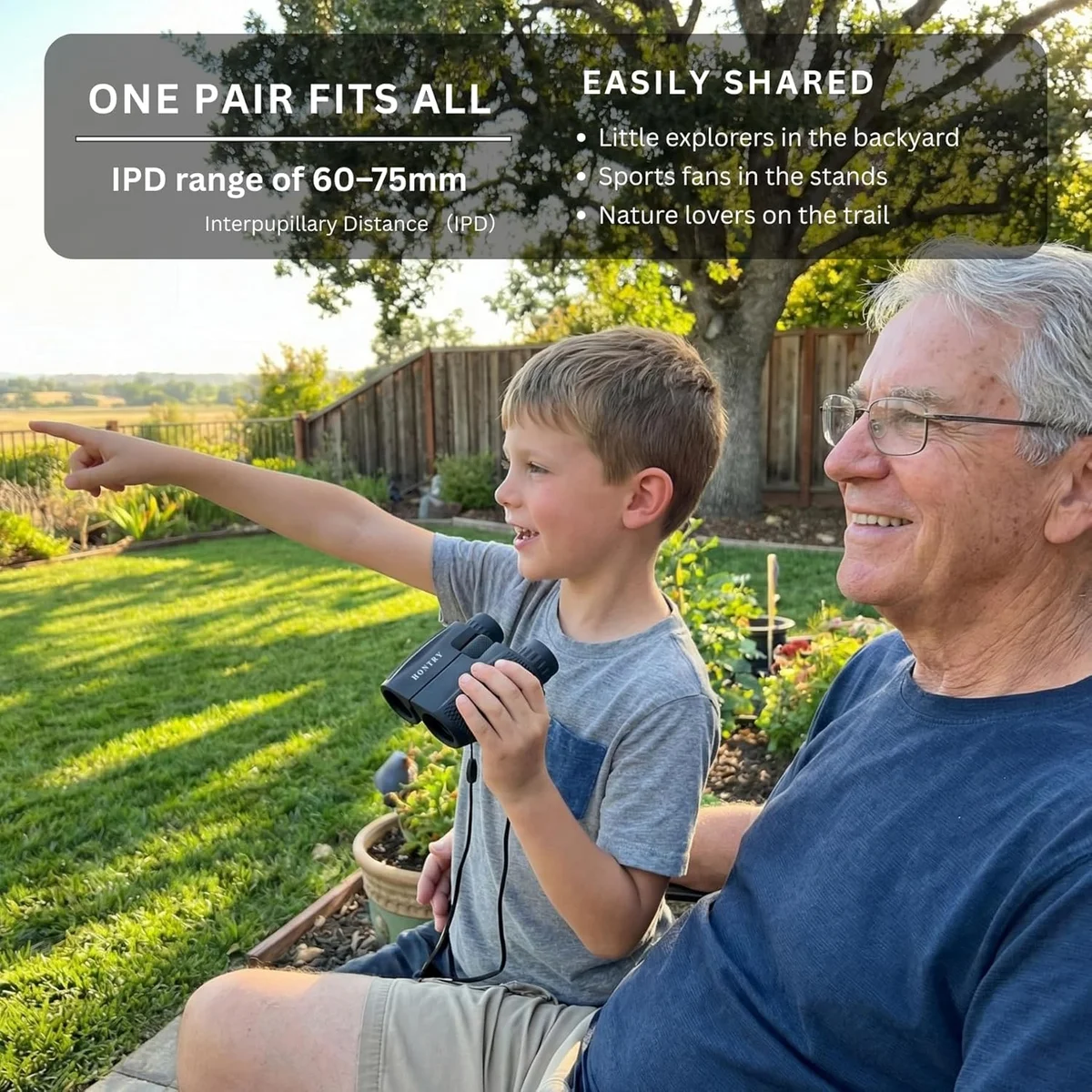
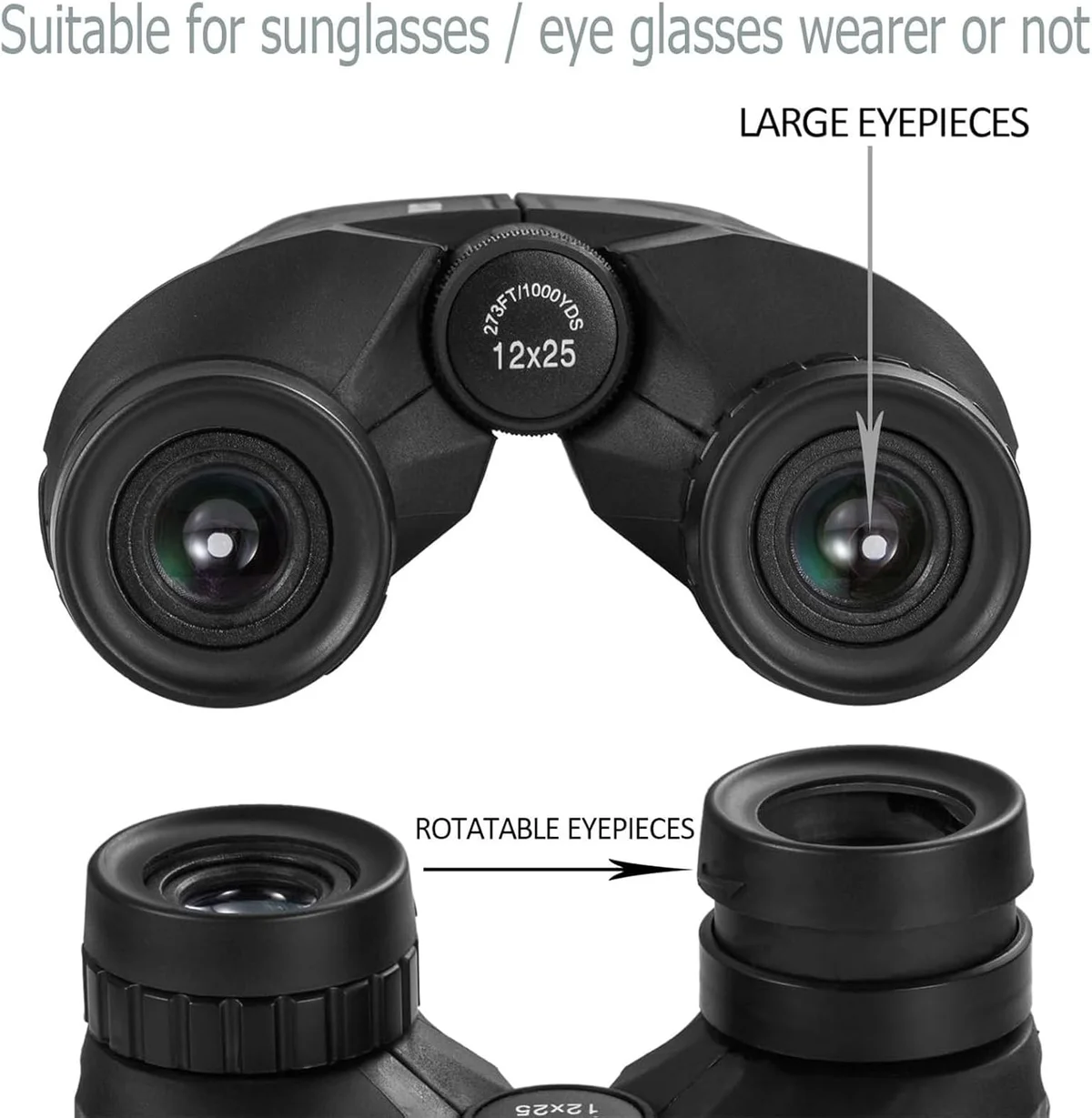
For most hikers, the Occer 12x25 compact is the right call. It delivers sharp daytime images, fits in a pocket, weighs 7.4 oz, and costs about $25–$50. You carry it because carrying it costs you almost nothing — and that means you use it, which is the whole point. The monocular vs binoculars comparison covers the even-lighter option if ounces are the primary concern.
For birder-hikers and wildlife-focused hikers willing to carry full-size glass, the Diamondback HD at $100–$250 with the GlassPak harness is the best trail binocular for serious wildlife observation. It outperforms every other full-size model in our catalog on the weight-to-optics ratio. Skip everything between compact and the Diamondback — the Triumph and Crossfire weigh more without matching its optical performance, which means you're paying more in ounces and getting less in glass.
Trail Optics — Common Questions from Hikers
Trail hikers ask different questions than birders or hunters — these are the ones that come up most in gear forums and trail journals.
Are compact binoculars good enough for hiking?
For daytime hiking in good light, compact 25mm binoculars work well. They resolve detail at 100+ yards, weigh under 8 oz, and fit in a jacket pocket. The tradeoff appears at dawn and dusk: 25mm objectives gather about 35% as much light as 42mm lenses, which means dim, low-contrast images in twilight conditions. If your hikes start before sunrise or end after sunset, upgrade to a full-size 42mm pair and carry the extra weight.
What is the best magnification for hiking binoculars?
10x is the standard for hiking — enough to identify birds, read trail markers at distance, and spot wildlife on a ridgeline. 8x is slightly wider and steadier but rarely offers a noticeable extra benefit over 10x for trail use. 12x and above amplifies hand shake to the point where standing on an exposed ridge in wind produces a jittery image. Stick with 10x unless you have a specific reason to go lower.
How heavy should hiking binoculars be?
It depends on the hike. For day hikes under 8 miles, any binocular under 25 oz is fine — the GlassPak harness distributes weight well. For long day hikes and multi-day backpacking trips, weight becomes competitive with food and water. Compact binoculars at 6-8 oz are the obvious choice for ultralight setups. Full-size 42mm binoculars at 21-24 oz are reasonable for most hikers who are not counting grams.
Do hiking binoculars need to be waterproof?
Yes. Weather on trail is unpredictable — a clear morning can turn into rain by noon, and alpine conditions change faster. Non-waterproof binoculars risk internal moisture damage from a single unexpected storm. O-ring sealed, gas-purged binoculars survive rain, creek crossings, and morning dew without degradation. Every full-size binocular we recommend is waterproof. Budget compacts like the Occer and Hontry are splash-resistant at best.
Should hikers use a neck strap or a harness?
A harness, every time. Neck straps concentrate the full weight of the binoculars on your cervical spine. After two hours of hiking with a 24 oz binocular swinging from your neck, the fatigue is noticeable. A chest harness distributes weight across shoulders and back, keeps the binoculars snug against your chest so they do not swing during scrambles, and lets you access them faster than a pack pocket. The GlassPak harness included with Vortex models is well-designed and adds no extra cost.
What features matter most for trail binoculars?
Weight, durability, and a carry system. Optical quality matters less for hiking than for birding or hunting because most trail observation happens in daylight when even budget optics perform well. Waterproofing is mandatory because weather is unpredictable. Rubber armor absorbs drops and bumps on rock. Close focus under 10 ft helps with wildflowers, insects, and birds on nearby branches. Everything else — phase correction, dielectric coatings — is nice but not essential for trail use.
Our Top Recommendation
Based on our research, the Occer 12x25 is our top pick — concerts, sporting events, and travel where pocketability matters more than optical performance.
Get Our Top 3 Picks
Get our top 3 picks for your budget — one email, then only updates.
Only when something changes. Unsubscribe anytime.