Binoculars for Hunting: Glass That Works When Light Doesn't
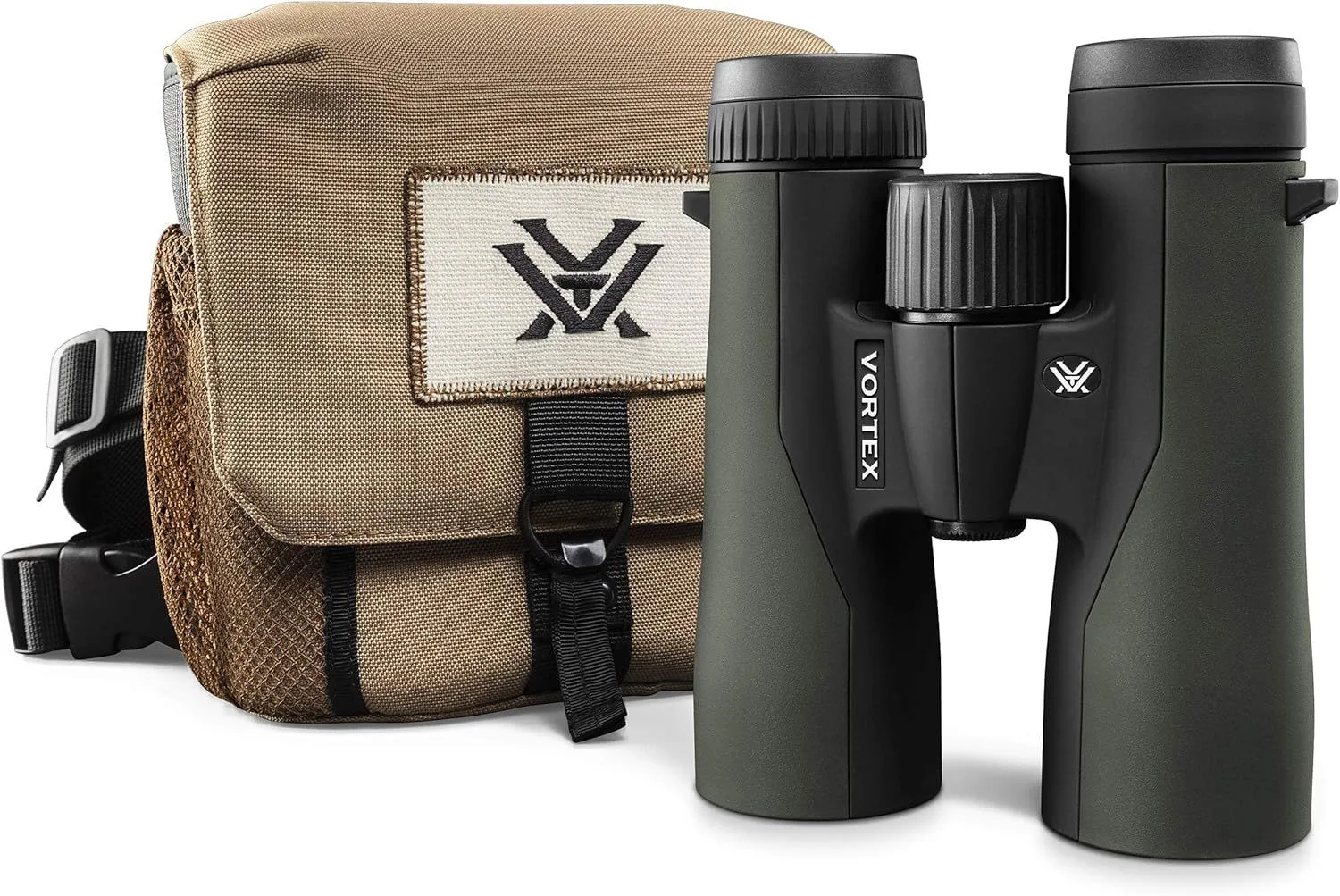
The best hunting binoculars share one trait with the best hunting rifles: they work when conditions are worst. Dawn in November, rain in October, the last thirty minutes of legal shooting light when a buck finally steps out at 300 yards. Binoculars that look fine at the store counter can fall apart optically under exactly these conditions — dim images at twilight, internal fog after a temperature drop, blurry edges that make antler point counts unreliable beyond 200 yards.
This guide is specifically about what hunters need from glass — not recycled "best binoculars" advice that treats hunting as one bullet point on a feature list.
We broke down over 1,200 verified reviews from hunters in our research database and cross-referenced them against measured optical performance data. The conclusions are consistent: low-light capability is the dividing line between binoculars that earn a permanent spot in your pack and ones that get left behind after the first season. Our complete binocular buying framework covers the full technical picture. This page narrows it to what matters in the field.
See Our Top Pick: Crossfire HD 10x42
Low-Light Performance Is the Single Spec That Separates Hunting Glass
Honestly, most binoculars perform acceptably at noon on a clear day. The separation happens at the margins — the first and last thirty minutes of legal light, overcast mornings in timber, the shadow side of a ridge at dusk. These are the moments when game moves, and they are the moments when optical quality either delivers or doesn't.
Three specs control low-light performance: coating quality, prism treatment, and objective lens diameter. All three interact, and upgrading one without the others gives diminishing returns.
Fully Multi-Coated (FMC) lenses are the baseline. Each uncoated glass surface reflects 4-5% of incoming light. A binocular with 10+ glass surfaces that skips coatings on half of them can lose 25-30% of available light before it reaches your eye. In a twilight hunting scenario, that's the difference between identifying a deer at 250 yards and seeing a brown shape you're not confident enough to shoot. Our guide to binocular lens coatings covers the four coating tiers and why the "Fully" in FMC is the part that matters.
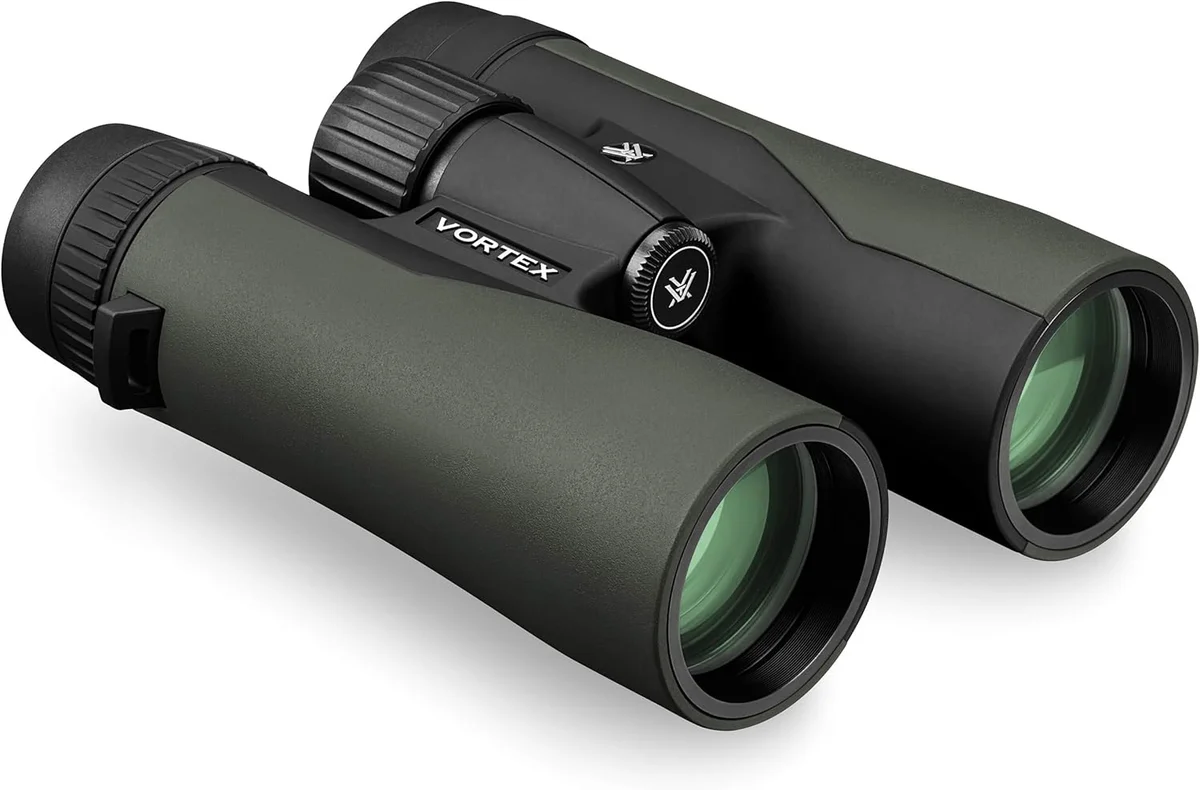
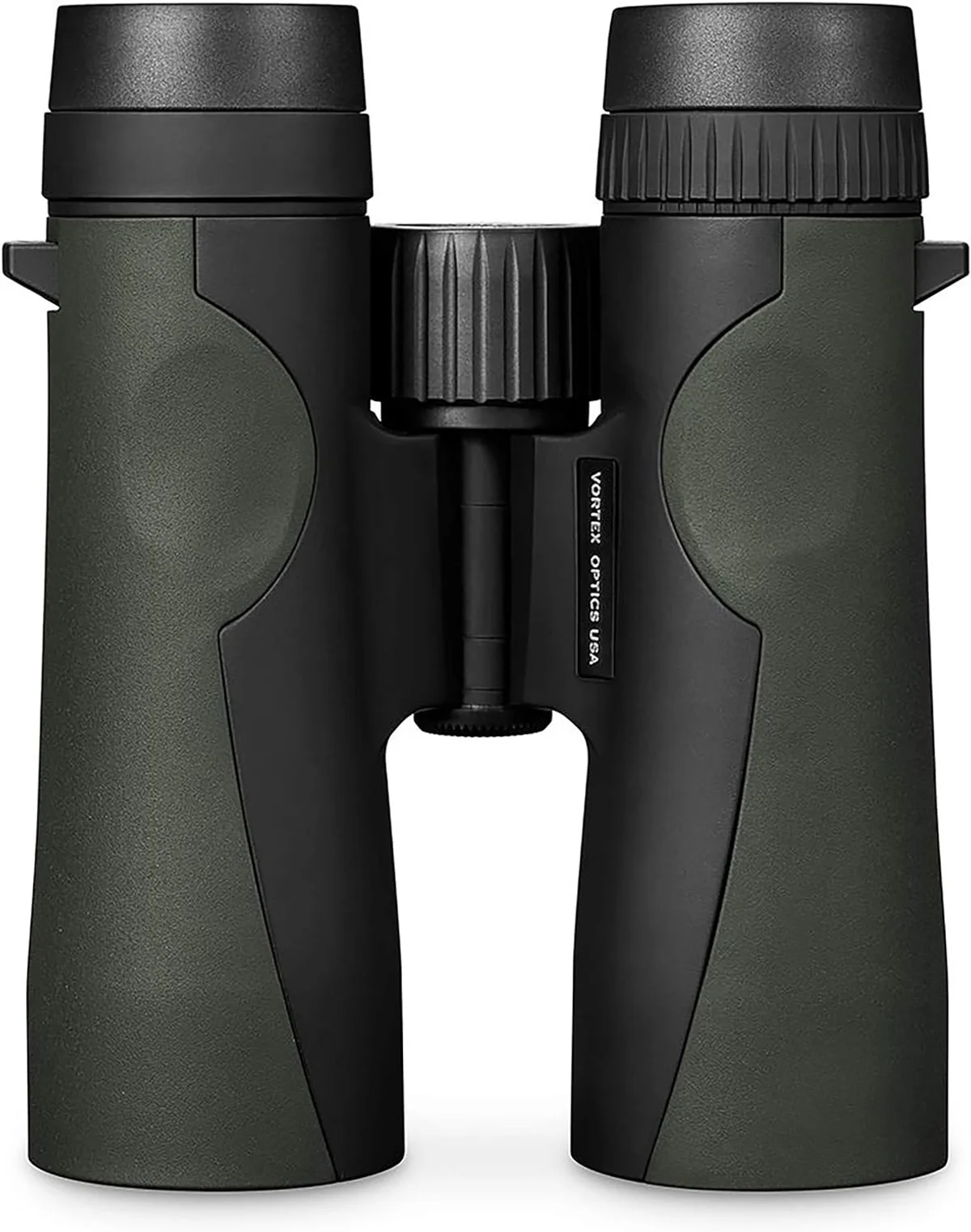
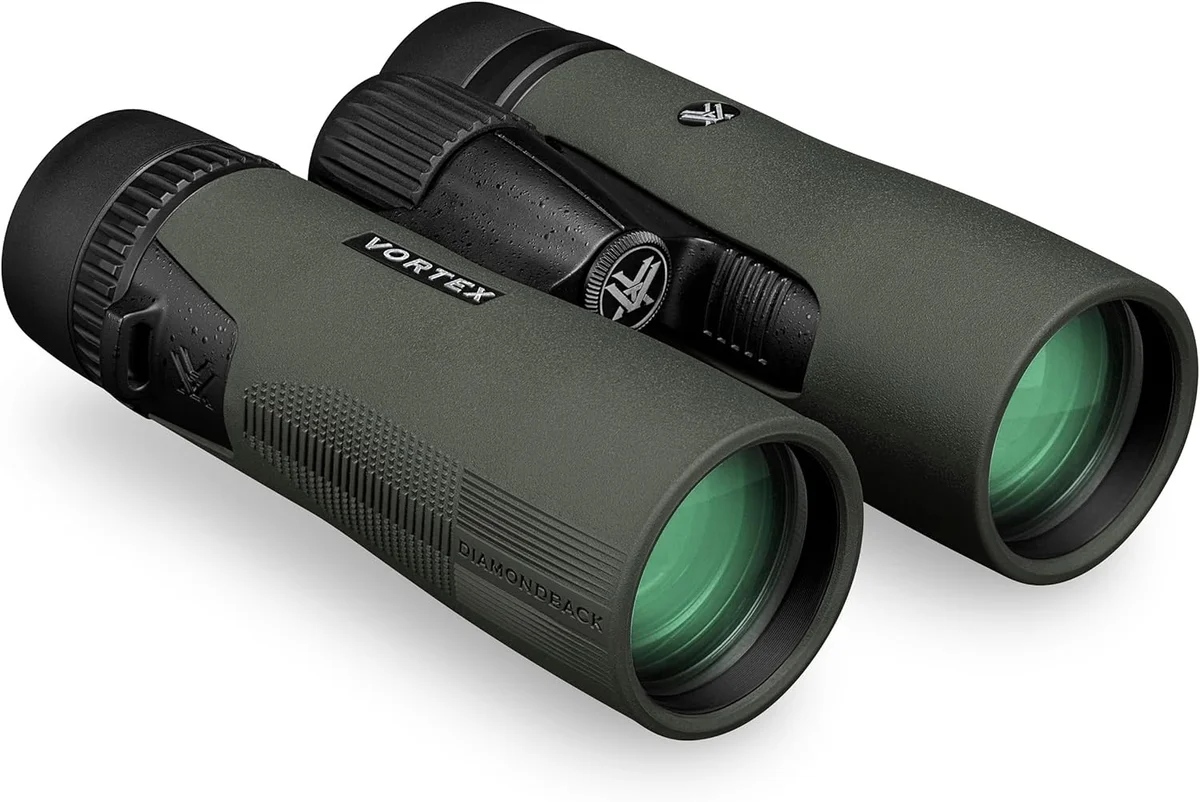
Phase correction fixes a problem unique to roof prism binoculars: light waves splitting as they bounce through the prism, creating interference patterns that reduce contrast on fine detail. Antler tine counts, ear shape for species ID at distance, the dark line between a mature buck's body and the brush behind it — phase correction sharpens all of these. The Diamondback HD has phase correction. The Crossfire HD does not. The difference is most visible on high-contrast edges at distance.
Objective diameter determines how much light enters the system. A 42mm objective gathers roughly 2.8x more light than a 25mm compact. A 50mm objective gathers roughly 1.4x more than 42mm. But bigger objectives mean more weight, and weight matters on a twelve-mile day. For most hunting scenarios, 42mm hits the balance point — enough light for dawn and dusk work without crossing into the two-pound territory that 50mm glass occupies.
Durability: What Survives the Pack and What Doesn't
Look, a binocular review tested on a desk is fiction. Hunting glass gets dropped, scraped, frozen, soaked, and banged against every hard surface in your pack.
Three features determine field durability:
O-ring sealing prevents water and dust from entering the optical path. Every binocular we recommend for hunting is O-ring sealed. The failure scenario is specific: rain gets inside, fog develops on internal surfaces, and the binocular is effectively ruined until professionally disassembled and dried. Prevention costs nothing — it's a manufacturing step, not a premium feature. Non-sealed binoculars have no place in a hunting pack.
Gas purging (nitrogen or argon) replaces internal air with moisture-free gas. This prevents internal fogging when you carry warm binoculars into cold air — a scenario that happens on every pre-dawn sit. Argon is more temperature-stable than nitrogen across extreme swings, which is why the Diamondback HD uses argon purging while the Crossfire and Triumph use nitrogen. Both work. Argon works better when the temperature drops 40 degrees between your truck and your stand.
Rubber armor absorbs impact from drops and bumps. Every full-size binocular in our catalog has rubber armor. The Diamondback HD adds Armortek — a hard exterior coating over the rubber that resists scratches, oil, and dirt. After three months of field use, the difference between Armortek and standard rubber armor is visible: standard armor collects scuffs and grime that Armortek sheds.
The Weight vs Light-Gathering Tradeoff
Every ounce matters on a backcountry hunt. So does every lumen at dawn.
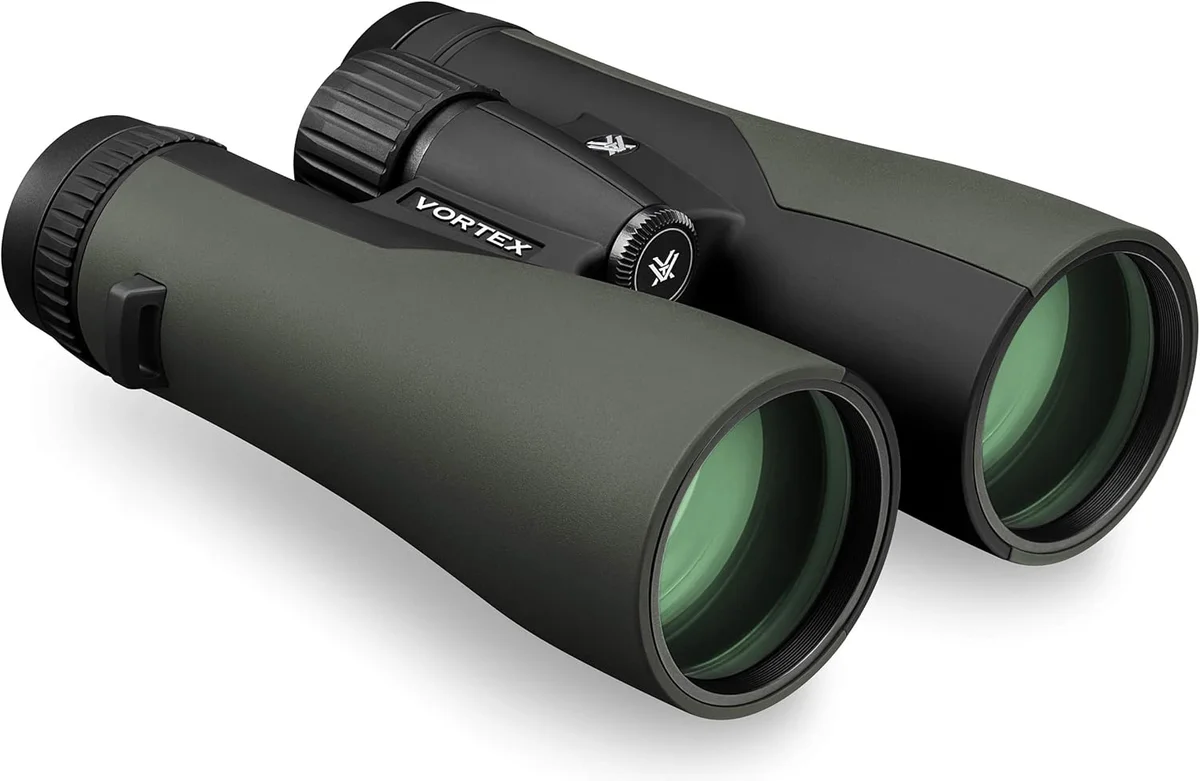
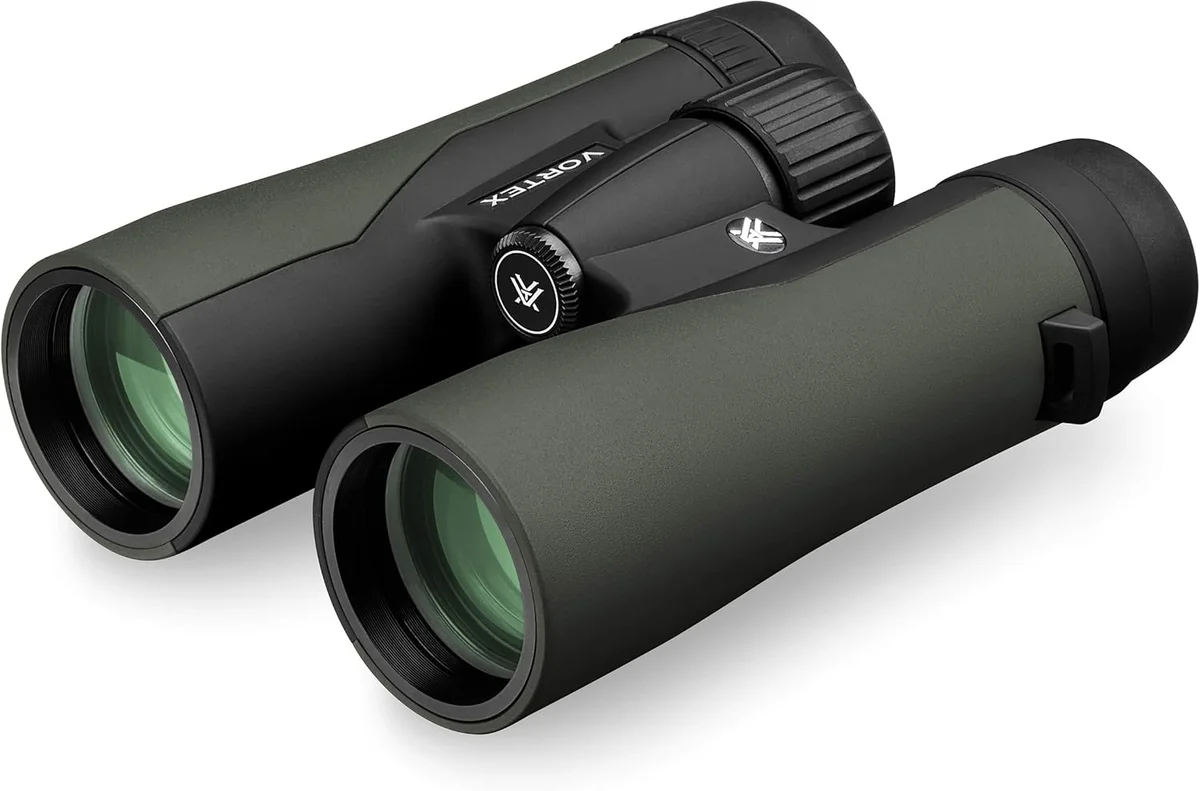
The Crossfire HD 12x50 at 29.5 oz gathers more light than any 42mm model and offers 12x reach for long-range glassing. It also weighs nearly two pounds and amplifies hand shake enough that extended freehand use is fatiguing. The Crossfire HD 10x42 at 23.8 oz is six ounces lighter with a wider field of view and steadier image. Our Crossfire HD 10x42 vs 12x50 comparison breaks down every scenario where each wins.
The practical split: stand hunters, blind hunters, and anyone glassing from a vehicle or fixed position benefit from 12x50 glass. The magnification and light-gathering advantages are real when you don't have to carry them far. Spot-and-stalk hunters, backcountry elk hunters, and anyone logging serious trail miles should stick with 10x42 — the weight savings over a week of hunting are measured in ounces that feel like pounds.
Warranty: The Spec That Outlasts Every Other Spec
A binocular warranty isn't fine print. It's a functional specification that determines how long your investment lasts.
Vortex VIP warranty: unconditional lifetime coverage. No receipt, no registration, no questions asked, transferable if you sell or gift the binoculars. Drop them from a treestand, scratch a lens on a barbed wire fence, run them over with an ATV — Vortex repairs or replaces them. This isn't hypothetical: hunters on forums routinely report sending in damaged glass and receiving repaired or new units within two weeks.
Bushnell warranty: limited lifetime, requires proof of purchase. Covers manufacturing defects and normal wear. Does not cover accidental damage with the same breadth as Vortex. The Bushnell H2O Xtreme is a solid binocular at the price, but the warranty gap versus Vortex is a factor that multiplies over years of field use.
The math is straightforward.
A $149 binocular with lifetime no-fault warranty is a better long-term investment than a $200 binocular with a warranty that excludes the damage hunting actually causes. Hunters who factor warranty into the purchase decision almost never regret it — the ones who ignore it almost always do, usually after their first treestand drop or first wet-season trip.
Magnification: Why 10x Is the Default and When to Break the Rule
The 10x magnification standard in hunting binoculars exists for a reason: it balances reach against stability. At 10x, hand shake is manageable during freehand use — you can hold steady enough to count tines at 200 yards without bracing against a tree. A 12x binocular shows 20% more detail at the same distance but amplifies shake by the same factor. That trade becomes painful during extended glassing sessions where fatigue compounds with every minute.
The rule breaks cleanly along terrain lines. Wide-open western landscapes — sagebrush flats, alpine basins, canyon country — reward extra magnification because game is often visible at 500+ yards where 10x struggles to resolve detail. Eastern timber, where the longest shot might be 150 yards through hardwoods, rarely needs more than 8x. Our detailed 8x42 vs 10x42 comparison covers the math behind this tradeoff.
One scenario where 12x earns its weight: treestand hunting where the binoculars rest on a rail or knee. From a fixed elevated position, hand shake matters less, and the extra magnification helps identify approaching deer at distances where 10x shows a brown shape but not enough detail for a confident species or sex identification.
Choosing Glass by Your Budget — Honest Tiers
Not every price tier produces a usable hunting binocular. Here's what each one actually delivers during a legal-light-only sit.
Under $50 — scouting tool only. Compact binoculars like the Occer 12x25 compact and Hontry 10x25 foldable are too dim at dawn to be primary hunting glass. They work for midday scouting, checking distant fields from a truck, and travel. Don't depend on them when light is the limiting factor.
$99-$150 — the hunting floor. This is where binoculars become reliable field tools. The Triumph HD at $99 is the budget entry — waterproof, FMC, and backed by the VIP warranty. Its 17mm eye relief makes it the best choice for hunters who wear shooting glasses. The Crossfire HD 10x42 at $149 is the step up: better low-light performance, shorter close focus, and a wider sweet spot in the center of the field.
$200-$250 — where optics earn their keep. The Diamondback HD adds the two features that separate adequate hunting glass from good hunting glass: phase correction for sharper detail on high-contrast targets and dielectric coatings for higher light transmission at dawn. If you hunt more than a dozen days a year, the difference compounds. A morning sit in November twilight reveals the gap between this tier and everything below it.
Hunting-Specific Use Cases and Recommendations
Eastern whitetail (treestands, blinds, timber): 10x42 is the standard. Shots are rarely beyond 200 yards, field of view matters more than extreme magnification, and weight must work with a climber stand and pack. The Crossfire HD 10x42 is the default pick — waterproof, warrantied, and optically strong enough for first-light sits.
Western big game (elk, mule deer, pronghorn): Glassing is the game. You sit on ridges and scan hillsides for hours. The Diamondback HD is the better pick here — phase correction and dielectric coatings deliver sharper detail at 400+ yards, and the argon purging handles the temperature swings between alpine mornings and midday sun. Budget allowing, this is where spending the extra money over the Crossfire pays off fastest.
Waterfowl and upland: Binoculars play a scouting role more than a hunting role — spotting flocks, identifying species, reading terrain before a walk-in. A 10x42 works fine. Waterproofing is non-negotiable since you're near water by definition. The Triumph HD at $99 handles this use case well without dedicating premium glass to a role where it spends most of its time in a pocket.
Predator calling (coyote, fox): Fast target acquisition matters. Coyotes respond to calls quickly and approach from unpredictable angles. A wide field of view — 320+ ft at 1,000 yards — lets you scan the field edge without panning. The Crossfire HD 10x42 with its 325 ft FOV outperforms narrower-field alternatives for this style of hunting. The GlassPak harness keeps binoculars on your chest and accessible within seconds, which matters when a coyote appears at a run and you need to confirm species before the shot.
Mountain and backcountry: Weight is king. Every ounce competes with food, water, and gear over multi-day trips. The Diamondback HD at 21.3 oz is the lightest full-quality option in our catalog, and the GlassPak harness distributes that weight across shoulders rather than hanging from the neck. Serious mountain hunters eventually add a tripod adapter for extended glassing sessions on ridgelines — the Diamondback accepts one natively.
Our Pick for Most Hunters
The Crossfire HD 10x42 is the best hunting binocular under $200. The Vortex Crossfire HD 10x42 at $100–$250 is the right hunting binocular for most people. Fully multi-coated optics, real waterproofing, nitrogen fog-proofing, 6 ft close focus, and the VIP lifetime warranty that covers everything the field throws at your glass. It handles eastern whitetail, western glassing, waterfowl scouting, and general outdoor use without a weakness severe enough to notice in the first several seasons.
Hunters who glass at dawn regularly — elk hunters, mule deer hunters, anyone who measures success in the last fifteen minutes of legal light — should stretch to the Diamondback HD. The phase correction and dielectric coatings deliver a visible brightness improvement when it matters most. The head-to-head comparison between the Crossfire and Diamondback breaks down every difference.
Questions Hunters Ask Before Buying Glass
We pulled these from hunting forums, treestand conversations, and the questions that repeat across thousands of product reviews.
What magnification works best for hunting binoculars?
10x is the standard for most hunting — enough reach to identify game at 200-400 yards, steady enough to use without a rest. Western hunters glassing open terrain sometimes prefer 12x or 15x, but those amplify hand shake and require a tripod for extended sessions. Eastern whitetail hunters often find 8x sufficient because shots happen at shorter distances in timber. For a single pair that covers everything, 10x42 is the default.
Are hunting binoculars different from birding binoculars?
Optically, no — the same binocular that works for birding works for hunting. The priorities shift: hunters value low-light performance above close focus, durability above weight savings, and warranty coverage above feature count. Birders prioritize wide field of view and short close focus for tracking small, fast-moving subjects. A Crossfire HD 10x42 serves both activities well. The Diamondback HD is the better choice if most of your use happens at dawn and dusk.
What does fogproof mean on hunting binoculars?
Fogproof means the internal air has been replaced with nitrogen or argon gas, which contains no moisture and cannot condense on internal lens surfaces when temperatures change. Walk from a warm truck into freezing air, and non-fogproof binoculars will fog internally within minutes — moisture trapped between glass elements that takes hours to clear naturally. Fogproof binoculars stay clear because there is no moisture inside to condense. Argon purging is slightly more stable than nitrogen across extreme temperature swings.
What is eye relief and why does it matter for hunters?
Eye relief is the distance between the eyepiece and the point where the full field of view forms. For hunters wearing sunglasses or shooting glasses, eye relief determines whether you see the full image or a restricted keyhole view surrounded by black. The minimum for comfortable use with glasses is 15mm. The Triumph HD offers 17mm — the best in the Vortex budget lineup. The Crossfire HD and Diamondback HD sit at 15mm, which is workable but tight with thicker frames.
Can cheap binoculars work for hunting?
Below $50, binoculars magnify but the images are dim at dawn and dusk — exactly when most game moves. Cheap compacts with 25mm objectives lack the light-gathering ability for the low-light conditions that define morning and evening hunts. Above $100, waterproofing, gas purging, and fully multi-coated optics become standard. The Vortex Triumph HD at $99 is the entry point where hunting binoculars stop being a liability and start being a tool.
How important is the warranty on hunting binoculars?
More important than any single spec. Hunting binoculars get dropped from treestands, banged against rifle stocks, rained on for hours, and dragged through brush. Damage is not a question of if but when. Vortex VIP warranty covers everything — accidental damage, no receipt, no registration, transferable to the next owner. Some hunters specifically buy Vortex because the warranty outlasts the hunt, the trip, and the decade. Bushnell and Nikon warranties are good but require proof of purchase.
Our Top Recommendation
Based on our research, the Crossfire HD 10x42 is our top pick — first-time buyers who want a trusted brand with a real warranty under $200.
Get Our Top 3 Picks
Get our top 3 picks for your budget — one email, then only updates.
Only when something changes. Unsubscribe anytime.