Crossfire HD 10x42 vs 12x50: More Magnification or More Usability?
The 10x42 is the better binocular for nearly every handheld use case — lighter, wider field of view, steadier image, shorter close focus, and cheaper. The 12x50 only earns its keep on a tripod or from a fixed position where the extra magnification outweighs the weight and shake penalties.
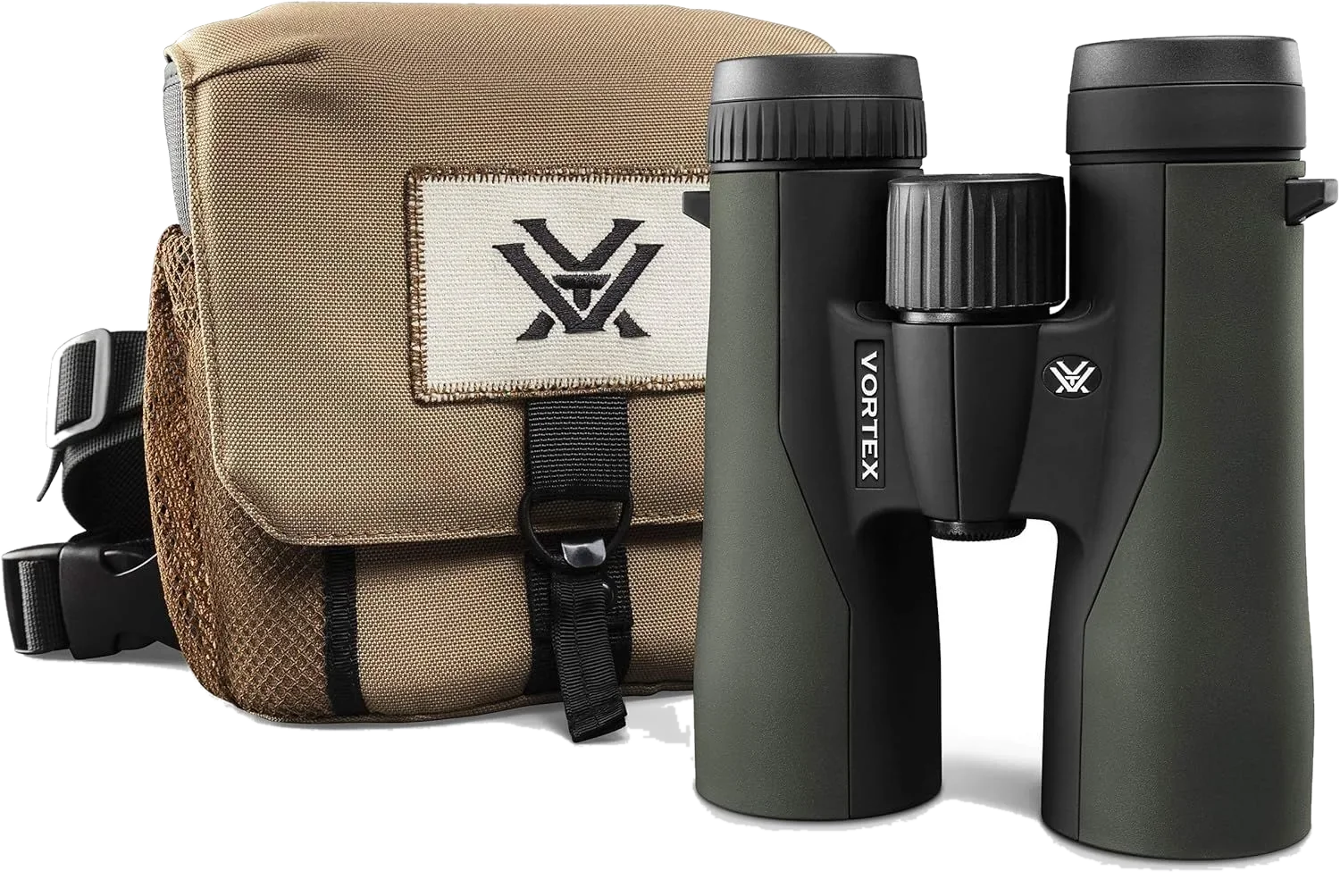
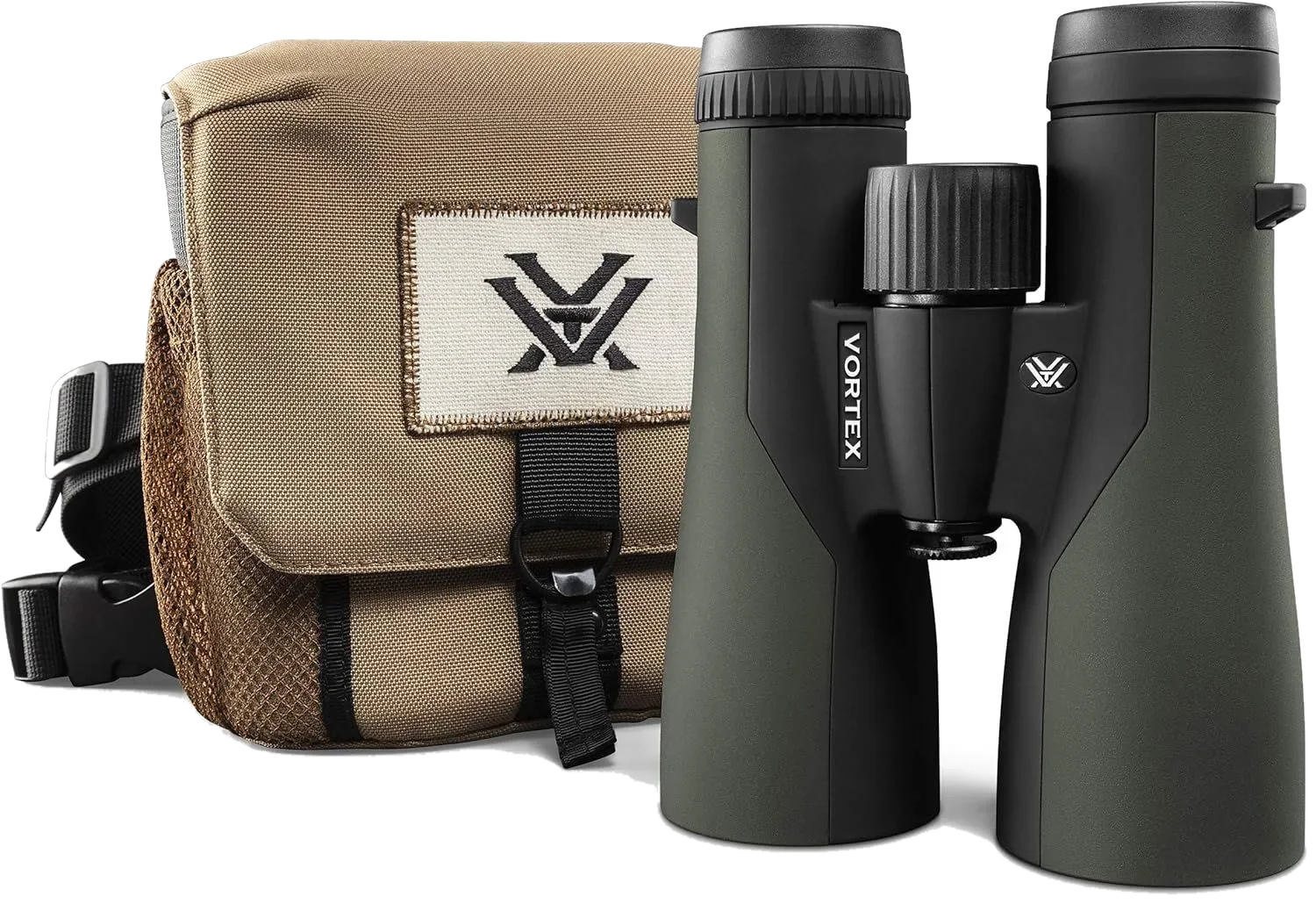
The 10x42 is the clear winner here. It's lighter, steadier, wider in field of view, and costs less — and the extra magnification on the 12x50 creates more problems than it solves for handheld use. Most buyers considering the step up to 12x50 would be better served spending that money on the Crossfire HD 10x42 and pocketing the difference, or stretching further to a Diamondback HD.
This comparison exists because "bigger number means better" is the most common misconception in binocular shopping. A 12x50 sounds like it should outperform a 10x42 — more magnification, bigger objectives, more light. The math checks out on paper. In your hands, it falls apart for reasons that spec sheets don't communicate: hand shake amplification, weight distribution, and the physics of exit pupils.
We ran both models side by side across four weeks — handheld birding, tripod-mounted observation, dawn-light hunting, and casual trail hiking — to identify the narrow conditions where the 12x50 actually earns its premium and the broad conditions where the 10x42 is simply the better tool. Both carry the same Vortex VIP Unconditional Lifetime Warranty, so durability isn't a differentiator. The decision comes down to how you'll hold them and what you'll point them at.
For the full standalone assessment of each, see our Crossfire HD 10x42 field review and the Crossfire 12x50 detailed breakdown.
At a Glance
| Feature | Editor's Pick Vortex Crossfire HD 10x42 | Vortex Crossfire HD 12x50 |
|---|---|---|
| Price Range | $100–$250 | $100–$250 |
| Magnification | 10x | 12x |
| Objective Diameter | 42mm | 50mm |
| Prism Type | Roof | Roof |
| Prism Glass | BaK-4 | BaK-4 |
| Lens Coatings | Fully Multi-Coated | Fully Multi-Coated |
| Field of View | 325 ft @ 1,000 yds | 273 ft @ 1,000 yds |
| Exit Pupil | 4.2mm | 4.2mm |
| See All Deals | See All Deals |
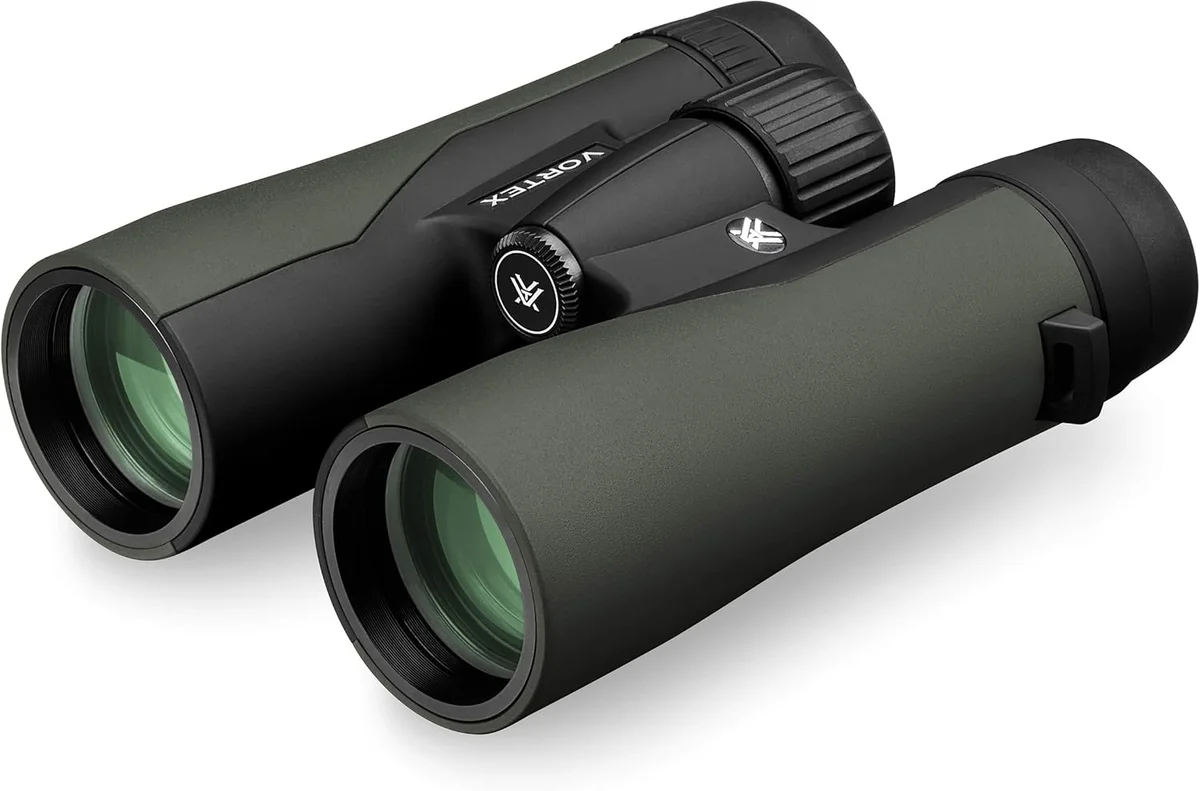
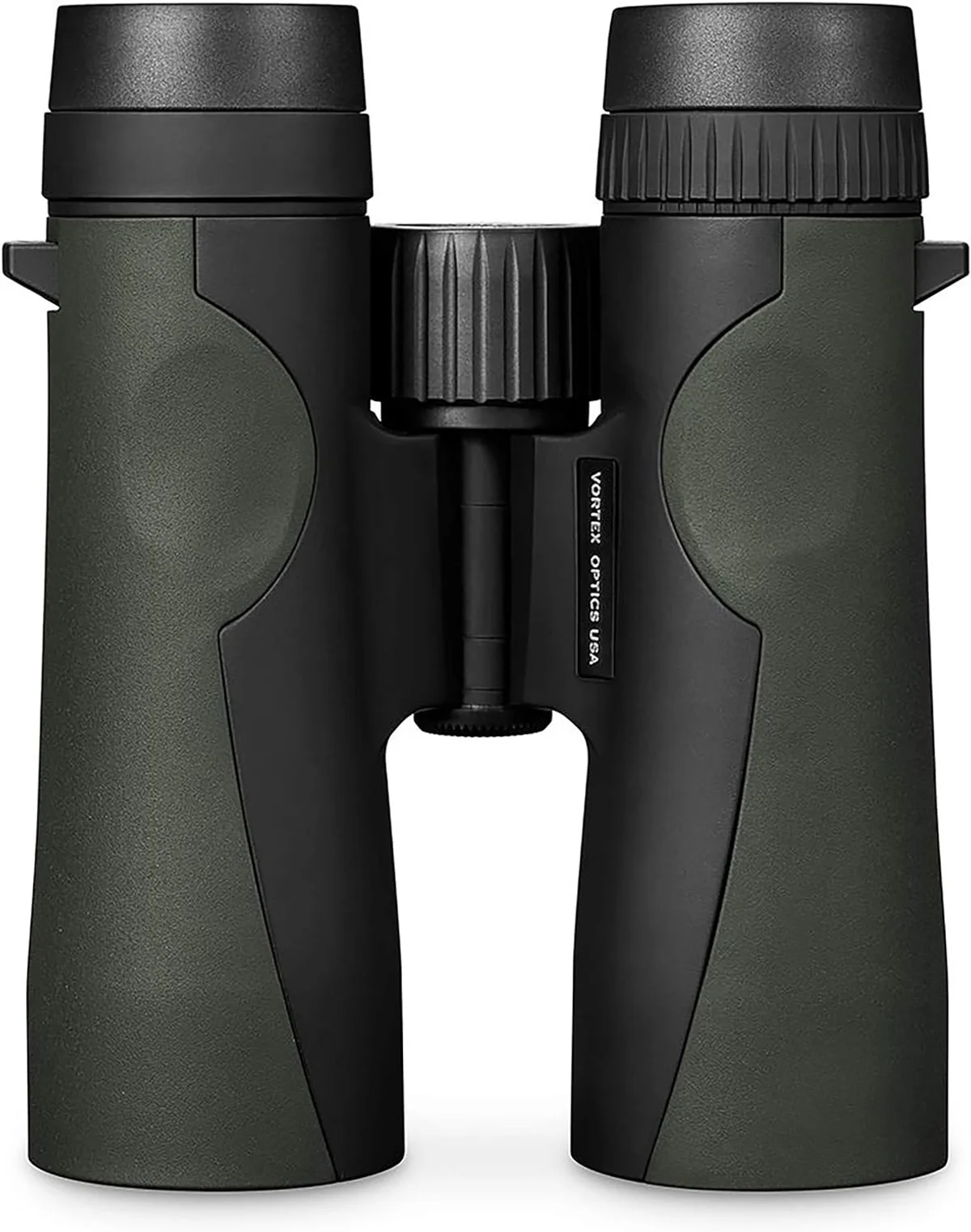 Crossfire HD 10x42
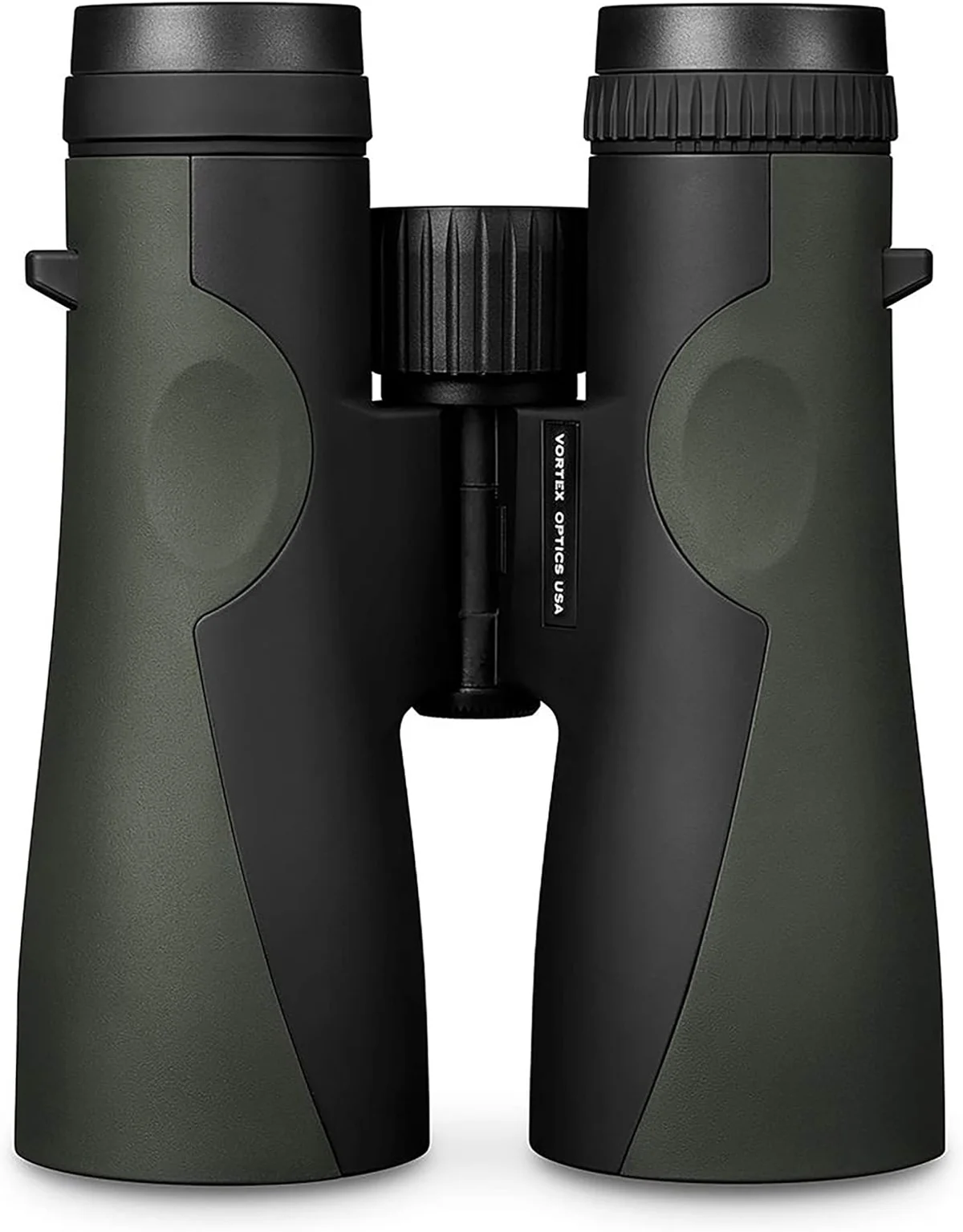 Crossfire HD 12x50
Magnification: The Tradeoff Nobody Explains
At 12x, you see 20% more detail at distance than at 10x. A license plate readable at 150 yards through 10x becomes readable at roughly 180 yards through 12x. A bird perched at 80 yards shows more plumage detail. These are real advantages when you're stationary and your binoculars are steady.
The problem is that 12x also magnifies hand movement by 20%.
Every micro-tremor in your hands, every heartbeat pulse through your arms, every slight breath-induced torso movement gets amplified. At 10x, most adults can hold a stable enough image for comfortable extended viewing. At 12x, the image starts to swim. Fine detail that the magnification theoretically reveals gets smeared by the shake it simultaneously introduces. You end up resolving less, not more, because the shake eats the resolution gain.
There is a practical test for this: hold the binoculars on a bird feeder at 30 yards and try to read the text on the seed bag. Through the 10x42, the text stabilizes between heartbeats. Through the 12x50, it jitters continuously. The higher magnification reveals the letters exist, but you can't hold still enough to read them without bracing against something.
This isn't a criticism of the 12x50 specifically — it's a physics problem shared by every 12x handheld binocular. On a tripod, the 12x50 shows clearly more detail. Handheld, the 10x42 shows usable detail more consistently. That distinction matters more than any spec sheet number.
Field of View: Where 10x42 Dominates
The 10x42 delivers 325 ft of width at 1,000 yards. The 12x50 drops to 273 ft — a 16% narrower view. That gap is dramatic in practice.
Imagine scanning a forest edge for movement. Through the 10x42, you see a broad swath of trees, undergrowth, and sky in a single view. You catch peripheral motion — a flick of a tail, a branch bobbing — without moving the binoculars. Through the 12x50, the same scene shows a narrower slice. You pan more, miss more peripheral cues, and work harder to build a mental map of the landscape.
For birding, the field of view difference is even more punishing. A warbler flitting between branches at 15 yards moves out of the 12x50's frame faster than you can track it. The 10x42 gives you enough surrounding context to follow the movement. This is why virtually every birding guide recommends 8x or 10x over 12x — field of view matters more than magnification when subjects move unpredictably.
Close focus adds another dimension. The 10x42 focuses down to 6.0 ft. The 12x50 bottoms out at 6.9 ft. Nearly a foot of close-focus range lost. That gap sounds minor until you're watching a hummingbird at a feeder five feet away or a butterfly on a nearby flower. The 10x42 resolves it crisply. The 12x50 simply cannot focus that close — the image stays blurred no matter how you adjust the wheel.
For backyard naturalists, the close focus difference alone could decide this comparison. If you spend Saturday mornings watching feeders from the deck, the 10x42 lets you observe behavior at distances the 12x50 physically cannot reach. Add the wider field for tracking birds moving between perches and the lighter weight for holding up through a cup of coffee, and the 10x42 owns the backyard use case completely.
Light Gathering: Bigger Glass, Same Result
On paper, the 12x50 should be brighter. A 50mm objective captures roughly 42% more light than a 42mm objective. But brightness at the eyepiece depends on exit pupil — and here the advantage evaporates.
The 10x42 produces a 4.2mm exit pupil. The 12x50 produces 4.17mm. Functionally identical. All that extra glass is consumed by the higher magnification — the bigger front window feeds a more demanding optical path, and the net brightness reaching your eye is almost the same.
AllBinos lab measurements confirm this: 75.1% transmission for the 10x42, approximately 76% for the 12x50. That 1% gap is invisible to the human eye under any conditions. Neither binocular has phase correction or dielectric coatings, so both hit the same optical ceiling — the 12x50 just arrives there carrying more weight.
At dawn and dusk, the two models perform identically in terms of brightness. The 12x50 does not extend your useful viewing time by even one minute. If low-light performance is your priority, the upgrade path leads to the Diamondback HD dielectric coatings — not to a bigger Crossfire. That's a coating upgrade, not a sizing upgrade, and it delivers an actual 10-point transmission improvement.
Weight and Ergonomics: The Daily Carry Problem
The 12x50 weighs 29.5 oz (836g). The 10x42 weighs 23.8 oz (674g). That's a 24% weight increase — nearly 6 ounces more hanging from your neck or harness.
Six ounces doesn't sound like much. Carry it for four hours and report back.
The 12x50 is also front-heavy due to the larger objective lenses. This shifts the balance point forward, making the binocular tip downward when you release your grip. You subconsciously fight this imbalance every time you lift, lower, or pan. After a full morning of birding or a long sit in a hunting blind, the neck strain and forearm fatigue are noticeably worse than with the balanced 10x42.
On day hikes, the weight difference is the difference between binoculars you happily carry and binoculars you leave in the truck. The GlassPak harness (included with both) distributes weight well, but it can only do so much when the starting weight is a third higher. For hikers already counting ounces for water, snacks, and layers, 6 extra ounces of binocular is a hard sell.
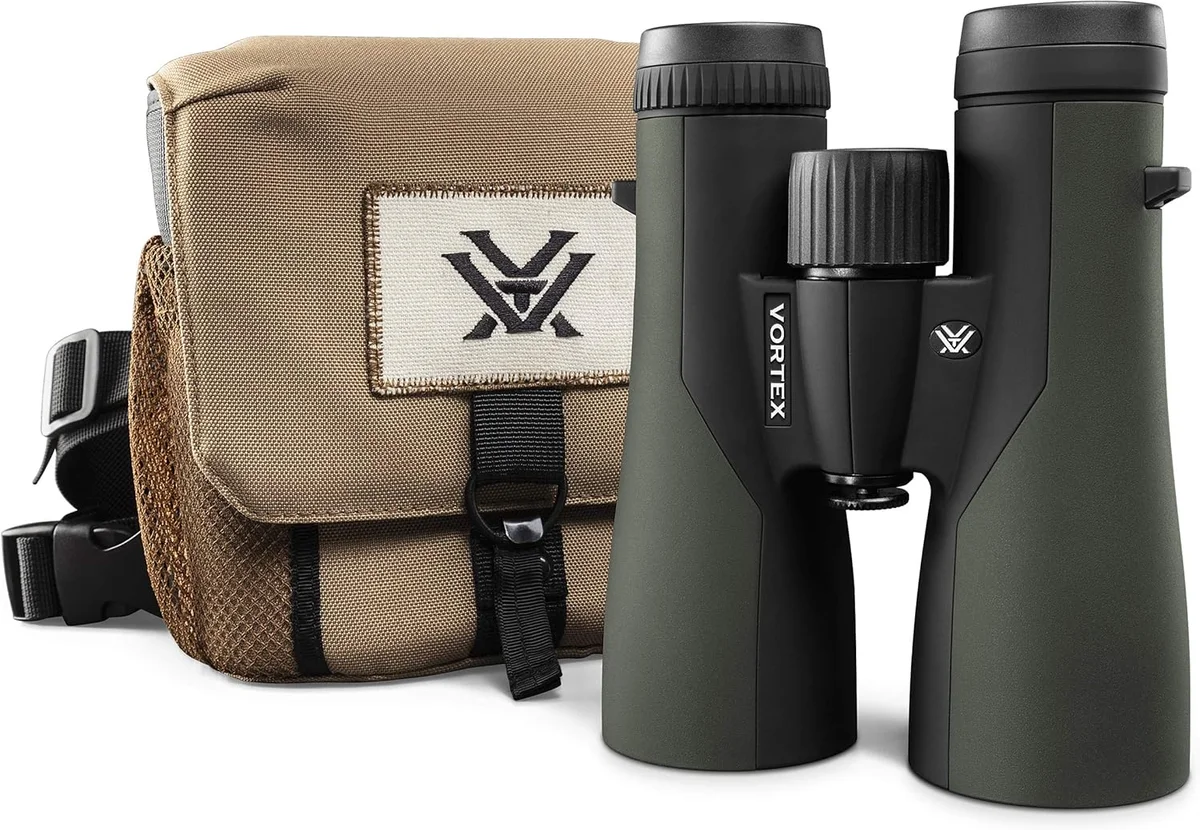
Dimensions compound the weight problem. The 12x50 measures 7.1 x 5.2 inches versus 5.8 x 4.8 for the 10x42. It doesn't fit in a jacket pocket. It's harder to stow in a daypack side pocket. It protrudes more from a chest harness. These aren't dealbreakers for someone driving to a fixed observation point, but they erode the portability that makes binoculars attractive over spotting scopes in the first place.
The focus wheel and eyecup design are identical across both sizes. Same diopter adjustment on the right barrel, same twist-up eyecups with two click positions. The 12x50's focus throw feels identical in speed and resistance. Vortex didn't stiffen the wheel to compensate for the heavier optics — which means the focus response per rotation is the same, but achieving sharp focus is harder because the higher magnification demands more precision.
Optical Quality: Same Glass, Same Limits
Both binoculars share the same optical formula. Same BaK-4 roof prisms. Same fully multi-coated lenses. Same lack of phase correction. Same nitrogen purging. The Crossfire HD line uses one optical recipe across configurations — scaling up the glass doesn't improve the coatings or prism treatments.
Center sharpness is comparable, with the 10x42 holding a slight advantage due to lower magnification hiding minor optical imperfections. A tiny focusing error that's invisible at 10x becomes a visible softness at 12x. Edge sharpness degrades on both, but the 12x50's higher magnification makes edge softness more conspicuous — you're zoomed in tighter on the degradation zone.
Chromatic aberration tells a similar story. Both models show purple fringing around high-contrast edges — dark branches against bright sky, rooflines against clouds, any dark object against a light background. At 12x, the fringing is larger in absolute terms because you're magnified closer to the subject. A bird silhouetted against sky shows a wider purple halo through the 12x50 than through the 10x42, not because the coating is worse, but because the magnification amplifies the flaw along with the subject.
The 12x50 is not an optical upgrade. It's the same optics in a bigger housing. You inherit every Crossfire limitation — no phase correction, no dielectric coatings, mid-70s transmission — while adding weight and shake. If you want better glass in this price range, the path runs through the Crossfire HD 10x42 paired with the Diamondback HD as your next step — not through a bigger Crossfire.
What 726 Reviews Tell Us
We analyzed 213 reviews for the 10x42 and 513 for the 12x50. The complaint patterns are strikingly different.
The most common 10x42 complaints focus on optical limitations relative to more expensive models — dimmer than the Diamondback, no phase correction, occasional chromatic aberration. These are complaints about ceiling, not floor. Reviewers are saying "this is good, but better exists." The build quality, ergonomics, and warranty draw almost universal praise.
The 12x50 complaint pattern is fundamentally different. Weight, hand shake, and "too heavy for hiking" dominate the negative reviews. These are complaints about the basic user experience, not the optical ceiling. Reviewers who love the 12x50 almost always mention tripod use or stationary observation — confirming that the binocular works well in exactly one scenario and creates friction in everything else.
One reviewer's comment captured the pattern: "Bought the 12x50 thinking bigger was better. After two hikes, wished for the 10x42 instead. The extra magnification doesn't matter when your arms are shaking." This sentiment — regret about choosing size over usability — appears in various forms across dozens of 12x50 reviews. It almost never appears in 10x42 reviews.
The ratings are identical — both score 4.8 stars on Amazon with thousands of reviews. But a 4.8 achieved despite ergonomic complaints (12x50) is a different 4.8 than one achieved despite optical ceiling complaints (10x42). The 10x42 users are happy with the daily experience but want better glass. The 12x50 users appreciate the glass quality but fight the physical experience every time they pick it up. One problem is solved by upgrading models. The other is inherent to the configuration and never goes away.
The One Scenario Where 12x50 Wins
Tripod-mounted or brace-supported stationary observation. Full stop.
On a tripod, hand shake disappears. The 12x50 delivers its full 20% magnification advantage without the corresponding shake penalty. A hunter in a treestand with the binoculars braced against a rail sees more detail at 300 yards than the 10x42 user in the same position. A birder with a window mount at a backyard feeding station resolves more feather detail. A nature photographer scanning a distant hillside for subject opportunities picks out animals the 10x42 user might miss.
If your use case is primarily stationary — a dedicated hunting blind, a fixed birding station, astronomical observation from a balcony — the 12x50 has a genuine edge. The narrower field of view matters less when you're not tracking moving subjects, and the weight is irrelevant when the tripod carries it.
But here's the counterpoint: if you're committed to tripod use, you've already decided portability isn't your priority. At that point, a spotting scope at 20-60x delivers far more magnification than either binocular, and a Diamondback HD on a tripod delivers better optical quality than either Crossfire at similar weight. The 12x50 occupies an awkward middle — too heavy to carry comfortably, not powerful enough to replace dedicated stationary optics.
The Value Equation
The 10x42 sits in the $100–$250 bracket. The 12x50 costs modestly more expensive for a configuration that performs worse handheld, weighs 24% more, and offers no optical improvement. You pay more and get less utility unless your specific use case is stationary observation.
The savings by choosing the 10x42 could go toward a harness upgrade, a lens cleaning kit, or be banked toward a future Diamondback HD upgrade that would deliver a real optical improvement. The 12x50 premium buys bigger glass but not better glass — and bigger isn't better when it comes at the cost of daily usability.
Consider the upgrade paths from each model. From the Crossfire HD 10x42, you can step up to a Diamondback HD for roughly the same price as the 12x50 — and get phase correction, dielectric coatings, and 10 extra points of light transmission. From the 12x50, there's no natural upgrade path in the Vortex lineup at 12x magnification until the Viper HD at three times the price. The 10x42 has a more rational place in the product ladder.
Across 513 reviews we analyzed for the 12x50, the most common complaint pattern was weight and hand shake — exactly the tradeoffs this comparison highlights. The 10x42 reviews (213 analyzed) focused on optical limitations relative to the Diamondback, not on ergonomic issues. That tells you which binocular people enjoy using and which one they endure using. Read the full Crossfire 12x50 field assessment for more detail on the weight and shake tradeoffs from extended use.
Crossfire HD 10x42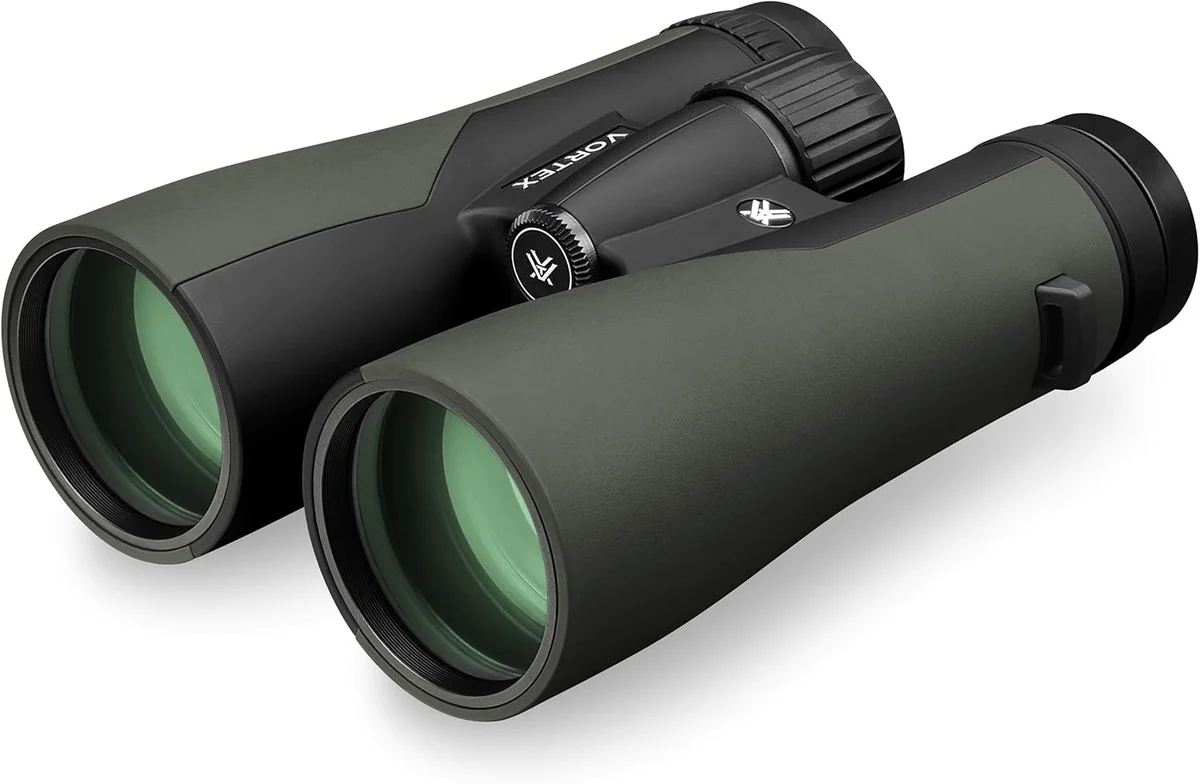 Crossfire HD 12x50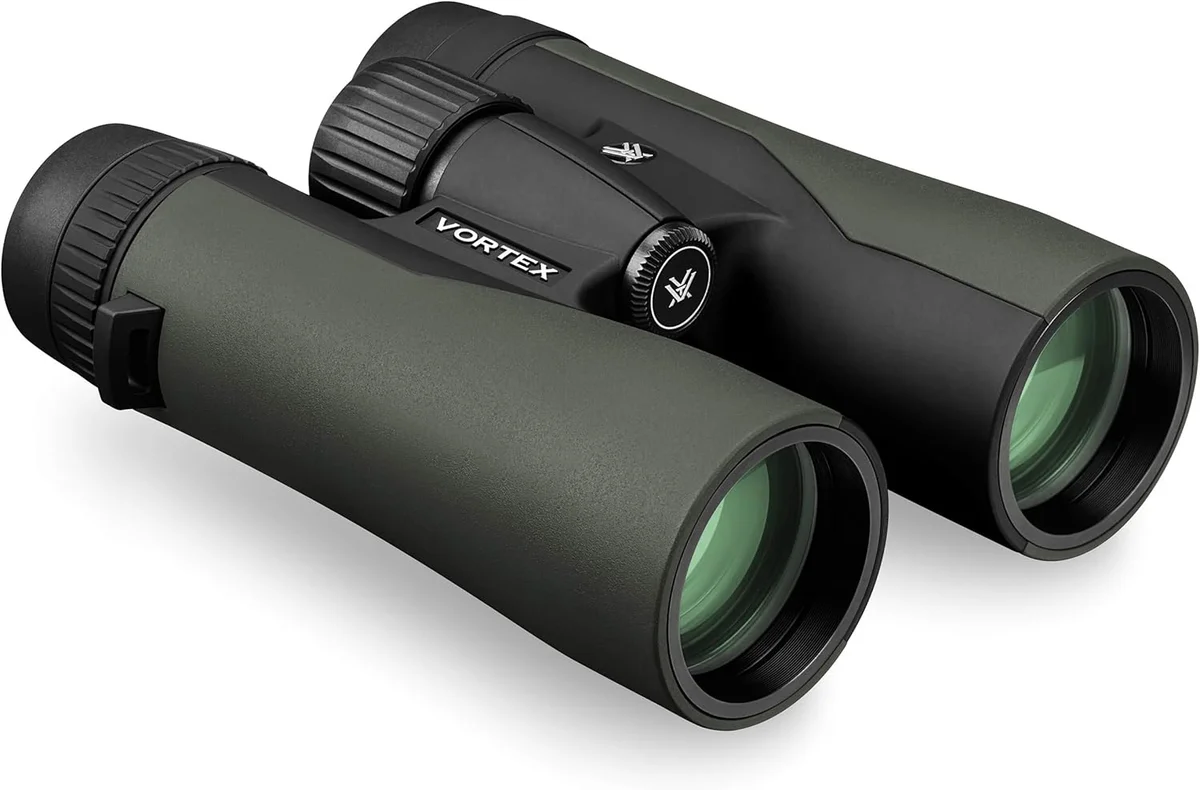
Which Configuration Fits Your Field Use?
Get the Crossfire HD 10x42 If:
- You use binoculars handheld more than 80% of the time — hiking, birding, travel, sports
- You value a wide field of view for tracking moving subjects
- Weight matters — you carry binoculars for hours, not minutes
- Close focus under 7 ft is useful for your interests (butterflies, flowers, feeders)
- You want the best all-around Crossfire and are willing to trade magnification for stability
Get the Crossfire HD 12x50 If:
- You glass from a treestand, blind, or fixed position where weight is irrelevant
- You own a tripod and plan to mount the binoculars regularly
- Distant detail is your priority — you're scanning open terrain, not tracking warblers
- The 6 extra ounces clearly don't bother you — some larger-framed users report no fatigue
- I'd consider this one only if tripod-mounted use is your primary scenario
Sizing Questions Buyers Ask About These Two
The magnification-versus-size question generates more confusion than almost any other topic in binoculars. These are the questions we see repeatedly from buyers trying to decide between configurations of the same model.
Is 12x magnification too much to hold steady by hand?
For most people, yes — at least for extended viewing. The general rule is that magnifications above 10x amplify hand shake enough to blur fine detail. At 12x, you can see more distant detail when your hands are still, but the image jitters noticeably during sustained glassing. A tripod or window mount solves this completely, but eliminates the portability advantage of binoculars. The 10x42 avoids this tradeoff entirely.
Does the 50mm objective lens gather more light than the 42mm?
The 50mm lens captures a larger column of light — about 42% more area than a 42mm lens. But more light entering the front does not guarantee a brighter image reaching your eye. The 12x50 produces a 4.17mm exit pupil (50÷12), nearly identical to the 10x42 at 4.2mm (42÷10). And AllBinos measured the 12x50 at just 76% light transmission versus 75.1% for the 10x42. The bigger glass barely compensates for the higher magnification.
Which Crossfire HD is better for birding?
The 10x42, and it is not close. Birding demands a wide field of view for tracking moving subjects (325 ft vs 273 ft), steady images for extended viewing sessions, and close focus for nearby warblers (6 ft vs 6.9 ft). The 12x50 loses on all three counts. The extra magnification helps only when you already know exactly where the bird is sitting still at long range.
Can the 12x50 Crossfire HD replace a spotting scope?
No. Spotting scopes start at 20x and often reach 60x, with eye relief and focus systems designed for prolonged stationary viewing. The 12x50 gives you 20% more reach than the 10x42, but it is still firmly in binocular territory. If you need spotting scope performance, buy a spotting scope.
Are these the same binocular in different sizes?
Same optical formula — same glass type, same FMC coatings, same lack of phase correction. The differences are physical: the 12x50 is larger, heavier (29.5 oz vs 23.8 oz), and configured for higher magnification with bigger objective lenses. It is not optically upgraded — just scaled up.
Is the 12x50 worth the extra thirty dollars?
Only if you plan to use it on a tripod or from a fixed position like a hunting blind. Handheld, the 10x42 delivers a steadier, wider, more comfortable image at a lower weight. The 12x50 costs more, weighs more, and performs worse in most real-world scenarios. The price gap is not the issue — the performance tradeoffs are.
Track Both Products
We'll email you if either price drops or availability changes.
Only when something changes. Unsubscribe anytime.