8x42 vs 10x42 Binoculars: The Magnification Tradeoff
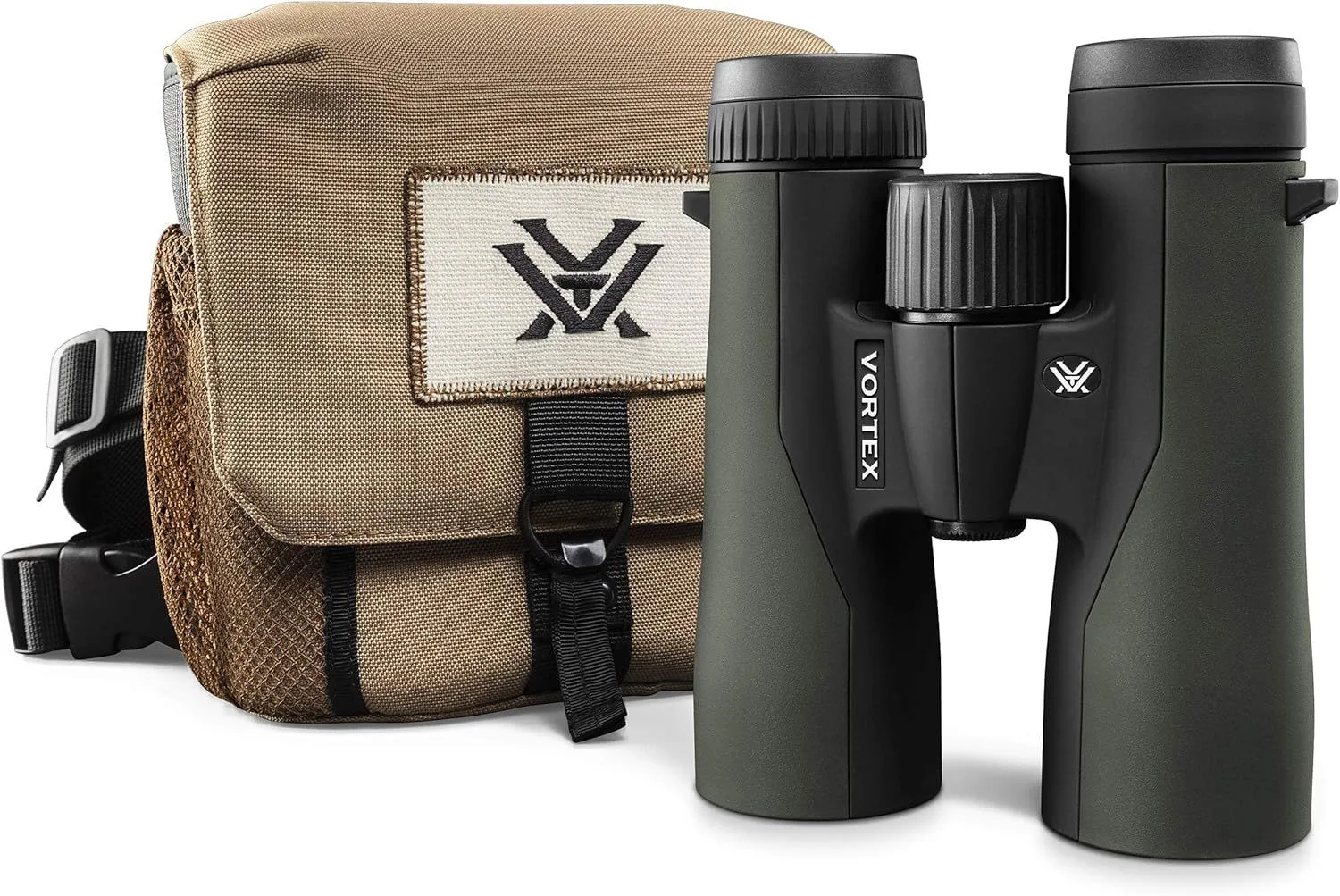
The 8x42 and 10x42 configurations share the same 42mm objective lenses but diverge on magnification — and that single variable cascades into differences in field of view, image brightness, hand stability, and which outdoor activities each configuration handles best. Neither is objectively superior. The right choice depends on what you do most with your binoculars, where you use them, and how much you value reach versus width.
Here's the thing: forums treat this like a religious debate. It isn't.
Both configurations use the same glass diameter, the same prisms, and often the same optical coatings. The 8x just spreads its magnification thinner across a wider scene, while the 10x concentrates it tighter on a narrower slice. Every other difference — brightness, stability, tracking ease — follows from that one decision. We break down each tradeoff with specific numbers from binoculars we have tested, then tell you which scenarios favor which configuration outright.
If the "10x42" notation is still unfamiliar — magnification times objective lens diameter — the best binoculars roundup covers the fundamentals alongside specific product picks. This page assumes you know what the numbers mean and want the head-to-head tradeoff analysis.
See Our Top Pick: Crossfire HD 10x42
Field of View: Where 8x42 Pulls Ahead
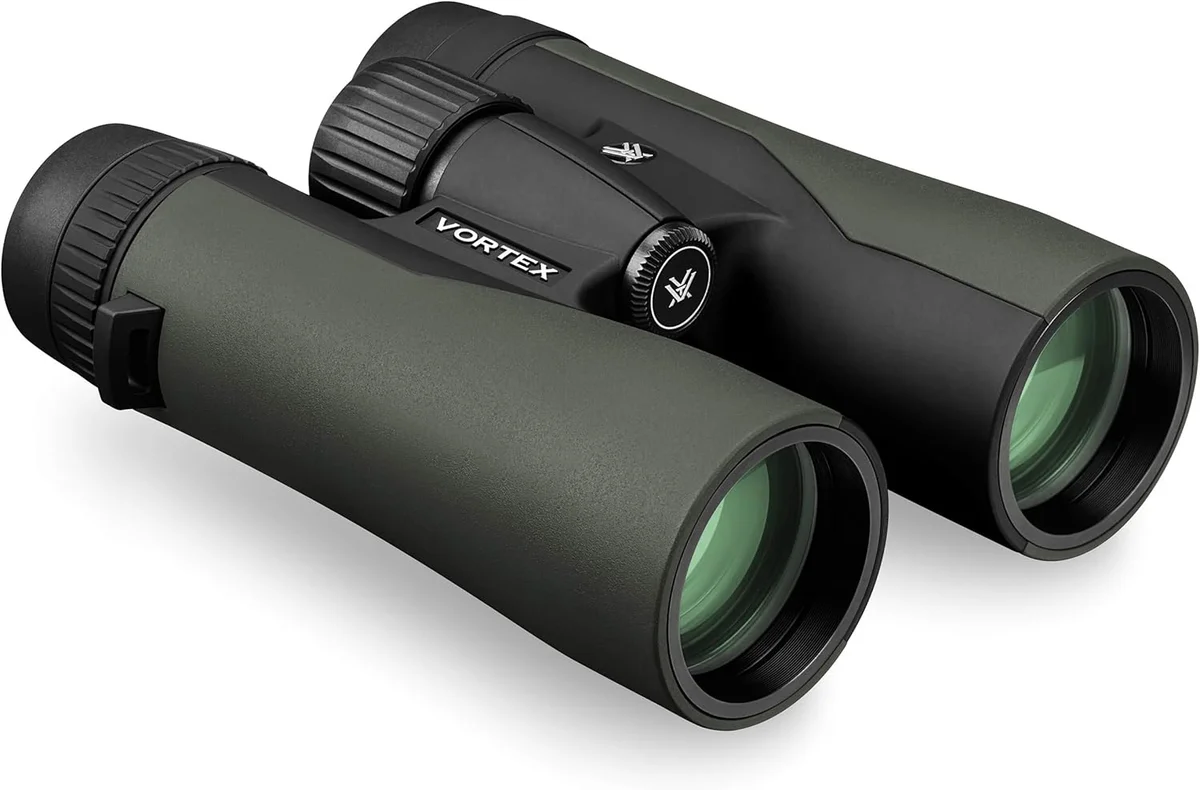
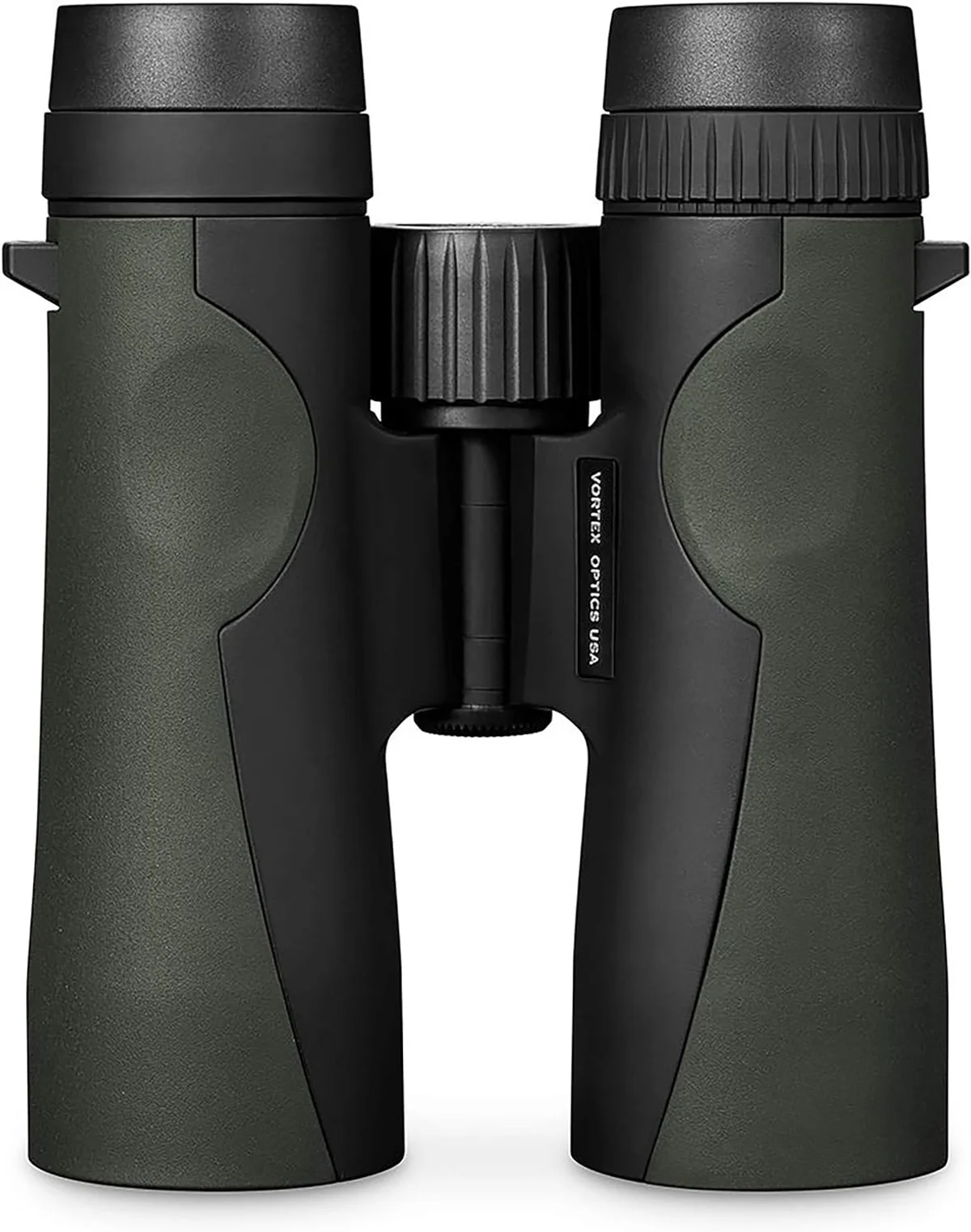
Field of view — the width of the scene visible through binoculars, measured in feet at 1,000 yards — is the single largest difference between 8x and 10x at the same objective size. Lower magnification captures a wider slice of the scene, producing more visible area at any given distance and making moving subjects easier to find and track.
The numbers are consistent across manufacturers:
8x42 binoculars typically deliver 360-400 feet of field at 1,000 yards (6.8-7.5 degrees). 10x42 binoculars typically deliver 300-340 feet (5.7-6.4 degrees). That 60-foot gap — roughly 15-20% wider — is not subtle. Point both at a tree line from the same spot and the 8x shows you trees the 10x crops out of the frame.
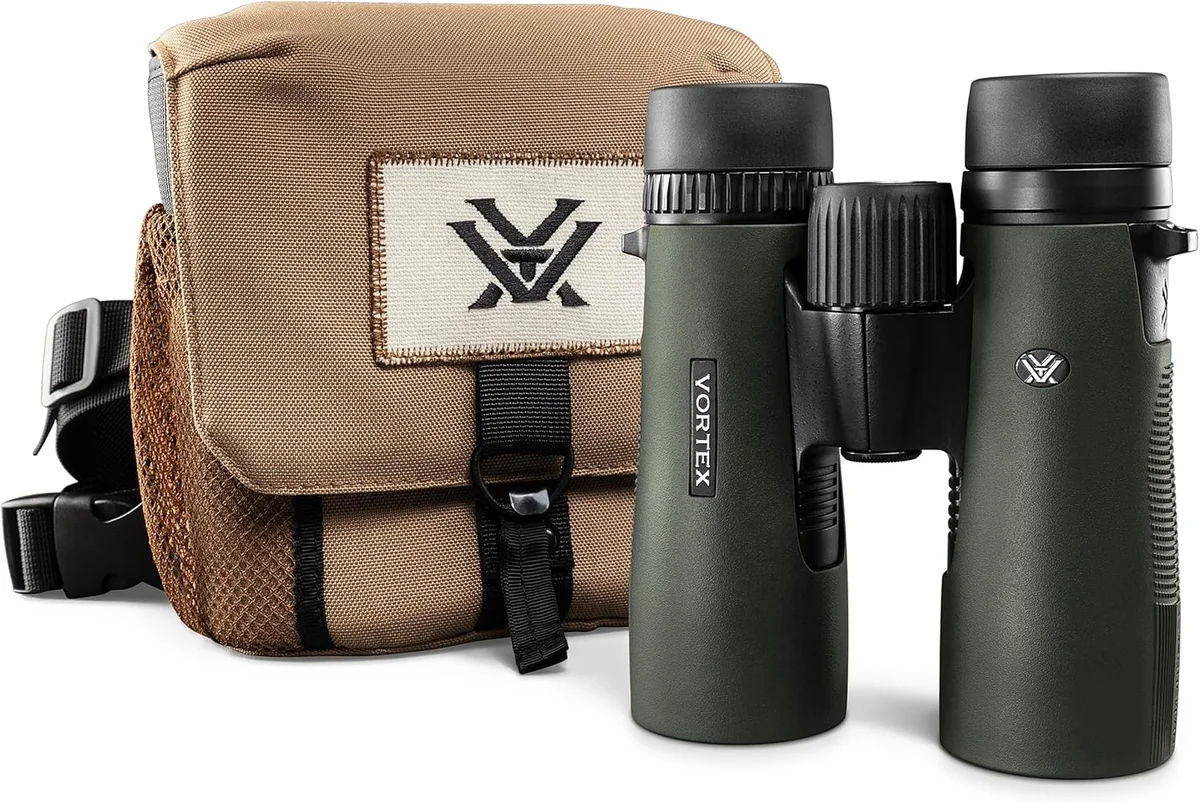
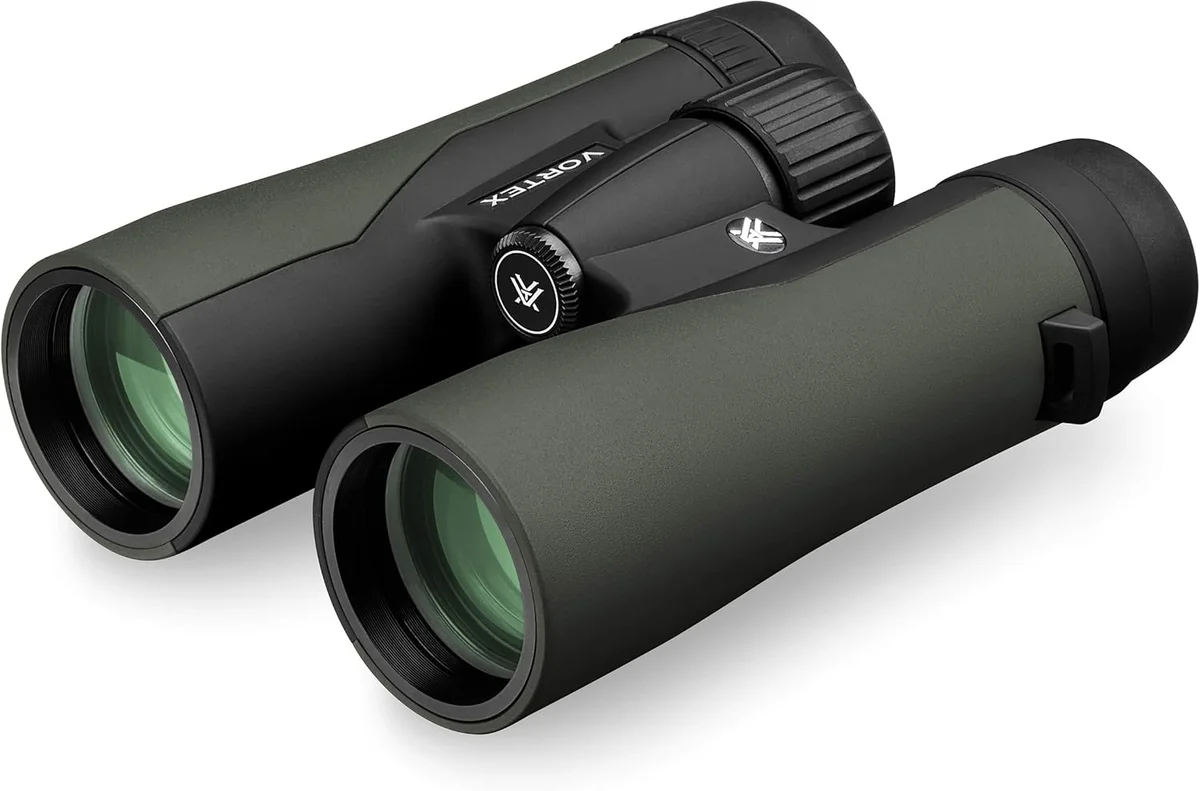
From our catalog, the Crossfire HD 10x42 delivers 325 ft at 1,000 yards. The Diamondback HD 10x42 pushes 330 ft — a slight improvement from its wider optical design. An 8x42 version of either would land near 390-420 ft based on the same optical platform.
Wider field of view matters most in three scenarios: tracking fast-moving birds through tree canopy, scanning a broad landscape for wildlife movement, and following action at a sporting event. In all three cases, you are searching for or following something that moves unpredictably. The wider the view, the less you pan and the less likely you lose the subject.
For stationary subjects — a perched hawk, a deer bedded in a field, a distant mountain ridge — the narrower 10x field is not a disadvantage. You found the subject already. You want detail, not width.
Exit Pupil and Low-Light Brightness
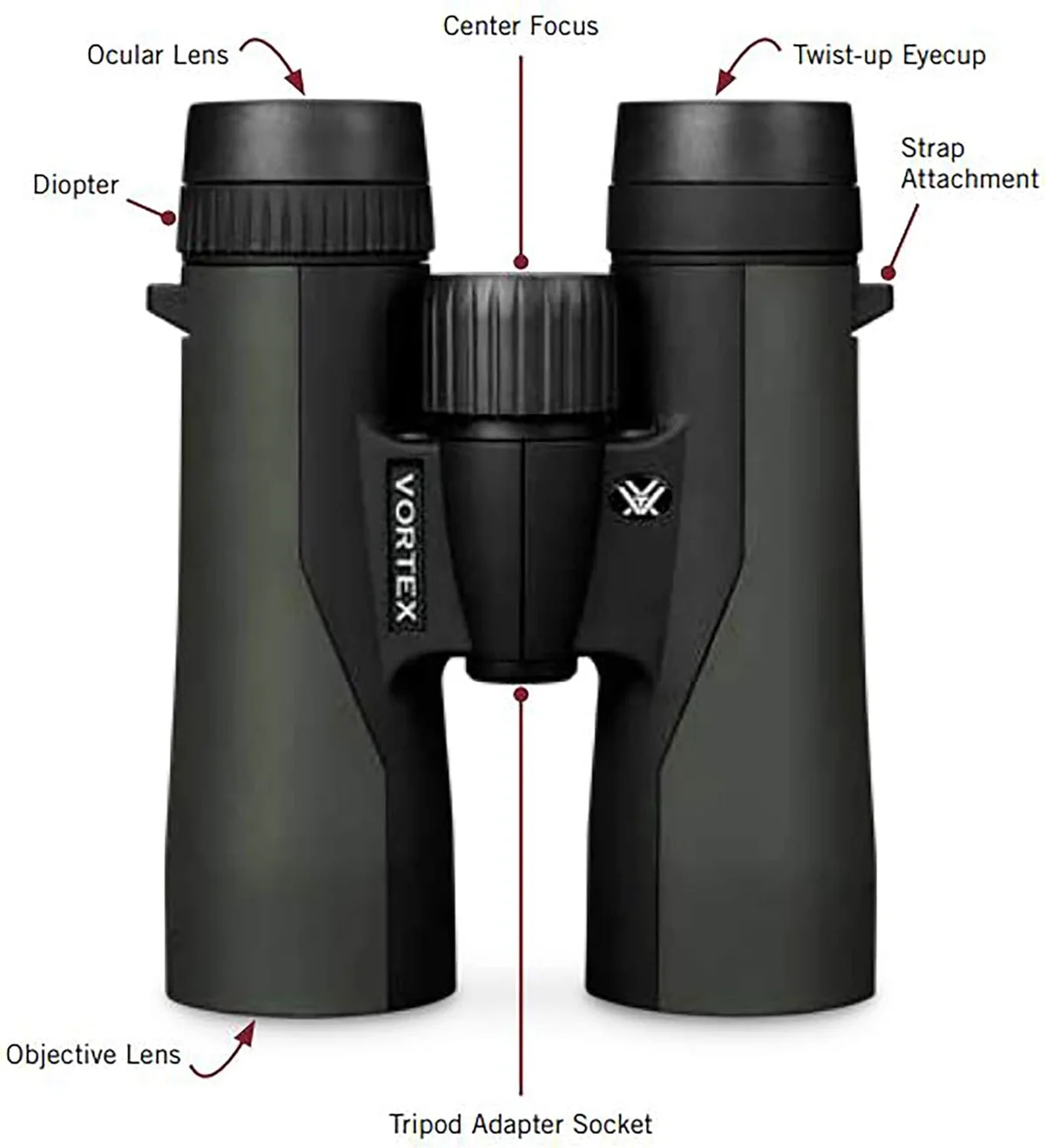
Exit pupil is calculated by dividing objective diameter by magnification. For 8x42, that gives 5.25mm. For 10x42, it gives 4.2mm. The larger exit pupil passes a wider beam of light to your eye — and that gap translates to a measurable brightness advantage in specific conditions.
During midday with your pupil contracted to 2-3mm, both exit pupils are larger than your eye can use. The brightness difference is invisible. A 10x42 at noon looks just as bright as an 8x42 at noon because your pupil is the bottleneck, not the binocular.
At dawn and dusk, the calculation changes. Your pupil dilates to 5-7mm depending on age and ambient light. The 8x42's 5.25mm exit pupil delivers light across a wider area of your dilated pupil than the 10x42's 4.2mm beam. The result: a visibly brighter image when light levels drop. Not a huge jump — you won't confuse night for day — but enough that a bird in deep shade at 6:15 AM is identifiable through the 8x when it's still a silhouette through the 10x.
Age factors in. A 25-year-old's pupil dilates to 7mm in low light. A 60-year-old's maxes out around 4-5mm. For older users, the 5.25mm exit pupil of 8x42 offers a smaller advantage because the pupil can't accept the full beam anyway. The 4.2mm exit pupil of 10x42 is already close to matching a 60-year-old's maximum dilation.
Hand Shake and Image Stability
Magnification amplifies everything — including every tremor in your hands, every breath that shifts your torso, every heartbeat that pulses through your arms. A 10x binocular shakes 25% more than an 8x binocular held by the same person in the same position. Not 25% more shake in the hands — 25% more visible shake in the image, because the higher magnification makes the same physical movement cover more of the field.
Look, most adults handle 10x just fine. The shake is present but manageable. The image jiggles slightly during freehand viewing, but fine detail remains readable. You learn to brace against trees, tuck elbows against your ribs, or time your focus between breaths. The Triumph HD 10x42 at just under 600 grams and the Crossfire HD at 675 grams are both light enough for extended handheld use without arm fatigue driving the shake worse.
The 8x advantage shows up in sustained viewing sessions. Thirty seconds through either magnification feels identical. Thirty minutes tells a different story. The lower magnification produces a more relaxed viewing experience — less visual fatigue, less subconscious bracing, less of that dull tension that builds in your forearms and shoulders when you're fighting to hold a jittery image still. Birders who spend three-hour morning walks with glass against their eyes feel this difference acutely.
Wind amplifies the gap. A moderate breeze that you barely notice at 8x becomes distracting at 10x. Mounting binoculars on a tripod or car window clamp eliminates shake entirely for both — which is why magnification concerns evaporate for stationary observation setups.
When 8x42 Wins Outright
Certain activities tilt the math decisively toward the wider, steadier 8x configuration. These are not marginal preferences — they are cases where 8x produces a measurably better field experience:
Woodland and canopy birding. Dense forest puts birds at 30-80 feet, moving fast between branches. The extra magnification of 10x is wasted — you're close enough that 8x resolves every feather detail. The wider field of view is the deciding factor: tracking a warbler hopping through oak branches is measurably easier when you see 390+ feet of scene rather than 325. Birding guides in the eastern U.S. and Pacific Northwest overwhelmingly recommend 8x42 for forest walks.
Pre-dawn wildlife observation. The 5.25mm exit pupil extracts every available photon during the critical 30 minutes before sunrise when nocturnal mammals are still active and dawn-chorus birds are just becoming visible. That extra millimeter of exit pupil is the difference between a shape and an identification.
All-day scanning from a moving position. Safari vehicles, kayaks, walking trails — any platform that adds motion to your body adds motion to the image. The reduced shake amplification of 8x makes sustained viewing from unstable platforms comfortable rather than nauseating.
Youth and beginning birders. Finding a bird through binoculars is a learned skill. The wider field of view forgives the clumsy pointing and slow tracking that beginners struggle with. Our best binoculars roundup recommends starting with 8x or 10x depending on primary use, but for kids under 12, 8x is almost always the right call — smaller hands produce more shake, and frustration from losing subjects kills the hobby fast.
When 10x42 Wins Outright
Reach wins when distance is the constraint.
The following scenarios favor 10x because the extra magnification changes what you can identify and how far away you can identify it:
Hunting open terrain. Western elk, mule deer, and pronghorn hunting involves glassing ridgelines, meadow edges, and clearcuts at 200-600 yards. At those distances, 10x reveals antler configuration, body size, and animal behavior that 8x renders as ambiguous blobs. The hunting binoculars roundup covers why 10x is the floor for serious hunters — and why some hunters push to 12x or 15x with tripod support.
Hawk watching and raptor identification. Raptors soar at 200-500 yards overhead. Identifying a Cooper's hawk from a sharp-shinned hawk — a common field challenge — requires resolving tail shape and flight posture at distance. Every bit of magnification helps. The narrower field is irrelevant because you're tracking a single bird against open sky.
Spectator sports at large venues. Football stadiums, horse racing tracks, and outdoor concert amphitheaters put the subject 100-300 yards away. The 10x magnification brings faces and jersey numbers into focus. An 8x shows the same scene 20% smaller — readable at close seats, frustrating from the upper deck.
Hiking with occasional wildlife viewing. Hikers typically carry binoculars for opportunistic glassing — a distant peak, a herd of elk across a valley, a bald eagle perched on a snag 200 yards up a canyon wall. These subjects don't move fast and they're usually far away. Reach beats width. The hiking binoculars guide covers the weight tradeoff in detail, but when a hiker chooses full-size glass over a compact, 10x42 is the default configuration for good reason.
The Middle Ground Both Camps Ignore
Online forums present this as a binary choice. Pick a side. Defend it. Dismiss the other.
The reality is that most people use binoculars across multiple activities, in varied light conditions, at mixed distances. A Saturday morning might start with dawn birding in the backyard (advantage: 8x), transition to a midday hike with distant scenery (advantage: 10x), and end at a dusk deer watch from the back porch (advantage: 8x again). No single configuration is optimal for the full day.
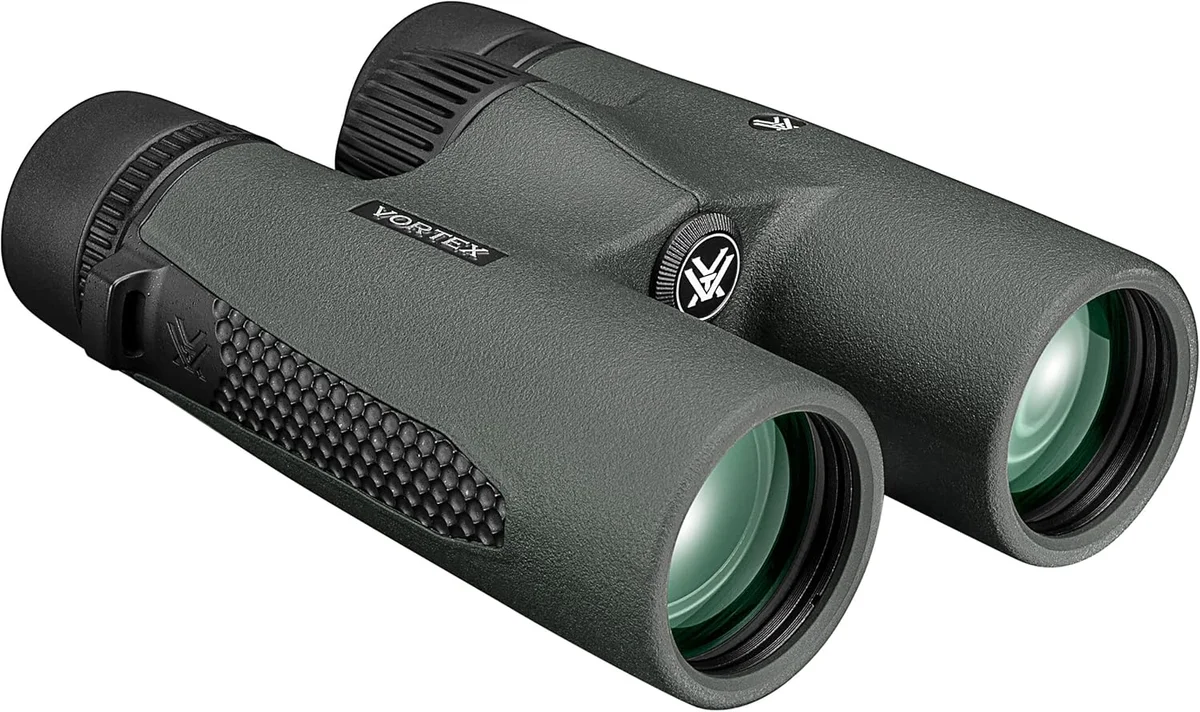
Here's what the data actually shows when you remove the advocacy: the performance gap between 8x42 and 10x42 is smaller than the gap between budget and mid-range glass at the same magnification. A premium 10x42 with phase-corrected prisms and dielectric coatings — like the Diamondback HD — produces a brighter, sharper image at dawn than a budget 8x42 without those coatings, despite the smaller exit pupil. Glass quality overwhelms the exit pupil math in real-world conditions.
This means the "which magnification" question is secondary to the "which optical quality" question for most buyers. A 10x42 with multi-coated, phase-corrected optics outperforms a cheap 8x42 in the very low-light scenarios where 8x supposedly dominates. If your budget allows only one pair, spend the money on better glass first and pick magnification second.
The Crossfire HD vs Diamondback HD comparison illustrates this: both are 10x42, but the Diamondback's phase correction and dielectric coatings produce measurably better light transmission. The coating gap between those two models is larger than the exit pupil gap between 8x42 and 10x42 at the same coating level.
Spec-by-Spec Comparison Table
The raw numbers, side by side. All values represent typical ranges across major manufacturers at mid-range price points:
| Specification | 8x42 | 10x42 | Advantage |
|---|---|---|---|
| Magnification | 8x | 10x | 10x (25% more reach) |
| Field of View | 360-420 ft / 1,000 yds | 300-340 ft / 1,000 yds | 8x (15-20% wider) |
| Exit Pupil | 5.25mm | 4.2mm | 8x (brighter at dawn/dusk) |
| Hand Shake Effect | Lower | 25% more visible | 8x (more stable image) |
| Detail at 200+ Yards | Adequate | Noticeably better | 10x |
| Close-Range Tracking | Easier (wider frame) | Harder (narrower frame) | 8x |
| Typical Weight | 21-24 oz | 21-25 oz | Negligible difference |
| Daylight Brightness | Identical | Identical | Tie |
The weight row surprises most people.
Weight is nearly identical because both configurations use the same 42mm objective lenses — the physical size of the binocular is determined by the glass, not the magnification. Same body, same weight, different view.
What About 8x32 or 10x50?
Once you understand the 8x42 vs 10x42 tradeoff, adjacent configurations start to make sense as deliberate shifts along the same spectrum.
8x32 sacrifices light gathering for compactness. The exit pupil drops to 4.0mm (below the 10x42's 4.2mm), so the low-light advantage of 8x magnification is partially negated by the smaller objectives. It's a travel compromise — lighter and smaller than 8x42, with a wider field of view than 10x32, but dimmer than either 42mm configuration at dawn.
10x50 adds light gathering to the 10x reach. The exit pupil climbs to 5.0mm — close to the 8x42's 5.25mm — at the cost of weight. The Crossfire HD 12x50 at 29.5 oz shows what happens when you push the objective size up: the binocular becomes heavy enough that long hikes demand a harness and extended freehand use fatigues your arms. For stationary observation, 10x50 is a strong low-light configuration. For field carry, the weight kills it.
12x42 pushes magnification higher while keeping the body compact. The exit pupil drops to 3.5mm — dim enough that dawn and dusk performance suffers noticeably. Hand shake at 12x is 50% more visible than at 8x. This configuration works for stationary glassing at distance where a tripod or support is available, but it's a poor choice for handheld field use. The 10x42 vs 12x50 comparison explores when stepping up magnification is and isn't worth the tradeoffs.
Our Recommendation by Activity
The best configuration depends on your primary use. Not your secondary use, not the activity you might try someday — the thing you do most weekends with binoculars in hand.
Forest birding, canopy birding, warbler chasing: 8x42. The wider field is worth more than the extra reach at close range. This is the one scenario where 8x is the unambiguous winner.
Open-field birding, shorebird ID, hawk watching: 10x42. Distance demands magnification. The birding binoculars roundup covers specific models.
Hunting — any terrain: 10x42. Identifying game at distance is the primary job, and hunters tend to glass from braced positions that minimize shake. The extra reach earns its keep on every hunt.
Hiking and backpacking: 10x42 if carrying full-size, but consider whether a compact 10x25 saves enough weight to justify the optical compromise. The hiking guide breaks down that decision.
Safari and wildlife tours: 8x42. Moving vehicles add body shake that 10x amplifies. The wider field helps acquire animals that a guide points out before the vehicle moves on.
General all-purpose (don't have a primary use yet): 10x42. It does more things acceptably. The lost field of view is manageable. The gained reach is useful at distance and invisible up close.
If you know the configuration you want and need help choosing a specific binocular, our overall best binoculars roundup ranks every model we have reviewed by category and budget tier.
Now That You Know Which Magnification Fits
If 10x42 is the right configuration — and for most people reading this, it is — the best binoculars roundup ranks our top picks across budget tiers. The Crossfire HD vs Diamondback HD comparison shows how two 10x42 models differ when glass quality changes but magnification stays constant. And the 10x42 vs 12x50 comparison shows what happens when you push magnification higher at the cost of weight and portability.
Picking Between 8x and 10x — Common Questions
The most common questions from people choosing between these two magnification configurations.
Is 8x42 or 10x42 better for birding?
It depends on where you bird. In dense woodland and forest canopy where birds are close (30-80 feet) and moving fast, 8x42 wins — the wider 360-400 ft field of view helps you acquire and track warblers through branches. For open-field birding, shoreline observation, and hawk watching where subjects are 100+ yards away, 10x42 reveals more plumage detail. Most birding organizations recommend 8x42 for beginners because the wider view reduces frustration when learning to find birds through optics.
Does 8x42 really produce a brighter image than 10x42?
Yes, measurably. The 8x42 exit pupil is 5.25mm versus 4.2mm for 10x42 — a 25% wider light beam reaching your eye. At dawn and dusk when your pupil dilates to 5-7mm, the 8x42 delivers noticeably more brightness because its exit pupil nearly matches your dilated pupil. During full daylight the difference vanishes, because your pupil contracts to 2-3mm and both exit pupils are larger than what your eye can accept.
Why do hunters prefer 10x42 over 8x42?
Reach. Identifying game at 200-400 yards demands the extra magnification — the difference between seeing a brown shape and counting antler points. Hunters also tend to glass from stable positions (treestands, prone, truck hoods) that reduce hand shake, neutralizing 10x magnification's biggest drawback. Western hunters glassing open terrain especially benefit from 10x reach. Eastern whitetail hunters in dense timber might prefer 8x for the wider field.
Do 10x42 binoculars require a tripod?
Yes. 10x is the practical upper limit for handheld use, and most adults can hold a 10x42 steady enough for extended viewing. Hand shake is present but manageable — the image jiggles slightly rather than blurring. Leaning against a tree, resting elbows on a fence rail, or tucking your elbows against your ribs all reduce shake further. Beyond 12x, a tripod or monopod becomes necessary for comfortable viewing.
What is the field of view difference between 8x42 and 10x42?
8x42 binoculars typically deliver 360-400 feet of view at 1,000 yards. 10x42 models deliver 300-340 feet. That 60-foot gap translates to seeing roughly 15-20% more of the scene at any given moment through 8x optics.
Is it worth owning both an 8x42 and a 10x42 binocular?
Only if you have two distinct primary activities that genuinely demand different configurations — say, weekly forest birding walks (8x) plus seasonal elk hunting in open country (10x). For most people, one configuration handles 90% of use cases well enough. If forced to own just one pair, 10x42 is the safer bet because the magnification advantage matters at distance while the narrower field of view is a manageable tradeoff up close. If budget allows a second pair, consider a compact like a 10x25 for travel rather than duplicating the 42mm size class.
Our Top Recommendation
Based on our research, the Crossfire HD 10x42 is our top pick — first-time buyers who want a trusted brand with a real warranty under $200.
Get Picks Delivered
One email per week. Honest reviews, no spam.
Only when something changes. Unsubscribe anytime.