Binocular Prism Types: Roof vs Porro and Why It Matters
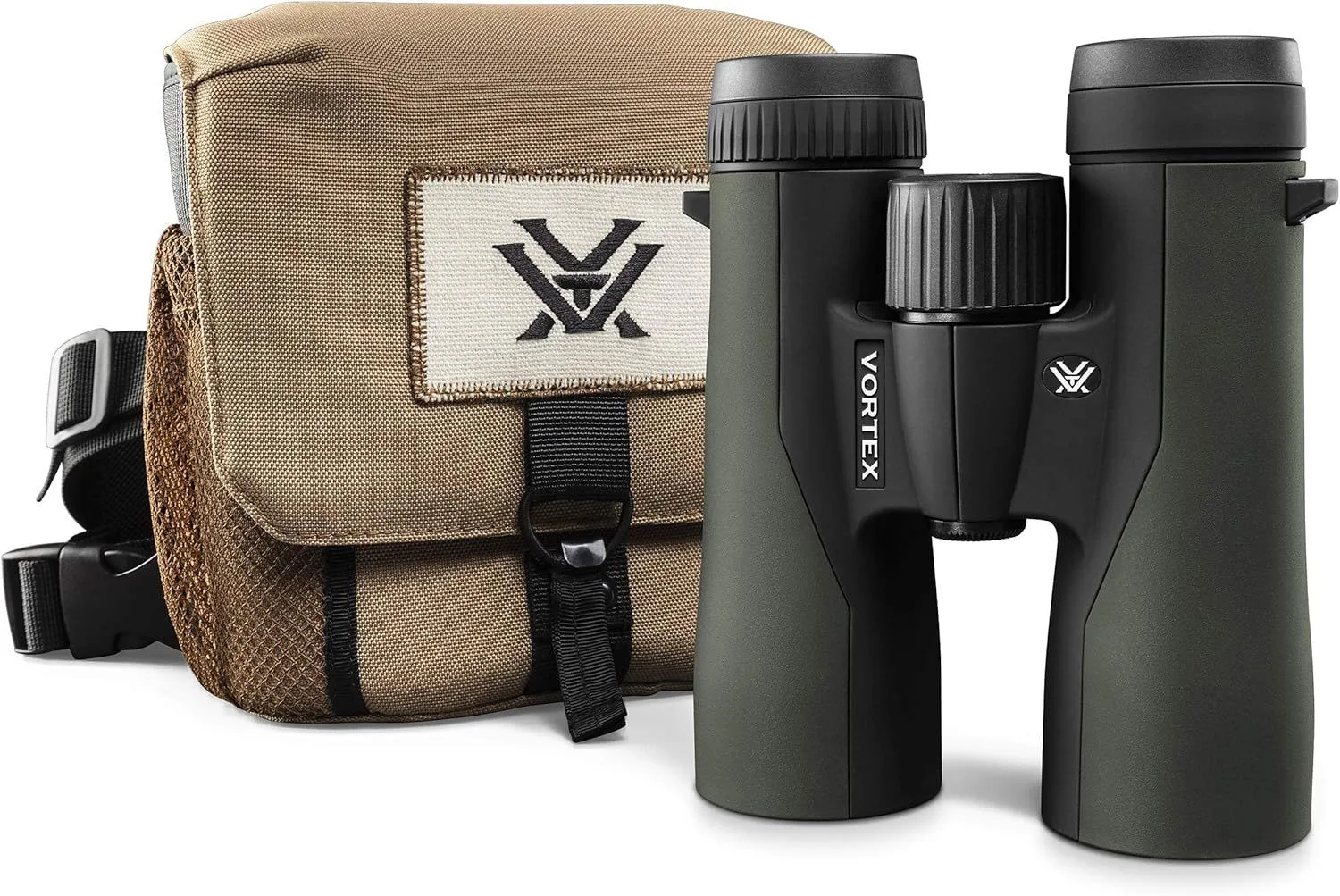
Every binocular contains a pair of prisms — glass wedges that flip the image right-side-up and forward-facing after the objective lens inverts it. The two dominant prism designs, roof and porro, take fundamentally different paths through the glass, and that difference shapes the binocular's body, its optical ceiling, its weight, and its price. Understanding prism types explains why two binoculars with identical magnification and lens size can produce very different images.
This matters more than most buyers realize.
The prism is where light either passes through cleanly or loses brightness, contrast, and color accuracy. A binocular with excellent lenses and a mediocre prism system still produces a mediocre image — the prism is the bottleneck. Coatings on the prism surfaces (phase correction, dielectric mirrors) often make a bigger difference than coatings on the external lenses, because the prism handles more reflections in a tighter space where every percentage point of light loss compounds.
We cover both prism designs, the glass types inside them, the coatings that separate cheap prisms from good ones, and which products in our catalog use which features. Our best binoculars roundup compares models with different prism treatments; this page goes deep on the single component that determines most of the optical character.
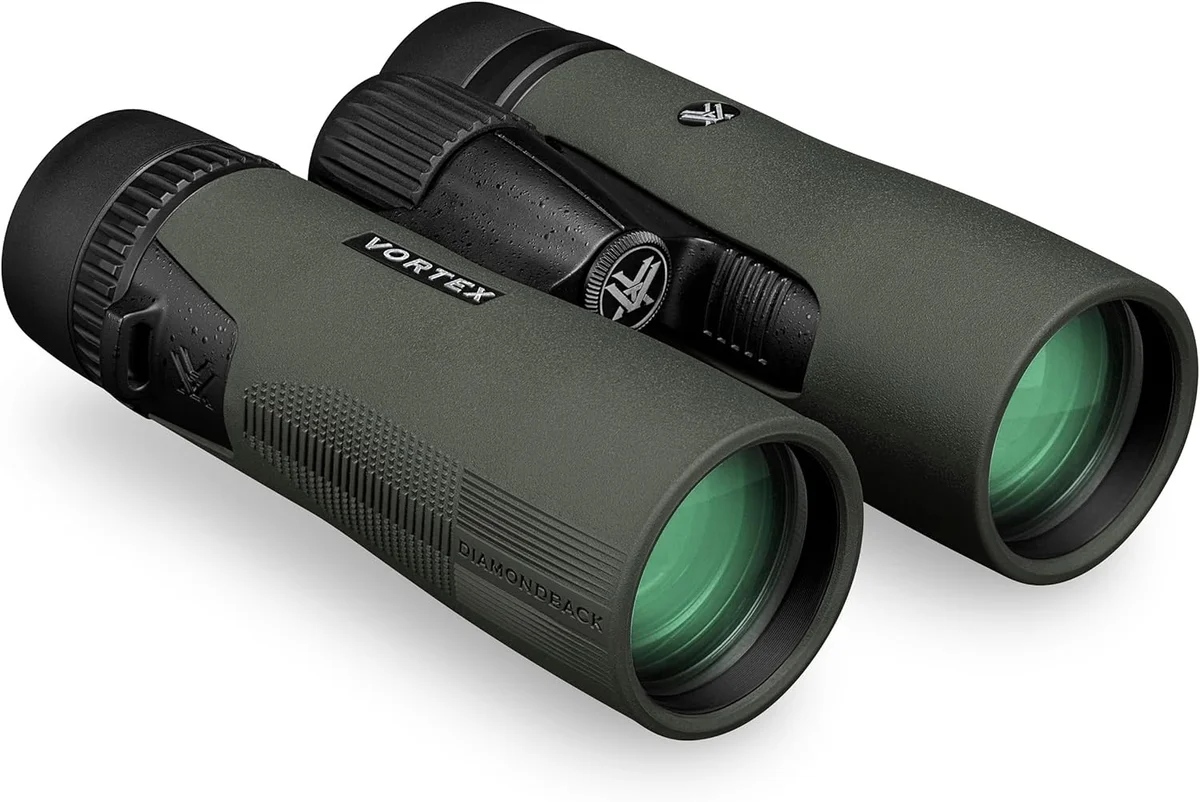
See Our Top Pick: Diamondback HD 10x42
How a Prism Works Inside a Binocular
A binocular prism is a solid glass wedge that flips the inverted image from the objective lens right-side-up and left-to-right. Without prisms, the view would be upside down and mirrored — the same problem a simple astronomical telescope has. The two main prism designs, roof and porro, accomplish this flip through different internal geometries.
Both roof and porro prisms accomplish this rotation, but through different geometries. The difference is not cosmetic. Each geometry creates different optical consequences: the number of reflections, whether the light beam splits, how much glass the light travels through, and how compact the resulting body can be. These consequences cascade into image quality, manufacturing complexity, and the coatings required to compensate for each design's inherent weaknesses.
Porro Prisms: The Original Design
Ignazio Porro patented this design in 1854, and the basic geometry has not changed since. Two right-angle prisms are mounted at 90 degrees to each other. Light enters the first prism, bounces off two internal surfaces via total internal reflection, then passes into the second prism and bounces off two more surfaces. Four total reflections flip the image both vertically and horizontally.
The key optical advantage: total internal reflection. When light hits a glass-air boundary at a steep enough angle (above the critical angle), 100% of it reflects — no coating needed, no light lost at the reflecting surface. This is pure physics, not marketing. A porro prism binocular reflects light at its prism surfaces with zero absorption loss, which is why inexpensive porro designs can still produce bright, contrasty images.
Look, here is the tradeoff nobody mentions in spec sheets: a porro prism arrangement offsets the eyepiece from the objective lens. The eyepieces sit closer together than the objectives, creating that distinctive wide-body zigzag shape. This offset actually improves stereoscopic depth perception — the wider objective separation exaggerates the parallax effect, making distant landscapes appear more three-dimensional than they do through a roof prism binocular of the same power.
The disadvantages are mechanical, not optical. The offset body is harder to seal against water because of the more complex internal geometry. It is wider, heavier, and less ergonomic for one-handed use. The exposed prism housing is more vulnerable to knocks that can misalign the optics. And the wider profile does not fit harness systems as neatly as a straight-barreled roof prism binocular.
Budget porro prism binoculars dominate the sub-$80 market for good reason — the design delivers more brightness per dollar than any roof prism at the same price. Above $150, the mechanical disadvantages start to outweigh the optical simplicity, and roof prism designs with proper coatings catch up in image quality while offering a smaller, tougher body.
Roof Prisms: The Modern Standard
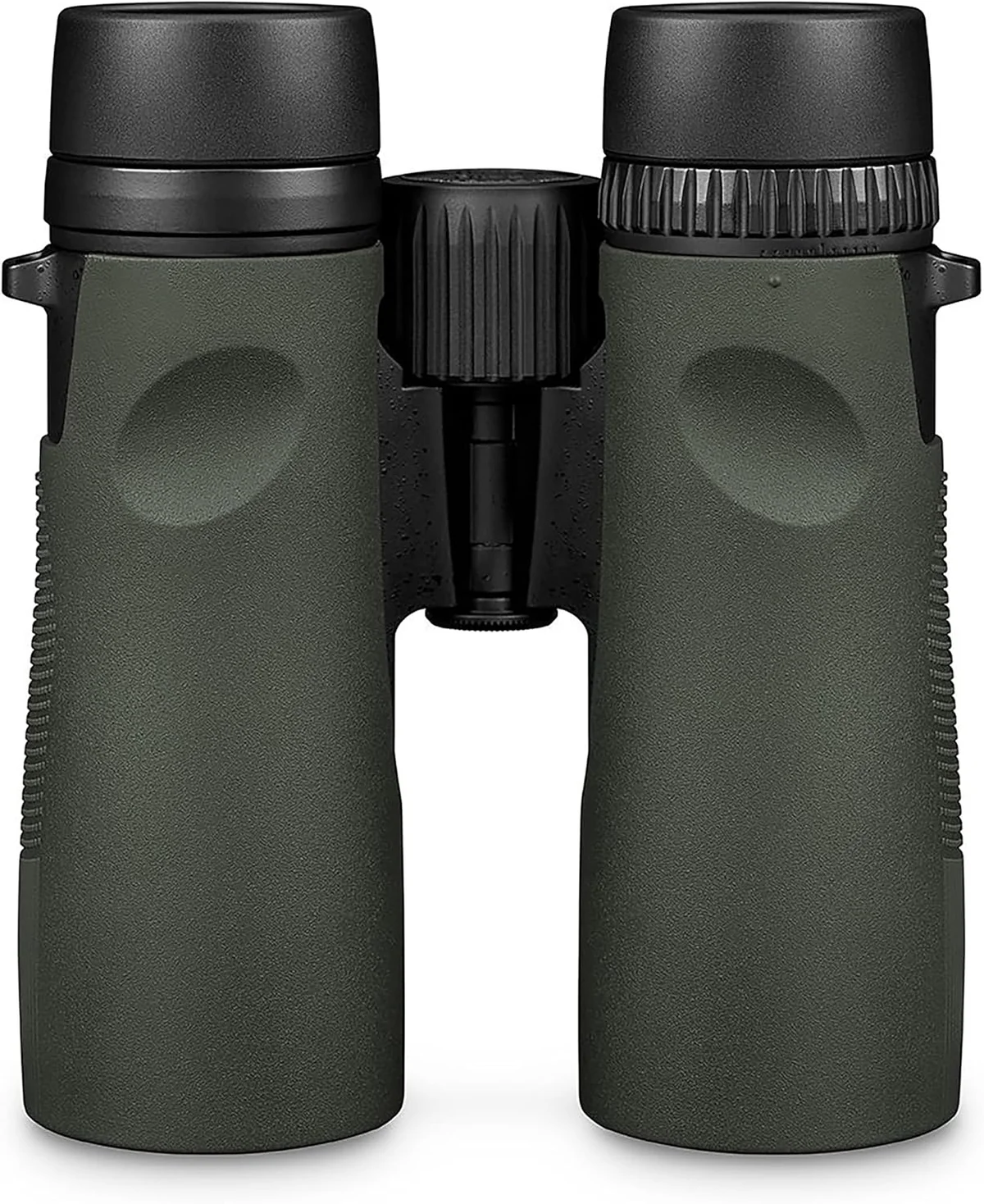
Roof prisms (also called Dach prisms, from the German word for "roof") fold the light path so the eyepiece aligns directly behind the objective lens. The result is a slim, straight-barreled body that is easier to hold, lighter to carry, and simpler to waterproof. Virtually every binocular sold above $100 today uses a roof prism design.
The optical challenge is more demanding. In the most common roof prism configuration (Schmidt-Pechan), one reflection occurs at an angle below the critical angle for total internal reflection. At that surface, light would leak out of the prism without a mirror coating. Early roof prism binoculars used aluminum coatings on this surface, reflecting 87-93% of the light. Modern mid-range and premium models use silver coatings (95-98%) or dielectric coatings (99%+) to minimize this loss.
But the bigger problem is phase shift.
When light reflects off the roof surface (the angled ridge at the top of the prism), the beam splits into two halves that travel slightly different path lengths before recombining at the eyepiece. These two halves arrive out of phase — their light waves no longer align. The result is destructive interference that reduces resolution and contrast, producing a softer image with less color snap. This effect is invisible in cheap binoculars because the overall image quality masks it, but it becomes the limiting factor in mid-range optics where the lenses are good enough to reveal the prism's shortcomings.
Phase correction coatings fix this. Applied to the roof surface, they equalize the path length of the two beam halves so they recombine in phase. The improvement is not subtle — side-by-side, a phase-corrected roof prism binocular shows noticeably sharper detail and more saturated colors than an identical model without it.
Phase Correction: The Upgrade That Matters Most
Phase correction is the best single upgrade you can get on a roof prism binocular — the most important differentiator between budget and mid-range models. More important than lens coatings. More important than glass type. The reason is cumulative: phase interference degrades the image at a fundamental level that no amount of lens coating can recover. Putting fully multi-coated lenses on an uncorrected roof prism is like fitting premium tires on a car with a bent axle.
Here's the thing: you can see the difference without any optical training. Hold a phase-corrected binocular and an uncorrected one side by side, aim both at a high-contrast target (tree branches against a bright sky, text on a distant sign), and switch between them. The corrected optic shows crisper edge definition and richer color depth. The uncorrected optic looks slightly washed, like viewing through a window that needs cleaning.
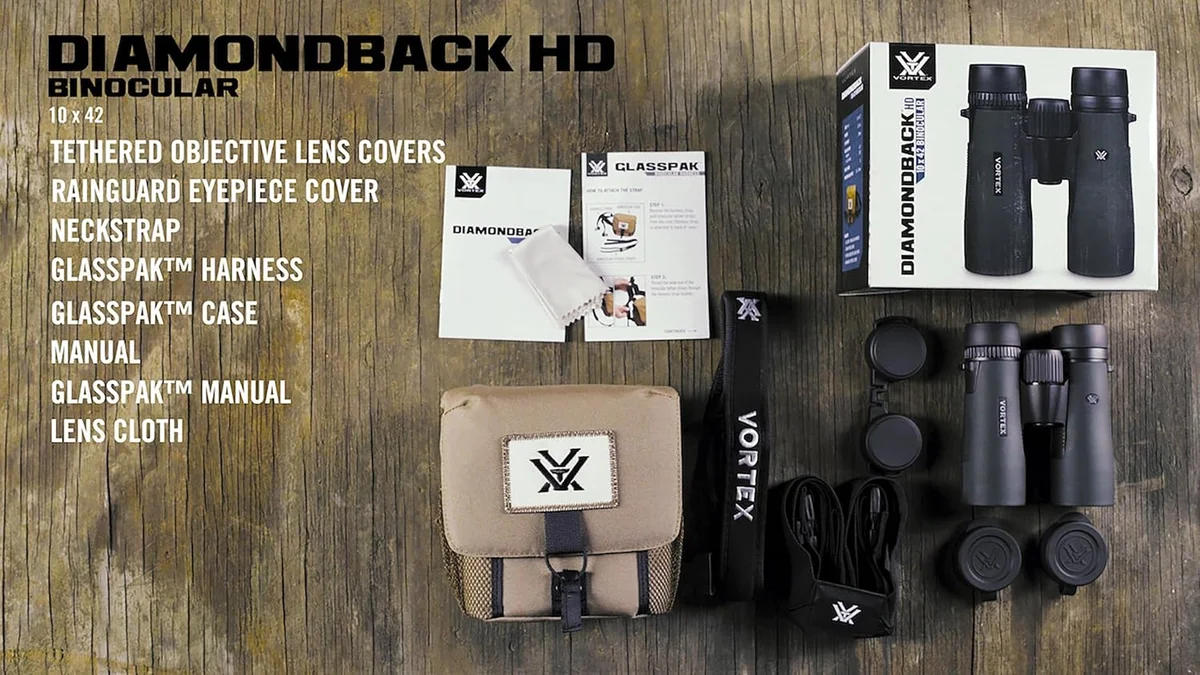
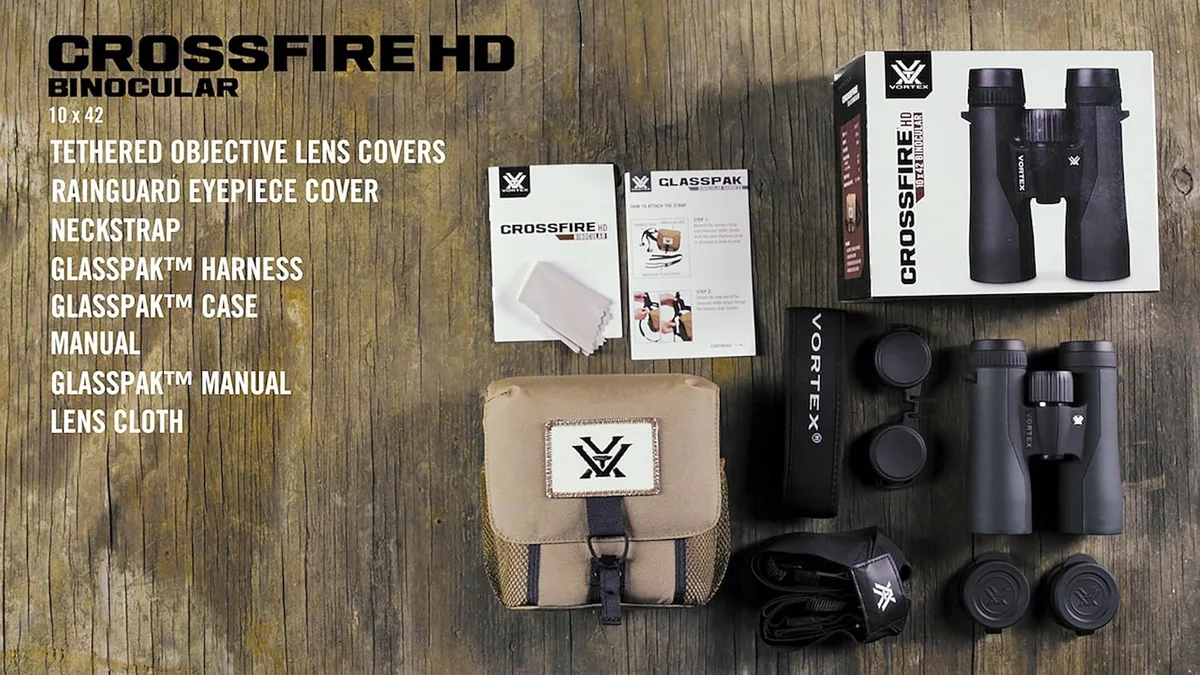
In our catalog, the split is clear. The Diamondback HD 10x42 has phase correction. The Crossfire HD 10x42 does not. The Triumph HD 10x42 does not. The Crossfire HD 12x50 does not. Phase correction is the primary optical reason the Diamondback costs more — and the primary reason experienced users say the price jump is worth it. The Crossfire vs Diamondback comparison shows this difference in measured light transmission and real-world image tests.
BaK-4 vs BK-7: Prism Glass Quality
The glass the prism is made from matters independently of coatings. Two types dominate binocular manufacturing: BaK-4 (barium crown glass) and BK-7 (borosilicate crown glass).
BaK-4 has a higher refractive index (1.569 vs 1.517 for BK-7). Higher refractive index means the critical angle for total internal reflection is smaller — light reflects internally at a wider range of angles, reducing the need for mirror coatings and producing a cleaner, more evenly illuminated exit pupil. Hold a BaK-4 binocular at arm's length and look at the bright circle of light coming out the eyepiece: it will be perfectly round and evenly bright to the edges. A BK-7 exit pupil shows slight gray shadows at the edges — a diamond-shaped dimming caused by light escaping the prism at oblique angles where the lower refractive index fails to achieve total internal reflection.
This edge dimming is cosmetic in bright conditions. In low light — dawn, dusk, heavy forest canopy — those gray edges reduce the effective exit pupil diameter and cost you brightness precisely when you need it most. For a binocular used primarily in daylight, BK-7 is perfectly adequate. For a binocular that sees regular use at the edges of the day, BaK-4 is the better glass.
Every Vortex model in our catalog — the Diamondback HD 10x42, the Crossfire HD 10x42, and the Triumph HD 10x42 — uses BaK-4 prism glass. Most binoculars above $80 do. BK-7 appears primarily in sub-$50 budget binoculars where cost pressure forces compromises on every component.
Dielectric Coatings vs Standard Mirror Coatings
Roof prisms need at least one mirror-coated surface (the reflection that falls below the critical angle for total internal reflection). The coating on that surface directly controls how much light survives the prism system.
Standard aluminum mirror coatings reflect 87-93% per surface. Silver coatings push that to 95-98%. Dielectric coatings — thin-film interference stacks applied in dozens of alternating layers — reflect 99% or more per surface. The difference between 93% and 99% sounds small. It isn't.
A roof prism has multiple reflecting surfaces. Each reflection compounds the loss. If one surface reflects 93% and the light hits it twice inside the prism, you retain about 86.5% of the original light through those reflections alone (0.93 x 0.93). At 99% per surface, the same two bounces retain 98%. That 11.5% difference is visible brightness in the eyepiece — it is the gap between a dim twilight image and a usable one.
Dielectric coatings also preserve color accuracy better than metallic coatings. Aluminum and silver reflect some wavelengths more efficiently than others, introducing a slight color shift (aluminum tends warm, silver tends cool). Dielectric coatings reflect all visible wavelengths equally, producing a neutral, true-color image. Bird watchers who need to distinguish between similar plumage colors — the difference between a Cassin's finch and a purple finch, for instance — benefit directly from this color neutrality.
In our catalog, only the Diamondback HD 10x42 has dielectric coatings. The Crossfire HD 10x42 and Triumph HD 10x42 use standard mirror coatings. This is the second major reason (after phase correction) that the Diamondback delivers visibly brighter, more color-accurate images. The best binoculars roundup ranks these models by overall optical performance, with the Diamondback consistently scoring highest in light transmission tests.
Which Prism Features Matter at Each Price Tier
Not every prism feature is equally important at every budget. Spending priorities shift as the price rises:
Under $50: Expect BK-7 glass, no phase correction, no dielectric coatings, aluminum mirror coatings. Some porro prism compacts in this range deliver decent brightness because porro designs avoid the phase and mirror-coating problems entirely. The Occer 12x25 compact is a porro prism design that avoids these constraints altogether.
$50-$150: BaK-4 glass becomes standard. Phase correction and dielectric coatings remain absent. This is where roof prism binoculars suffer most from their design's inherent weaknesses — the glass is good, but the coatings have not caught up. A porro prism binocular at this price can outperform a roof prism optically, and many experienced buyers deliberately choose porro at this tier for the brightness advantage. The Triumph HD 10x42 review and Crossfire HD 10x42 review cover two models that sit here with BaK-4 prisms but no phase correction.
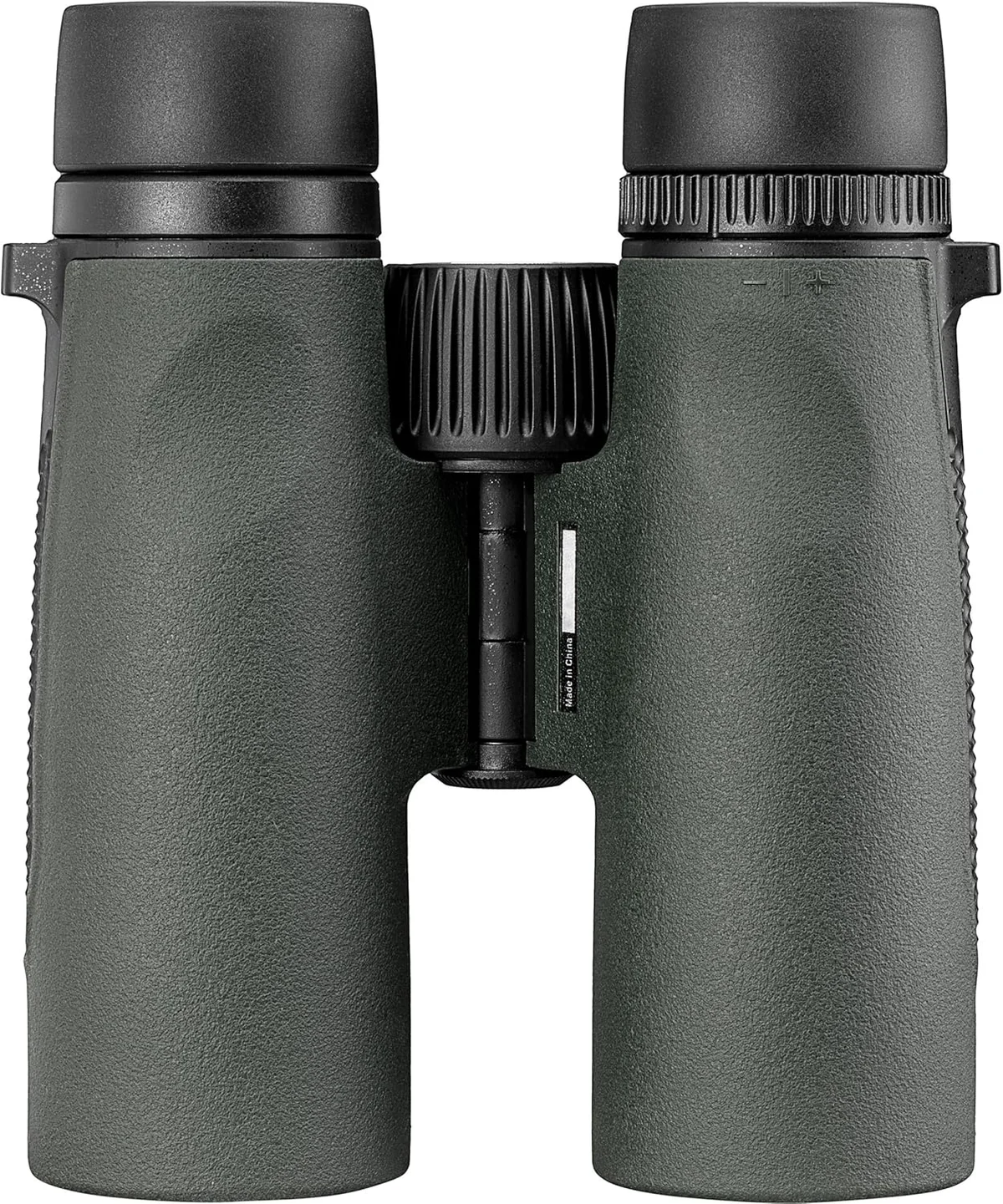
$150-$300: Phase correction appears. This is the inflection point where roof prism binoculars stop fighting their own design and start exploiting it. The Diamondback HD 10x42 sits here with both phase correction and dielectric coatings — the two upgrades that close the gap between roof and porro prism optics. At this tier, a well-coated roof prism matches or exceeds a porro prism in image quality while maintaining the compact body advantage.
Above $300: Phase correction and dielectric coatings are universal. Prism quality is no longer the differentiator — fluoride lens elements, field curvature correction, and mechanical refinements take over. The prism features that matter most at this level are exotic: mirror-finish polishing of prism surfaces, custom dielectric layer counts optimized for specific wavelength ranges, and tighter manufacturing tolerances on prism alignment.
When Porro Prisms Still Win
Roof prism dominance is a modern market reality, not an optical law.
Below $150, a well-made porro prism binocular delivers better brightness and contrast than a roof prism at the same price. The math is straightforward: porro prisms achieve total internal reflection on all surfaces (zero light loss at reflections), while budget roof prisms lose 7-13% at the mirror-coated surface. No amount of marketing language about "fully coated" lenses changes the physics at the prism stage.
Porro prisms also produce a wider, more three-dimensional image. The offset between the objectives and eyepieces increases the effective baseline for stereoscopic vision — your brain calculates depth from the slightly different angles the two barrels present. This stereoscopic enhancement is measurable and visible, particularly when scanning forested landscapes where depth perception helps separate a bird from the branches around it.
Marine binoculars — the heavy, rubber-armored 7x50 models used on boats — often use porro prisms deliberately. The 7x50 configuration produces a 7.1mm exit pupil (the largest practical size), and the porro design maximizes brightness through that already-massive exit pupil. Sailors who need to spot markers, buoys, and other vessels in fog and twilight choose porro 7x50s over roof prism equivalents because every fraction of light transmission matters when visibility is degraded.
The recommendation: if you need a binocular under $100 and optical brightness matters more than portability, consider a porro prism design. Above $150, a roof prism with phase correction closes the gap and adds the advantages of compact size, better waterproofing, and lower weight. Our overall binoculars roundup walks through this decision with model-by-model rankings.
Now That You Understand Prism Types
The prism system determines the optical ceiling of any binocular — everything else (lenses, coatings, focus mechanism) refines what the prism allows. If you are shopping for a roof prism binocular, phase correction is the feature to prioritize. The best binoculars roundup ranks every model by overall optical quality. The Crossfire vs Diamondback comparison isolates the phase correction difference between two otherwise similar Vortex models. And our full buying guide puts prism type in context alongside every other spec that shapes the purchase decision.
Prism Questions From Binocular Buyers
These are the prism-related questions that come up most often when people are choosing between binocular models.
What is a roof prism binocular?
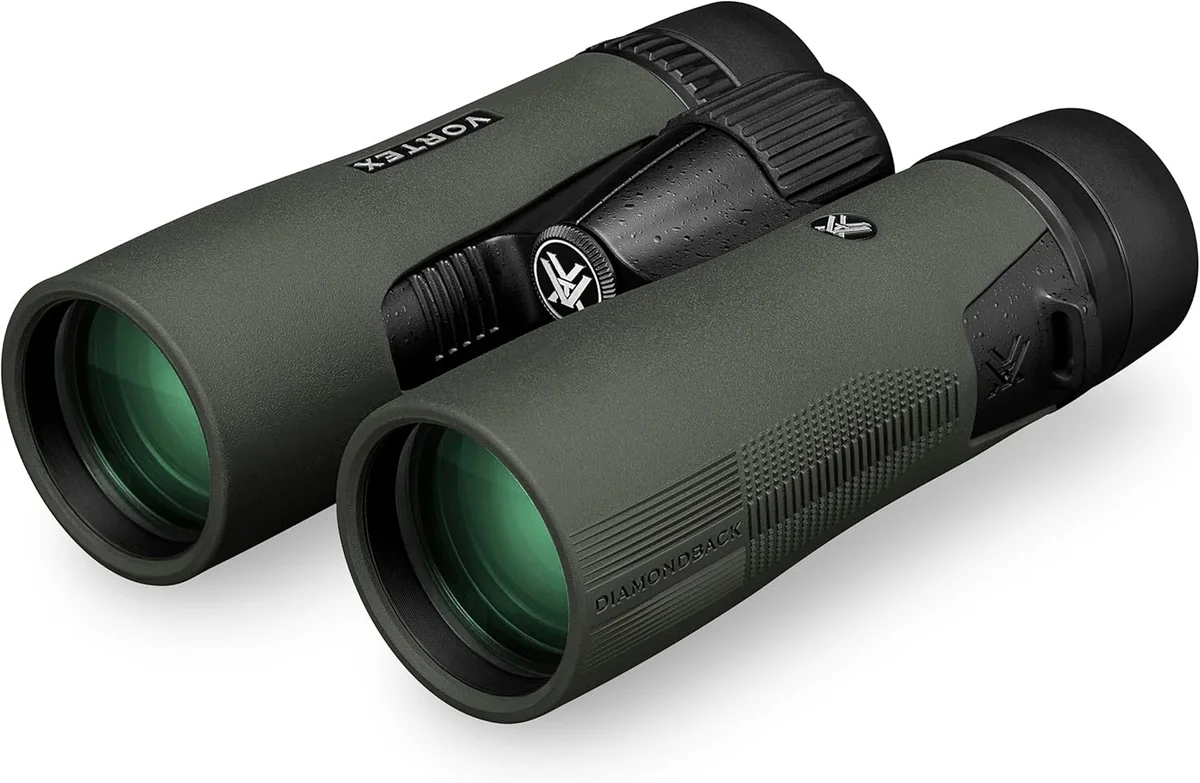
A roof prism binocular uses two prisms aligned in a straight barrel so the eyepiece sits directly behind the objective lens. The light path folds inside a compact, H-shaped body. Roof prism designs dominate modern binoculars because they are lighter, easier to seal against water, and more ergonomic to hold for extended periods — but they require phase correction coatings to match the optical performance of simpler porro prism designs.
Are phase-corrected prisms worth the extra cost?
Yes, if you want sharp, high-contrast images from a roof prism binocular. Without phase correction, the two split light beams recombine slightly out of sync, producing a softer image with muted colors and lower resolution. Phase correction is the single biggest optical upgrade separating budget roof prisms from mid-range ones. In our catalog, only the $200+ tier includes phase-corrected models — the budget and entry-level models skip it to hit their price targets.
What is BaK-4 glass?
BaK-4 (barium crown glass) has a higher refractive index than BK-7 (borosilicate), which means it bends light more efficiently inside the prism. The practical result: a perfectly round, evenly illuminated exit pupil. BK-7 produces an exit pupil with slightly gray edges — not ruinous, but visible through the eyepiece when you hold the binocular at arm's length and look at the bright disk of light coming out the back.
Are porro prism binoculars worse than roof prism binoculars?
Not optically. A porro prism reflects light with total internal reflection — no beam-splitting, no phase interference. Dollar for dollar, a porro prism binocular delivers brighter, higher-contrast images than a roof prism without phase correction. The tradeoff is size and weight: porro designs are wider, heavier, and harder to waterproof. If portability and durability rank above raw optical performance, roof prism wins. If brightness per dollar is the priority, a quality porro prism still holds an edge below the $200 mark.
What are dielectric coatings on prisms?
Dielectric coatings are multi-layer mirror coatings applied to the reflecting surfaces inside roof prisms. Standard aluminum mirror coatings reflect about 87-93% of light per surface. Dielectric coatings reflect 99%+ per surface. Across the multiple reflections inside a roof prism, that 6-12% difference per bounce compounds into a visible brightness and color accuracy improvement.
How do you tell which prism type a binocular uses?
Usually. Porro prism binoculars have a distinctive wide-set, zigzag profile — the eyepieces are offset inward from the objective lenses, giving the body a bent shape. Roof prism binoculars have straight barrels where the eyepiece aligns directly behind the objective, forming a slim H or double-tube shape. The body shape alone tells you the prism type in nearly every case.
Our Top Recommendation
Based on our research, the Diamondback HD 10x42 is our top pick — hunters and birders who want the best glass under $300 with a lifetime warranty.
Get Picks Delivered
One email per week. Honest reviews, no spam.
Only when something changes. Unsubscribe anytime.