Binoculars for Beginners: What to Know Before Your First Purchase
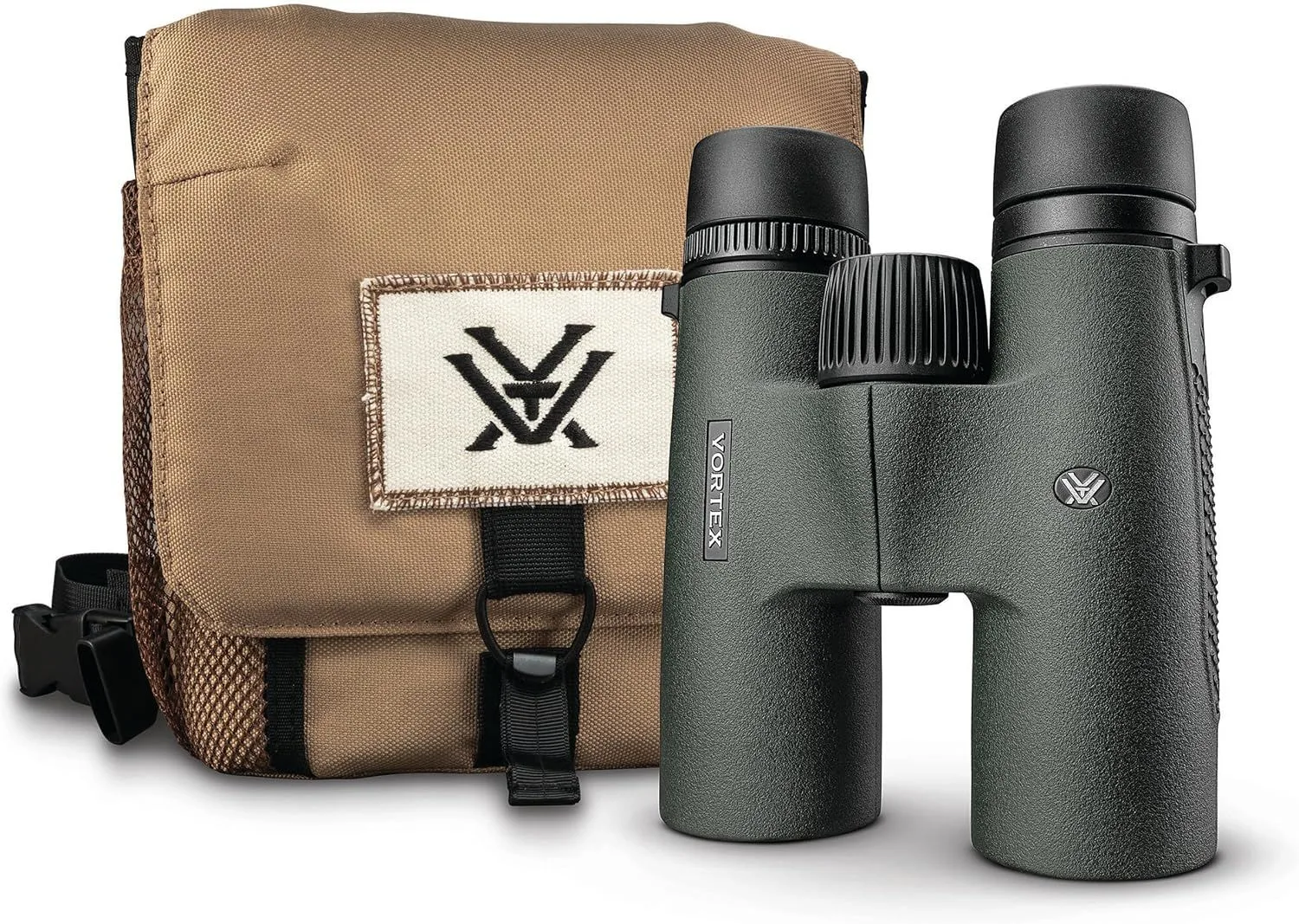
You don't need to understand optics to buy good binoculars. You need to answer three questions: what will you look at, how much can you spend, and do you wear glasses. Everything else is detail that matters to enthusiasts but not to someone making their first purchase.
This guide strips away the jargon and gives you the minimum knowledge needed to buy confidently. We cover what the numbers mean in plain language, which specs to care about and which to ignore entirely, the three price tiers that actually matter, and specific product recommendations at each tier based on our testing and review analysis.
If you want the deep technical reference, our full binocular buying framework covers every variable including prism types, coating tiers, and configuration matching by activity. This page is the shortcut — the "just tell me what to buy" version for people who don't want to become optics experts before their first purchase.
See Our Top Pick: Crossfire HD 10x42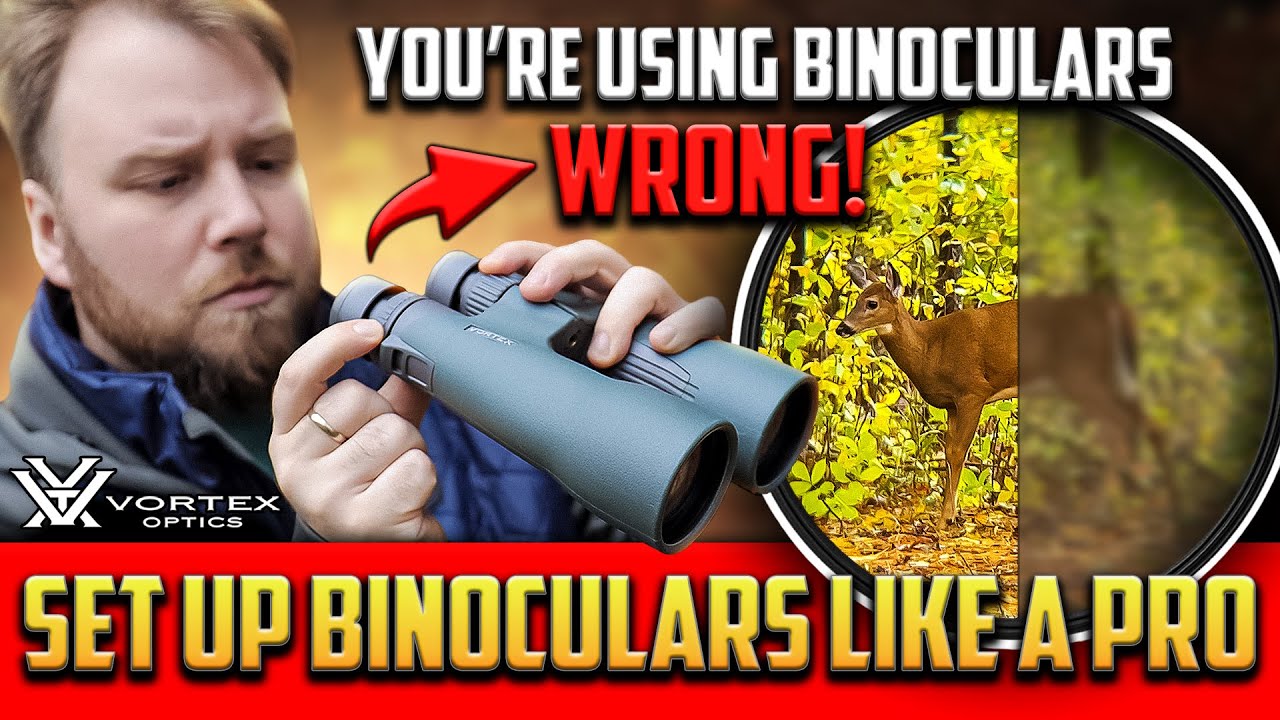
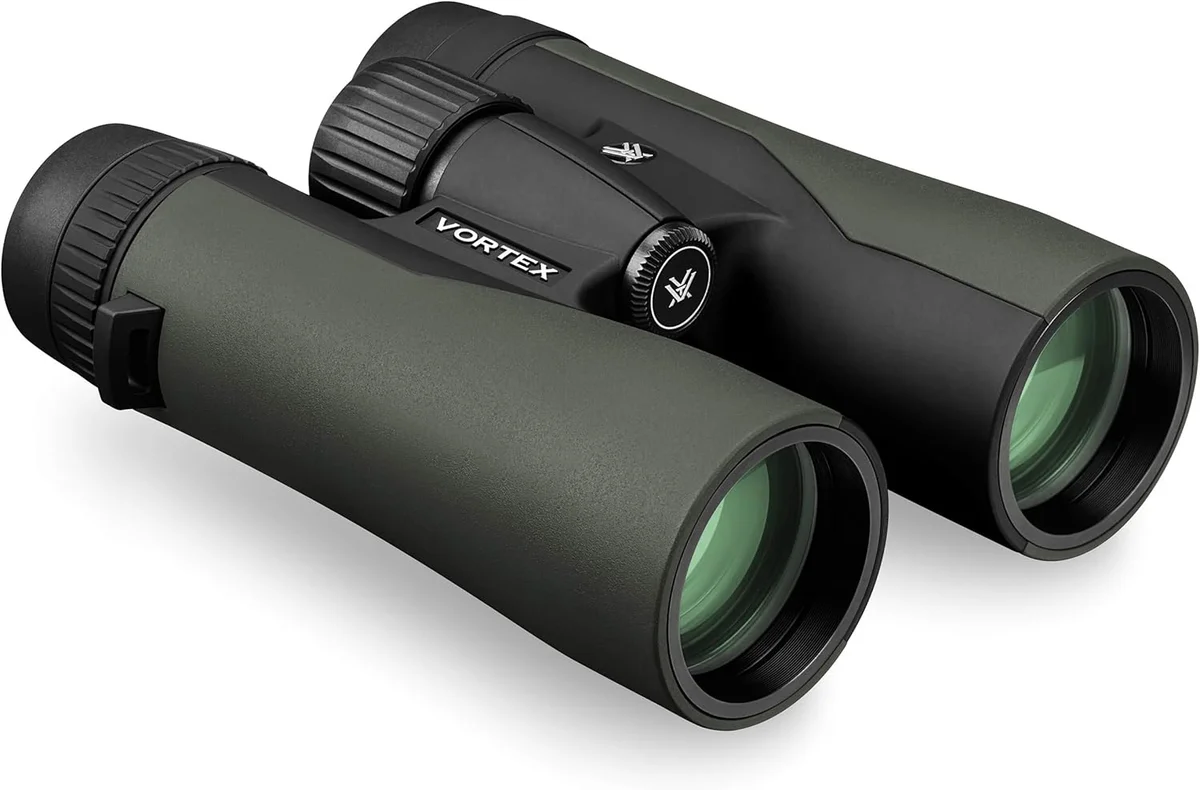
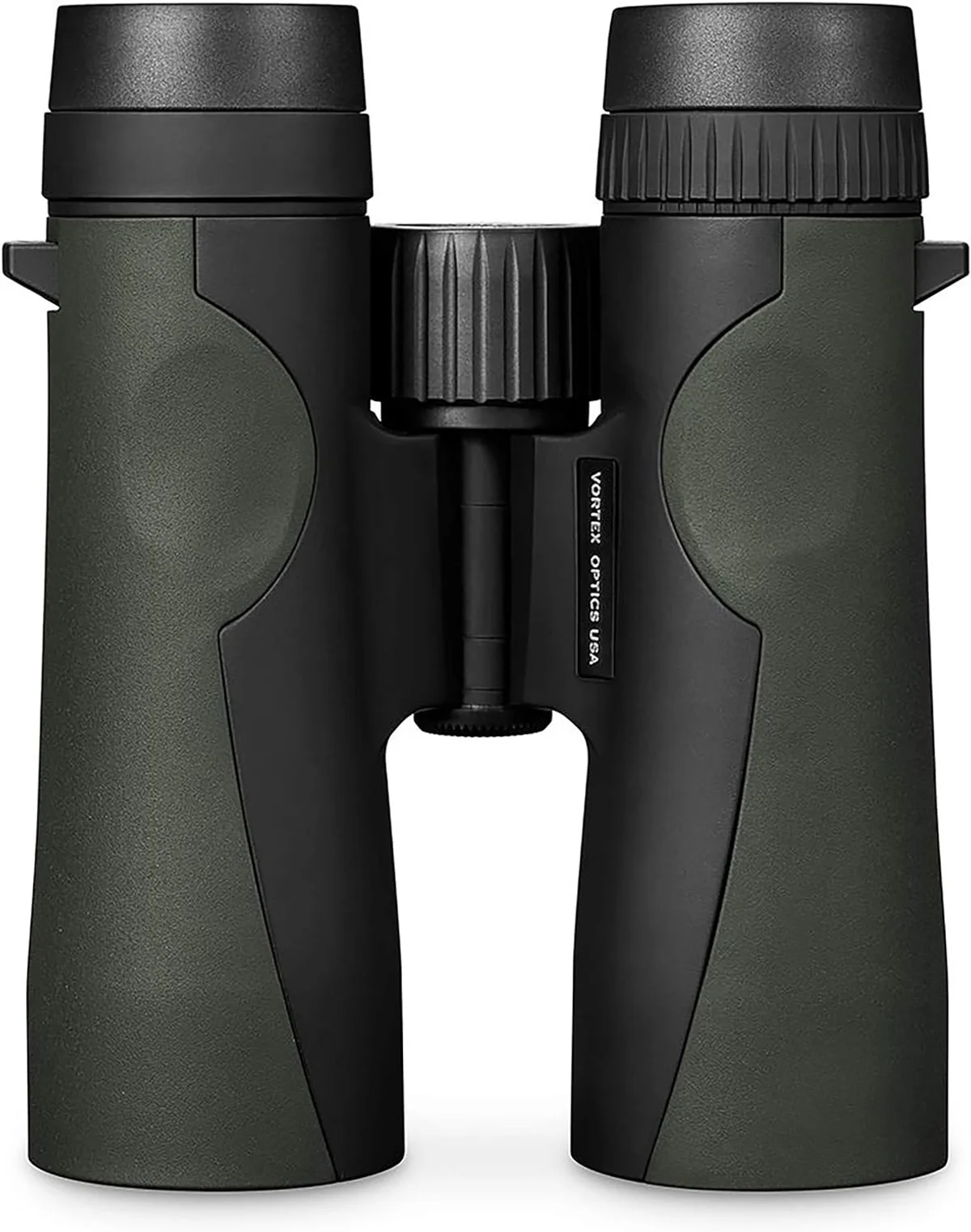
The Only Two Numbers That Matter at First
Every binocular is defined by two numbers printed on the body — like 10x42 or 8x25. The first number (10x) is magnification: how many times closer distant objects appear to the naked eye. The second number (42) is the objective lens diameter measured in millimeters, which directly controls how much light enters the optic.
That's it. Those two numbers determine 80% of your experience.
Higher magnification means more detail at distance but also more hand shake and a narrower view. Bigger front lenses mean brighter images but heavier binoculars. Every binocular design is a balance between these two forces — more reach versus more comfort, more brightness versus more weight.
For your first binocular, we recommend 10x42. It's the default configuration for outdoor use because it balances reach, brightness, and weight better than any other combination. The 10x magnification is enough to identify birds at 100 yards, spot deer at 300 yards, and read signs at a distance. The 42mm objectives keep the weight manageable at around 22-25 ounces while gathering enough light for dawn and dusk use.
Why not 8x42 or 12x50? Our 8x42 vs 10x42 comparison covers this in detail, but the short version: an 8x42 gives you a wider view and brighter image but 20% less reach — fine for close birding but limiting at distance. A 12x50 gives more reach but amplifies hand shake, weighs nearly two pounds, and costs more. The 10x42 sits in the middle where nothing is perfect but nothing is a serious weakness either. It's the Honda Civic of binoculars — not the fastest, not the flashiest, but the right call for most people most of the time. Our guide to the 10x42 designation explains the math behind why this configuration became the industry default.
What to Ignore (Seriously, Ignore It)
Marketing materials throw dozens of specs at you. Most are irrelevant for a first purchase. Here's what you can safely skip:
- Prism type (BaK-4 vs BK-7) — Every binocular over $80 uses BaK-4. Below that, it's a minor difference. Don't factor it into your decision.
- Lens diameter precision — Whether the objective is 41mm or 42mm makes zero practical difference. Ignore sub-millimeter marketing claims.
- Maximum magnification claims on compacts — Compact binoculars claiming 12x or 15x are often overstated, and even if accurate, you can't hold them steady enough to use the extra magnification. Stick with 10x.
- Night vision — Consumer binoculars do not have night vision. Products marketed as "night vision binoculars" are simply binoculars with slightly larger objectives. Real night vision is a different technology entirely and starts at $300+ for dedicated devices. For stargazing and comet viewing with binoculars, large-objective models (50mm+) are what you want — not fake night vision marketing.
- Zoom binoculars — Variable magnification binoculars sacrifice optical quality at every setting. Fixed magnification is sharper, brighter, and more durable. Avoid zoom models.
The Three Budget Tiers (Pick One)
Binocular quality follows a predictable price curve. Here's what each tier delivers and what it sacrifices:
Tier 1: Under $50 — Pocket Fun
These are small compact binoculars for concerts, sporting events, travel, and kids. They magnify — that's the selling point. Images are dim compared to full-size optics, edges blur, and durability is a question mark. The Hontry 10x25 at under $25 is our pick here: foldable, lightweight, and priced where loss or damage is not painful. The Occer 12x25 compact binocular is the step up with BaK-4 glass and better magnification for about $36.
Who should buy Tier 1: people who want binoculars in their pocket for occasional use and would rather spend under $50 than carry a heavier, higher-quality pair. If you only need one eye's worth of magnification, a monocular might be lighter and cheaper — but binoculars win on comfort for sessions longer than a few minutes. This is also the gift tier — sub-$40 binoculars make solid stocking stuffers.
Tier 2: $99-$150 — Your First Real Binocular
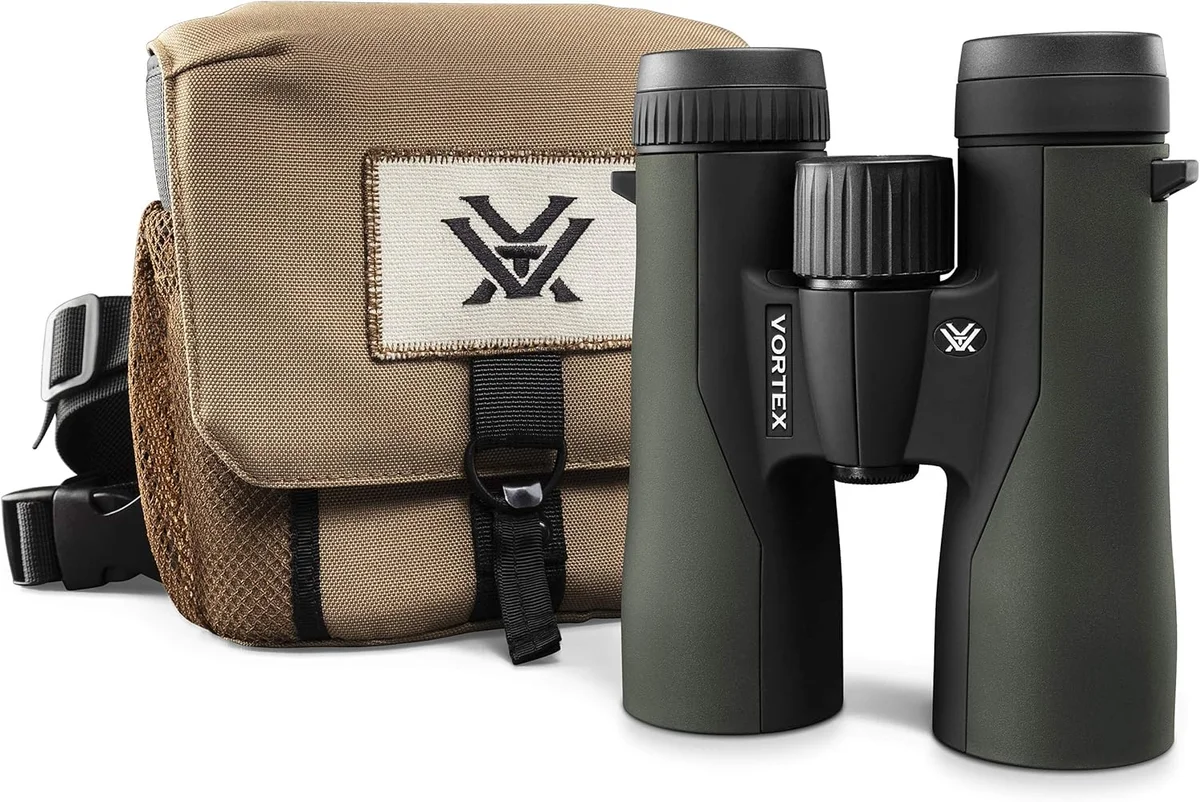
This is where binoculars stop being toys. You get fully multi-coated optics, waterproof construction, comfortable ergonomics, and warranties from real brands. The Vortex Triumph HD at the low end offers the same lifetime warranty as $2,000 Vortex models. The Crossfire HD 10x42 at $149 is the best all-around binocular under $200 and the most common first "serious" binocular for new outdoor enthusiasts.
Who should buy Tier 2: anyone who plans to use binoculars regularly — weekly birding, seasonal hunting, monthly hiking. If you'll pick them up more than a few times a year, this tier is the minimum investment that delivers a genuinely good experience. The difference between a $30 compact and a $149 Crossfire is not subtle — it's the difference between squinting through a foggy window and looking through clean glass on a clear morning. First-time users who start at this tier rarely regret the investment. Those who start lower often upgrade within six months.
Tier 3: $200-$300 — The Quality Jump
Phase correction and dielectric coatings appear at this price level. These are optical technologies that produce a visible brightness and contrast improvement — the kind you notice within seconds of looking through the eyepiece. The Diamondback HD 10x42 at around $224 is the entry point and our top recommendation for most buyers who can reach this budget.
Who should buy Tier 3: daily users, dedicated birders, hunters who spend time glassing at dawn and dusk, or anyone who tried Tier 2 binoculars and feels ready for the next step up. The jump from Tier 2 to Tier 3 is the largest single improvement in the entire binocular price spectrum — wider sweet spot, brighter images, better color accuracy, and less eye fatigue during long sessions.
The Glasses Question
If you wear glasses, one spec becomes critical: eye relief. This is the distance between the eyepiece and the point where the full image forms. With glasses, your eye sits further back from the eyepiece than without. If eye relief is too short, you see a restricted circle surrounded by black — like peering through a keyhole.
The numbers to remember: 14mm eye relief is the minimum for comfortable glasses use. 15mm is good. 17mm+ is excellent. Below 14mm, glasses wearers will be frustrated.
In our catalog: the Triumph HD offers 17mm eye relief — the best in Vortex's budget range and outstanding for glasses wearers. The Crossfire HD and Diamondback HD both offer 15mm — workable but tight with larger frames. Our complete eye relief guide covers which models pass the glasses test and how to adjust eyecups for optimal viewing with spectacles.
Five Common Beginner Mistakes
We've analyzed enough buyer reviews and return patterns to identify the errors that cost first-time buyers the most satisfaction:
1. Buying too much magnification. The 12x50 sounds better than the 10x42 — more zoom, bigger lenses. In practice, 12x amplifies hand shake, the heavier body causes neck fatigue, and the narrower field of view makes finding subjects harder. Start at 10x. You can always go higher with your second pair if you need more reach.
2. Skipping the warranty check. Binoculars take abuse outdoors. A $150 binocular with a lifetime warranty is a better long-term investment than a $200 binocular with a 1-year warranty. Vortex's VIP warranty covers accidental damage, no receipt required, forever. Factor this into every comparison you make.
3. Choosing by Amazon star rating alone. A 4.7-star compact binocular and a 4.7-star full-size binocular are not equivalent products — they're rated by entirely different buyer populations with different expectations and different use cases. Read the 3-star and 4-star reviews, where honest day-to-day assessments live, not the 5-star reviews, where first-day enthusiasm routinely outpaces long-term objectivity.
4. Ignoring close focus distance. If you'll watch birds at feeders, butterflies in gardens, or anything within 15 feet, check this number. It ranges from 5 ft on premium models to 15+ ft on budget ones. A binocular that can't focus on your nearest subjects is a binocular you'll use less than expected.
5. Buying the cheapest option and expecting quality. Below $50, binoculars are functional but limited — dim images, soft edges, questionable durability. The jump from $50 to $100 buys a fundamentally better product with real coatings and actual waterproofing. The jump from $100 to $200 buys another level with tighter tolerances and better glass. If you can afford to start at the $100 tier, do it — the experience difference is worth every additional dollar and will keep you using the binoculars instead of leaving them in a drawer after the novelty fades.
How to Use Your New Binoculars
Three setup steps that most beginners skip and then wonder why the image looks wrong:
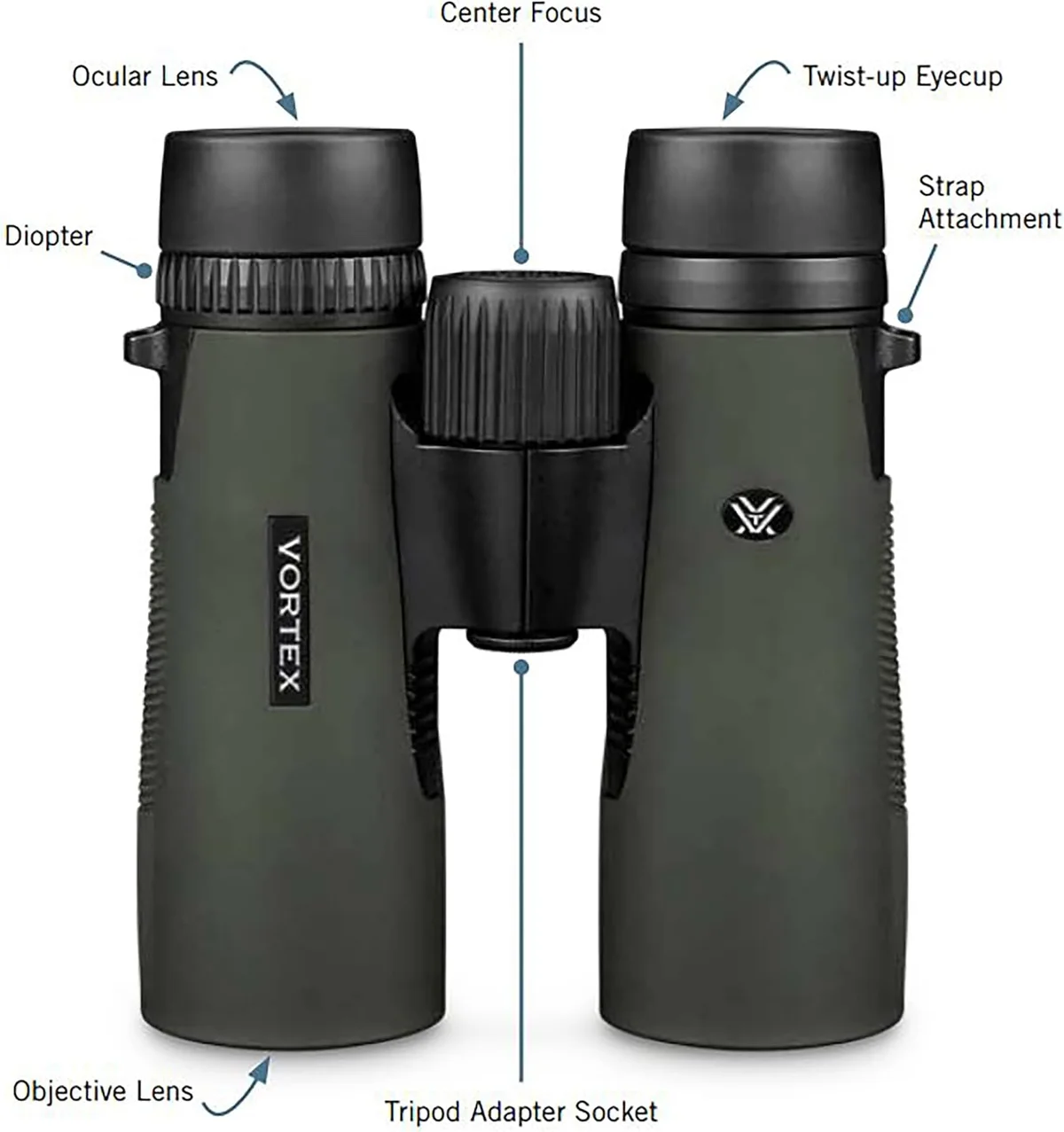
Step 1: Set the interpupillary distance (IPD). Fold the two barrels closer together or further apart until you see one clean circle instead of two overlapping circles or a figure-eight shape. The hinge should match the distance between your eyes. This is the first thing to adjust on any binocular — if the barrels are too wide or narrow, you see a figure-eight instead of a full circle.
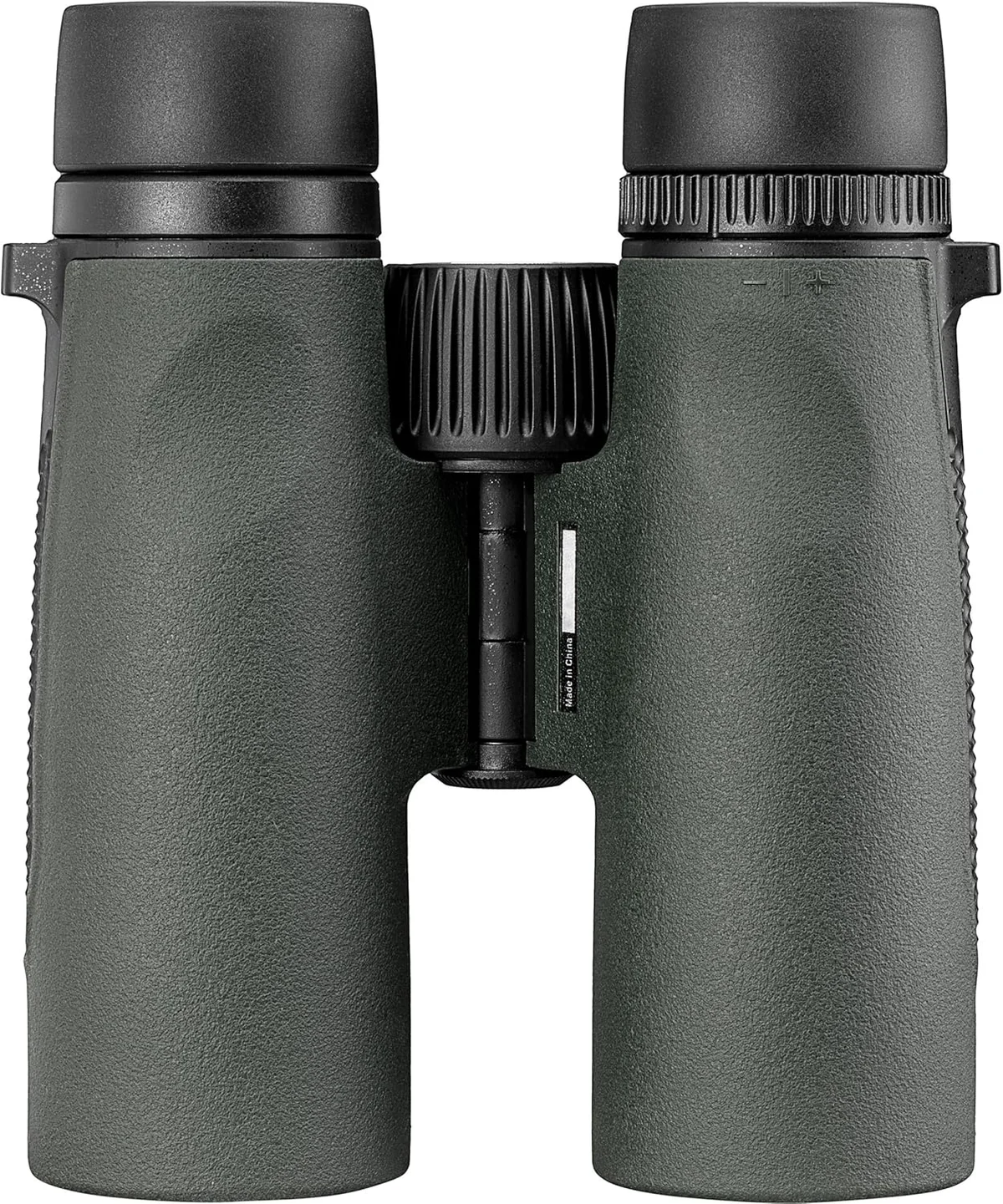
Step 2: Set the diopter. Your left and right eyes have different prescriptions, even if you don't wear glasses. Close your right eye, focus the center wheel until the left-eye image is sharp. Then close your left eye, open your right, and turn the diopter ring (on the right eyepiece) until that image is sharp. Now open both eyes — sharp image, no further diopter adjustment needed.
Step 3: Learn to find subjects. Look at your target with naked eyes first. Without moving your head, bring the binoculars up to your eyes. The subject should be roughly centered in the view. This "eyes first, then binoculars" technique is far faster than trying to scan through the eyepieces from scratch — a mistake every beginner makes on day one and fixes by day three. Practice with stationary objects: mailboxes, signs, perched birds on obvious branches. Moving subjects come with practice.
One more technique worth learning early: use landmarks. If someone says "there's a hawk in that dead tree," look at the tree with naked eyes, note a branch near the hawk, then bring the binoculars up. Your eye naturally returns to the same position. Starting from scratch through the eyepiece, with its magnified and narrow view, turns a five-second find into a two-minute search.
Our Pick for First-Time Buyers
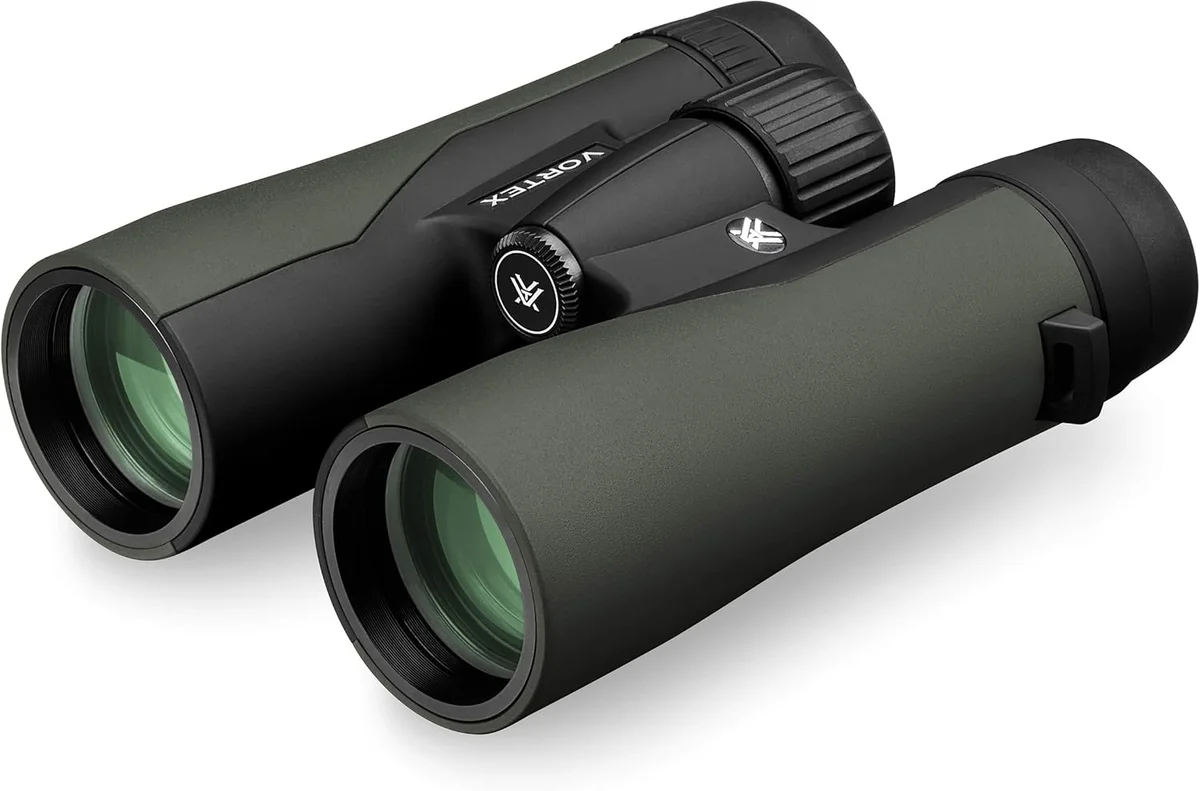
The Vortex Crossfire HD 10x42 at $100–$250 is our default first-binocular recommendation. Fully multi-coated optics, waterproof construction, 6 ft close focus, smooth focus wheel, and the VIP lifetime warranty. It delivers a good-enough experience that most beginners never feel limited, and the warranty means your first binocular purchase is effectively permanent — if anything breaks, Vortex replaces it, no questions.
If the budget can stretch to $100–$250, the Diamondback HD is a better starting point. If it can't go above $100, the Triumph HD is the smartest option at that tier. All three carry the same warranty. All three are 10x42. The difference is glass quality — and every dollar spent on better glass pays back in a brighter, sharper, more enjoyable view.
Beginner Questions We Hear Most Often
First-time buyers ask variations of the same core questions — here are direct answers without the jargon that usually buries them.
What are the two numbers on binoculars?
The first number is magnification — how many times closer things appear. The second is objective lens diameter in millimeters — how big the front lenses are. A 10x42 binocular makes things look 10 times closer through 42mm lenses. Bigger front lenses gather more light for brighter images but add weight. Our guide to what 10x42 means covers the math and tradeoffs in detail.
What is a good starter binocular brand?
Vortex Optics is the default recommendation for beginners. Every model from their $99 Triumph HD to their $2,000+ Razor HD carries the same unconditional lifetime warranty — no receipt, no registration, no questions asked. That warranty removes the risk of buying your first serious optic. Bushnell and Nikon also make solid entry-level options, but neither matches the Vortex warranty terms.
Are cheap binoculars worth buying?
Below $50, binoculars are functional toys — they magnify, but images are dim, edges are blurry, and they lack waterproofing. Between $50 and $100, you enter the "real optics" zone where coatings and glass quality make a noticeable difference. The Vortex Triumph HD at $99 is the line where binoculars stop being a compromise and start being a tool. Below that, set expectations low.
What size binoculars are best for a beginner?
10x42 is the best all-purpose configuration for a first binocular. The 10x magnification works for birding, hiking, hunting, and general wildlife viewing. The 42mm objectives gather enough light for dawn and dusk use without making the binoculars too heavy. If you know you will primarily use them for concerts or travel, consider a compact 10x25 instead — lighter and pocketable, but dimmer.
How do you focus binoculars correctly?
Close your right eye and focus using the center wheel until the image is sharp through your left eye only. Then close your left eye, open your right, and adjust the diopter ring (usually on the right eyepiece) until the right eye image is sharp. Now open both eyes — the image should be crisp. You only need to set the diopter once. After that, the center wheel adjusts both eyes simultaneously.
How long do binoculars last?
Quality binoculars from reputable brands last 10-30 years with normal use. The optical coatings can degrade over decades if exposed to harsh conditions, and rubber armor eventually hardens, but the glass and prisms are effectively permanent. Internal fogging is the most common age-related failure — nitrogen or argon purging prevents this. With a lifetime warranty from Vortex, longevity becomes academic — they fix whatever breaks, forever.
Our Top Recommendation
Based on our research, the Crossfire HD 10x42 is our top pick — first-time buyers who want a trusted brand with a real warranty under $200.
Get Our Top 3 Picks
Get our top 3 picks for your budget — one email, then only updates.
Only when something changes. Unsubscribe anytime.