Binoculars for Glasses Wearers: What to Buy and What to Avoid
Eye relief — the distance between the eyepiece lens and the point where the full image forms — determines whether glasses wearers see a bright, complete view or a dark tunnel. This guide ranks every binocular in our catalog by glasses compatibility and recommends specific models at three budget tiers.
Look, a $300 binocular with 12mm of eye relief is worse for a glasses wearer than a $90 pair with 17mm.
This page is the practical companion to our eye relief coverage: which products to buy, which to avoid, and how to set them up once they arrive. The best binoculars roundup covers overall rankings, while this guide filters strictly for glasses compatibility.
See Our Top Pick: Triumph HD 10x42
Why Glasses Wearers Have a Harder Time with Binoculars
Prescription lenses hold your eye 12-14mm farther from the eyepiece than a bare eye. That extra distance pushes your pupil past the exit pupil — the point where the full image forms — shrinking the visible circle and producing black vignetting around the edges.
The spec that fixes this is eye relief: the distance in millimeters from the last lens surface to the exit pupil. More eye relief means more room for glasses. Binoculars with 15mm or more accommodate most standard prescription frames. Below that threshold, the physics work against you regardless of brand, price, or glass quality.
This is not a minor annoyance. Losing 30% of your field of view to vignetting turns birding from a scanning activity into a search-through-a-keyhole exercise. It makes tracking moving subjects nearly impossible. And it makes the binocular feel claustrophobic in a way that kills the entire outdoor experience.
The Glasses Test: Every Binocular in Our Catalog Ranked
We checked the eye relief on every binocular we review against the 15mm minimum threshold. Products are ranked from most glasses-friendly to least, with our real-world observations for each.
Tier 1 — Comfortable with any frame style (17mm+)
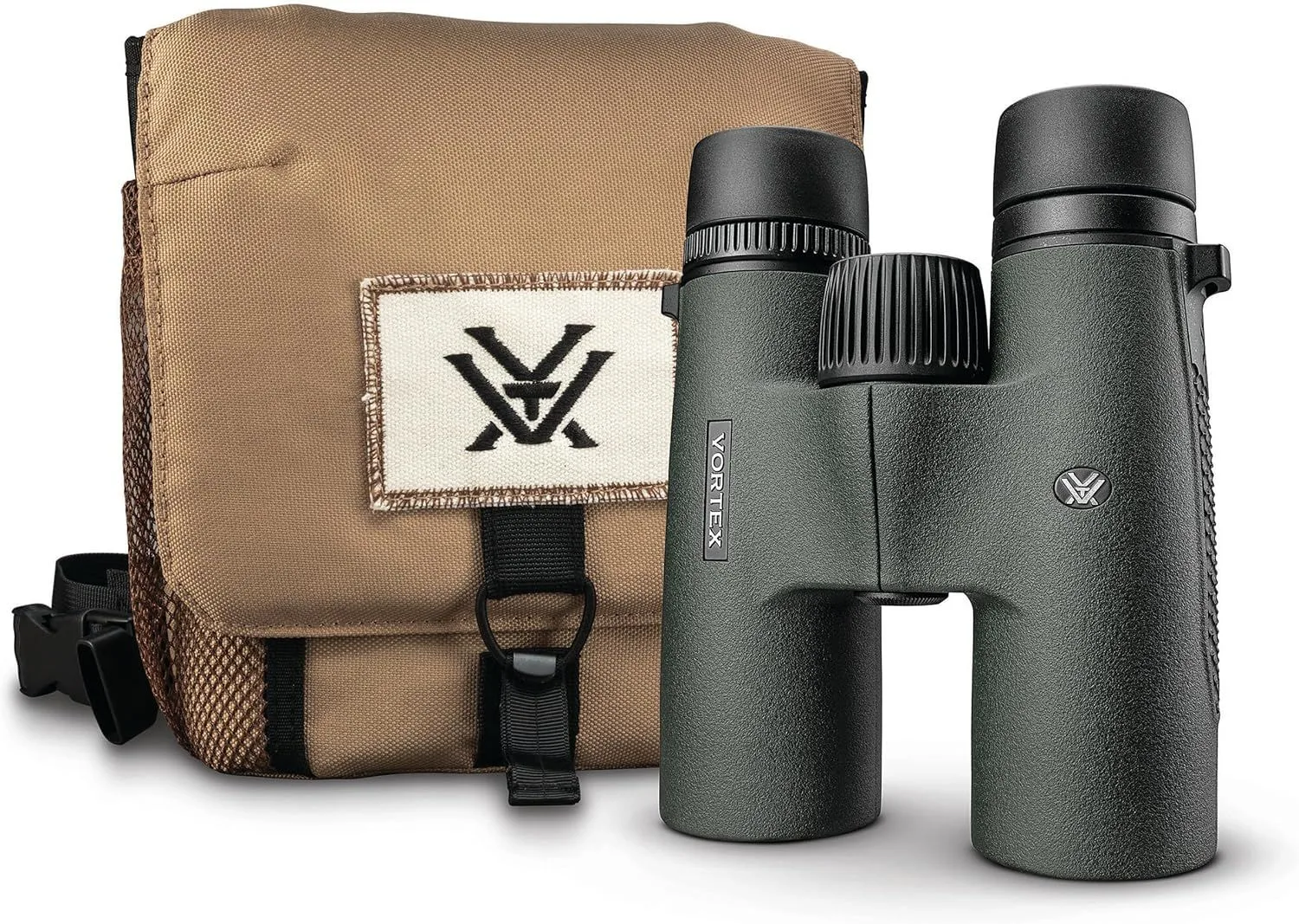
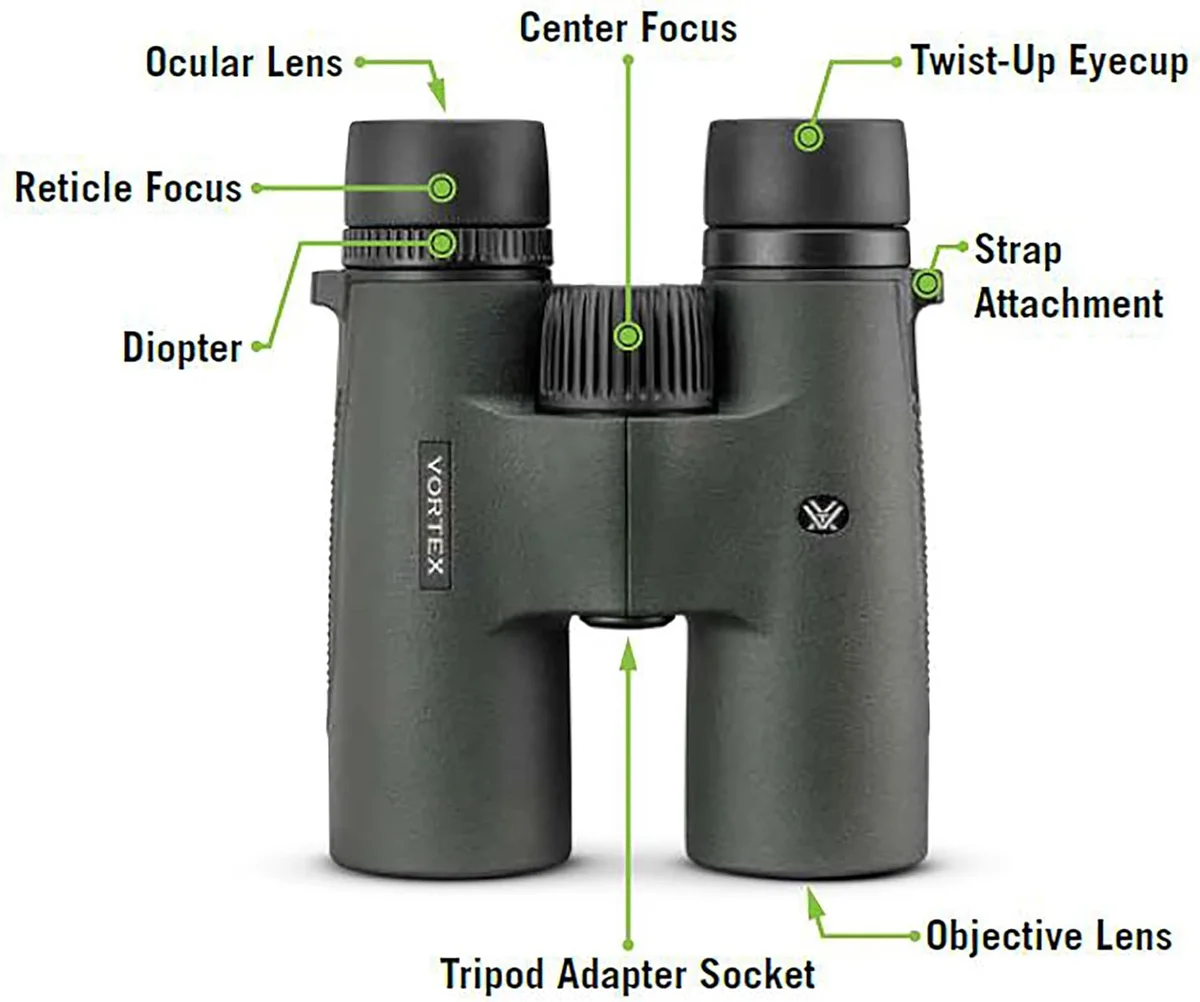
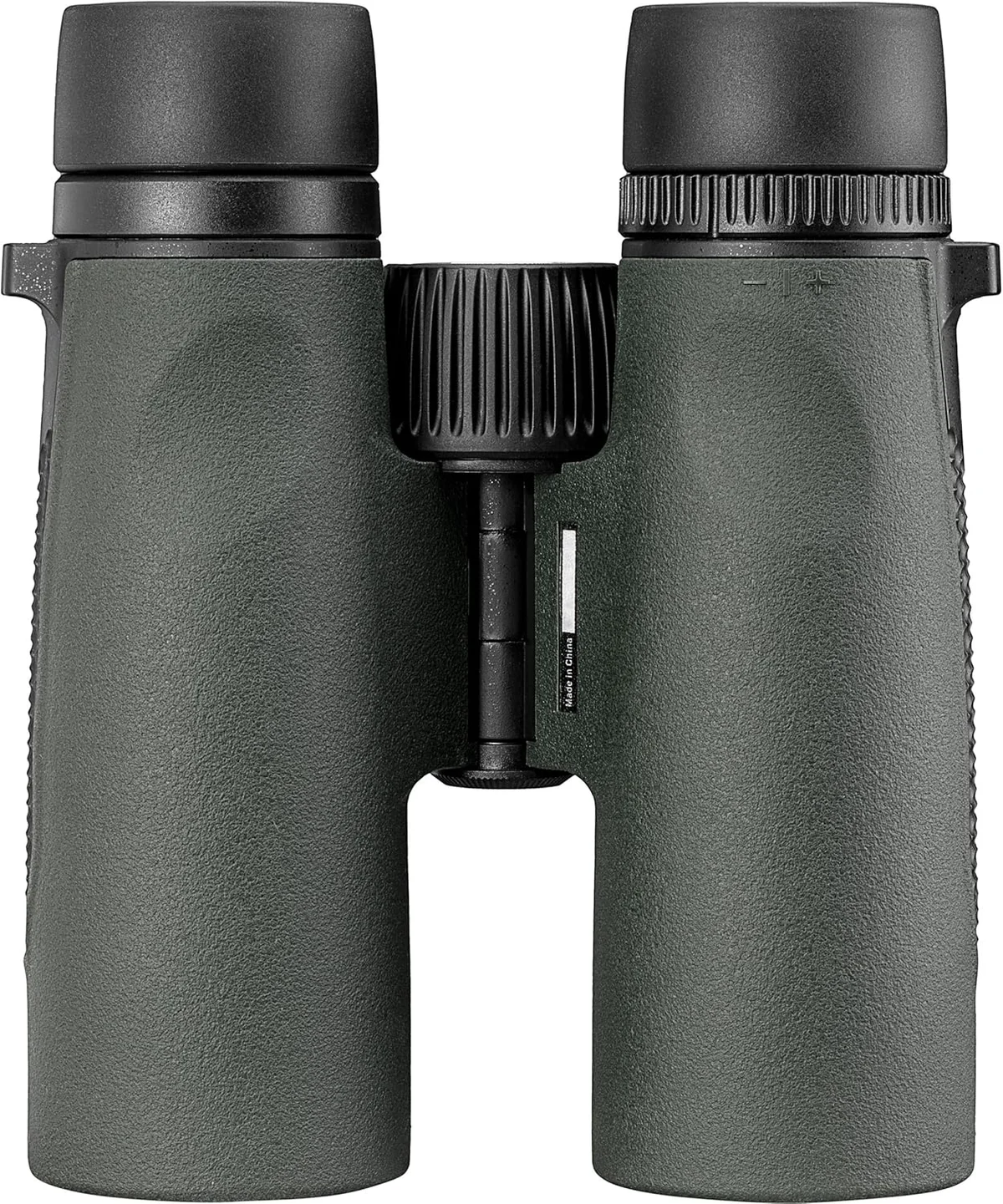
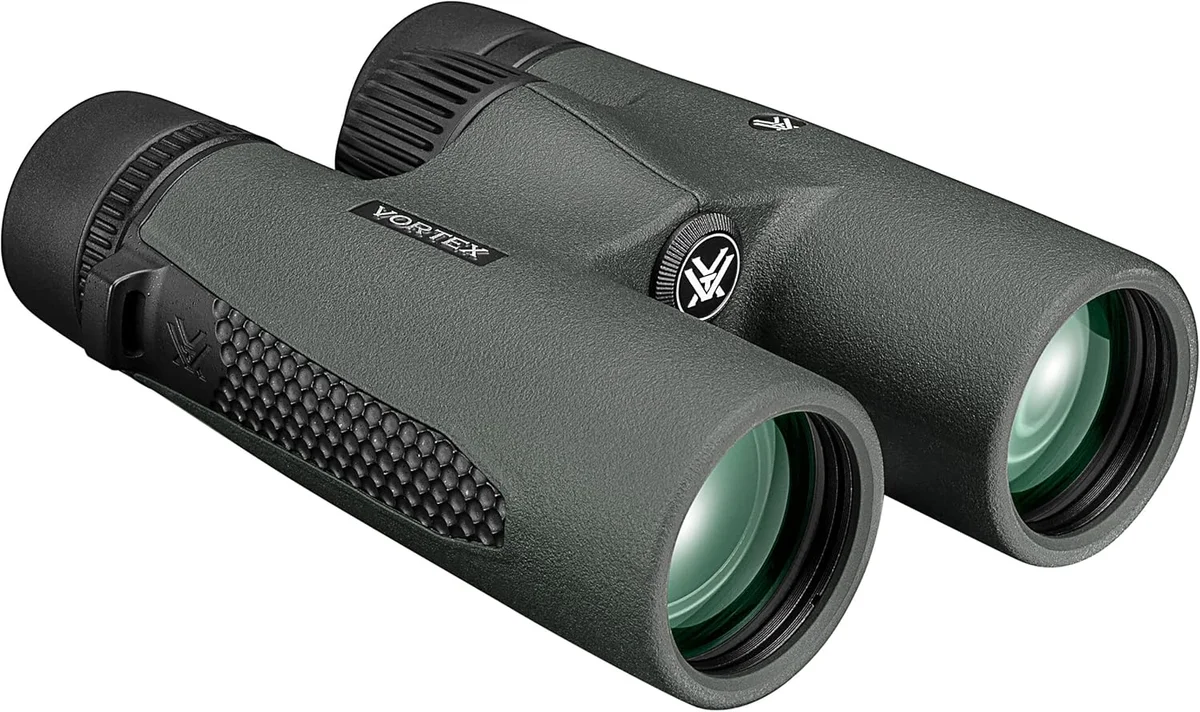
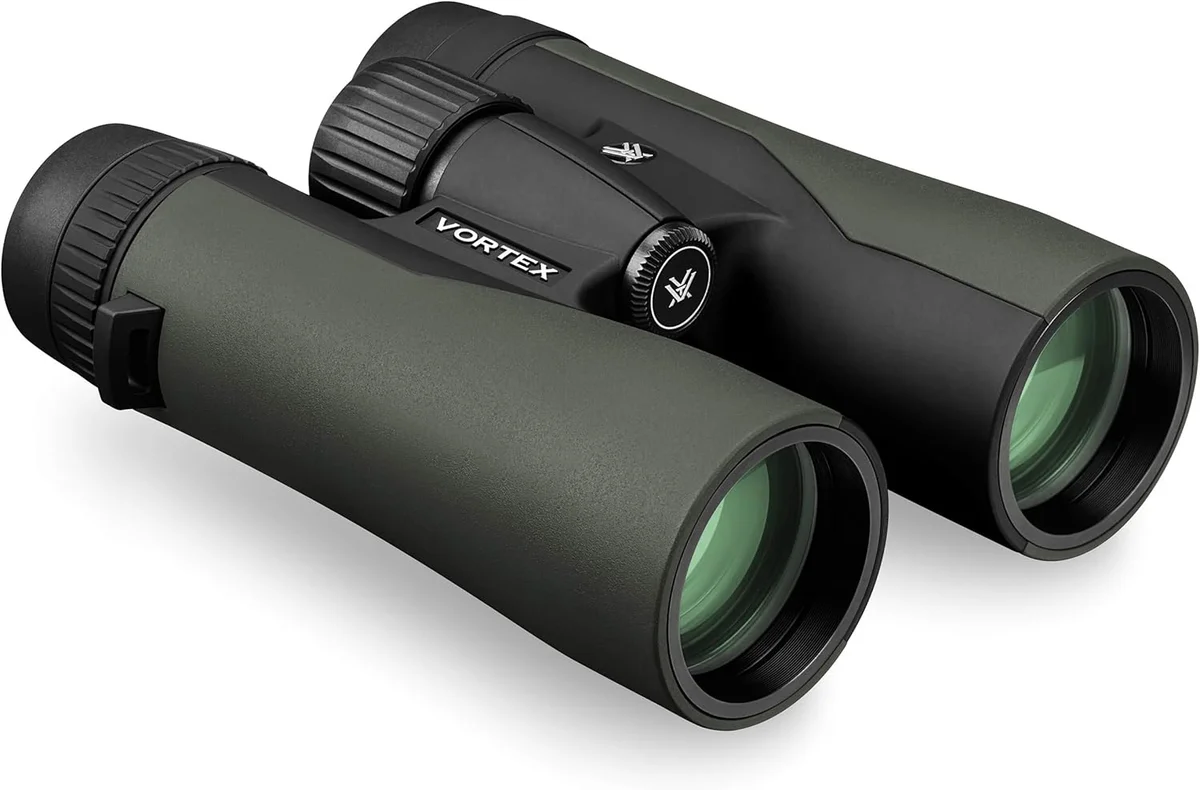
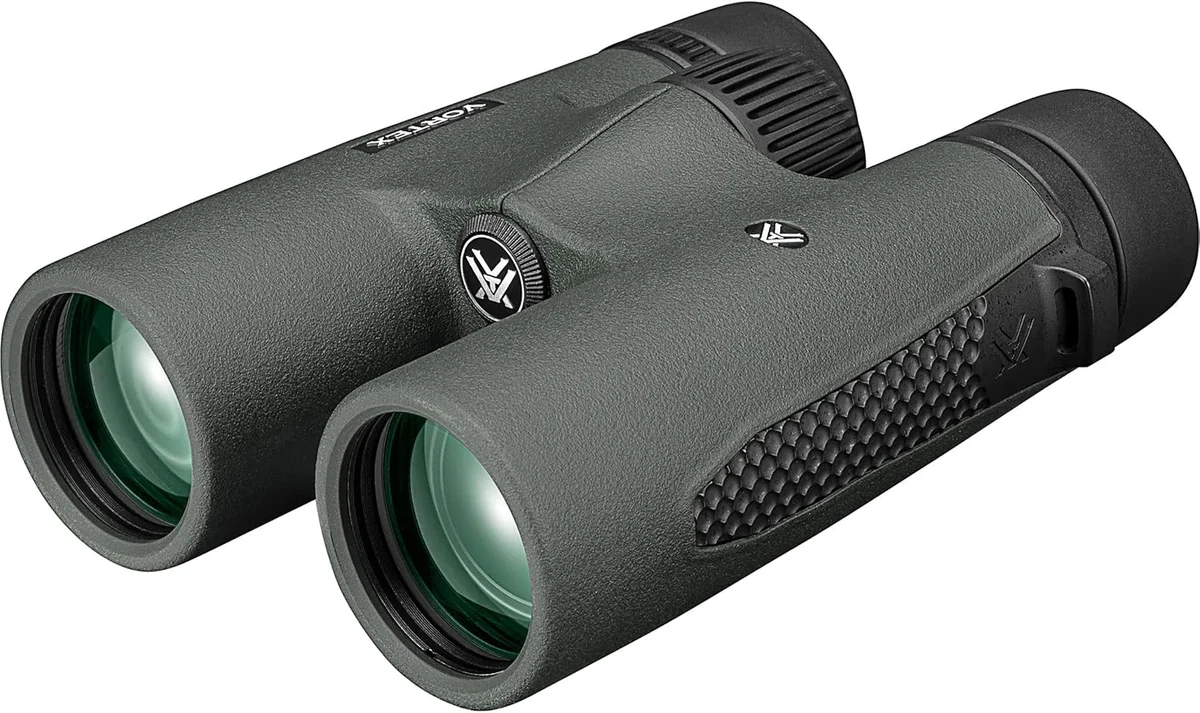
Vortex Triumph HD 10x42 — 17mm eye relief. Our top pick for glasses wearers. That extra 2mm beyond the 15mm threshold sounds small on paper, but the difference in practice is the gap between "the full image is visible when holding still" and "the full image stays visible while walking, scanning, and shifting grip." The Triumph's twist-up eyecups click to an intermediate position that many glasses wearers find perfect without going fully flat. At a budget-friendly price tier, it outperforms binoculars costing three times as much on this specific metric. Fully multi-coated optics and phase-corrected roof prisms round out the package. The Triumph vs Crossfire comparison tests how that 17mm vs 15mm difference plays out side by side.
Tinllaans 15x55 UHD — 13.6-19.6mm adjustable. The adjustable eyecups span a wide range, and at the lowest position (glasses setting), the effective eye relief reaches the upper end of that range. If the 19.6mm figure holds at the glasses position, this is the most accommodating binocular in our catalog for thick progressive lenses and wraparound safety frames. The catch: 15x magnification at 32 ounces makes this a stationary-use binocular. Not something you carry on a morning bird walk. It fills a niche for glasses wearers who view from a fixed position — a window, a balcony, a hunting blind.
Tier 2 — Works with standard frames (15mm)
Vortex Crossfire HD 10x42 — 15mm. Right at the threshold. Glasses wearers with standard frames — thin metal or plastic, not wraparounds — will see the full field of view with eyecups twisted down. Thick progressive lenses or oversized frames may notice faint edge darkening. The Crossfire's optics are a step above the Triumph HD 10x42 in clarity and chromatic aberration control, so glasses wearers who fit within the 15mm window get better glass for the tradeoff. Our Crossfire vs Diamondback comparison covers how these two 15mm models differ in optical quality.
Vortex Diamondback HD 10x42 — 15mm. Identical eye relief to the Crossfire in a higher-grade optical package. Phase-corrected roof prisms and dielectric coatings push resolution and color accuracy well above what the Crossfire delivers. If you already know 15mm works for your frames, the Diamondback is the better investment in image quality. If your prescription is strong or your frames are thick, the Triumph HD at 17mm is the safer choice even though the glass is a step below.
Vortex Crossfire HD 12x50 — 15mm. Same 15mm as the 10x42 Crossfire, but higher magnification amplifies every misalignment. When your eye drifts even slightly off the exit pupil — from breathing, hand shake, or adjusting your grip — the 12x magnification makes that drift twice as noticeable as it would be at 8x. Glasses wearers can use this binocular, but the margin for error is thinner than the 10x42 models. Best for tripod or window-mount use where head movement is minimal.
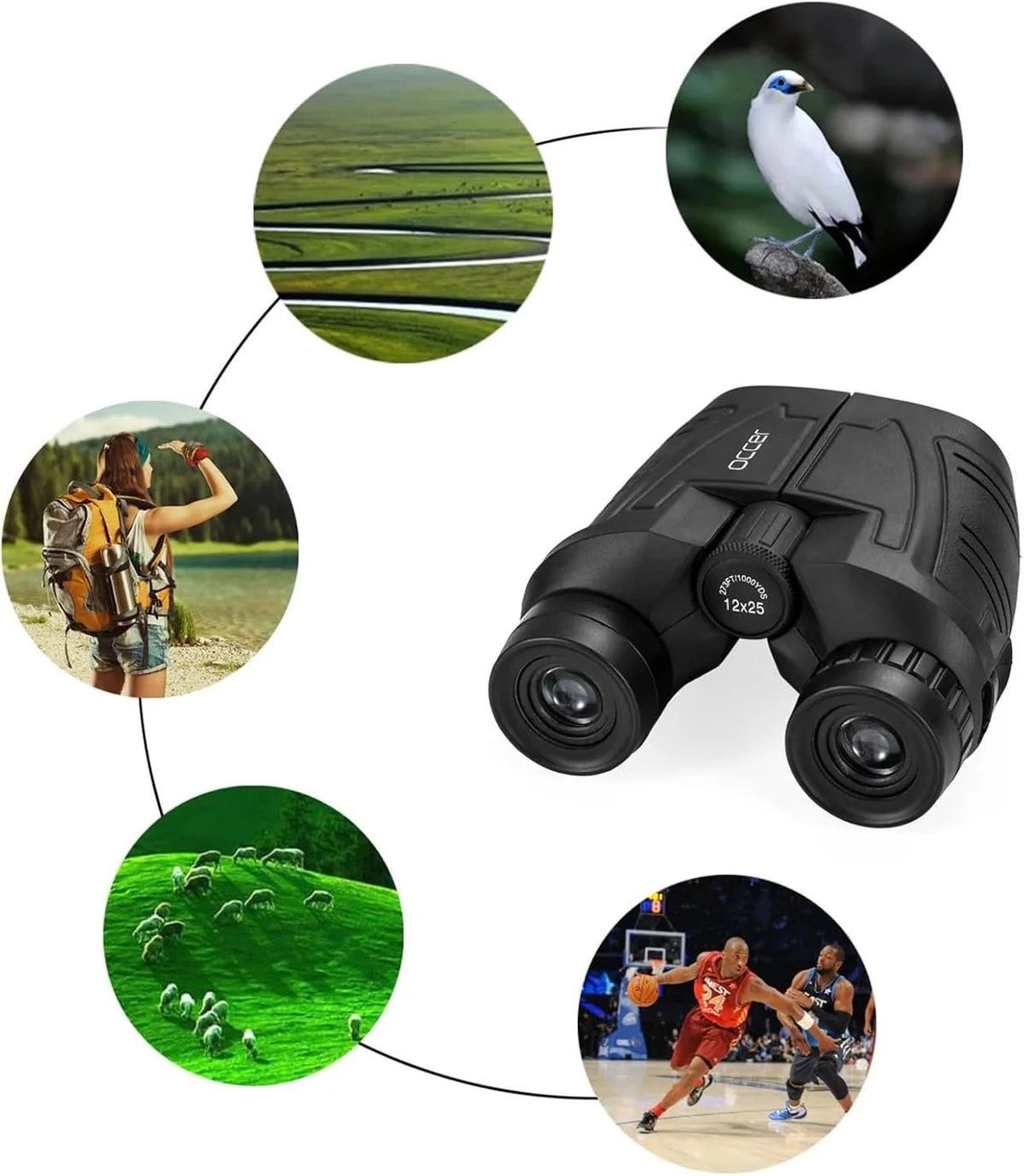
Occer 12x25 compact — 15mm. The spec sheet puts it at the threshold. The fold-down rubber eyecups are soft enough that prescription frames compress them flat against the eyepiece housing, which actually positions your eye closer to the exit pupil than the spec suggests. Functional for short viewing sessions — a concert, a quick scan from a hiking overlook. Not comfortable for extended use because the soft cups provide no structural standoff and your glasses press directly against the housing.
Tier 3 — Marginal or unusable with glasses
Bushnell H2O Xtreme 10x42 — 14.5-17mm (conflicting data). Bushnell's own spec sheet and independent measurements disagree. If the actual figure is closer to 14.5mm, glasses wearers will notice vignetting. If 17mm is accurate, it matches the Triumph HD 10x42. We cannot confirm which number is correct, and that uncertainty alone is a reason to choose a product with a verified spec when eye relief is your buying criterion.
Adasion 12x42 HD — 15mm. The listed spec says 15mm, but the Adasion 12x42 review details eyecup quality concerns. The phone adapter design forces an unusual viewing angle that compounds any eye relief limitation. Glasses wearers report mixed results — the 15mm may be nominal rather than effective once the adapter hardware is mounted.
Adasion 20x50 high power — approximately 13mm. Below the threshold. Combined with 20x magnification, even slight misalignment produces visible field loss. Skip this if you wear glasses.
Hontry 10x25 compact — 10mm. Unusable with glasses. Not "tight." Not "manageable." At 10mm, prescription lenses physically cannot fit between your eye and the exit pupil with enough clearance to see the full image. Multiple verified Amazon reviews describe exactly the tunnel effect that the physics predicts. If you want a compact that works with glasses, the Occer vs Hontry comparison shows why the Occer wins this specific matchup despite having other limitations.
Full-Size vs Compact: What Changes for Glasses Wearers
Full-size binoculars with 42-55mm objectives tend to have more eye relief than compacts (25mm objectives). This is not a coincidence — larger eyepiece assemblies provide more room for the optical designer to extend the exit pupil distance without compromising field of view. The three Vortex full-size models all deliver 15-17mm. The two dedicated compacts range from 10-15mm.
That pattern holds across the industry, not just our catalog.
For glasses wearers, this creates a real tension: compacts are more portable, but full-size models with more eye relief are more likely to work with your frames. The decision depends on your primary activity:
Birding, hunting, nature observation: Full-size wins. You are using the binocular for extended sessions where field of view and comfort matter more than pocketability. The Triumph HD 10x42 at 17mm is our recommendation for glasses wearers in this category. At 21 ounces, it is not heavy enough to justify sacrificing eye relief for a lighter compact.
Concerts, travel, casual use: A compact makes sense if — and only if — you find one with adequate eye relief. The Occer 12x25 compact at 15mm is the minimum viable compact in our catalog for glasses wearers. It is not ideal for extended viewing, but for 10-15 minutes of use at a venue, the eye relief works.
Honestly, most glasses wearers are better served by a full-size binocular with a good harness than by a compact with marginal eye relief. The weight difference is half a pound. The viewing experience difference is enormous.
How to Set Up Your Binoculars for Glasses
Buying the right eye relief is half the battle. Setting the binocular up correctly is the other half, and most people skip it. Three adjustments make the difference between a frustrating first outing and a clear, full image.
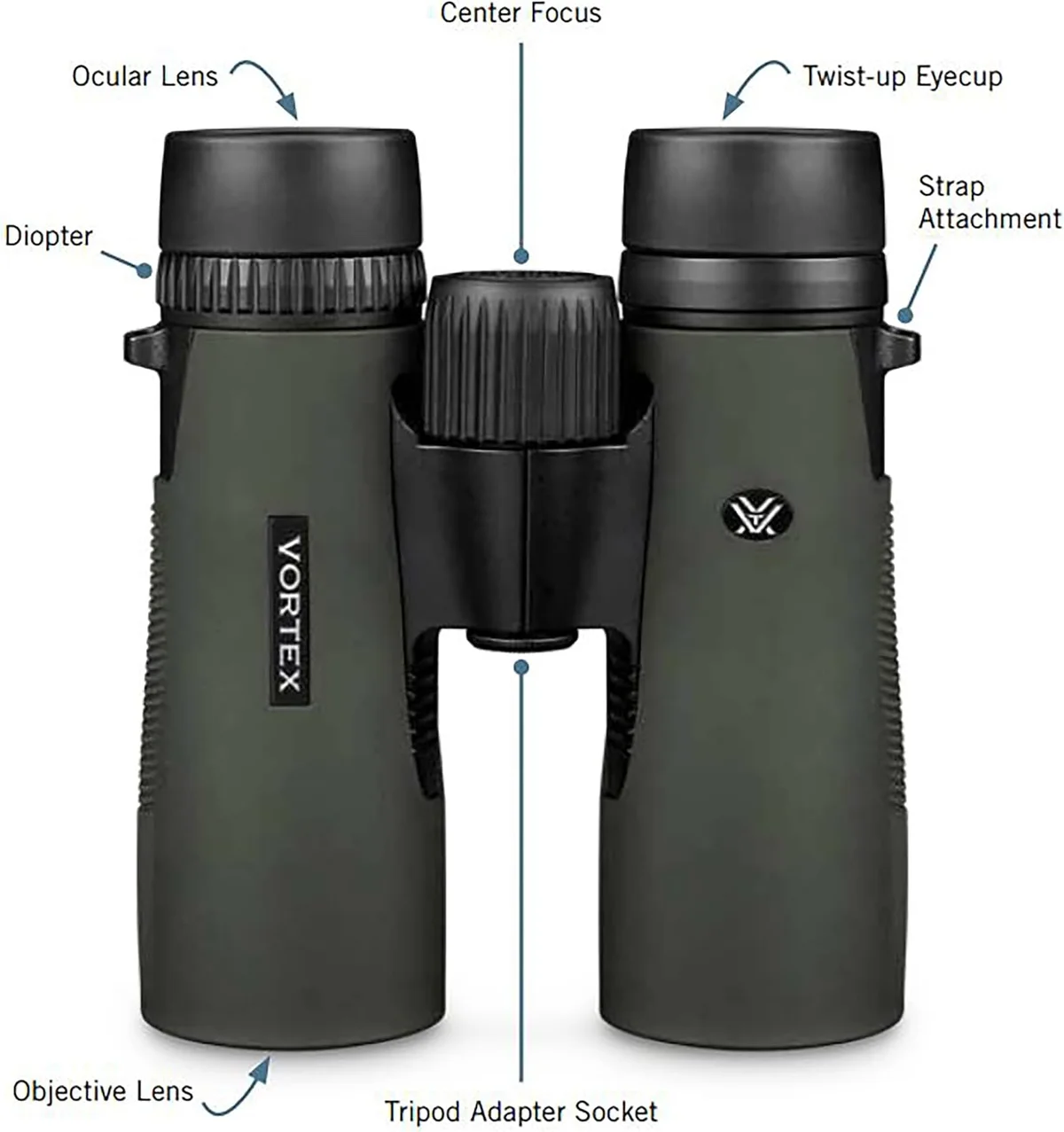
Step 1: Retract the eyecups. Twist-up eyecups: rotate them fully counterclockwise until they sit flat. Fold-down eyecups: fold them against the eyepiece body. This removes the physical standoff that is designed for bare eyes and positions your glasses as close to the eyepiece as possible without contact.
Step 2: Adjust the diopter ring. Close your right eye. Focus the center wheel until the image through your left eye is sharp with your glasses on. Now close your left eye, leave the center wheel alone, and rotate the diopter ring (usually on the right eyepiece or near the center bridge) until the right eye is equally sharp. This compensates for any residual difference between your two eyes that your glasses prescription does not perfectly balance.
Step 3: Find your eyecup sweet spot. With both eyes open and the image focused, try raising the twist-up eyecups one click position. If the image stays full with no edge darkening, that position blocks more stray light than fully retracted and gives you a slightly better viewing experience. If any dark edges appear, go back to fully retracted. The goal is the tallest eyecup position that still shows the complete field.
Our Recommendation by Budget
Three price tiers, three clear picks for glasses wearers. Every recommendation prioritizes eye relief first, optical quality second.
Budget (under $100): Vortex Triumph HD 10x42. The 17mm eye relief makes it the most glasses-friendly binocular in our catalog at any price. Fully multi-coated optics produce a sharp, bright image that punches well above its price tier. The VIP unconditional lifetime warranty — identical to what Vortex puts on their $2,000 Razor line — means a dropped pair gets replaced, no questions asked. For glasses wearers on a budget, nothing else comes close.
Mid-range ($100-$200): Vortex Crossfire HD 10x42. If your frames are standard width and you have confirmed that 15mm works for your prescription, the Crossfire delivers noticeably better optics than the Triumph HD 10x42 — tighter edge sharpness, less chromatic aberration on high-contrast edges, and faster focus response. The best binoculars roundup ranks it among the top values in the full-size category.
Premium ($200+): Vortex Diamondback HD 10x42. Same 15mm eye relief as the Crossfire, but phase-corrected roof prisms and dielectric coatings push this into a different optical class. Colors are more accurate, resolution is higher, and low-light performance is markedly better. Again, this only makes sense if 15mm clears your frames. If you are between the Diamondback's 15mm and the Triumph HD with 17mm eye relief, spend 20 seconds holding a ruler 15mm from your glasses lens to your pupil in a mirror. That measurement decides which tier to buy into.
Three Mistakes That Ruin the Glasses Experience
These show up in Amazon reviews and birding forum posts over and over. All three are avoidable.
Buying on magnification instead of eye relief. A 12x binocular with 13mm of eye relief shows a glasses wearer less usable image than a 10x binocular with 17mm. The higher magnification enlarges a smaller visible area while the inadequate eye relief clips 30% of the field. Raw zoom is the wrong metric when your glasses constrain viewing geometry. The Triumph vs Crossfire HD comparison shows this tradeoff in real products.
Leaving eyecups extended. This is the most common fixable mistake. Extended eyecups add 5-8mm of standoff designed for bare eyes. With glasses already pushing your eye back, the combined distance overshoots the exit pupil. The image shrinks to a small circle surrounded by darkness. Fold the cups down and the full image returns immediately. Takes two seconds.
Assuming all 15mm binoculars feel the same. Eye relief is a single number, but the experience depends on eyecup design, eyecup material, and how the specific eyepiece interacts with your frame shape. The Crossfire HD 10x42 and the Occer 12x25 compact both spec 15mm, but the Crossfire's machined twist-up eyecups allow fine-tuning that the Occer's floppy rubber cups do not. Try before you commit to extended sessions.
When Eye Relief Is Not Enough: The Contact Lens Option
Contact lenses eliminate the eye relief constraint entirely. Your eye sits at the same distance from the eyepiece as someone with 20/20 uncorrected vision. Every binocular in our catalog — including the 10mm Hontry 10x25 compact — works normally with contacts.
Daily disposable lenses make this practical for occasional use. Put them in for the birding trip or the hunting season, take them out at home. No eye relief math, no eyecup fiddling, no field-of-view compromise. The cost runs about $1-2 per day of use, which is less than the price difference between a binocular chosen for eye relief and one chosen purely on optical merit.
Not everyone can wear contacts. Severe dry eye, certain corneal conditions, and high astigmatism make them impractical. If contacts are off the table, eye relief is your hard constraint and the ranking above is your shopping list.
Ready to Pick Your Binoculars
If eye relief is your primary constraint, the Triumph HD 10x42 review covers our top glasses-friendly pick in detail. The best binoculars roundup ranks every model with eye relief flagged for each. And the Triumph HD vs Crossfire HD comparison tests whether the Triumph's 17mm or the Crossfire's better optics at 15mm wins for spectacle wearers — the answer depends on your frames.
Glasses Wearers Ask
The questions glasses wearers search for most when shopping for binoculars.
How much eye relief do glasses wearers need?
At least 15mm, and 17mm or more is better. Prescription lenses sit 12-14mm from your cornea, so the binocular needs enough distance behind the eyepiece for the full image circle to form beyond your glasses. Below 14mm, no eyecup adjustment can recover the lost field of view.
Can glasses wearers just remove their glasses to use binoculars?
Not recommended. The diopter adjustment ring compensates for small differences between your eyes, not for your full prescription. If your correction exceeds about 2 diopters, objects will stay blurry even with the diopter ring maxed out. Keep your glasses on and choose binoculars with sufficient eye relief instead.
Should eyecups be folded down when wearing glasses?
Yes.
Do compact binoculars work with glasses?
Some do, some are terrible. The Occer 12x25 compact lists 15mm of eye relief and works passably for glasses wearers — the soft fold-down cups collapse under the pressure of frames, which actually positions your eye closer to the exit pupil. The Hontry 10x25 at just 10mm is a different story. That 10mm gap cannot physically accommodate a prescription lens between your eye and the exit pupil, and multiple Amazon reviewers confirm the tunnel-vision effect. Always check the eye relief number before buying any compact, because size reduction often comes at the expense of this spec.
What are twist-up eyecups and why do they matter for glasses?
Twist-up eyecups rotate on a threaded mechanism with multiple click-stop positions. Unlike fold-down cups that are binary (up or flat), twist-ups let you dial in the exact distance between the eyepiece and your glasses lens. Set them one or two clicks above fully retracted to fine-tune the image. All three Vortex models in our catalog use this design.
Will contacts solve the eye relief problem completely?
Completely. Contact lenses sit on the cornea, so your eye position is identical to someone without corrective lenses. Every binocular works normally with contacts — extend the eyecups fully and use the optic as designed. Daily disposables make this practical for occasional outdoor use without committing to full-time contact wear.
Our Top Recommendation
Based on our research, the Triumph HD 10x42 is our top pick — budget-conscious hunters and beginners wanting a trusted brand with a real warranty under $100.
Get Picks Delivered
One email per week. Honest reviews, no spam.
Only when something changes. Unsubscribe anytime.