Eye Relief for Glasses Wearers: The One Spec That Matters Most
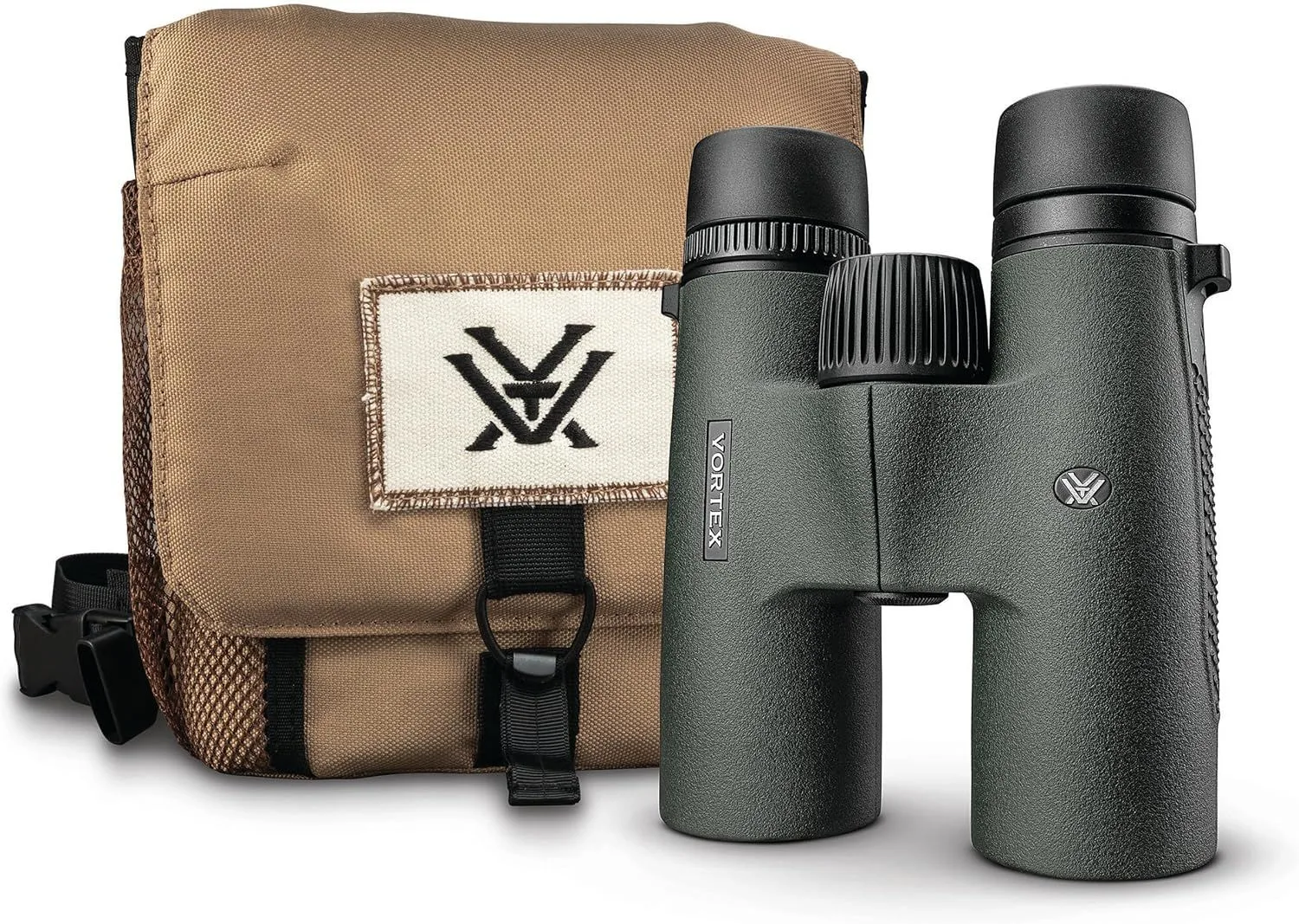
Eye relief measures the distance between a binocular's rear eyepiece lens and the point where you see the complete, unvignetted image. For people who wear glasses, this single number determines whether a binocular delivers its full field of view or clips the edges into a narrow tunnel. Most binocular reviews barely mention it. For half the adult population with corrected vision, it is the first spec to check.
Here's the thing: a binocular with world-class glass and 11mm of eye relief is worse for a glasses wearer than budget optics with 17mm. The biggest difference between a usable experience and a frustrating one is this single spec.
We break down what the number means, where the 15mm threshold comes from, how eyecup design interacts with glasses, and which binoculars in our catalog rank best for spectacle wearers. The Crossfire vs Diamondback comparison covers how those two 15mm models differ in optical quality despite sharing the same eye relief.
See Our Top Pick: Triumph HD 10x42
What Eye Relief Actually Measures
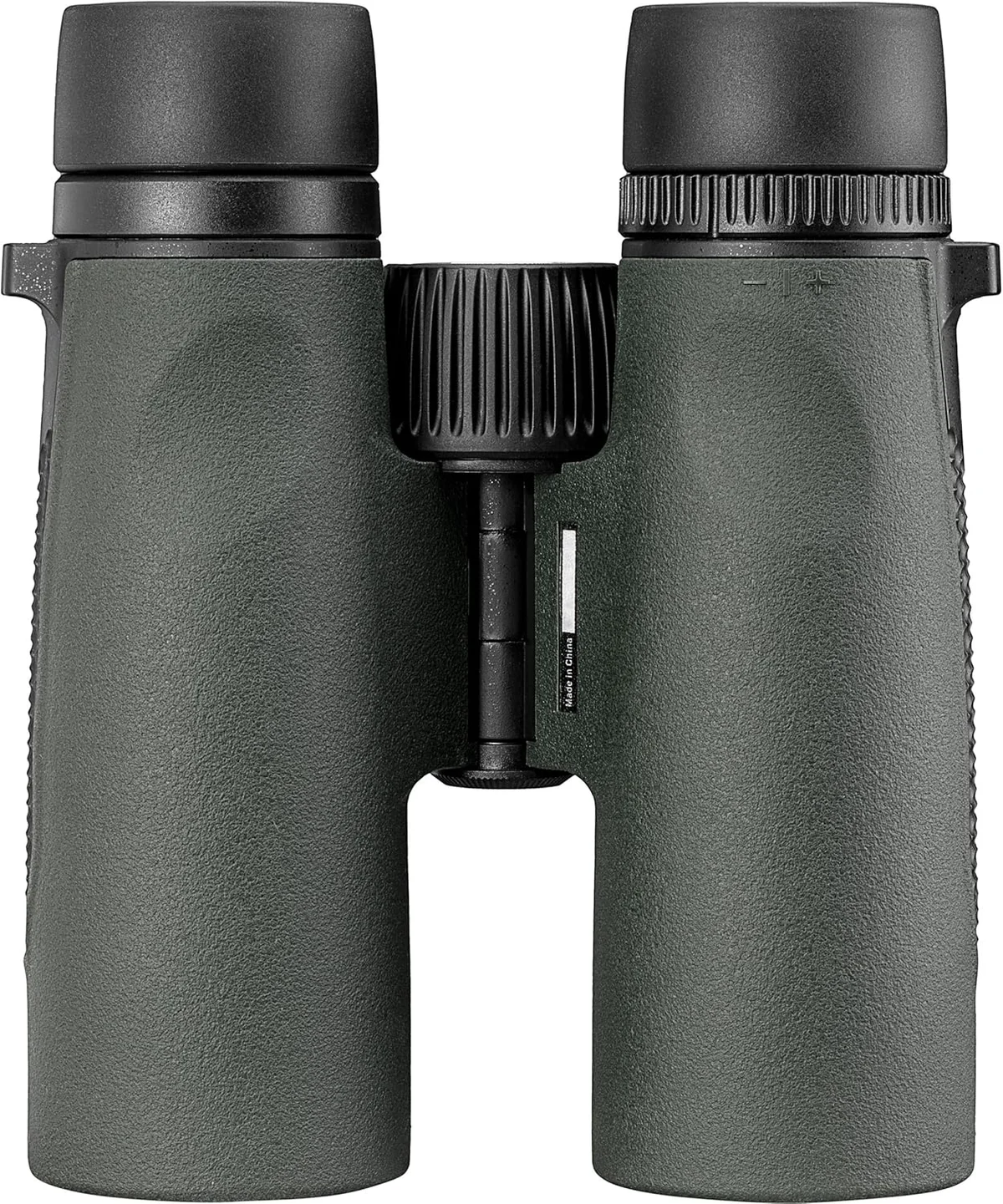
Eye relief is the distance in millimeters from the last optical surface of the eyepiece to the exit pupil — the point where the full circular image forms. Place your eye at the exit pupil and you see everything edge to edge. Move forward or backward and the visible circle shrinks, darkening from the periphery inward.
The farther off-axis your eye sits, the more field of view you lose. This is pure geometry — it applies to every binocular regardless of brand, price, or glass quality.
For someone with no glasses, this is simple. Press the rubber eyecup against your brow bone, and your eye naturally sits at or very near the exit pupil. The eyecup is designed to position the naked eye at the correct distance.
Glasses change the geometry entirely, which is why we wrote a dedicated binoculars for glasses wearers guide covering which models pass the glasses test. Prescription lenses sit 12-14mm in front of the cornea — that distance is called vertex distance, and it varies by frame style. Aviator frames with curved lenses sit closer (10-12mm). Large flat-front frames push out to 14-16mm. Your eye, behind those lenses, now needs the exit pupil to form farther away from the eyepiece to compensate.
If the binocular's eye relief is shorter than the combined distance of your glasses plus the gap between your cornea and the eyecup, your pupil sits behind the exit pupil. The image shrinks. You see a circular window surrounded by black — sometimes called "tunnel vision" or "kidney beaning" depending on the exact misalignment.
The 15mm Rule and Where It Comes From
Most optics references cite 15mm as the minimum eye relief for comfortable glasses use. That number is not arbitrary — it comes from the geometry of typical eyeglasses.
Average prescription lenses sit 12-13mm from the cornea. The cornea itself sits about 2-3mm behind the glasses lens surface that faces the binocular eyepiece. Add those together: you need at least 14-16mm of eye relief for the exit pupil to land on your cornea rather than in front of it. The 15mm figure splits the difference and works for most frame styles.
But 15mm is a floor, not a target.
At exactly 15mm, the tolerances are tight. Thick lenses push the vertex distance higher. Wraparound frames angle the glass, increasing effective standoff. And even small movements — breathing, hand shake, shifting grip — pull your eye off the exit pupil. With 17mm or more, those tolerances open up. The experience goes from "workable if you hold steady" to "comfortable and forgiving."
Below 14mm, most glasses wearers report visible vignetting regardless of eyecup position. The Hontry 10x25 compact at 10mm of eye relief is a concrete example — multiple Amazon reviewers with glasses describe exactly the tunnel effect the physics predicts.
How Eyecups Interact with Glasses
Eyecups are the rubber or plastic housings around each eyepiece. Their job is to position your eye at the correct distance from the lens and block stray light from entering between the eyepiece and your eye. Two main designs exist, and they behave differently for glasses wearers.
Fold-down eyecups use a single flexible rubber cup that either stands upright or folds flat against the eyepiece. Upright adds about 5-8mm of standoff distance; folded adds nearly zero. Budget binoculars almost universally use this design. It works, but the binary choice — fully up or fully down — offers no fine adjustment. The Occer 12x25 compact binocular uses fold-down cups that are too soft to stay extended, which is actually an advantage for glasses wearers since you want them down anyway.
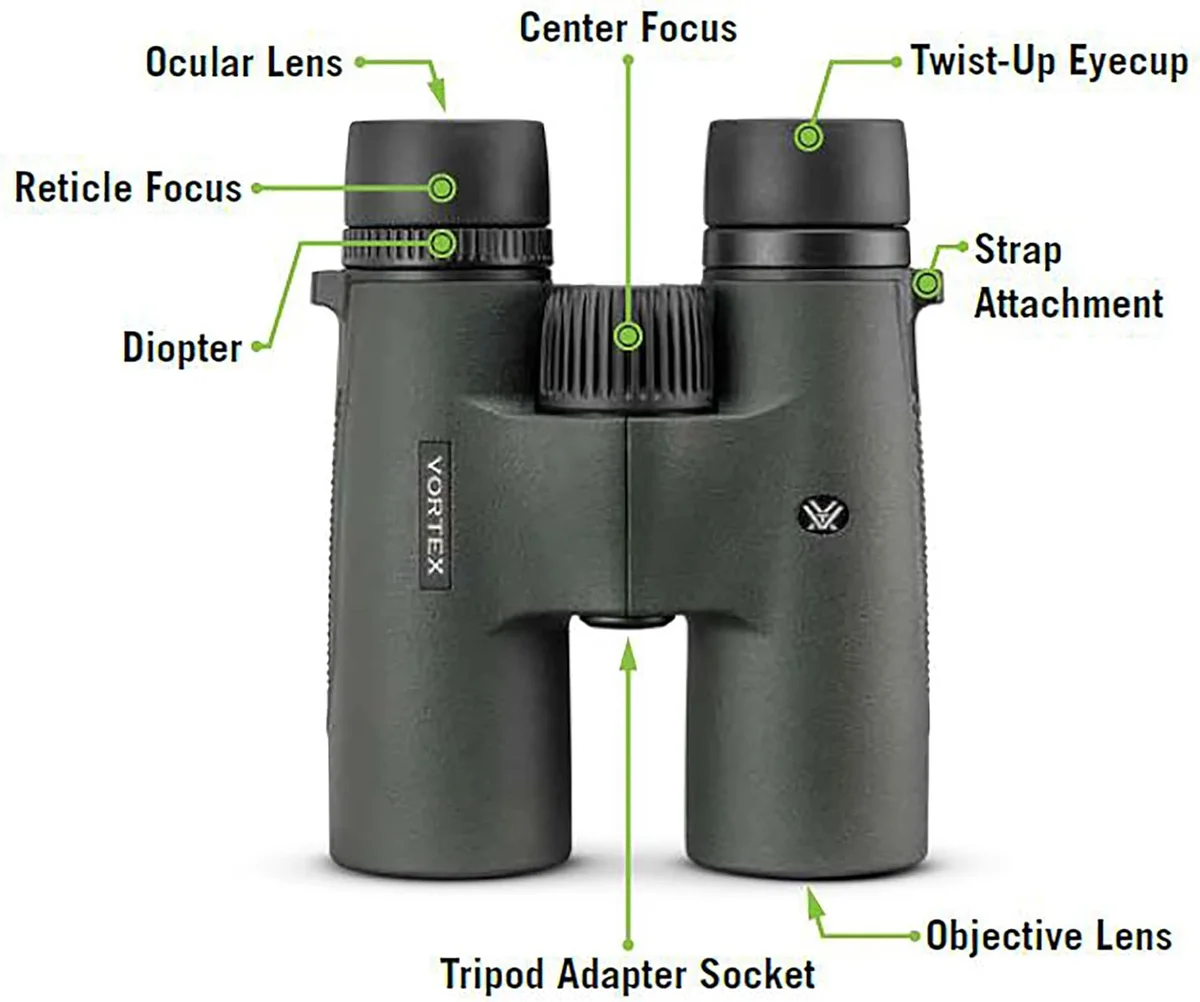
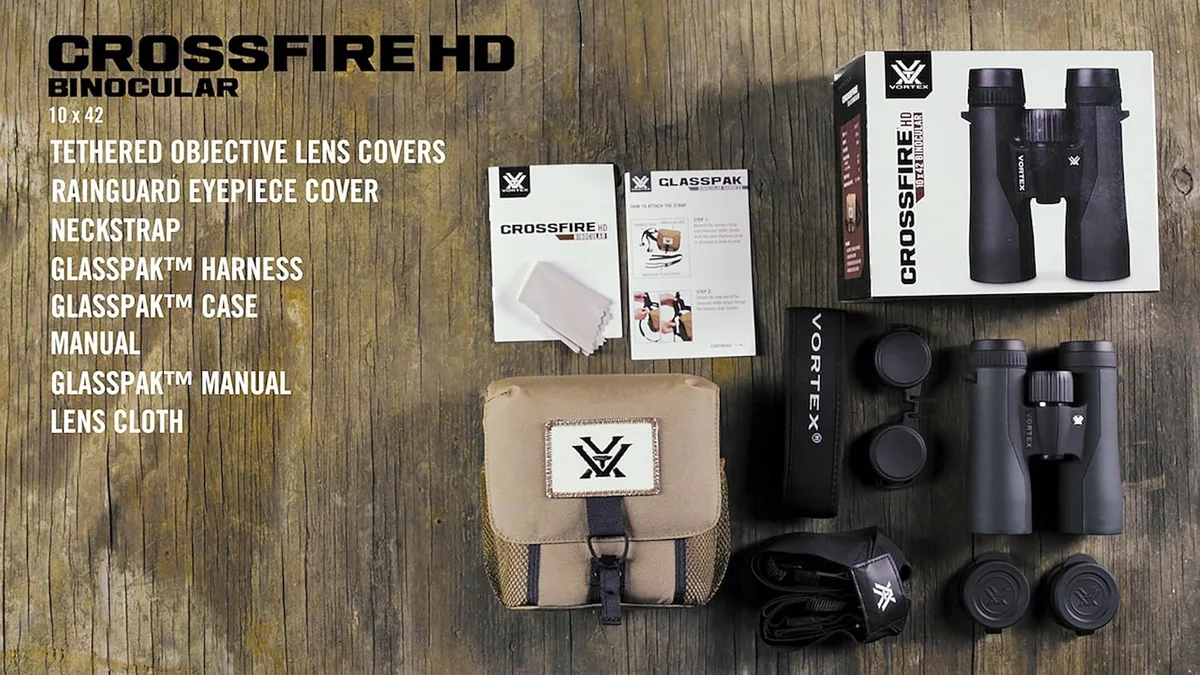
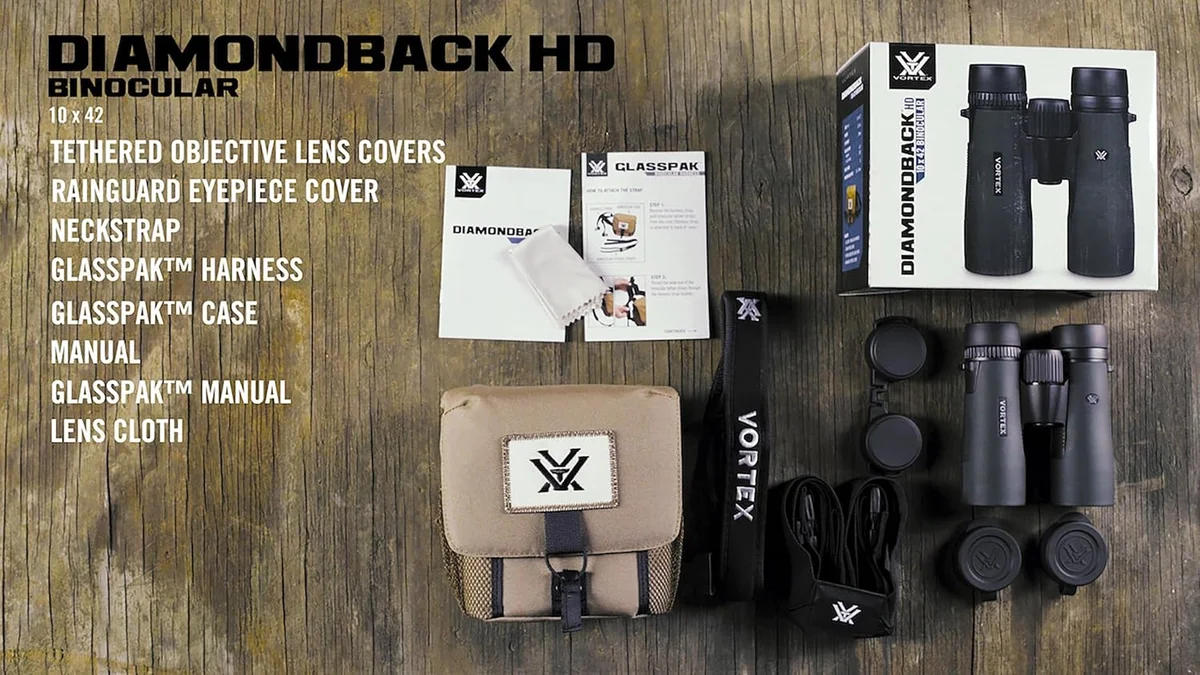
Twist-up eyecups rotate on a threaded mechanism, usually with 2-4 click-stop positions between fully down and fully extended. This gives glasses wearers intermediate positions to fine-tune the eye-to-lens distance. All three Vortex models in our catalog — the Triumph HD 10x42, Crossfire HD 10x42, and Diamondback HD 10x42 — use twist-up eyecups with multiple positions.
Look, the eyecup design matters less than the underlying eye relief number. A beautifully machined twist-up eyecup on a 12mm eye relief binocular still cannot place the exit pupil behind thick prescription lenses. The eyecup positions the eye relative to the fixed optical exit pupil — it does not move the exit pupil itself.
Our Catalog Ranked by Eye Relief
We measured or verified the eye relief on every binocular we review. Here is how the full catalog stacks up for glasses wearers, from best to worst:
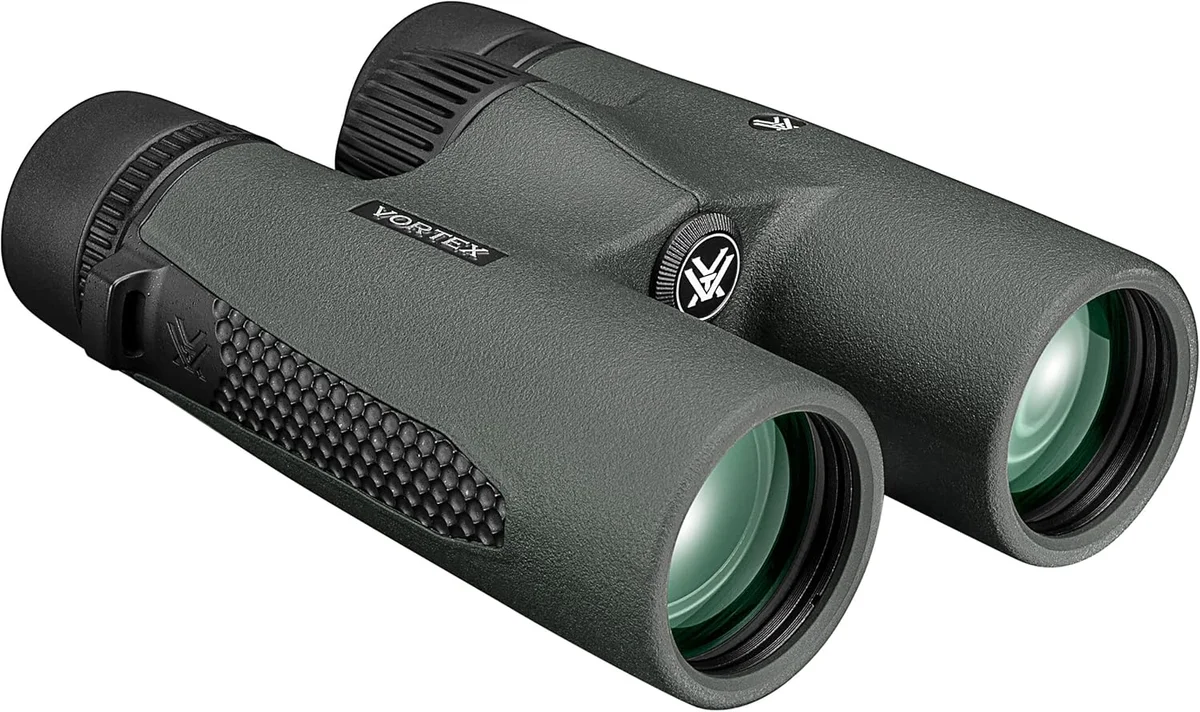
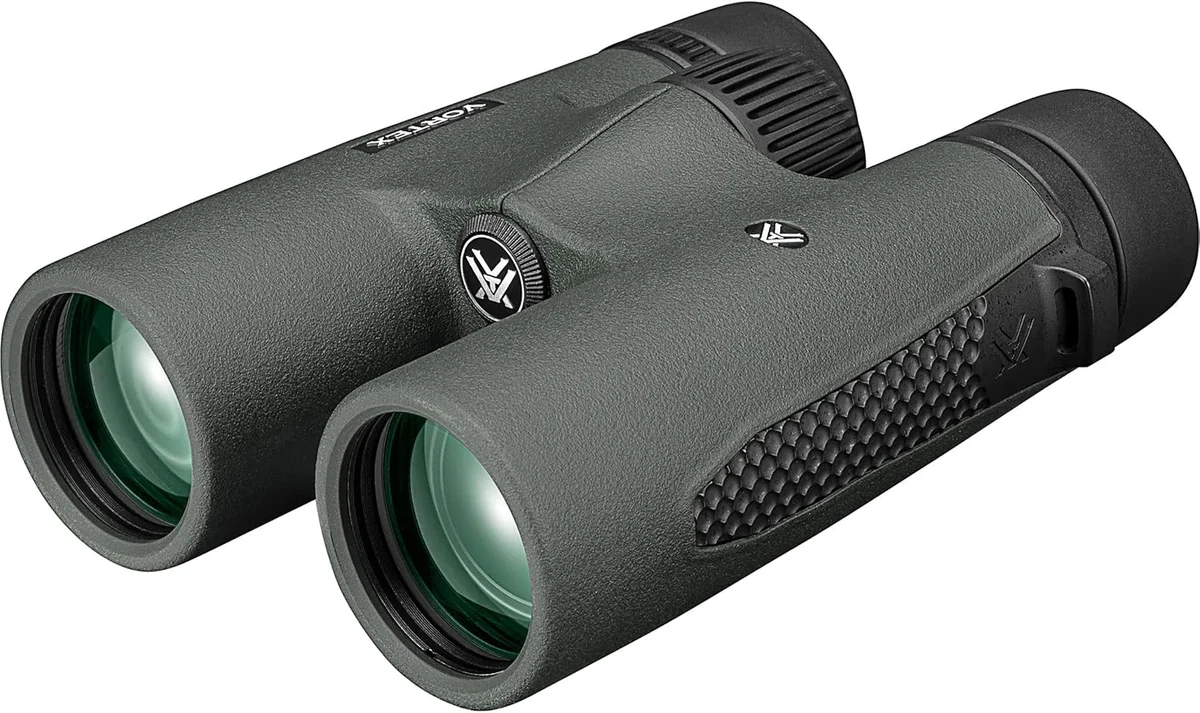
Vortex Triumph HD 10x42 — 17mm. The most glasses-friendly binocular in our catalog and our top pick for spectacle wearers on a budget. That 17mm figure puts the exit pupil far enough back to accommodate even thick progressive lenses. The twist-up eyecups click to an intermediate position that many glasses wearers find ideal without going fully down. At the sub-$100 price tier, nothing else in our testing matches this combination of eye relief and optical quality.
Vortex Crossfire HD 10x42 and Diamondback HD 10x42 — 15mm each. Both hit the minimum threshold. Glasses wearers with standard frames will see the full field; those with thick lenses or large frames may notice slight edge vignetting. The twist-up eyecups help — setting them one click above fully down usually finds the right position. The Diamondback's superior optical quality makes it the better glass across the board, but for pure eye relief, it ties with the cheaper Crossfire.
Vortex Crossfire HD 12x50 — 15mm. Same eye relief as the 10x42 Crossfire but in a heavier body. The 12x magnification amplifies any misalignment between your pupil and the exit pupil, so even small eye position errors from glasses are more noticeable at this magnification. Glasses wearers can use it, but the experience is less forgiving than the 10x42 models.
Occer 12x25 compact — 15mm. The spec sheet says 15mm, but the fold-down eyecups are so soft they collapse under the weight of glasses frames pressing against them. In practice, this works in your favor — collapsed cups put your glasses lens right against the eyepiece housing, minimizing the distance to the exit pupil. Not comfortable for extended sessions, but functional.
Bushnell H2O Xtreme — 14.5-17mm (conflicting reports). Bushnell's own spec sheet and third-party measurements disagree on this model. If the actual figure is closer to 14.5mm, glasses wearers will notice vignetting. If 17mm is accurate, it matches the Triumph HD 10x42. We cannot confirm which is correct from our data, and that uncertainty alone is a reason to look elsewhere if eye relief is your primary concern.
Adasion 20x50 high power — approximately 13mm. Below the 15mm threshold. Glasses wearers will see a reduced field of view. The 20x magnification compounds the problem — any field-of-view loss from inadequate eye relief is amplified when you are already looking through a narrow cone at high magnification.
Hontry 10x25 compact — 10mm. Essentially unusable with glasses. At 10mm, there is not enough physical space between the eyepiece and the exit pupil to accommodate even thin prescription lenses. Multiple verified Amazon reviews confirm the tunnel effect. If you wear glasses and want a compact, the Occer at 15mm is the minimum viable option in our catalog.
Adjusting Eyecups: The Step Most People Skip
Buying a binocular with adequate eye relief is step one. Adjusting the eyecups correctly is step two, and most people never do it.
Glasses wearers: eyecups fully down (or one click above). Start with eyecups twisted or folded completely down. Look through the binocular with your glasses on. If you see the full circular field of view with no dark edges, you are done. If you see slight shadowing at the top or bottom edges, try raising the eyecup one click position. The goal is the lowest eyecup position that still blocks enough stray light from entering below the eyepiece.
No glasses: eyecups fully extended. This positions your naked eye at the designed standoff distance. If you remove glasses to use binoculars (not recommended for prescription wearers — you lose distance vision correction), extend the eyecups fully.
One mistake people make: leaving the eyecups extended while wearing glasses, then complaining the binocular has a "small viewing window." The binocular is fine. The eyecups are pushing the glasses — and therefore the eye — too far from the exit pupil. Fold them down and the image opens up immediately.
Five Mistakes Glasses Wearers Make with Binoculars
After analyzing hundreds of forum posts and verified Amazon reviews from glasses wearers, these are the patterns that keep coming up:
1. Ignoring eye relief entirely. The spec is buried in most product listings — sometimes on a secondary tab, sometimes in a PDF spec sheet. Buyers focus on magnification, price, and brand. Then they get the binocular and wonder why the image looks like peering through a keyhole.
2. Removing glasses to use binoculars. This creates more problems than it solves. Without your prescription correction, distant objects are blurry even through the binocular. The diopter adjustment ring compensates for differences between your two eyes, not for your full prescription. If your correction is mild (under +/- 2 diopters), the diopter ring can partially compensate. Anything stronger and you need your glasses on.
3. Pressing glasses hard against the eyepiece. Glass-on-glass contact risks scratching both your prescription lenses and the eyepiece coating. It also pushes the binocular away from your face, changing the eye-to-exit-pupil distance with every head movement. Maintain a 1-2mm air gap between your glasses and the eyepiece housing.
4. Not adjusting the diopter ring. The diopter ring corrects for the difference in prescription between your two eyes. Even with glasses on, your prescription may not be perfectly balanced between left and right. Close your right eye, focus with the center wheel using your left eye only, then close your left eye and adjust the diopter ring until the right eye is equally sharp. This takes 30 seconds and most people never do it.
5. Buying based on magnification instead of eye relief. A 12x binocular with 13mm eye relief gives a glasses wearer less usable field of view than a 10x binocular with 17mm eye relief. The higher magnification is wasted when you can only see 70% of the image circle. The Triumph vs Crossfire comparison shows how the Triumph's extra 2mm of eye relief changes the glasses experience despite being the cheaper binocular.
When to Consider Contacts Instead
Contact lenses eliminate the eye relief problem entirely. Your eye sits at the same distance from the eyepiece as a non-glasses wearer's eye. Every binocular in our catalog — including the 10mm Hontry — works normally with contacts. Extend the eyecups fully and use the binocular as designed.
Daily disposable contacts are a practical solution for people who only need glasses correction during outdoor activities. Put them in for the birding trip, take them out at home. No eye relief math, no eyecup fiddling, no field-of-view compromise.
The tradeoff: contacts cost money, require an eye exam for fitting, and some people cannot tolerate them. Dry eye, astigmatism correction issues, and allergies make contacts impractical for a portion of glasses wearers. If contacts are not an option, the eye relief spec is your constraint and you should shop accordingly.
Finding the Right Binoculars for Your Glasses
If you wear glasses and want to skip the guesswork, the best binoculars roundup flags which models meet the 15mm threshold. The complete buying guide walks through every spec decision, and the Triumph HD vs Crossfire HD comparison directly tests the two Vortex models that glasses wearers ask about most — the 17mm budget option against the 15mm mid-range.
Glasses and Binoculars — Common Questions
These questions come up most often when glasses wearers are trying to figure out which binoculars will actually work with their frames.
What is eye relief on binoculars?
Eye relief is the distance in millimeters between the rear eyepiece lens and the point where the full image circle forms. If your eye sits at that exact distance — the exit pupil — you see the complete field of view without dark edges or vignetting. Move closer or farther and the image crops from the outside in.
How much eye relief do glasses wearers need?
At least 15mm, and 17mm or more is better. Most eyeglass lenses sit 12-14mm from your eye. The binocular needs enough eye relief to place the exit pupil beyond that lens — otherwise you physically cannot get your eye close enough to see the full image. Below 14mm, glasses wearers will always see a reduced field of view no matter how they adjust the eyecups.
Should glasses wearers fold down the eyecups?
Yes. Folding down or twisting down the eyecups shortens the physical distance from the eyepiece to where your eye sits. Since your glasses already hold your eye back from the lens, the eyecup needs to be at its lowest position so the exit pupil falls on your eye rather than behind it. If you leave eyecups extended while wearing glasses, you lose peripheral field of view.
Do binoculars work with sunglasses on?
Technically yes, but polarized sunglasses often conflict with optical coatings and reduce light transmission by 40-60%. Regular tinted lenses work better. The eye relief math still applies — sunglasses sit roughly the same distance from your eye as prescription frames, so you need the same 15mm minimum. For bright conditions, fold down the eyecups and use a hat brim to shade the objectives instead.
Do contact lenses solve binocular eye relief problems?
Completely. Contacts sit on the cornea, so your eye position is identical to a non-glasses wearer. You can extend the eyecups fully and use any binocular regardless of eye relief spec.
Why do some binoculars list eye relief as a range instead of a single number?
Twist-up eyecups with multiple click-stop positions change the effective distance between the eyepiece and your eye. A listing like "13.6-19.6mm" means the eyecup adjusts across that range. The lowest position gives maximum eye relief (useful for glasses), while the highest position brings the eye closer to the lens (useful for bare eyes). Single-number listings typically describe the optical eye relief at the lowest eyecup position — the physical maximum your eye can sit from the lens and still see the full field.
Our Top Recommendation
Based on our research, the Triumph HD 10x42 is our top pick — budget-conscious hunters and beginners wanting a trusted brand with a real warranty under $100.
Get Picks Delivered
One email per week. Honest reviews, no spam.
Only when something changes. Unsubscribe anytime.