Binocular Specs Decoded: What Every Number on the Box Actually Means
A binocular spec sheet lists 15-20 numbers. Three of them determine 90% of your experience. The most common mistake buyers make is fixating on magnification and ignoring exit pupil — which matters more for image brightness. The rest are either derived from those three or irrelevant for purchase decisions. This guide explains every spec you'll encounter, ranks them by importance, and tells you exactly which numbers to compare when shopping.
We reference real measurements from our reviews and independent lab data from AllBinos where available. Manufacturer-listed specs are sometimes optimistic — particularly light transmission percentages and close focus distances — and we note where real-world performance diverges from the box claims. If you're new to binoculars entirely, our beginner's guide covers the basics in less technical terms. This page is the reference for when you want to understand the engineering behind the numbers.
See Our Top Pick: Diamondback HD 10x42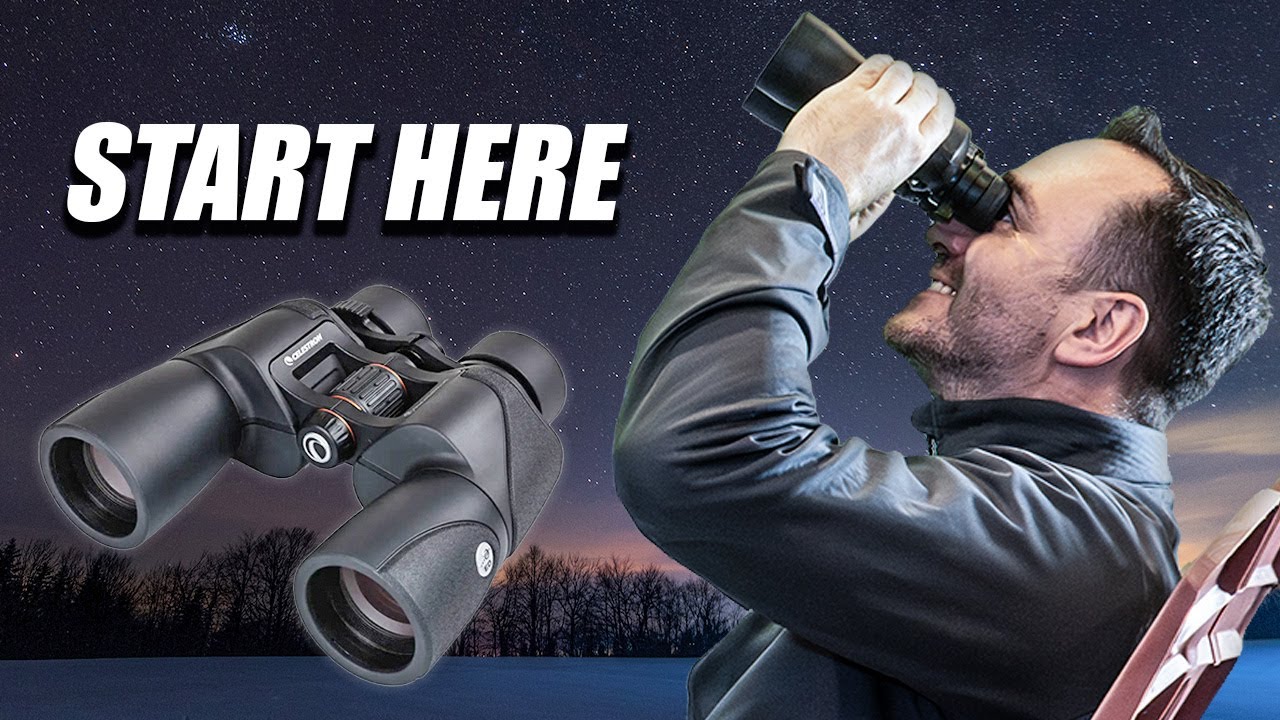
The Big Three: Magnification, Objective, Exit Pupil
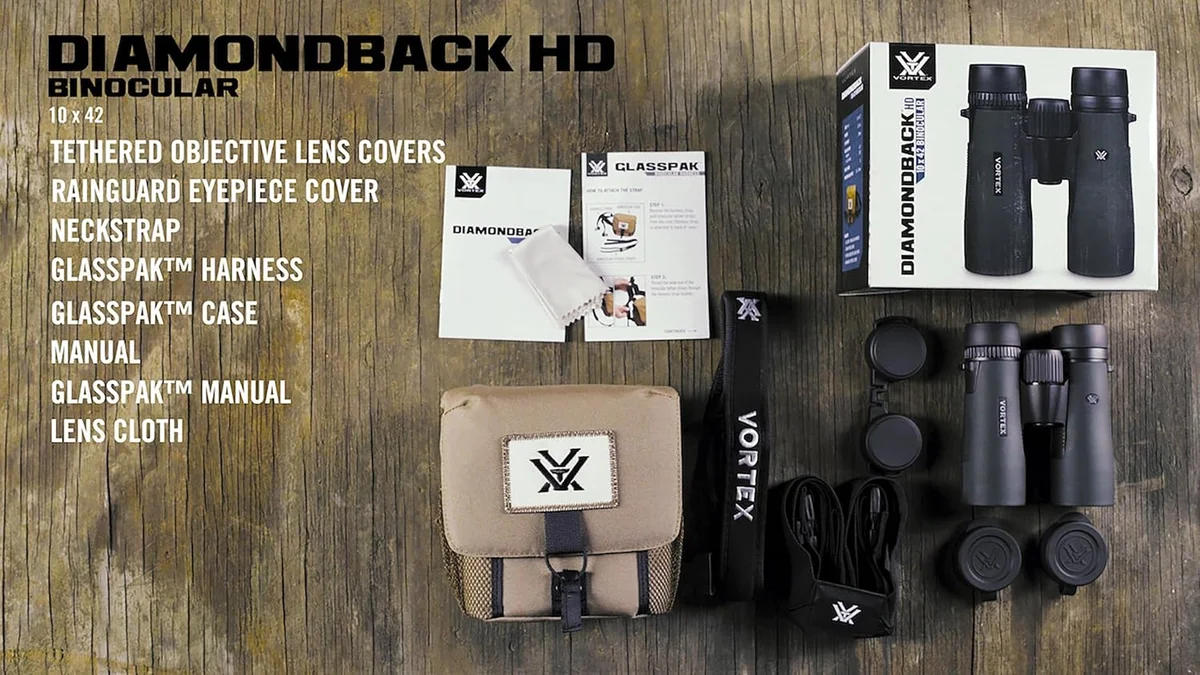
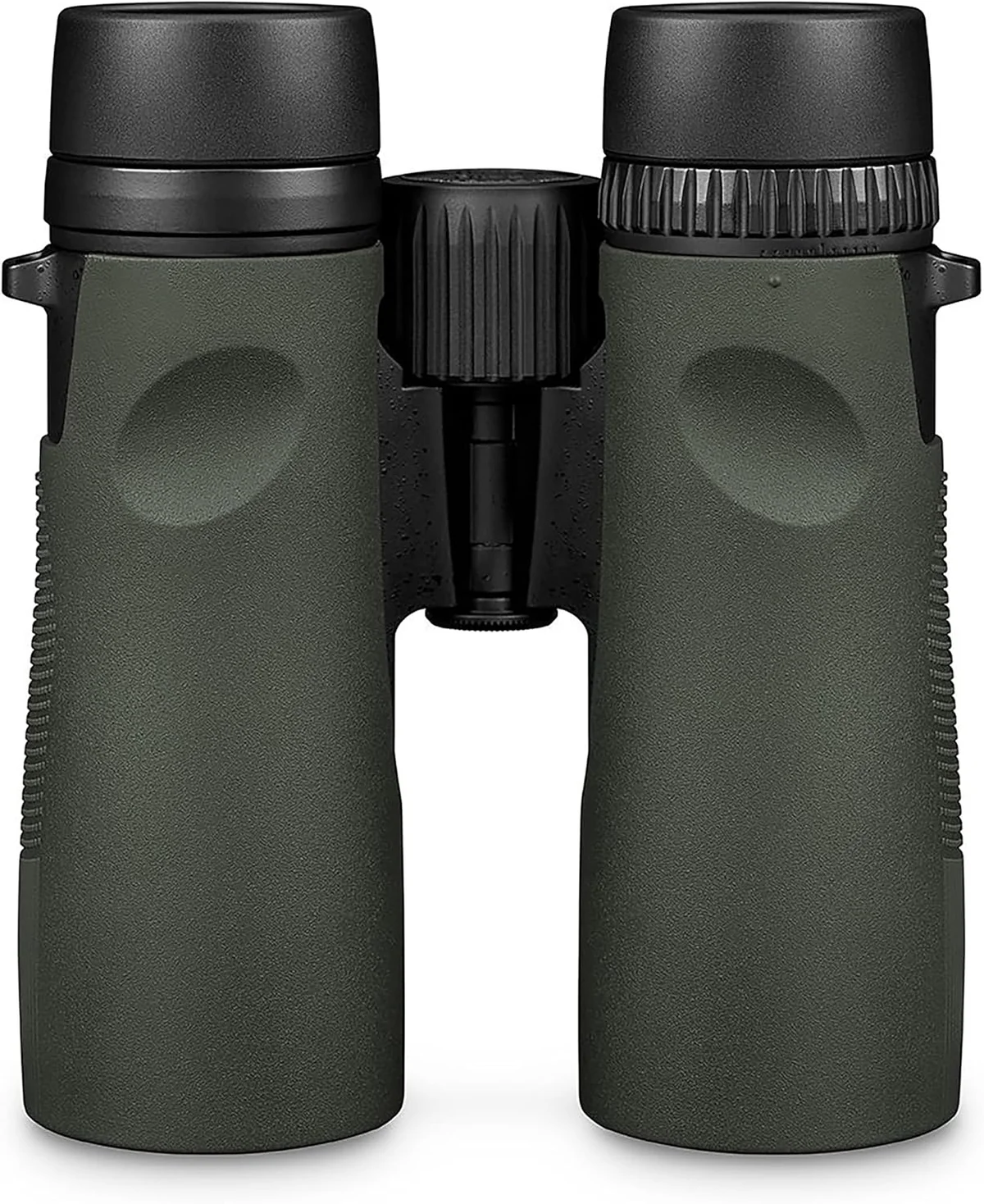
Every binocular specification on the box flows from two core design choices: the magnification power selected by the manufacturer and the objective lens diameter that determines light-gathering capability. The exit pupil — the single most important brightness metric for handheld use — is mathematically derived from dividing these two numbers. Get these right and every other spec falls into place.
Magnification (the first number)
The "10" in 10x42 means subjects appear 10 times closer. A bird at 100 yards looks like a bird at 10 yards. This is the spec most buyers fixate on, and the one most likely to lead them wrong. Higher magnification sounds better. In practice, magnification above 10x creates problems that eliminate the theoretical advantage.
At 12x, hand tremor is magnified enough that fine detail becomes a jittery blur during handheld use. Field of view narrows — you see a smaller slice of the scene, making it harder to find and follow subjects. The image dims because the same amount of light is spread across a larger magnified area.
We tested this directly in our Crossfire 10x42 vs 12x50 comparison. At 12x with the heavier 50mm objectives, handheld image quality was worse than at 10x with 42mm objectives — the shake penalty exceeded the magnification benefit. The only scenario where 12x won: tripod-mounted stationary observation.
For most buyers: 8x or 10x. Birders who prioritize wide field of view lean toward 8x. General-purpose users default to 10x. Anything above 10x should come with a tripod budget — or consider whether a spotting scope is the better tool for fixed-position long-range observation.
Objective Diameter (the second number)
The "42" in 10x42 is the diameter of the front lenses in millimeters. Larger objectives capture more light — a 50mm lens intercepts 42% more photons than a 42mm lens. More light means a brighter image, all else equal.
But all else is never equal. Larger objectives add weight (often 20-30% more), increase bulk, shift the balance point forward, and raise cost. A 10x50 weighs roughly 30 oz versus 24 oz for a 10x42. That extra 6 ounces compounds over four hours of field use into real neck and arm fatigue.
The critical insight: objective diameter only matters relative to magnification. A 10x42 and a 12x50 produce nearly identical exit pupils (4.2mm vs 4.17mm) because the larger objective is consumed by the higher magnification. The 50mm lens gathers more light, but the 12x magnification demands more of it. The net brightness at your eye is essentially the same — but the 12x50 weighs 25% more.
Common sizes and their roles:
- 25mm — Compact/pocket binoculars. Dim but portable. Event use, travel, kids.
- 32mm — Mid-size. A good compromise for daytime birding and hiking where weight matters.
- 42mm — Full-size standard. Bright enough for dawn/dusk use. The default for serious outdoor optics.
- 50mm+ — Specialized. Astronomy, stationary observation. Too heavy for casual carry.
Exit Pupil (the brightness metric)
Exit pupil = objective diameter ÷ magnification. This single derived number tells you how bright the image can potentially be at your eye. A 10x42 produces 4.2mm. A 7x50 produces 7.1mm. A 12x25 produces 2.08mm.
Your eye pupil dilates to roughly 2-3mm in bright direct daylight and 5-7mm in dim twilight conditions. The exit pupil needs to be at least as large as your current pupil diameter for the image to feel bright. A 4.2mm exit pupil is comfortable in daylight and adequate at dawn/dusk. A 2.5mm exit pupil (typical compact) feels dim in anything less than full sun. A 5mm+ exit pupil delivers bright images well into the golden hours.
Above 7mm, the exit pupil exceeds your maximum pupil dilation — extra brightness that your eye cannot physically absorb or use, making it wasted optical capability. This is why 7x50 is considered the "maximum brightness" configuration: the 7.1mm exit pupil matches peak human pupil size.
Optical Specs: Coatings, Prisms, Glass Type
Coating Levels
Every uncoated air-to-glass surface reflects away about 4% of incoming light. A binocular has 10-16 such surfaces. Without coatings, you lose 40-50% of the light before it reaches your eye. Coating tiers, from worst to best:
- Coated (C) — One layer on one surface. Minimal impact. Sub-$30 territory.
- Fully Coated (FC) — One layer on every surface. Better but still basic.
- Multi-Coated (MC) — Multiple layers on some surfaces, single on others. Mixed quality.
- Fully Multi-Coated (FMC) — Multiple layers on every surface. The standard for any binocular over $80. This is the minimum to look for.
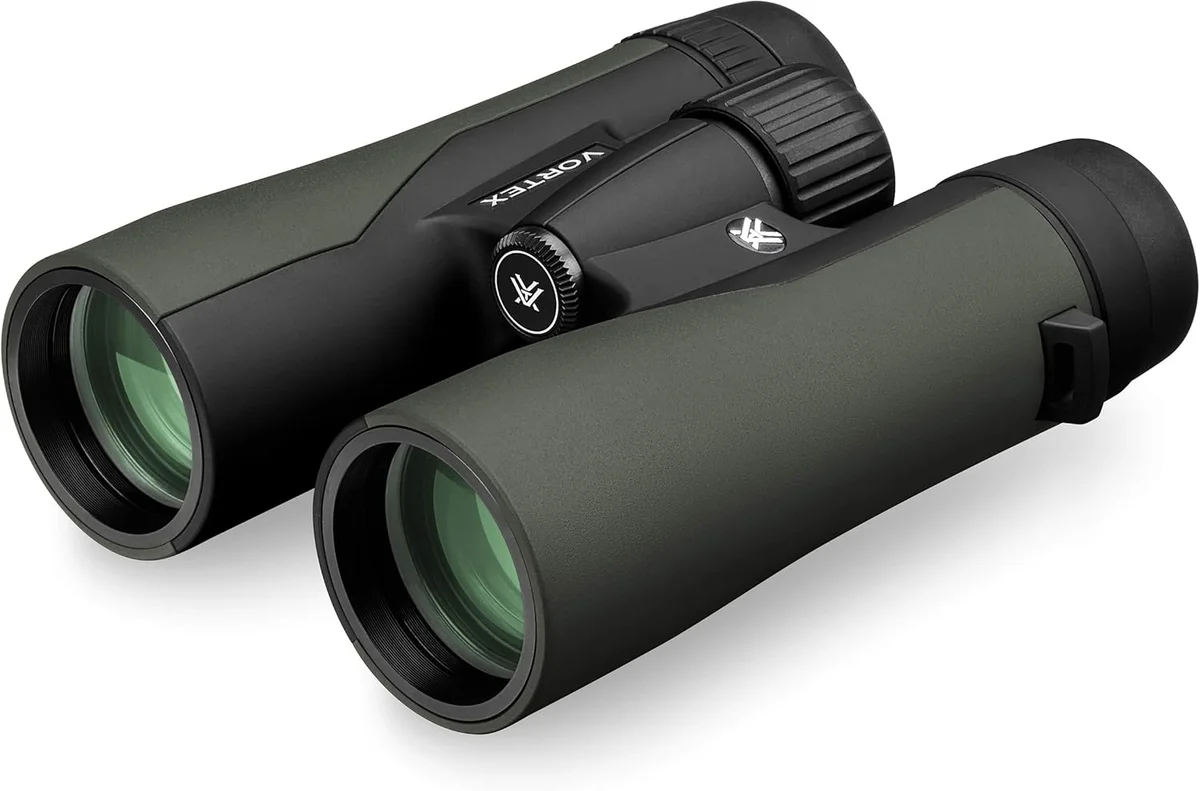
Beyond FMC, dielectric mirror coatings on the prisms push reflectivity above 99% per surface (versus 87% for aluminum). And phase correction coatings fix the light-wave misalignment in roof prisms that reduces contrast. Both appear at the $200+ tier — the Diamondback HD has both treatments. The Crossfire HD lacks both. Our coating guide covers the physics in full.
Prism Glass: BaK-4 vs BK-7
BaK-4 (barium crown glass) has a higher refractive index than BK-7 (borosilicate crown). BaK-4 prisms transmit light more efficiently, with less scatter at the prism edges. In practice: BaK-4 produces a rounder, brighter exit pupil with cleaner edges. BK-7 produces a slightly dimmer image with a squared-off exit pupil edge.
Every binocular over $60 uses BaK-4. Below that, BK-7 is common on sub-$30 compacts. The practical difference is real but minor compared to coating quality — a fully multi-coated BK-7 binocular outperforms a merely coated BaK-4 binocular. Don't choose a binocular based on prism glass alone.
Prism Design: Roof vs Porro
Roof prisms produce a straight-barrel body — compact, easy to seal against water, and durable in rough handling. Porro prisms produce the classic offset body — wider and heavier, but optically simpler and brighter per dollar spent because they don't require phase correction coatings. Modern full-size binoculars above $100 are almost exclusively roof prism designs because the ergonomic and durability advantages outweigh the coating cost. Porro prisms survive in budget compacts where lower manufacturing cost outweighs the larger body penalty. See our prism type comparison guide for the full optical tradeoff analysis between the two architectures.
Physical Specs: FOV, Close Focus, Eye Relief, Weight
Field of View (FOV)
FOV measures the width of the visible scene, expressed as feet at 1,000 yards or degrees. Wider FOV makes it easier to find subjects and track movement. Typical ranges by magnification:
- 8x — 380-420 ft at 1,000 yds
- 10x — 300-340 ft at 1,000 yds
- 12x — 260-290 ft at 1,000 yds
FOV matters most for birding (tracking subjects that move unpredictably through branches and open sky) and hunting (scanning broad landscapes for game movement). A wider FOV means more context per view — you catch peripheral motion that a narrower field would miss entirely. For stationary observation or astronomy, FOV is less critical because subjects are fixed or slow-moving, and you have time to pan.
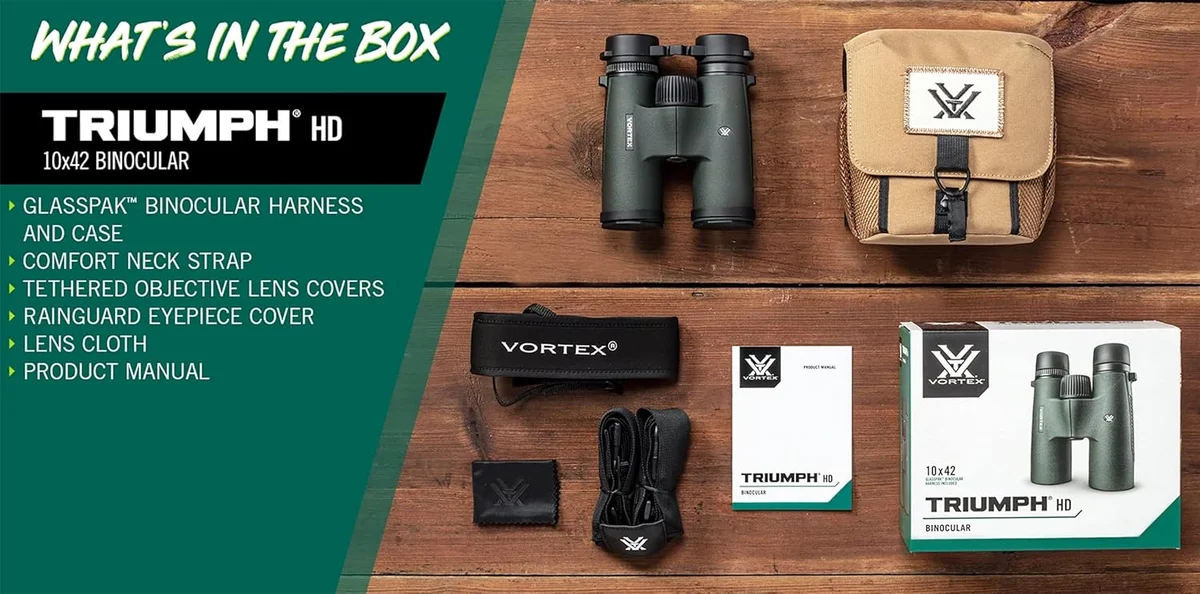
Two binoculars at the same magnification can differ in FOV by 30-50 ft due to eyepiece design. The Triumph HD at 334 ft has a wider field than the Crossfire HD at 325 ft despite both being 10x42 — proof that magnification and objective size don't fully determine FOV. Eyepiece architecture matters, and spec sheets don't explain why two 10x42 models can deliver noticeably different viewing widths.
Close Focus
Minimum focus distance varies from 5 ft on the Diamondback HD to 15.4 ft on the Triumph HD. This spec is irrelevant for hunting at distance but critical for backyard birding, butterfly watching, and nature observation within arm's reach. If your bird feeder sits 8 feet from your window, a binocular with 15 ft close focus cannot show it clearly. Check this number before buying if you observe nearby subjects regularly.
Eye Relief
Distance from the rear eyepiece lens to where the full image forms. Glasses wearers need 14mm minimum — below that, spectacles push the eye too far back to see the full field. In our catalog: Triumph HD at 17mm (excellent for glasses), Crossfire and Diamondback at 15mm (adequate), most budget compacts at 10-12mm (unusable with glasses). Our eye relief guide for spectacle wearers covers this in detail.
Weight
Spec sheet weights are sometimes wrong — and not always in the direction you'd expect. The Triumph HD lists 649g but actually weighs 596g on our scale — lighter than claimed. Other models occasionally weigh more than published. Always cross-reference with third-party reviews when weight matters to your decision. For practical context: 20-24 oz is comfortable for all-day carry with a chest harness and barely noticeable with a quality strap system. 25-30 oz is manageable but causes neck and shoulder fatigue on long days. Above 30 oz, plan to use a tripod or accept periodic fatigue breaks.
Durability Specs: Waterproofing and Gas Purging
Waterproofing and fog-proofing are separate systems that work together. O-ring seals prevent water intrusion. Internal gas purging prevents condensation when temperature changes rapidly — like stepping from a warm car into freezing air.
Nitrogen purging is the standard approach, used on the Crossfire HD and Triumph HD. Effective for years of normal temperature cycling. Argon purging is the premium alternative — larger molecules that resist permeation through seals over decades. The Diamondback HD uses argon. In practice, both work well for the first 5-10 years. The advantage of argon shows up in extreme temperature cycling over 10+ years.
Binoculars marketed as "waterproof" without specifying an IPX rating should be treated with skepticism. We've tested products that claim waterproofing and leak in moderate rain — the Occer 12x25 is one example where marketing claims don't match real-world performance. Ask for the IPX rating. IPX7 (1 meter submersion for 30 minutes) is the standard for quality optics. Anything less is splash-resistant at best, and "water-resistant" without a number is marketing language that means almost nothing.
One spec that deserves more attention than it gets: the light transmission percentage. This is the total amount of light that passes through all optical elements and reaches your eye. FMC binoculars in the $100-200 range typically deliver 75-82% transmission. Adding dielectric coatings pushes this into the 84-88% range. Adding ED glass and premium multi-coatings pushes above 90% on the best models. AllBinos publishes lab-measured transmission data for many models — we reference their numbers when available because manufacturer claims tend to be optimistic by 3-5 percentage points.
Which Specs Matter Most for Your First Purchase
When comparing models side by side, rank the specs in this order of importance: (1) magnification and objective size matched to your intended use case, (2) coating level — insist on FMC as the absolute minimum, (3) eye relief if you wear glasses or plan to share with someone who does, (4) close focus distance if you observe nearby subjects like feeders or butterflies, (5) weight if you carry binoculars for hours rather than minutes. Everything else is secondary for a first purchase and can be evaluated later if you upgrade.
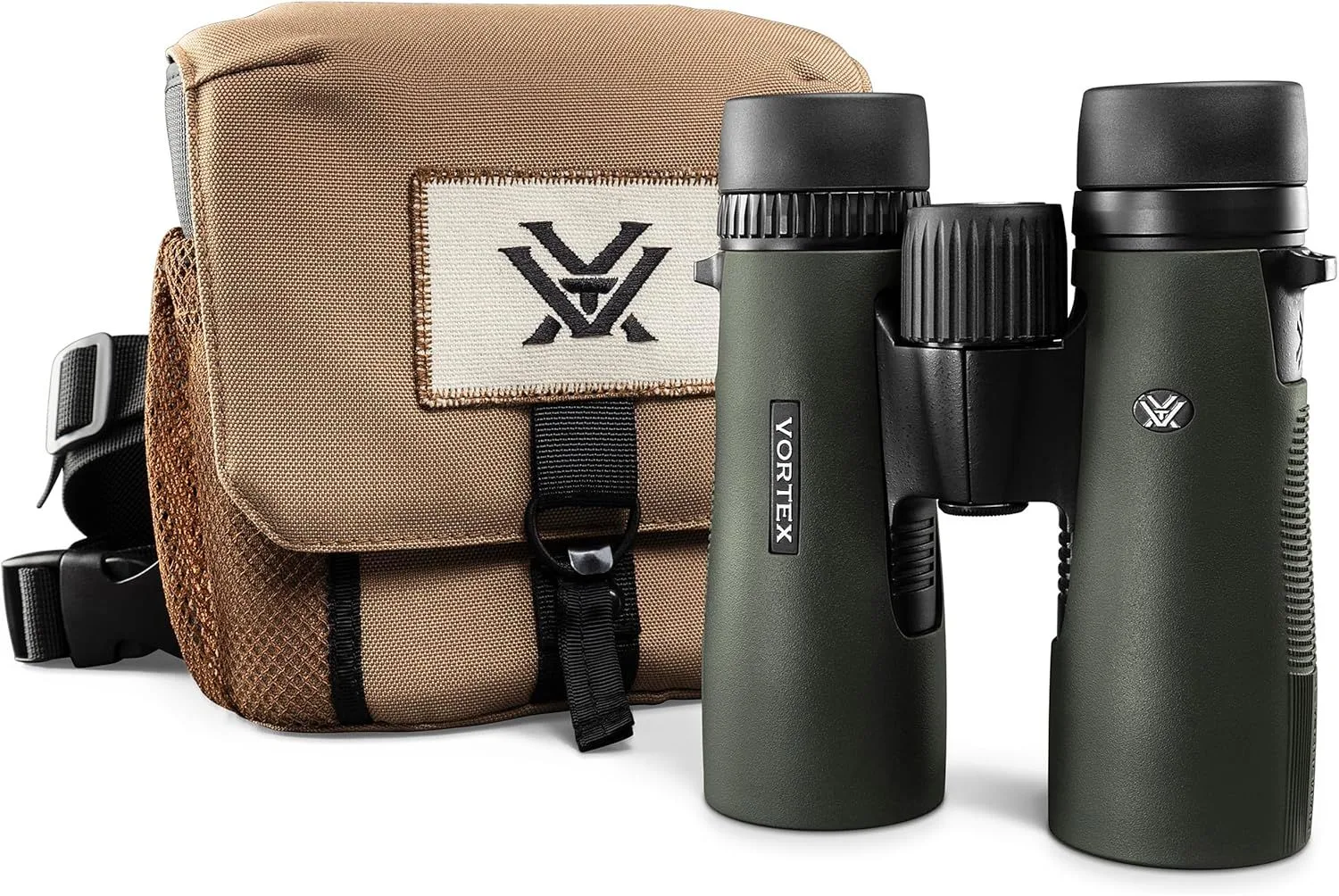
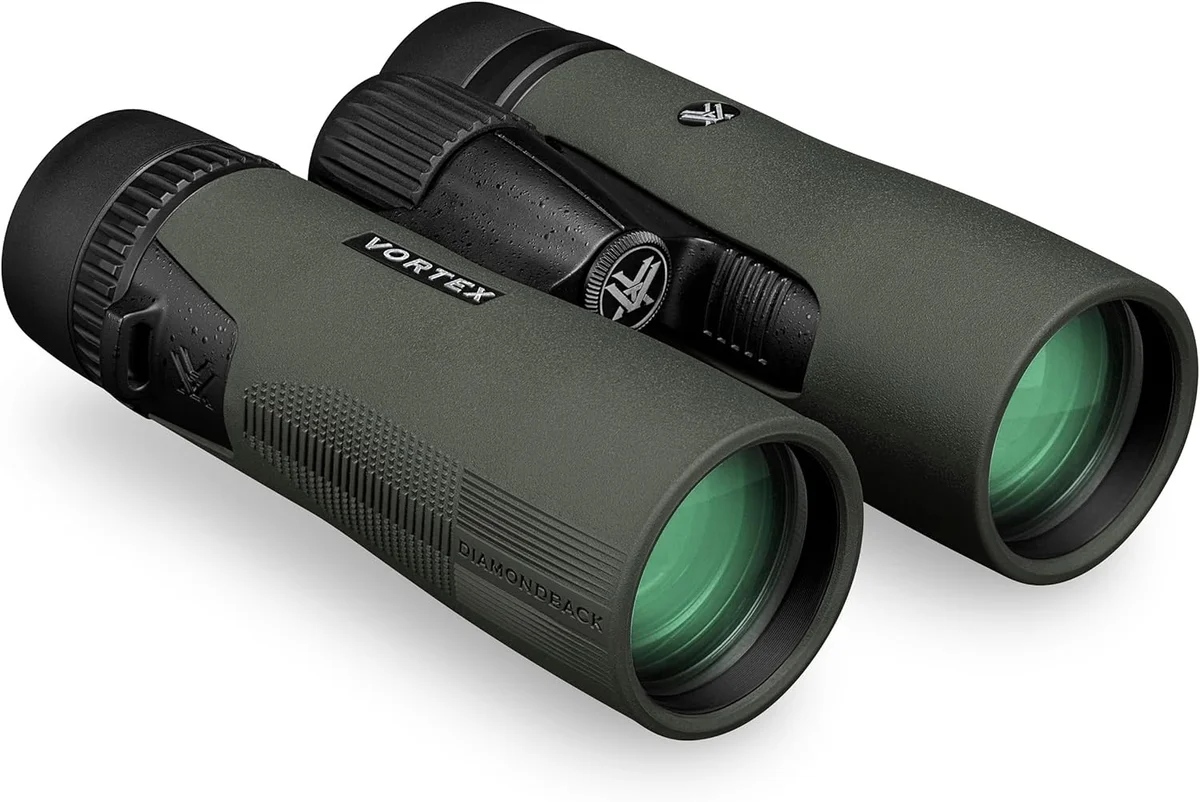
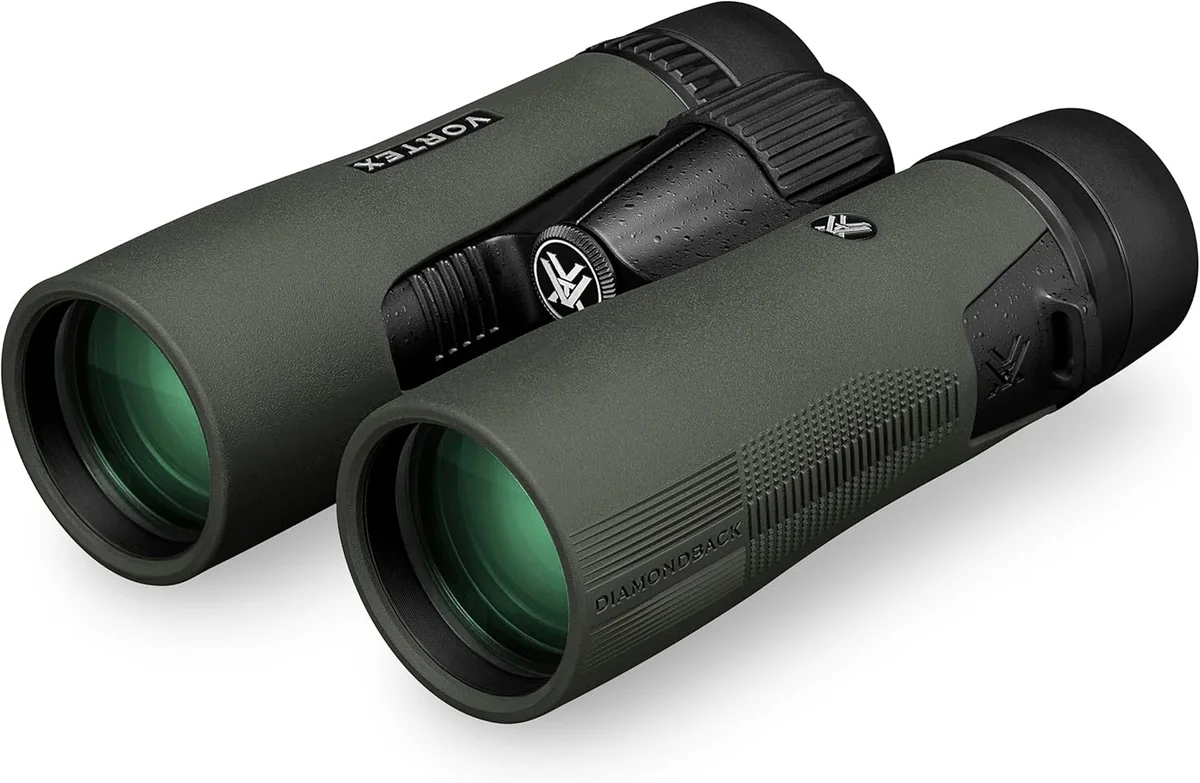
The Vortex Diamondback HD 10x42 in the $100–$250 range checks every box: 10x42 configuration, FMC with dielectric and phase correction coatings, 15mm eye relief, 5 ft close focus, 21.3 oz weight, IPX7 waterproof with argon purging, and the VIP lifetime warranty. It's the model we use as the benchmark when evaluating specs across our entire catalog.
Spec-Related Questions From Buyers
These spec questions come up constantly in buyer forums and retail conversations — here are clear answers for each without the marketing spin.
What does the exit pupil number tell you about binoculars?
Exit pupil = objective diameter ÷ magnification. It tells you how bright the image can be at your eye. A 4mm+ exit pupil works in daylight. A 5mm+ exit pupil works at dawn and dusk. Your eye pupil dilates to roughly 5-7mm in dim light, so anything above 7mm is wasted brightness. A 10x42 produces 4.2mm. A 10x50 produces 5.0mm. A 7x50 produces 7.1mm — among the brightest possible configurations.
What is eye relief and why does it matter?
Eye relief is the distance from the rear lens to where the full image forms. Short eye relief forces your eye close to the glass. With glasses, you cannot get close enough to see the full field of view if eye relief is under 14mm. The Triumph HD at 17mm is excellent. The Crossfire and Diamondback at 15mm are adequate. Below 12mm, glasses wearers see a restricted tunnel view.
What is the difference between FOV in feet and degrees?
Same measurement, different units. Field of view in feet measures the width of the visible scene at 1,000 yards — the standard binocular reference distance. Degrees measure the angular width. To convert: multiply degrees by 52.36 to get approximate feet at 1,000 yards. A 6.5° FOV equals roughly 340 ft. Both tell you the same thing — wider is better for tracking moving subjects.
What does IPX rating mean on binoculars?
IPX4 means splash-resistant — handles rain but not submersion. IPX7 means waterproof to 1 meter depth for 30 minutes — what most quality binoculars achieve. IPX8 means deeper submersion for longer periods. Most binoculars over $100 are IPX7 rated. The number after "IPX" is the important one — higher means better water protection. Fog-proofing, which uses nitrogen or argon gas purging of the internal barrel, is separate from waterproofing and specifically prevents internal condensation from forming on the prism and lens surfaces.
Are bigger objective lenses always better?
Bigger objectives gather more light and can produce larger exit pupils, but they also add weight, bulk, and cost. A 50mm objective gathers 42% more light than a 42mm — but paired with 12x magnification, the exit pupil (4.17mm) is barely different from a 10x42 (4.2mm). The extra glass often buys you more weight without more brightness. For handheld use, 42mm is the optimal balance. Go bigger only for tripod-mounted or astronomical use.
What is close focus and when does it matter?
Close focus is the minimum distance at which the binoculars can produce a sharp image. It ranges from 5 ft on premium models to 15+ ft on budget ones. Close focus matters most for backyard birding (feeders are often 6-12 ft away), butterfly watching, and nature observation at close range. If your primary subjects are at 50+ yards, close focus is irrelevant. If you watch feeders from a window, it is the most important spec after magnification.
Our Top Recommendation
Based on our research, the Diamondback HD 10x42 is our top pick — hunters and birders who want the best glass under $300 with a lifetime warranty.
Get Our Top 3 Picks
Get our top 3 picks for your budget — one email, then only updates.
Only when something changes. Unsubscribe anytime.