What Does 10x42 Mean on Binoculars?
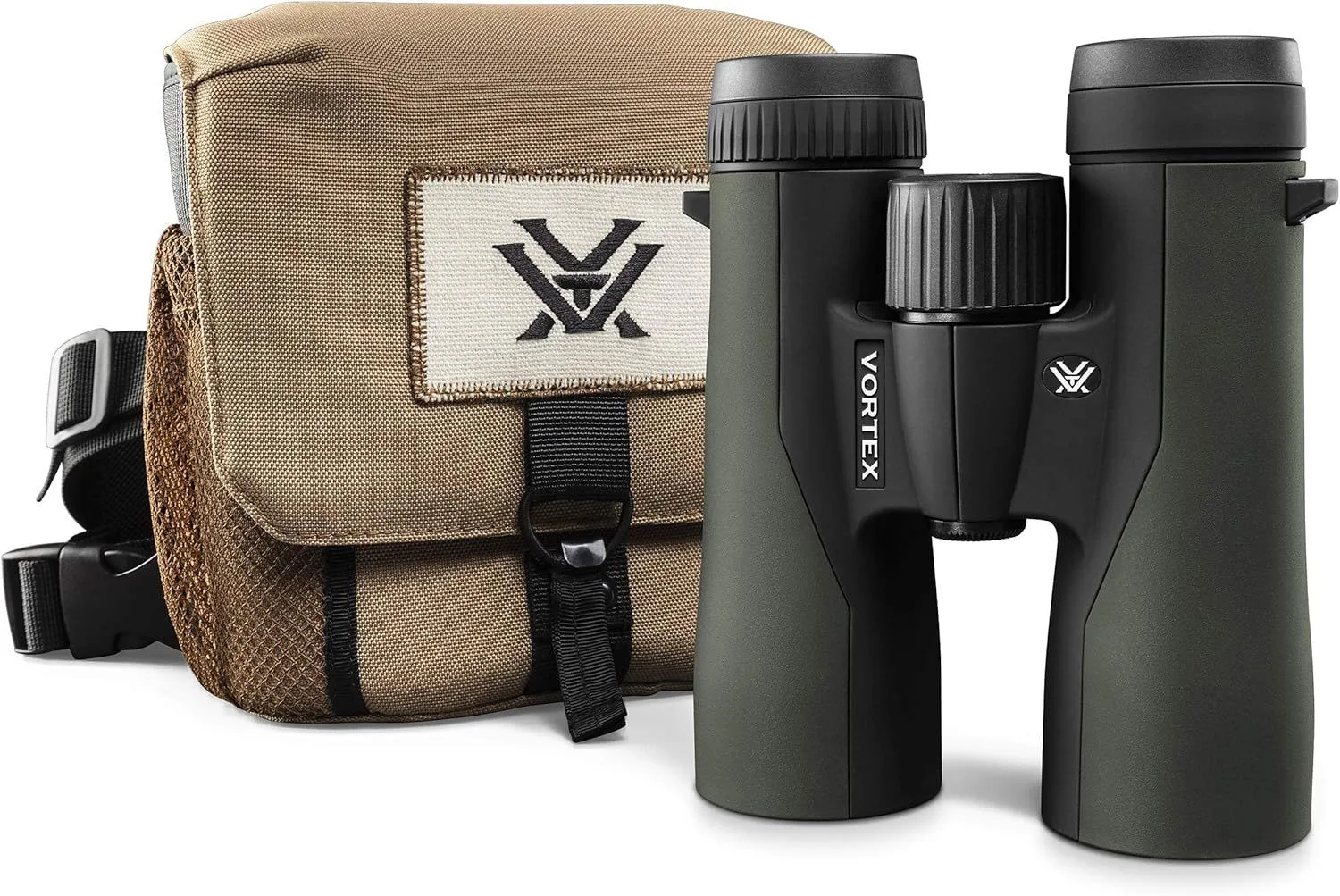
The two numbers printed on every binocular — like 10x42, 8x25, or 12x50 — describe the two most fundamental properties of the optic: how much it magnifies and how much light it gathers. These two numbers interact to determine image brightness, field of view, weight, hand-shake sensitivity, and ultimately which activities the binocular is suited for. Understanding them takes five minutes and covers roughly 80% of what you need to know to buy the right pair.
This is the foundation. The most common configuration sold worldwide is 10x42 — and for good reason.
Everything else — coatings, prisms, glass type — refines what these two numbers set in motion. Get the two main numbers right and you're 80% of the way to the right binocular. Get them wrong and no amount of premium glass saves the experience.
We explain each number, the derived specs they produce, why 10x42 became the default, and when other configurations make more sense. Our full binocular buying guide builds on this foundation with activity-specific recommendations and optical details.
See Our Top Pick: Crossfire HD 10x42
The First Number: Magnification (the "10" in 10x42)
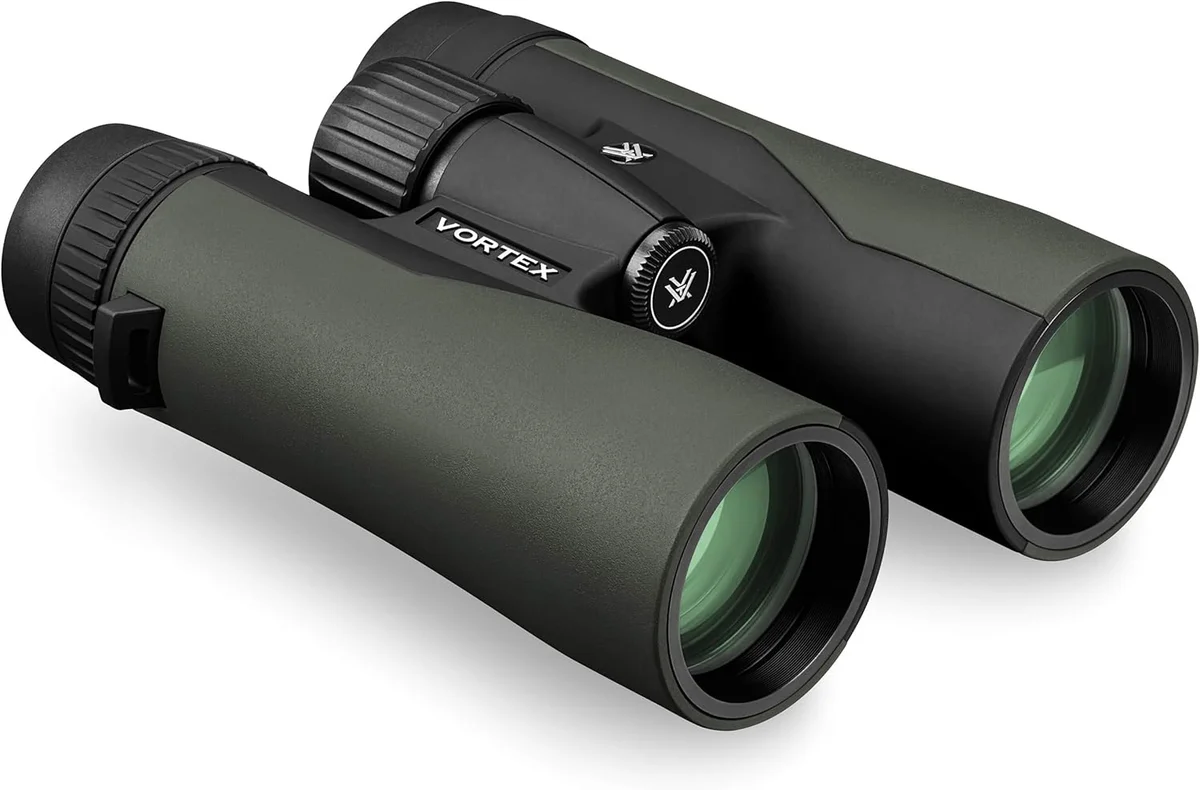
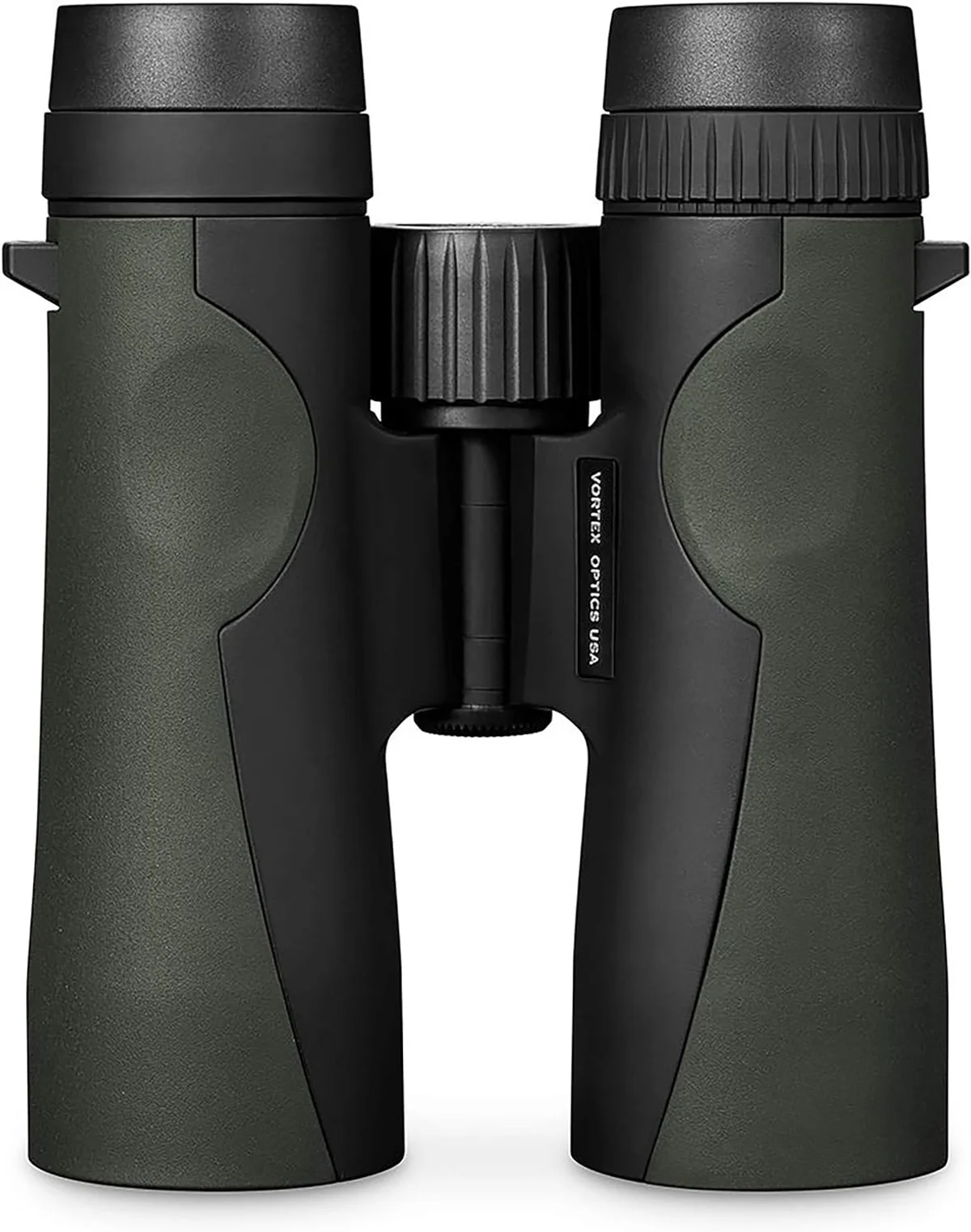
The first number followed by an "x" is the magnification power — how many times closer objects appear through the binocular compared to your naked eye. A 10x binocular makes a bird at 100 yards look as if it were at 10 yards. The math is division: divide actual distance by magnification.
More zoom sounds strictly better. It isn't.
Higher magnification reveals more detail at distance — an 8x shows the same bird as if at 12.5 yards, a 12x brings it to roughly 8.3 yards. But the costs of additional magnification scale proportionally, and they add up fast:
Higher magnification reveals more detail at distance. That's the benefit. The costs are real and scale proportionally:
Hand shake. Magnification amplifies not just the subject but every micro-movement of your hands. At 10x, normal hand shake is manageable — the image jiggles slightly but remains usable. At 12x, the jitter increases enough that fine detail blurs during sustained freehand viewing. At 15-20x, freehand use is impractical for most people — a tripod or window mount becomes necessary. This is the single most important constraint on magnification and the reason most general-use binoculars stay between 8x and 10x.
Field of view. Higher magnification zooms into a smaller slice of the scene. A 10x42 binocular typically offers 300-340 ft FOV at 1,000 yards. An 8x42 of equivalent quality offers 360-400 ft — roughly 15-20% wider. That width difference matters when tracking birds in flight, scanning a forest edge for movement, or following action at a sporting event. Wider FOV means fewer panning movements to cover the same area.
Image brightness. At constant objective size, increasing magnification shrinks the exit pupil (the bright disk of light leaving the eyepiece). A 10x42 has a 4.2mm exit pupil. An 8x42 has a 5.25mm exit pupil — 25% wider, which translates to a visibly brighter image in low light. This matters at dawn and dusk when your eye pupil dilates to 5-7mm and a larger exit pupil delivers more of that available light.
The Second Number: Objective Lens Diameter (the "42" in 10x42)
The second number is the diameter of the front lenses in millimeters — the ones facing the subject, not the ones near your eyes. A 42mm objective lens has an area of roughly 1,385 square millimeters available to collect light. A 25mm objective has 491 square millimeters — about one-third the light-gathering area. A 50mm objective has 1,963 square millimeters — roughly 42% more than 42mm.
Bigger objectives gather more photons. More photons mean brighter images, especially in low-light conditions where every bit of light transmission matters. This is why dawn and dusk performance scales directly with objective diameter — a 42mm binocular produces a noticeably brighter twilight image than a 25mm compact, and a 50mm produces a brighter image still.
The relationship is not linear — it follows the area of a circle (π × radius²). Doubling the diameter quadruples the light-gathering area. A 42mm objective collects 2.82 times more light than a 25mm, not 1.68 times more. This non-linear relationship is why the jump from 25mm to 42mm feels dramatic while the jump from 42mm to 50mm feels modest — the percentage area increase shrinks as the baseline gets larger.
The tradeoff is size and weight. Objective diameter dictates the physical bulk of the binocular. A 25mm compact fits in a jacket pocket and weighs 6-8 oz. A 42mm full-size binocular needs a harness and weighs 21-25 oz. A 50mm binocular approaches two pounds and demands a harness or tripod for extended use. Here's the practical range:
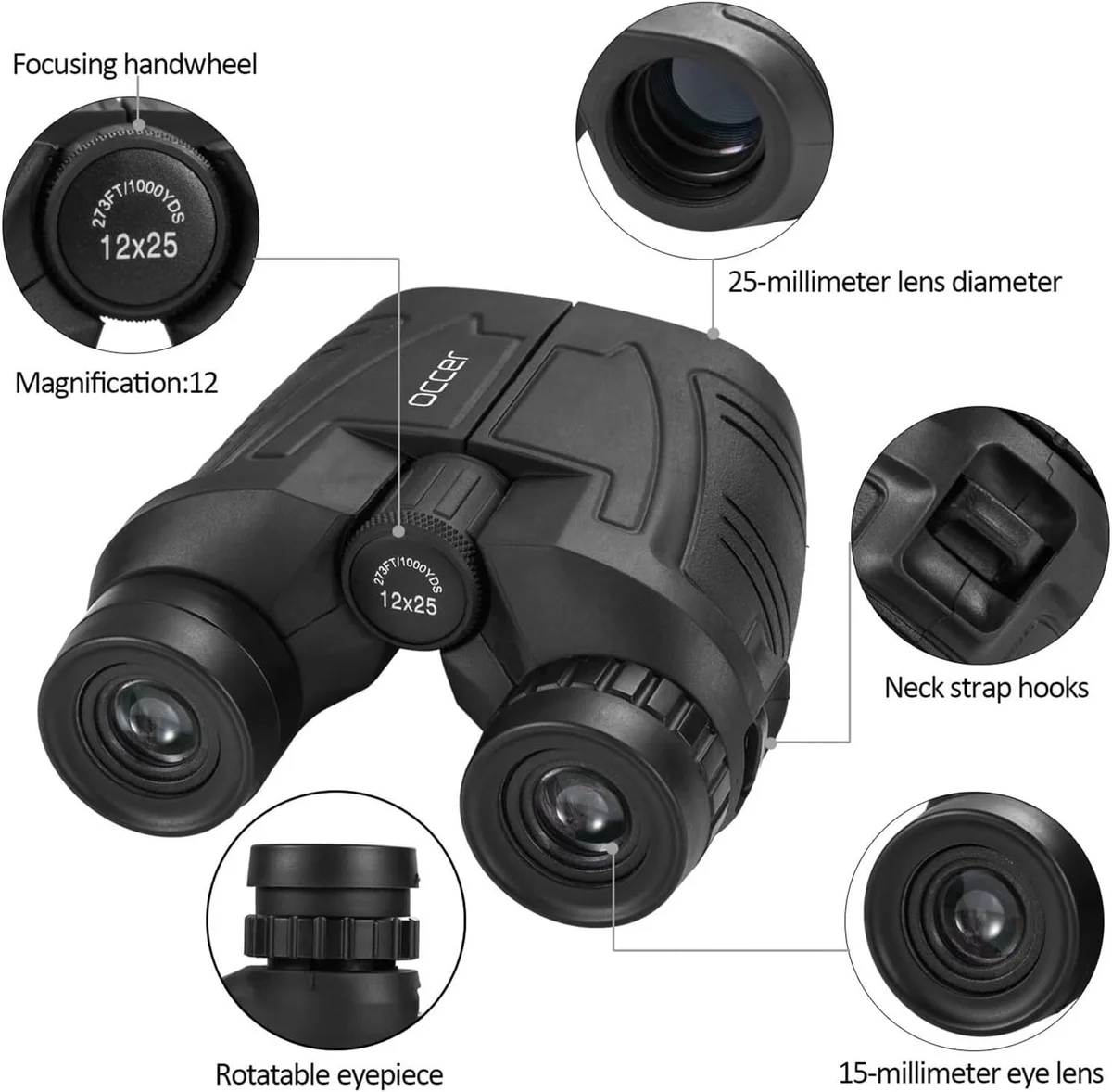
25mm (compact): Pocketable, travel-friendly, daytime use. Dim in low light. Good for concerts and live events, casual hiking and trail use, and travel. The Occer 12x25 compact and Hontry 10x25 foldable fall here.
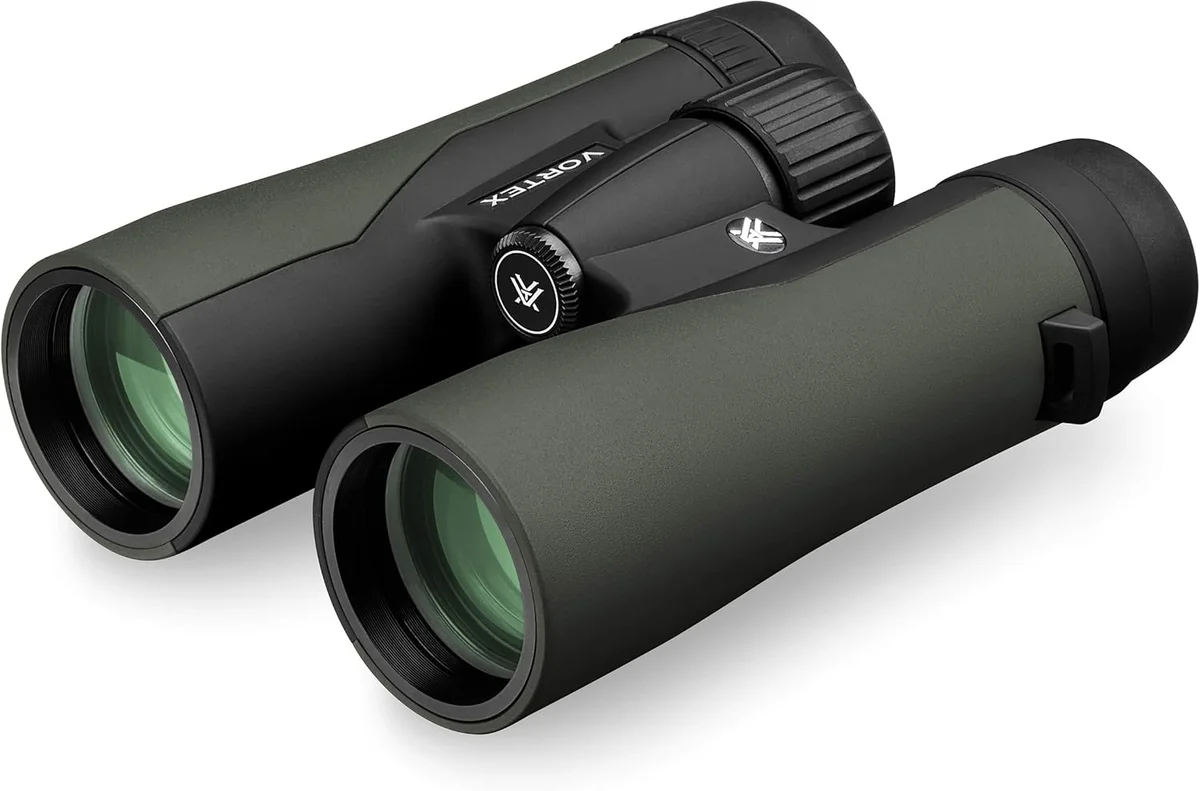
42mm (full-size standard): The default for serious outdoor use. Bright enough for dawn and dusk. Manageable weight with a harness. Good for birding and wildlife, hunting and glassing, and general nature observation. The Crossfire HD 10x42, Diamondback HD 10x42, and Triumph HD 10x42 fall here.
50mm (large): Maximum light gathering. Heavier and front-heavy. Best for stationary use — treestands, astronomy, window observation. The Crossfire HD 12x50 falls here.
The Hidden Third Number: Exit Pupil
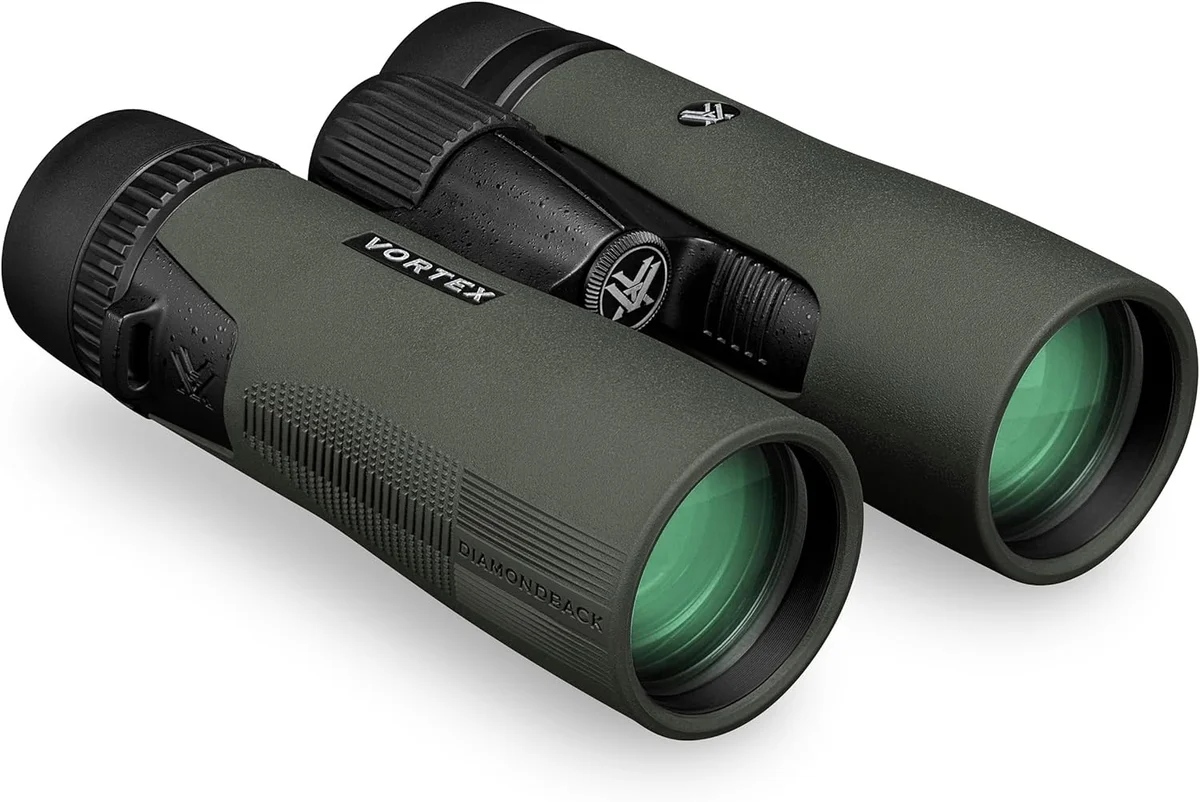
Exit pupil isn't printed on most binoculars, but it's derived directly from the two numbers that are. Divide objective diameter by magnification: 42 ÷ 10 = 4.2mm exit pupil. This number controls image brightness in a way that's independent of glass quality, coatings, or prism type — it's pure geometry, and it's the first thing experienced optics users calculate when evaluating a binocular for low-light use.
Your eye pupil adjusts from about 2-3mm in bright sunlight to 5-7mm in near-darkness. When the binocular's exit pupil is larger than your eye pupil, light is wasted — your eye can't accept the full beam. When the exit pupil is smaller than your eye pupil, the binocular becomes the limiting factor and the image darkens relative to what your eye could handle with more light.
Here's what this means in practice: at noon on a sunny day, your pupil is about 2.5mm. A 10x42's 4.2mm exit pupil is larger than your pupil — plenty of brightness. At dawn with your pupil dilated to 6mm, the 4.2mm exit pupil is smaller than your pupil — the binocular limits the brightness your eye could receive. An 8x42 with its 5.25mm exit pupil gets closer to matching your dawn-dilated pupil, delivering a brighter image in the same conditions.
This is why exit pupil matters for low-light activities like dawn birding sessions and twilight hunting trips, and barely matters for daytime use like hiking and concerts. When you see binocular reviews emphasizing "brightness," they're describing the combined effect of exit pupil, coating quality, and prism treatment — but exit pupil is the foundation that coatings and prisms can only refine, never replace.
Why 10x42 Became the Default
No other configuration outsells it, and the reason is simple: 10x42 is the best all-around binocular configuration for general outdoor use.
The 10x42 configuration dominates the binocular market because it sits at the intersection of "good enough at everything, bad at nothing." No single spec is optimal, but no single spec is a disqualifying weakness.
10x magnification: enough reach for birding at 100 yards, hunting at 200-400 yards, and nature observation at any practical distance. Not so high that hand shake becomes a problem.
42mm objectives: enough light for dawn and dusk use with a 4.2mm exit pupil. Not so large that the binocular weighs two pounds or needs a tripod.
Typical weight at 21-25 oz: carryable all day with a harness. Not light enough for pocket carry, but light enough for field use without fatigue.
Typical FOV at 300-340 ft: wide enough to track moving subjects. Not as wide as 8x, but wide enough for most activities.
The result: 10x42 is the configuration recommended by virtually every outdoor gear publication, binocular review site, birding organization, and hunting guide. Not because it's the best at any one thing, but because it's the least compromised across everything. The best birding binoculars roundup covers which configuration works best for each birding style.
When Other Configurations Make More Sense
10x42 is the safe default. But "safe" and "optimal" are not the same thing.
These situations merit different choices, and understanding why circles back to the two numbers and the tradeoffs they encode:
Concerts and events: 10x25 or 12x25 compacts. Pocketability trumps optical performance when the venue is lit and the primary constraint is portability, not brightness.
Astronomy and comet viewing: 15x50 or larger. Maximum light gathering and magnification matter. Tripod use is expected. Weight is irrelevant because the binocular sits on a mount. The Crossfire HD 12x50 review covers our largest-objective option.
Woodland birding: 8x42. The wider field of view and brighter image outweigh the lost magnification when tracking warblers through canopy at 30-60 feet. The exit pupil jumps from 4.2mm to 5.25mm — a tangible brightness gain for pre-dawn forest walks where every photon counts.
Ultralight hiking: 10x25 compacts. Weight is competitive with food and water in your pack. Optical performance in daylight is acceptable. Dawn and dusk performance is the sacrifice.
Stand hunting / stationary glassing: 12x50. More reach and light for a binocular that doesn't move far from a fixed position. The weight penalty is absorbed by the treestand, truck, or tripod. Western hunters who glass ridgelines for hours at a time often prefer this configuration because the extra magnification reveals game at distances where 10x shows only terrain shapes. The 50mm objectives help at first and last light when the mountain shadows are long and the elk are moving.
Common Misreadings of Binocular Numbers
Three misconceptions show up repeatedly in reviews and forum questions. Clearing them saves confusion:
"10x42 means it can see 10 miles." No. Magnification is a ratio, not a distance. A 10x binocular makes any object at any distance appear 10 times closer. It does not have a "range" in the way a rifle scope does. You can see the moon through a 10x binocular — the magnification applies regardless of distance. What limits visibility is atmospheric clarity, not the binocular's power.
"Bigger second number always means better." Not always. A 10x50 gathers more light than a 10x42, but it also weighs more, is physically larger, and has a narrower field of view for the same magnification. The extra brightness of 50mm objectives matters at dawn and dusk — during the day, the human pupil is too small to use the additional light. For most daytime activities, the 42mm version of the same magnification is the better practical choice. Pay for light-gathering capacity only if you'll use binoculars in low-light conditions regularly.
"12x25 is better than 10x25 because 12 is higher than 10." Higher magnification on a compact binocular shrinks the exit pupil below the comfort threshold (12÷25 = 2.08mm vs 10÷25 = 2.5mm) and narrows the already-limited field of view. The 12x25 shows more detail of a smaller area through a dimmer image. Whether that tradeoff favors the 12x depends entirely on the use case — stadium sports where detail matters, or festival crowds where finding the performer in a wide scene matters. Our Occer 12x25 vs Hontry 10x25 comparison tests this specific tradeoff between the two most popular compact configurations in our catalog.
Now That You Know the Numbers
If you're choosing a first binocular and the numbers make sense now, our beginner's buying guide narrows the field to specific models by budget tier. The best binoculars roundup ranks every model we've reviewed for overall value. And the Crossfire vs Diamondback comparison shows how two 10x42 binoculars with identical numbers can differ sharply in optical quality and price.
Numbers on the Box — Your Questions Answered
These are the questions people search for most often when trying to decode the numbers printed on binoculars.
What do the numbers 10x42 mean on binoculars?
10x42 means the binocular magnifies objects 10 times closer and has 42mm diameter front lenses. The first number (10x) is magnification — a bird at 100 yards appears as if it were at 10 yards. The second number (42) is the objective lens diameter in millimeters, which determines how much light the binocular gathers and how bright the image appears, especially in low-light conditions like dawn and dusk.
Which is better — 10x42 or 8x42 binoculars?
10x42 gives 25% more magnification, making distant objects larger and more detailed. 8x42 gives a wider field of view and a brighter image because the larger exit pupil (5.25mm vs 4.2mm) passes more light to your eye. For general outdoor use, 10x42 is the better all-around choice. For birding in dense woodland where tracking fast-moving subjects matters, 8x42 has the edge. Our 8x42 vs 10x42 comparison covers every tradeoff in detail.
Why is 10x42 the most popular binocular size?
The 10x42 configuration balances magnification, brightness, weight, and field of view better than any other combination for general outdoor use. 10x provides enough reach for birding, hunting, and nature observation without requiring a tripod. 42mm objectives gather sufficient light for dawn and dusk use while keeping the binoculars under 25 ounces. No spec is perfect, but no spec is a serious weakness either — which is why 10x42 became the default recommendation across virtually every binocular review site.
What does the exit pupil number mean?
Exit pupil is the diameter of the light beam leaving the eyepiece, calculated by dividing objective lens diameter by magnification. A 10x42 binocular has a 4.2mm exit pupil (42 ÷ 10). Your eye pupil dilates to about 2-3mm in daylight and 5-7mm in darkness. When the exit pupil matches or exceeds your pupil size, the binocular delivers its maximum brightness. A larger exit pupil also makes it easier to maintain a full image when your hands move slightly.
Does higher magnification always mean a better binocular?
No. Higher magnification amplifies hand shake proportionally — a 20x binocular shakes twice as much as a 10x held by the same hands. It also narrows the field of view, making it harder to find and track subjects. And at constant objective size, higher magnification shrinks the exit pupil, dimming the image. The practical handheld limit for most people is 10-12x. Beyond that, a tripod or support is recommended for stable viewing.
What does the field of view number mean on binoculars?
Field of view (FOV) measures the width of the scene visible through the binoculars, expressed as feet at 1,000 yards or degrees. A binocular with 330 ft FOV shows a 330-foot-wide slice of the world at 1,000 yards distance. Higher magnification narrows FOV because you are zooming into a smaller portion of the scene. FOV matters most when tracking moving subjects — wider is better for birds in flight, scanning wildlife herds, and following action at sporting events.
Our Top Recommendation
Based on our research, the Crossfire HD 10x42 is our top pick — first-time buyers who want a trusted brand with a real warranty under $200.
Get Picks Delivered
One email per week. Honest reviews, no spam.
Only when something changes. Unsubscribe anytime.