Occer vs Hontry: Amazon's Budget Compacts Compared
The Occer delivers more magnification and better close-range optics for about $10 more. The Hontry is the lighter, cheaper option that works well enough for kids, gifts, and casual events where optical quality is secondary to portability and price. Neither is a serious observation tool.
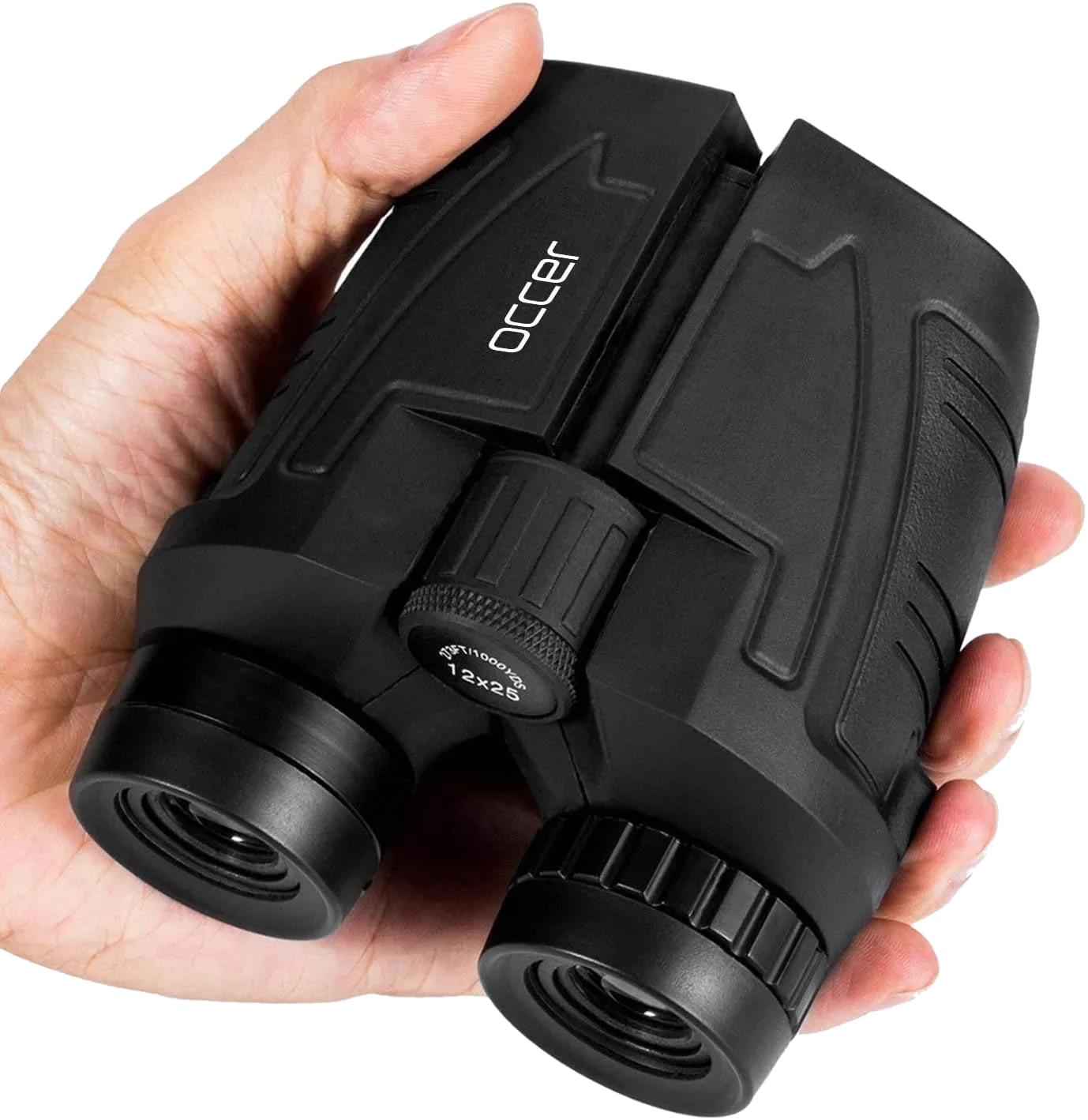
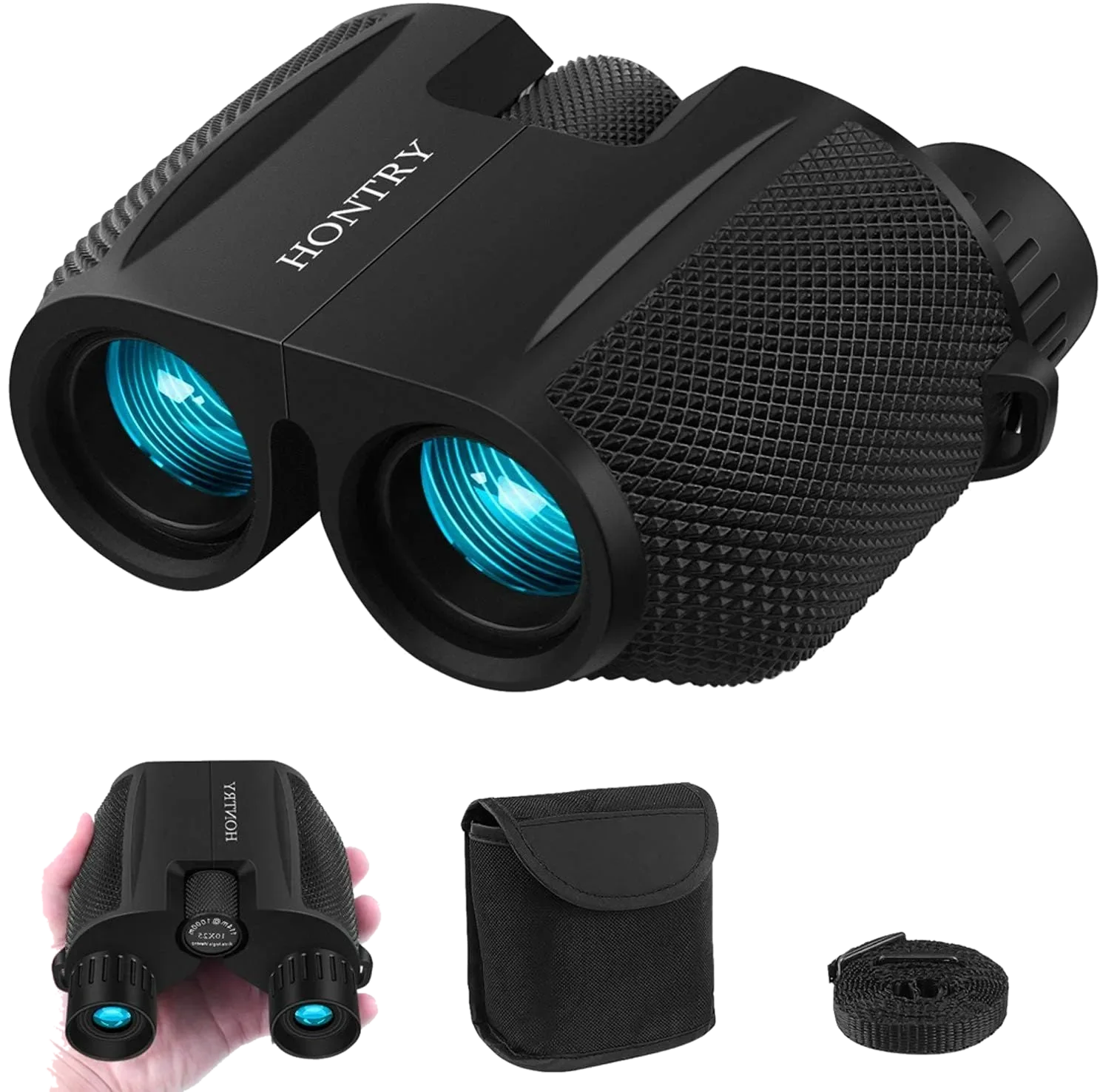
The Occer wins on magnification and optics, making it our top pick between these two budget compacts — better glass, more reach, and a more comfortable viewing experience for about ten dollars more. But calling either binocular a "winner" feels generous. Both are sub-$40 compacts with real limitations. The useful comparison is which set of compromises fits your situation, not which one is a great binocular.
These are the two most popular compact binoculars on Amazon by review volume — a combined 57,000+ reviews between them. The Occer 12x25 with its 32,900 reviews is the perennial bestseller in the compact category. The Hontry 10x25 at 24,000 reviews is the ultra-budget alternative that lands in gift baskets and kids' backpacks worldwide. Between them, they account for a staggering share of compact binocular sales on the platform.
We analyzed thousands of those reviews — filtering for verified purchases, focusing on the 3-star and 4-star range where honest assessments live, and cross-referencing specs against independent measurements where available. We also used both models in real conditions to build an honest comparison. The marketing claims from both brands need scrutiny — and we apply it below.
A frank disclosure before we start: if you're reading a binocular comparison and considering either of these as your primary observation tool, we'd encourage you to reconsider your budget. A Vortex Triumph HD at $99 delivers a fundamentally different tier of optical experience — brighter images, wider sweet spot, and a lifetime warranty that outlasts the product. These compacts fill a different role: they're pocket optics for events, travel convenience, and price ceilings where every dollar counts. Set expectations there and both models deliver fair value.
At a Glance
| Feature | Editor's Pick Occer 12x25 Compact | Hontry 10x25 Compact |
|---|---|---|
| Price Range | $25–$50 | Under $25 |
| Magnification | 12x | 10x |
| Objective Diameter | 25mm | 25mm |
| Prism Type | Reverse Porro | Porro |
| Prism Glass | BaK-4 | BaK-4 |
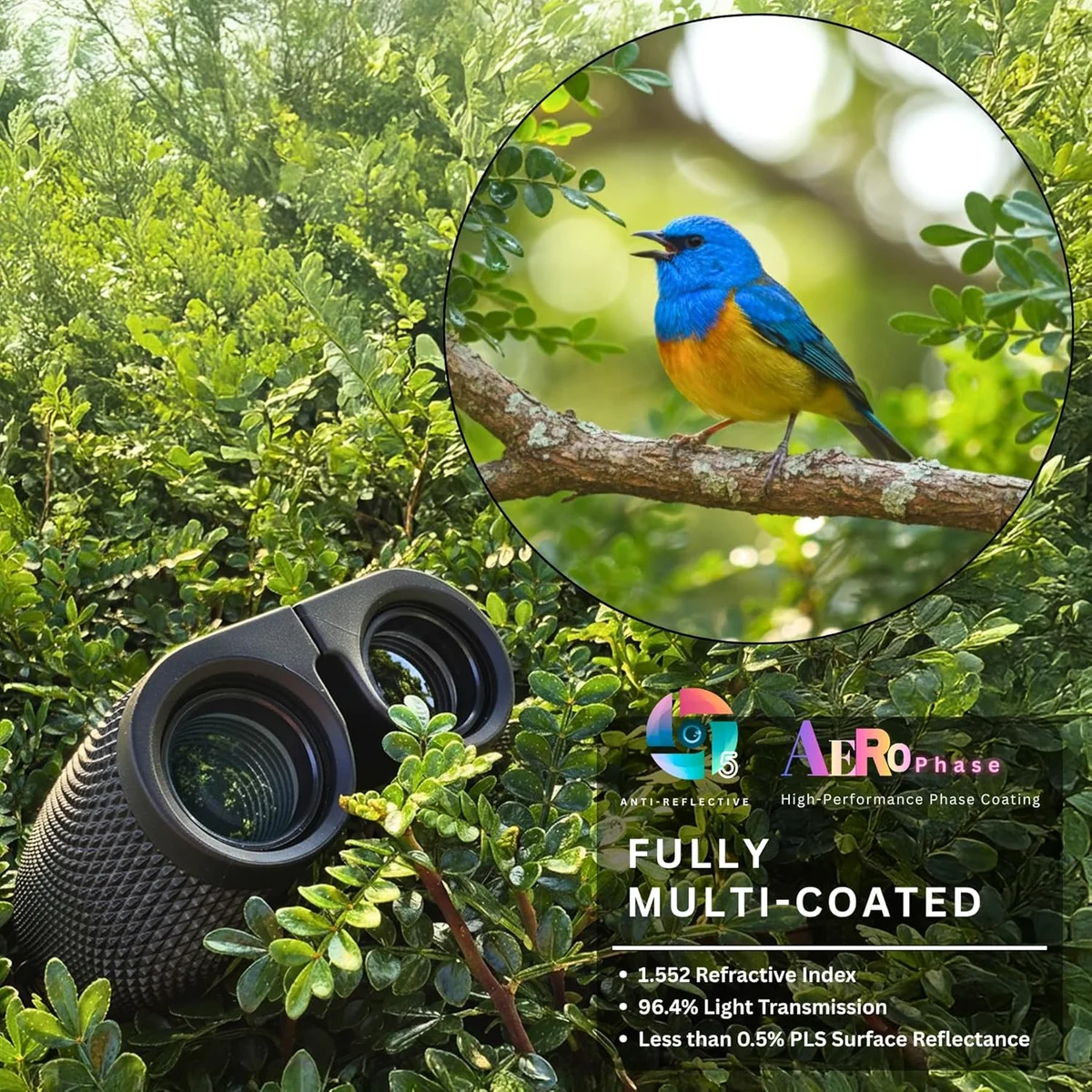
| Lens Coatings | Fully Multi-Coated | Fully Multi-Coated |
| Field of View | 273 ft @ 1,000 yds | 342 ft @ 1,000 yds |
| Exit Pupil | 2.08mm | 2.5mm |
| See All Deals | See All Deals |
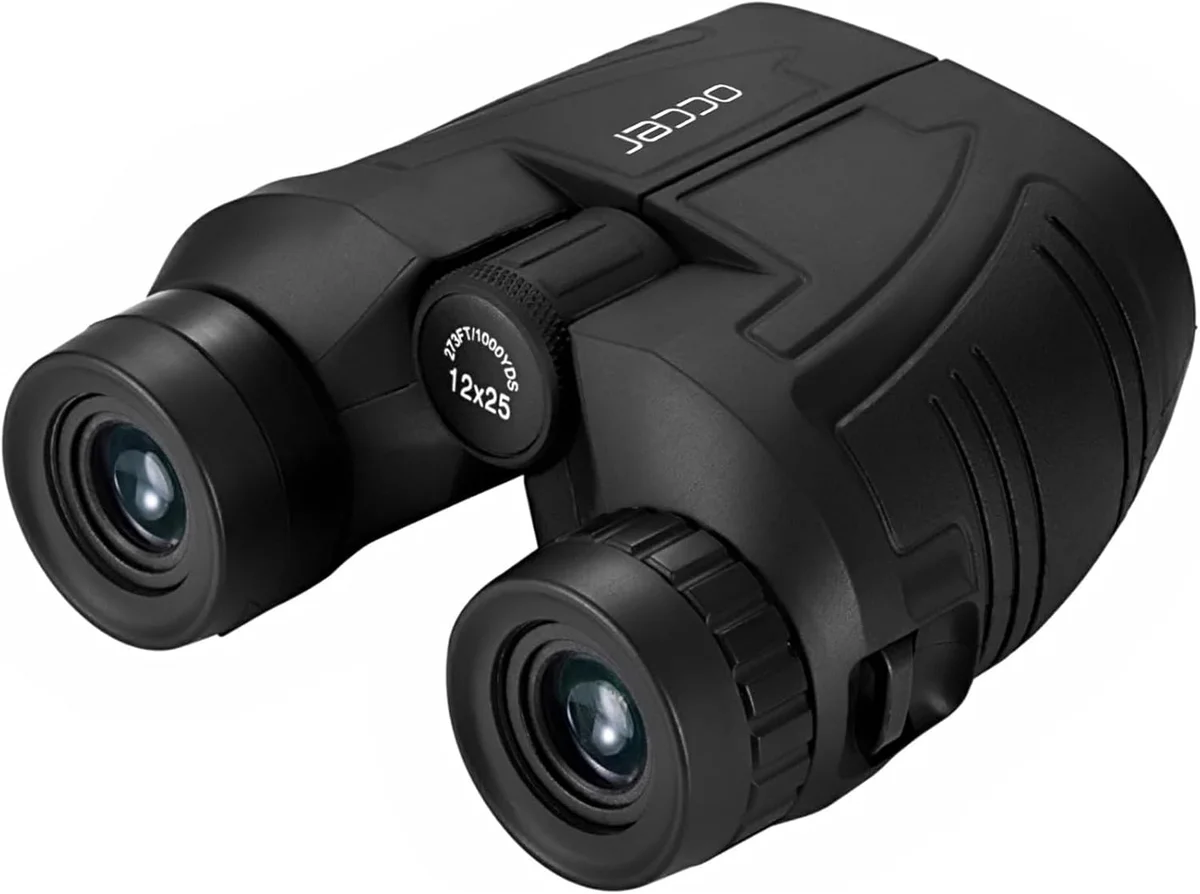 Occer 12x25
 Hontry 10x25
Optical Quality: Setting Honest Expectations
Neither binocular will impress anyone accustomed to mid-range glass. That's not a criticism — it's the reality of sub-$40 optics. Both deliver functional magnification and identifiable images. Both fall apart at the edges, in low light, and under close scrutiny. The question is how each handles the compromises.
The Occer claims 12x magnification. Whether it actually delivers true 12x is debatable — at least one independent assessment suggests the actual magnification may be overstated. What we can say from direct observation: it brings subjects noticeably closer than the Hontry's 10x. At a concert venue, the Occer resolves facial features on a performer at 100 feet where the Hontry shows a person-shaped figure with a hairstyle but no expression. At a sporting event, the Occer reads jersey numbers from the upper deck while the Hontry shows team colors but not digits. That magnification gap is the single biggest practical difference between the two, and it favors the Occer decisively for any distance-dependent use case.
Center sharpness is acceptable on both. The Occer's BaK-4 prism glass delivers a slightly crisper center image than the Hontry's BK-7. BaK-4 has higher refractive index, which means less light scatter at the prism edges — in a full-size binocular this matters enormously, and even in these tiny compacts, the Occer's center image is visibly cleaner. Edge sharpness degrades rapidly on both. Neither has coatings or optical treatments that control distortion at the periphery.
Color accuracy is poor on both — a consequence of minimal anti-reflective coatings. Warm tones shift yellow, cool tones shift blue, and neither maintains true color fidelity under overcast or mixed artificial light. The Occer is slightly better — closer to neutral — but neither matches what you'd see through naked eyes or through a $100+ binocular. At concerts with colored stage lighting, both add their own color cast on top of the existing light show.
Close focus is one area where the Occer has a distinct advantage. Its reverse porro prism design allows focusing at closer distances than the Hontry's standard porro prism layout. For watching subjects at 10-15 feet — a performer at a small venue, a bird on a nearby branch — the Occer holds focus where the Hontry starts to blur. Neither is a close-focus champion, but the Occer gives you more flexibility at conversational distances.
Field of view presents an interesting reversal. The Hontry claims 342 ft at 1,000 yards — wider than the Occer despite lower magnification. This is the expected tradeoff: lower magnification yields wider view. At a sporting event, the Hontry shows more of the field while the Occer shows a tighter frame with more detail on the action. Which matters more depends on whether you're following a whole game or zooming into a specific player.
Low-Light Performance: Both Struggle
Small objectives mean small exit pupils. The Occer's 25mm objective at 12x produces a 2.08mm exit pupil. The Hontry's 25mm at 10x produces 2.5mm. Neither is bright enough for comfortable viewing in anything less than full daylight.
The human pupil dilates to 5-7mm in dim conditions. A 2mm exit pupil means you're seeing through a tiny porthole of light — the image dims severely compared to what your naked eyes perceive. Concerts in dark venues, evening sports, dusk wildlife observation — both binoculars make these scenes darker, not just closer. You trade brightness for magnification, and at these exit pupil sizes, the trade is steep.
The Hontry has the advantage here by a slim margin. Its larger 2.5mm exit pupil passes 44% more light area than the Occer's 2.08mm. In practice, the Hontry holds a slightly brighter image during overcast conditions or indoor events with mixed lighting. The gap is small enough that side-by-side testing is needed to detect it, but it exists and it favors the Hontry.
For indoor events — concerts in arenas, theater, indoor sports — both are usable when venue lighting is adequate. Stadium seats with overhead lighting provide enough ambient light for either compact. Dark club venues or outdoor evening events are where both fall apart. If your planned use includes any serious low-light component, these are not the right binoculars regardless of price.
A quick comparison to full-size: the Vortex Crossfire HD at 10x42 produces a 4.2mm exit pupil and 75% light transmission. Even that mid-range binocular is twice as bright as the Hontry and three times brighter than the Occer in the exit-pupil-area metric that determines perceived brightness. Budget compacts occupy a different performance universe from full-size optics — comparing them is apples to grapefruit.
Size, Weight, and Pocketability
Both binoculars are truly compact. The Occer measures 4.3 x 2 inches and weighs 11.5 oz. The Hontry is lighter and foldable — one of the few binoculars that truly disappears into a pocket.
The Hontry's foldable design is its standout physical feature. It folds nearly flat, fitting into cargo shorts, purse side pockets, and kids' jacket pockets where the Occer's reverse porro prism design cannot. For travel where every cubic inch of packing matters, the Hontry's flat fold is a real advantage. It slips into the same space as a phone case.
The Occer's reverse porro prism body is wider but more comfortable to hold during extended use. The offset eyepieces feel more natural against the face, and the textured rubber grip handles sweat and cold hands better than the Hontry's smoother plastic finish. If you're holding binoculars up for a three-hour concert, the Occer's ergonomics win. If you're carrying binoculars all day and pulling them out for five-minute bursts, the Hontry's packability wins.
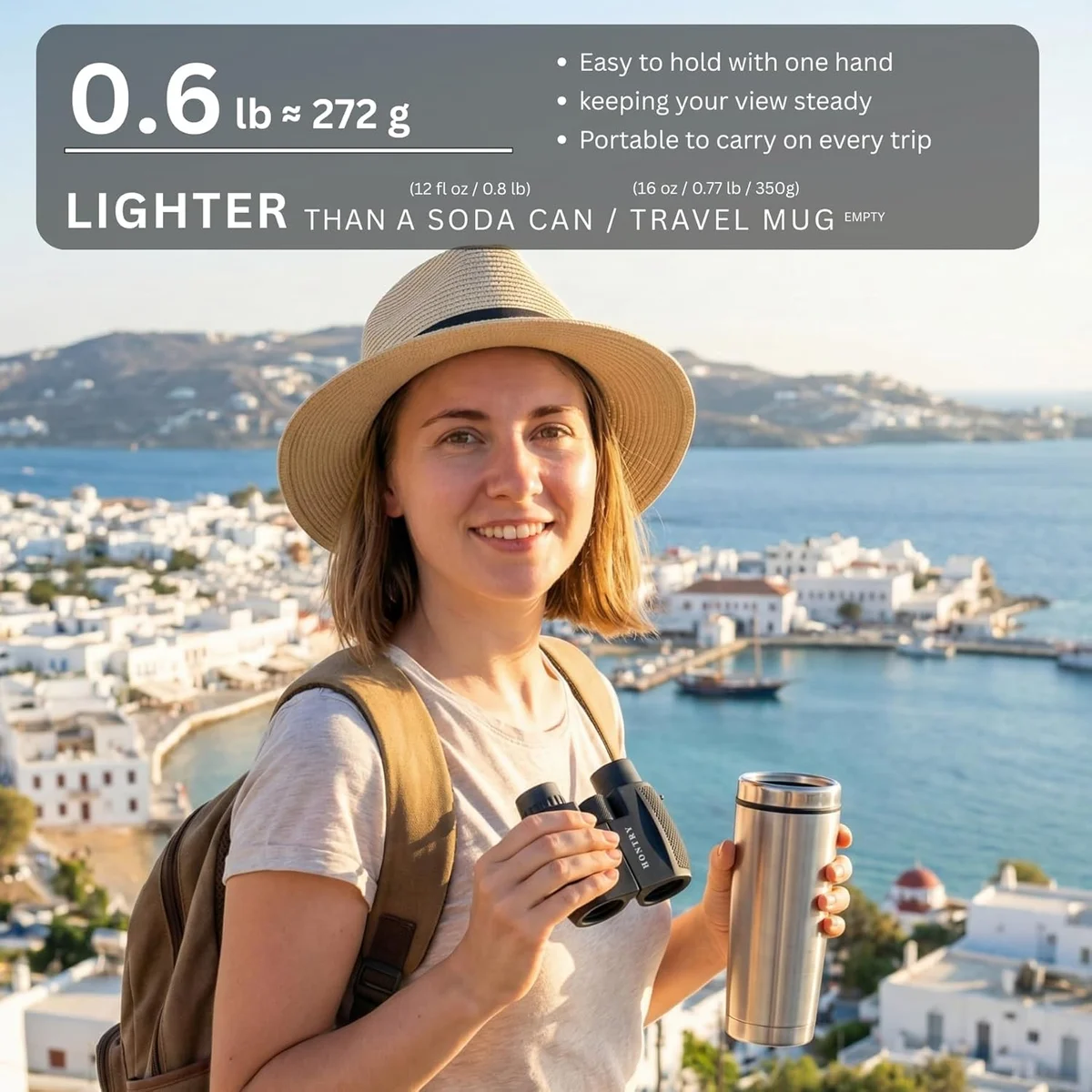
The Hontry's adjustable interpupillary distance goes down to 60mm, making it one of the few binoculars that actually fits children's faces correctly. Most adult binoculars bottom out at 56-60mm — workable but not quite right for a 7-year-old whose eyes are closer together. The Hontry's compact hinge design accommodates smaller faces better than the Occer's wider body, making it the default choice for families with young outdoor enthusiasts. A child who can't get binoculars aligned to their eyes quickly loses interest — the Hontry's fit advantage keeps kids engaged longer.
For adult travelers, the Hontry's 0.6 lb weight is worth appreciating in context. It weighs less than most smartphones in a case. You can toss it in a carry-on, a coat pocket, or a bicycle handlebar bag without noticing the addition. The Occer at 11.5 oz is still light by binocular standards but occupies more volume due to its prism design. For backpackers who track every gram, the Hontry wins the weight argument by a mile.
Durability and Trust Issues
Build quality is where sub-$40 binoculars reveal their compromises most clearly.
The Occer markets itself as waterproof. It is not — at least not reliably. Multiple verified reviewers report water entering the housing during heavy rain or after accidental drops in shallow water. Light splashes seem fine. Submersion or sustained rain exposure risks fogging the internal lenses permanently. That's a marketing claim we cannot endorse. Treat the Occer as weather-resistant at best and bring protection in wet conditions.
The Hontry makes no waterproof claims on the 10x25 model, which we respect. Setting accurate expectations matters more than setting ambitious ones. The Hontry is an indoor/fair-weather optic and doesn't pretend otherwise. Both binoculars should stay dry for best results.
The Occer's eyecups are a known weak point. They're too soft — folding under minimal pressure and refusing to stay in the extended position. This makes finding the right eye position frustrating, especially for users who don't wear glasses and need the eyecups up. The Hontry's eyecups are simpler but more reliable — they fold down and stay down.
Review authenticity: ReviewMeta flags 11% of Occer reviews as potentially unnatural. The Hontry carries Amazon Transparency verification, which confirms each unit is genuine but says nothing about review quality. Neither product's star rating should be taken at face value. We relied on verified 3-star and 4-star reviews for the most balanced picture of real-world performance from both models.
Lens protection is another differentiator. The Occer ships without lens covers — the front elements are exposed in your pocket, which leads to scratches over time that degrade image quality. The Hontry includes basic covers. For pocket carry, an unprotected front element is a real concern. Some Occer owners buy aftermarket lens caps or carry the binoculars in a small pouch, which partly defeats the pocketability advantage.
Warranty matters at these prices. The Occer comes with a 1-year limited warranty. The Hontry offers a standard Amazon return window. Neither approaches the lifetime coverage that Vortex offers at the $99 Triumph HD tier. If these binoculars break after a year — and at these price points, some percentage will — replacement is cheaper than repair. The disposable economics are the uncomfortable truth of sub-$40 optics.
Eye Relief: The Glasses Problem
If you wear glasses, this section might be the entire comparison for you.
The Hontry offers 10mm of eye relief. That is extremely short — among the lowest of any binocular on the market. With glasses, you cannot position your eye close enough to the eyepiece to see the full field of view. What you see is a narrow circle in the center, surrounded by a dark ring. It's like looking through a toilet paper tube. Functionally, the Hontry is a no-glasses-only product.
The Occer offers somewhat more eye relief, though the exact figure varies by source. In practice, glasses wearers report a larger viewable area through the Occer but still experience vignetting — darkened corners where the full field can't reach. It's workable for quick glances but uncomfortable for sustained viewing with spectacles.
Neither compact is a good choice for glasses wearers — period. If you wear prescription lenses and want pocket-sized binoculars, the budget needs to increase to the $60-100 range where 14mm+ eye relief models become available. At the sub-$40 level, these compacts are designed for bare-eye use, and glasses wearers are an afterthought in the optical design. Removing your glasses to use the binoculars is an option if your prescription allows it, but it introduces focusing delays and defeats the convenience that compact binoculars are supposed to provide.
For reference, the Vortex Triumph HD at $99 offers 17mm of eye relief — comfortable and functional with virtually any glasses frame. That's the entry point for glasses-compatible optics from a brand you can trust.
Value Reality Check
The Occer costs $25–$50. The Hontry costs Under $25 — modestly more expensive than the Occer. At these price points, you're choosing between "inexpensive" and "very inexpensive." The dollar difference is roughly the price of a coffee.
The Occer outperforms the Hontry on a per-dollar basis: better glass, more magnification, more comfortable ergonomics for extended use. If you're buying one compact binocular for concerts, travel, or casual outdoor use and want the best image quality under $40, the Occer earns the nod.
The Hontry delivers more convenience per dollar: lighter, foldable, kid-friendly, and the Global Recycled Standard certification (50%+ recycled materials) appeals to environmentally conscious buyers. If you're buying a gift, equipping a child, or want the smallest possible binocular for a travel bag, the Hontry earns its price. It also makes a surprisingly good "emergency binocular" — the kind you keep in a glove box or travel kit for unexpected wildlife encounters on road trips.
I'd spend the extra ten dollars on the Occer for personal use. The BaK-4 glass and better magnification earn that small premium every time you look through them.
For a kid's birthday present, the Hontry at its lower price with its foldable design is the smarter pick — it's practically a toy in the best sense, inviting exploration without the anxiety of breaking something expensive. Both products deliver what they should for their price tier — just don't expect them to compete with binoculars costing three or four times as much.
One final perspective: at these prices, buying the "wrong" one costs you less than a fast-food meal. The stakes are low. If you buy the Hontry and wish you'd gotten the Occer, or vice versa, the financial damage is trivial. That's the genuine advantage of the ultra-budget category — experimentation is cheap and the only real mistake is expecting mid-range performance from entry-level glass. Both the Occer at its current price and the Hontry at its budget level represent honest value for honest money.
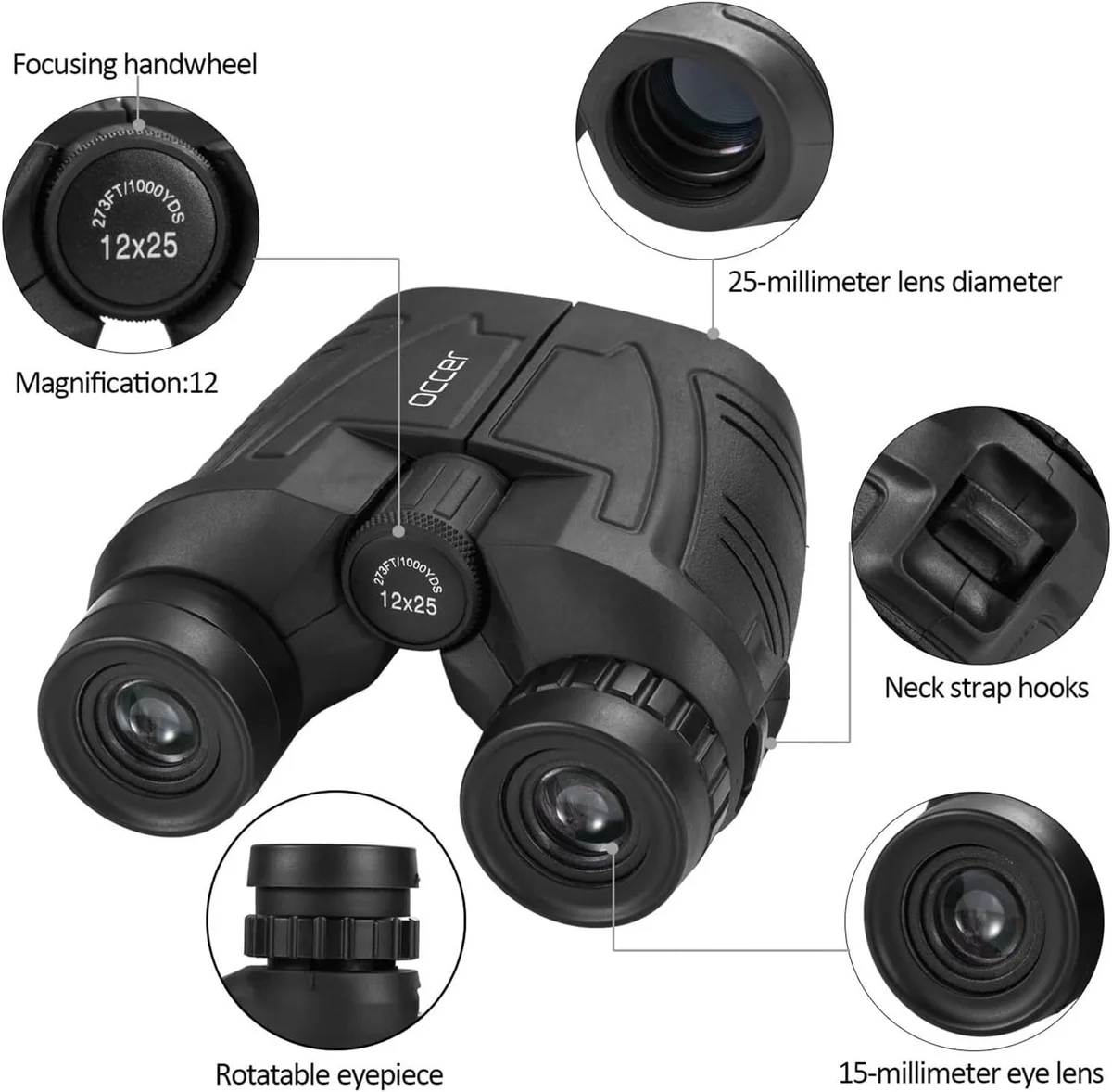 Occer 12x25
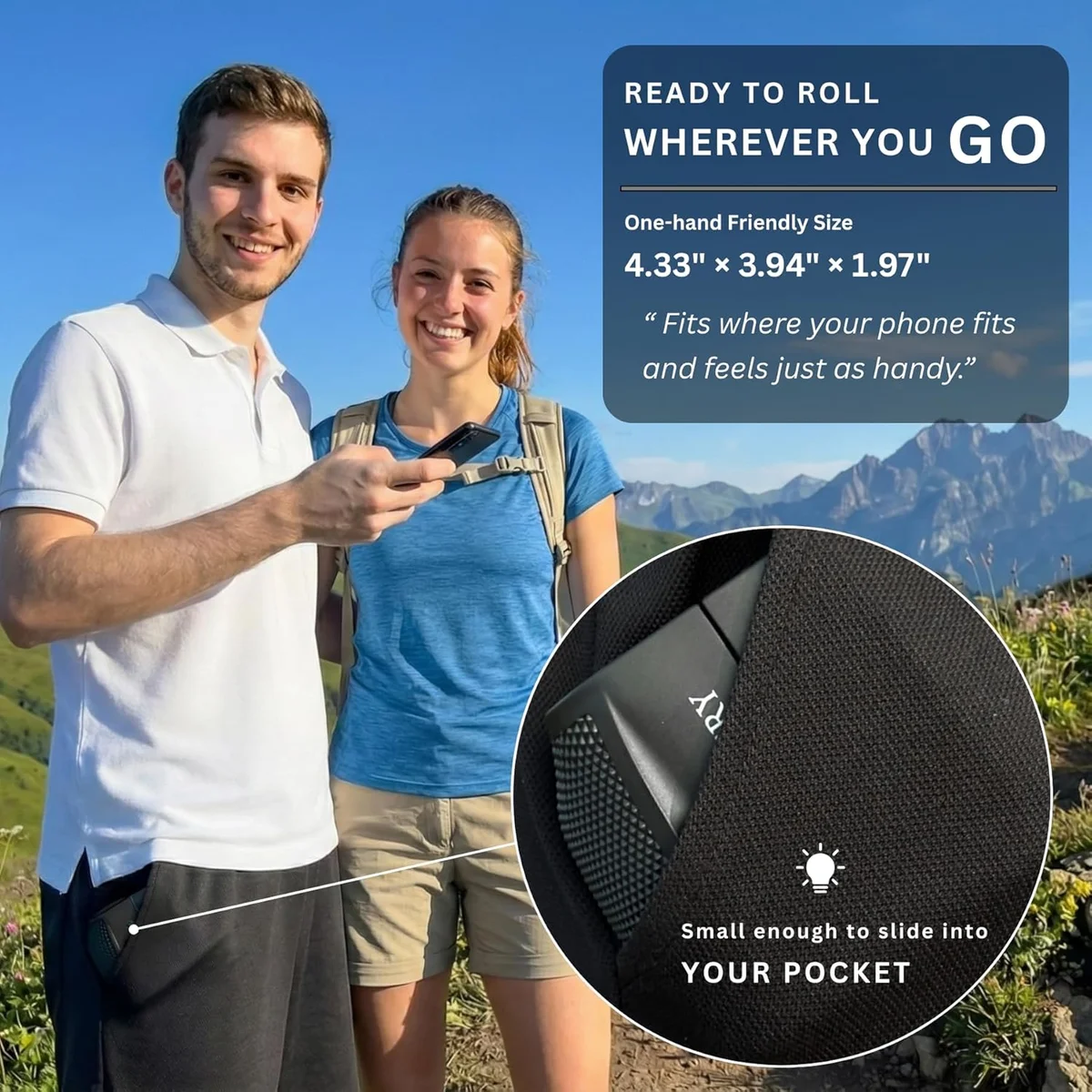 Hontry 10x25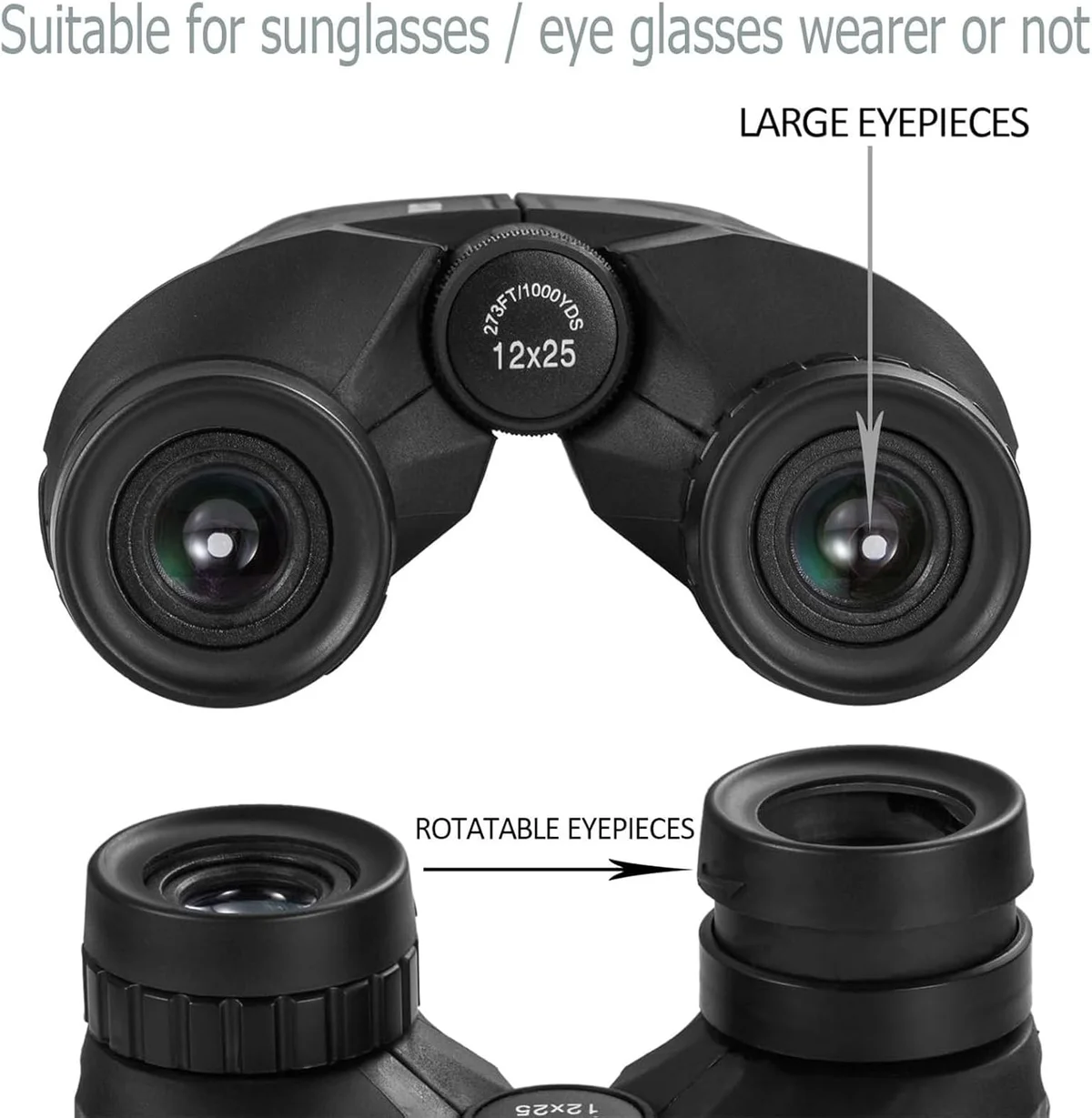
Pick Your Priority: Reach or Price?
Get the Occer 12x25 If:
- Concerts and live events are your primary use — the extra magnification matters
- You want the best image quality available under $40
- Comfort during 2-3 hour viewing sessions matters to you
- You don't wear glasses or can remove them for viewing
- You want BaK-4 glass — a real optical material at a budget price
Get the Hontry 10x25 If:
- Buying for a child — the foldable design and wide IPD range fit small hands and faces
- Gift buying — sub-$30 price, looks good in a stocking or Easter basket
- Maximum packability — the foldable design disappears into any pocket
- Weight is everything — among the lightest binoculars you can buy
- Recycled materials matter to you — GRS certified, 50%+ recycled content
Questions About Budget Pocket Binoculars
Budget compact binoculars generate more confusion per dollar than any other optics category. Here are the questions that come up most often from buyers trying to decide between Amazon's two most popular options.
Are budget compact binoculars worth buying at all?
For casual use — concerts, sporting events, travel, kids exploring — yes. You get functional magnification in a pocket-sized package for less than a dinner out. The mistake is expecting birding-quality optics. Budget compacts are event optics and travel convenience, not observation instruments. Set expectations accordingly and both the Occer and Hontry deliver acceptable performance.
Which compact binocular is better for concerts and live events?
The Occer, despite its flaws. The 12x magnification (even if slightly overstated) brings the stage closer than the Hontry at 10x. The reverse porro prism design feels more natural to hold during long events. And the larger eyepiece makes it easier to align your eyes quickly when the performer moves. Both work for this use case, but the Occer gives you more reach and a slightly more comfortable viewing experience.
Can glasses wearers use either of these binoculars?
The Hontry is essentially unusable with glasses — its 10mm eye relief means you cannot position your eye far enough back to see the full field. You get a narrow tunnel view. The Occer is marginally better but still tight. Neither compact is comfortable for prolonged glasses use. If you wear glasses and need compact binoculars, budget up to the $80-100 range where 14mm+ eye relief models exist.
Is the Occer actually waterproof like it claims?
No. Despite marketing claims, multiple reviewers report water intrusion during heavy rain. Light splashes are fine, but do not submerge it or rely on it in a downpour. The Hontry makes no waterproof claims on the 10x25 model, which is at least honest. Treat both as fair-weather optics and bring a ziplock bag if rain is possible.
Are the reviews for these binoculars trustworthy?
Both products have massive review volumes — 32,900 for the Occer and 24,000 for the Hontry — but ReviewMeta flags 11% of Occer reviews as potentially unnatural. The Hontry has Amazon Transparency verification, which confirms product authenticity but not review quality. Read the 3-star and 4-star reviews for the most accurate picture of what to expect from either product.
Would either of these work as a gift for a kid?
The Hontry is the better kids gift. Lighter weight, foldable design, adjustable IPD that accommodates smaller faces (60mm minimum), and a price point where damage or loss is not financially painful. The recycled materials angle adds a teachable moment. The Occer works too but is slightly heavier and more fragile in the eyecup area.
Track Both Products
We'll email you if either price drops or availability changes.
Only when something changes. Unsubscribe anytime.