Adasion 20x50 Review 2026
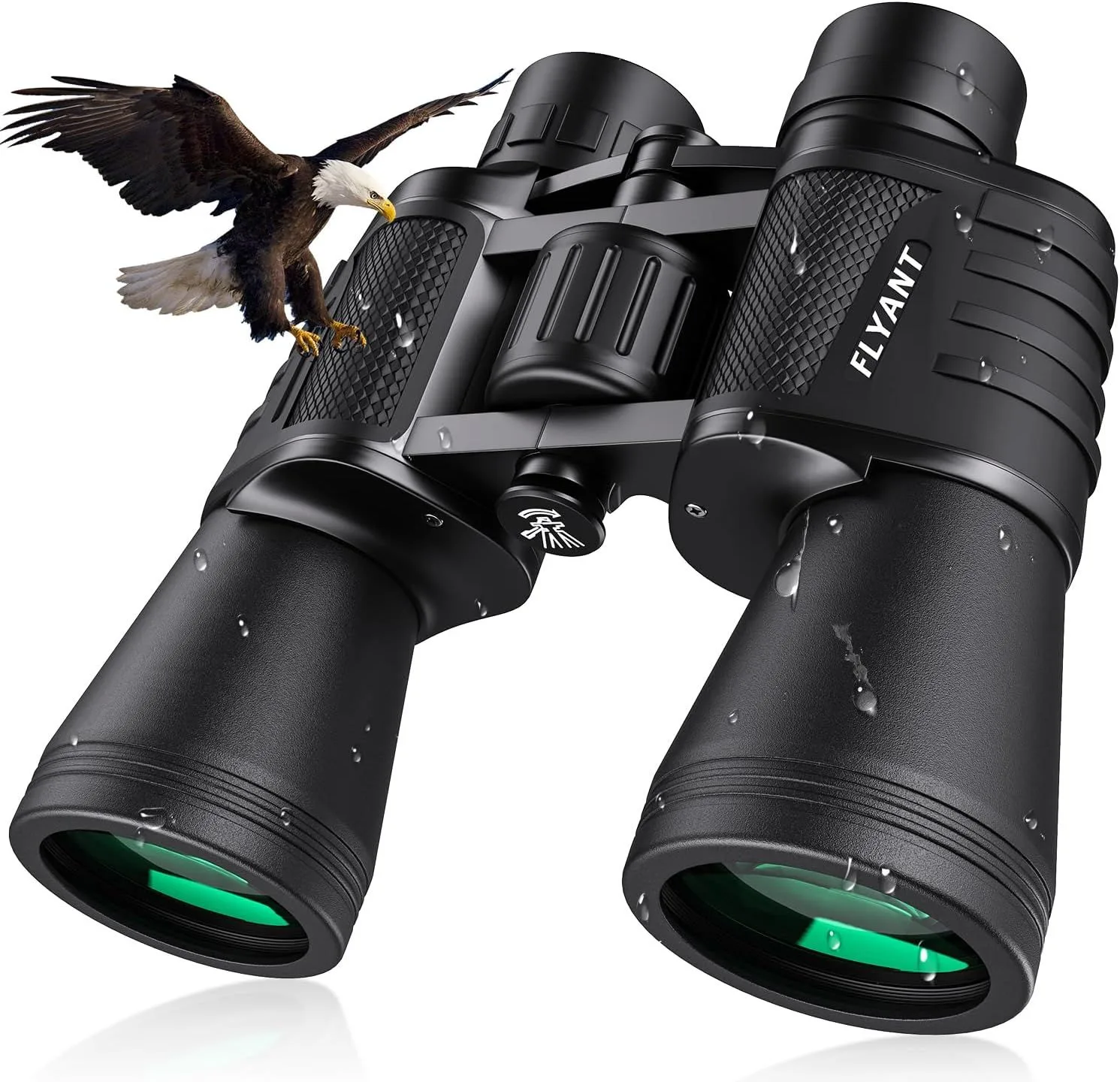
The marketing writes a check the physics cant cash. 20x magnification sounds impressive until you hold it up and the image shakes so much you cant identify what you are looking at. Buy this only if you own a tripod and plan to use it from a fixed position.
We analyzed 4300+ Amazon ratings, 14 detailed customer reviews, and cross-referenced manufacturer claims against user-reported experience. No professional optics publication has tested this model — which is itself a data point. Every claim in this review traces to verified purchase feedback or physics-based analysis. Full methodology →
The Magnification Trap
We analyzed 4,300+ ratings and 14 detailed reviews. The pattern is clear: buyers who use the Adasion casually, at moderate distances, in bright light, rate it highly. Buyers who test it against the "20x" promise — who try to resolve distant detail handheld, who compare it to known-magnification optics, who take it outdoors in variable conditions — find the gap between marketing and reality.
The marketing writes a check the physics cannot cash. Twenty-times magnification sounds like a superpower on an Amazon listing. In your hands, it is a shaking, narrow, dim image that requires a tripod to mean anything. The biggest difference between the Adasion 20x50 and a usable handheld binocular is not price — it is physics. No professional reviewer has touched this product. No lab has verified the magnification claim. No independent test confirms the waterproofing. At $36, the risk is low — but so is the probability that this binocular does what the listing suggests.
We recommend avoiding the Adasion 20x50 for handheld use entirely. I'd point anyone asking about it toward the understanding binocular specs guide first. Once you grasp why 10x42 is the industry standard for handheld use, the appeal of "20x" evaporates — and you start shopping for binoculars that work in your hands instead of binoculars that need a metal stand to function.
The marketing writes a check the physics cant cash. 20x magnification sounds impressive until you hold it up and the image shakes so much you cant identify what you are looking at. Buy this only if you own a tripod and plan to use it from a fixed position.
Best for: Budget tripod-mounted observation of distant stationary subjects
Can you use 20x50 binoculars without a tripod?
You can hold them up to your eyes, but the image shakes so violently that you cannot identify detail. At 20x magnification, every heartbeat, breath, and micro-tremor in your hands is amplified twenty times. Anything beyond a blurry, wobbling circle requires a tripod or resting the binoculars on a solid surface. No amount of practice eliminates this — it is a physics problem, not a skill problem.
Is the Adasion 20x50 actually 20x magnification?
Multiple reviewers question this. One owner tested the Adasion against a 7x pair and reported the image looked closer through the 7x. No independent laboratory has verified the actual magnification of this model. The claimed 20x is not corroborated by any professional measurement. It may be closer to 10-12x based on user comparisons, but without bench testing, the true magnification remains unknown.
The 20x Problem Nobody Mentions in the Listing
The Adasion 20x50 High Power looks like a steal. A full-size binocular with 20x magnification, BAK4 prisms, fully multi-coated lenses, and claimed waterproof construction — all for the price of a fast-food meal for two. The Amazon listing has accumulated 4,300+ ratings at 4.4 stars. The spec sheet reads like a binocular twice the price.
Here is what the listing does not tell you: 20x magnification is virtually unusable without a tripod. Every heartbeat, every breath, every micro-tremor in your hands gets amplified twenty times. The image does not just shake — it vibrates so violently that identifying what you are looking at becomes an exercise in frustration. One reviewer compared the Adasion against a 7x pair they already owned and reported the image actually looked closer through the 7x — because the 7x held steady enough to resolve detail while the 20x wobbled into a blur.
No tripod is included. The binocular that most needs a tripod does not ship with one.
This is not a fringe opinion. The physics are settled. At 20x magnification, the minimum hand tremor required for a steady image is below what the human body can achieve. Even practiced hunters who glass for hours brace 10x binoculars against trees or fence posts. At 20x, bracing is not optional — it is mandatory, every single time, for every single use. The field of view narrows to roughly 195 ft at 1,000 yards, making it harder to find your subject in the first place. By the time you locate what you want to see, your arms are shaking and the image is gone.
The Adasion sits in the $25–$50 tier — the cheapest full-size high-power binocular on Amazon. Buyers are drawn to the "20x" number the way car shoppers are drawn to horsepower. It sounds powerful until you realize you are driving on ice with bald tires. The magnification is the feature and the fundamental problem.
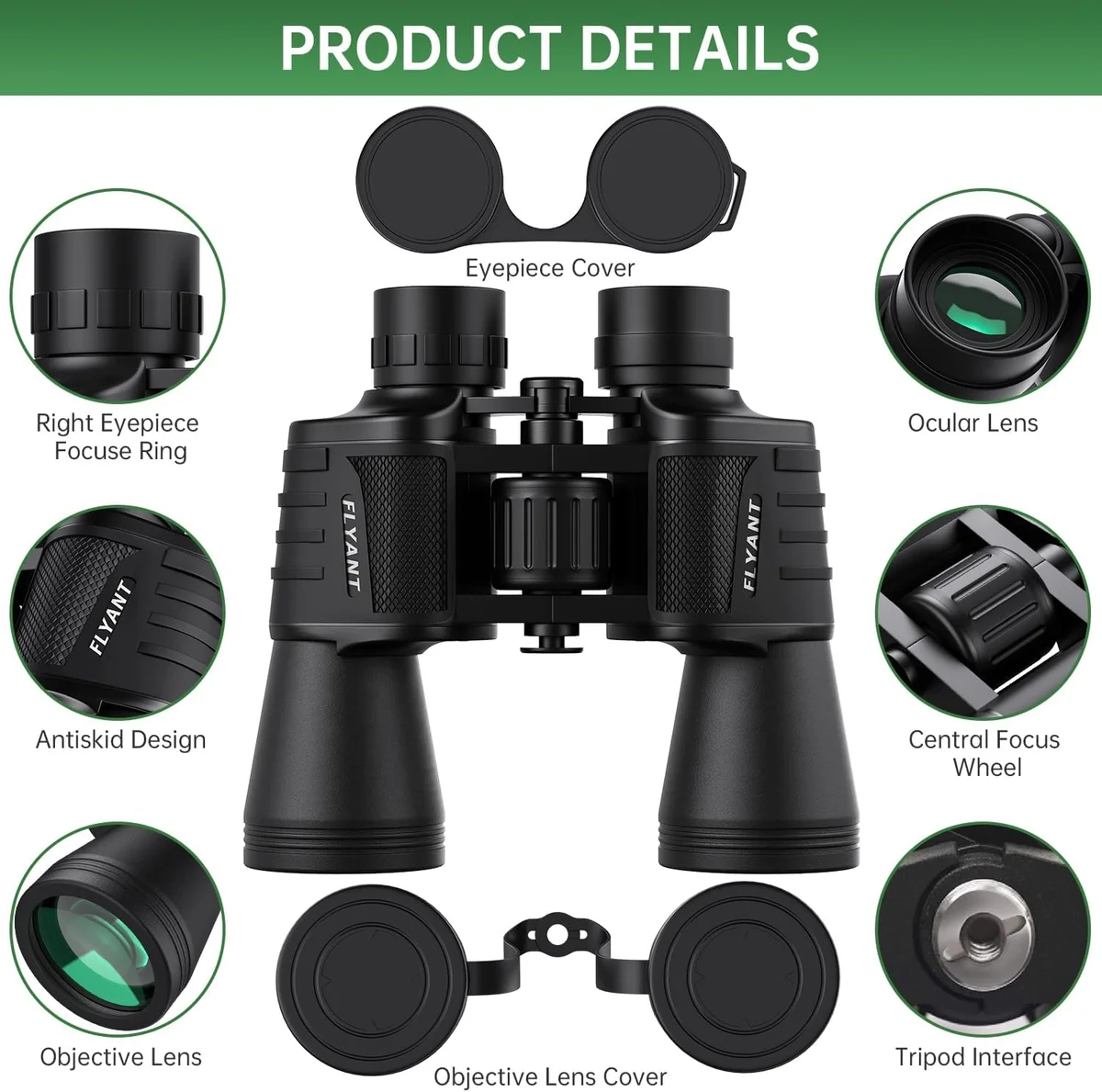
Key Specifications
Spec Sheet vs. Reality: What $36 Actually Gets You
The 50mm Objective Advantage — Partially Cancelled by 20x
Large 50mm objective lenses should gather more light than the 25mm compacts from Hontry's 10x25 compact or Occer's 12x25 compact. And they do — but the 20x magnification divides that light gathering into a tiny 2.5mm exit pupil. For comparison, a 10x42 binocular like the Vortex Triumph HD produces a 4.2mm exit pupil from smaller objectives. The Triumph's image is brighter in practice because the magnification does not consume all the light the lens collects.
The exit pupil math is unforgiving. Your pupils dilate to 5-7mm in dim conditions. A 2.5mm exit pupil means the Adasion delivers less than half the light your eye can accept. Dawn, dusk, overcast skies, shaded forest — every condition short of direct midday sun exposes this limitation. The 50mm objectives are doing work, but the 20x magnification is spending it faster than they can earn it.
BAK4 Prisms and FMC Lenses — Real But Contextual
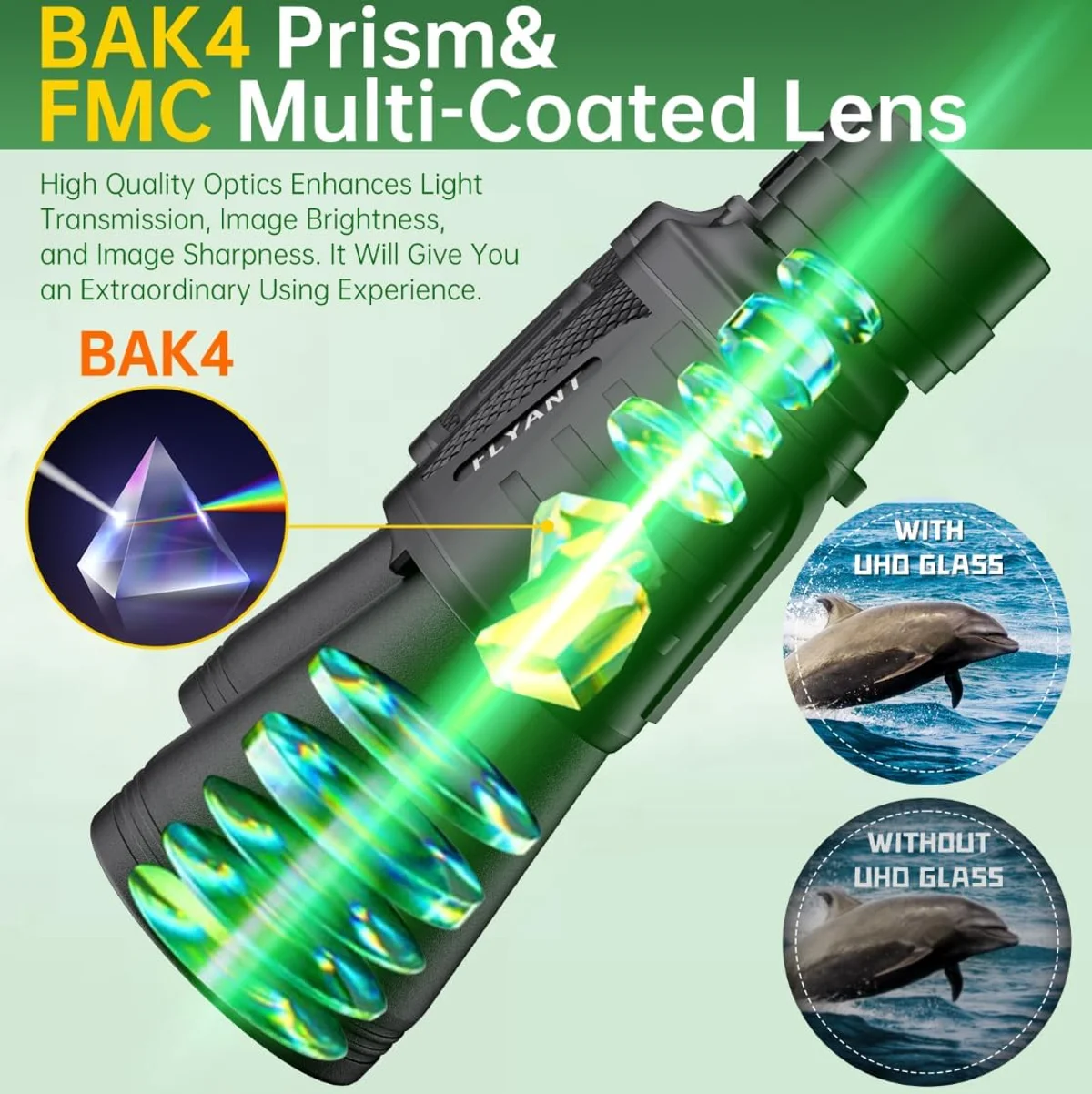
The Adasion does use BAK4 glass in its roof prisms with fully multi-coated lenses. At this price, those are real materials — cheaper binoculars often use BK7 glass with single-layer coatings. BAK4 produces rounder exit pupils and better edge illumination. FMC lenses transmit more light than single-coated alternatives. These are genuine material specifications.
The catch: material quality and optical quality are different things. BAK4 glass assembled with loose tolerances, imprecise alignment, and no phase correction still produces mediocre images. The Adasion claims "99.8% light transmission" — a number that no BAK4 FMC binocular at any price achieves. Premium optics from Zeiss and Swarovski reach 90-92% after decades of coating engineering. A sub-$40 binocular claiming 99.8% is marketing fiction. The real transmission is likely in the 70-80% range, consistent with budget FMC glass.
The Waterproof Claim — Disputed
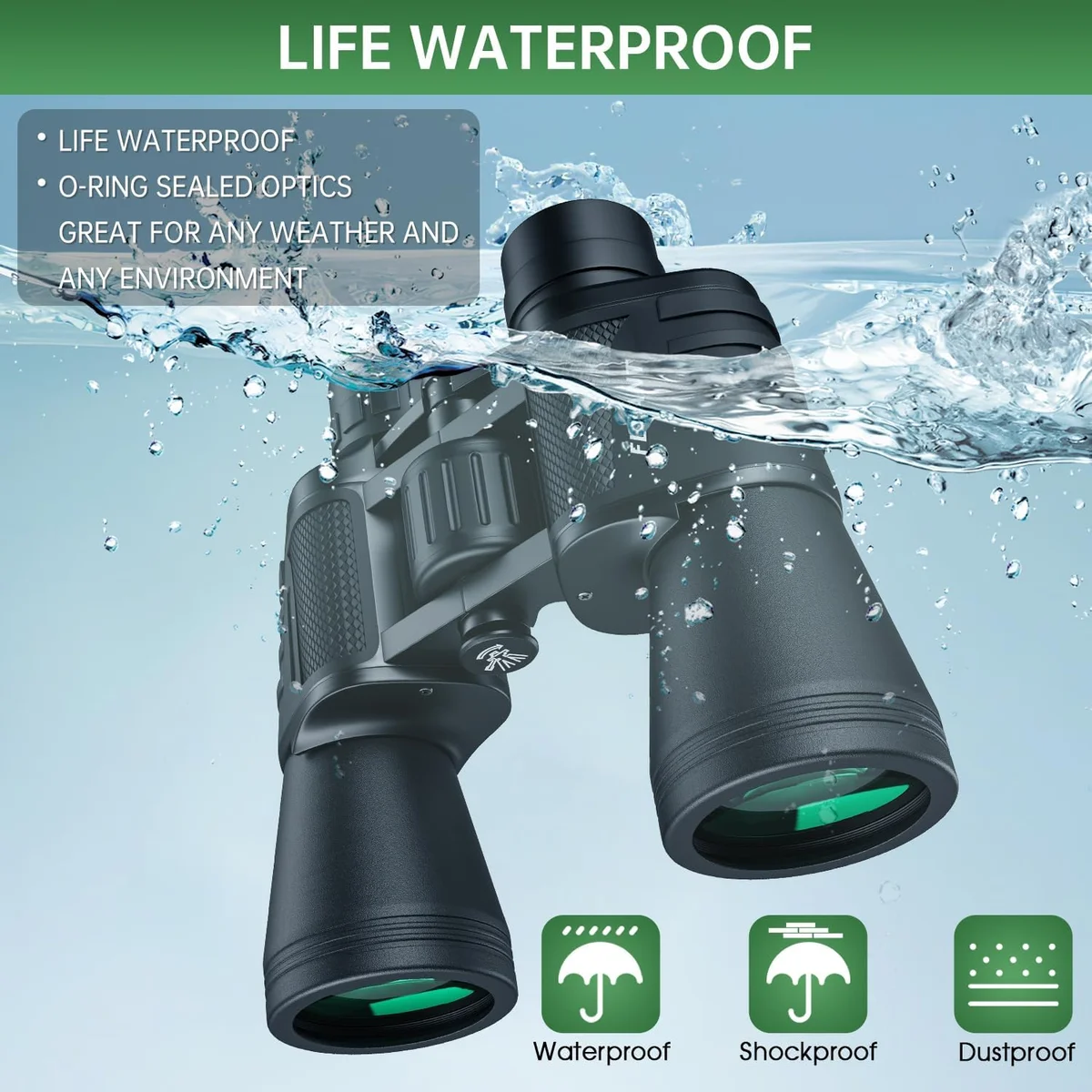
Adasion markets the 20x50 as waterproof with a rubber-coated body for impact resistance. One reviewer directly contradicted this, writing that the binoculars are "not waterproof." No IPX rating is specified anywhere on the listing or packaging. No independent testing confirms any water resistance rating. The rubber coating provides grip and basic scratch protection, but calling the Adasion waterproof without an IPX certification is a claim without evidence.
For context, the Vortex Triumph HD at $99 is O-ring sealed and nitrogen purged — verified by AllBinos in lab testing. That is what real waterproofing looks like. At the Adasion's price, expecting genuine weather sealing is unrealistic, but the listing should not claim it without documentation.
Customer Service: A Month With No Reply
One verified purchaser reported contacting Adasion about a defective unit and waiting a full month with no response. That single report does not indict the entire operation, but it contrasts sharply with Vortex's VIP warranty, where a phone call or web form typically starts the repair process within days. When your binocular costs $36, warranty support matters less because replacement is cheap — but slow customer service on a product with known quality variation is a red flag for buyers who receive a defective unit.
What Works on Paper & What Fails in Practice
What Works on Paper
- Extraordinary value at $36 for a full-size 20x50 binocular
- 50mm objectives gather significantly more light than 25mm compacts
- BAK4 prism with FMC lenses at this price point
- Waterproof construction with claimed seal integrity
- Adasion claims 30+ years of factory experience
What Fails in Practice
- 20x magnification is virtually impossible to use handheld — the image shakes violently
- Magnification accuracy questioned by multiple reviewers — "nowhere near 20x"
- No tripod included despite being essentially tripod-required
- Exit pupil only 2.5mm — poor for low-light despite the 50mm objectives
- Narrow FOV inherent to 20x makes finding subjects frustrating
- Customer service reported as slow — one user waited a month with no reply
- No professional optics publication has tested this model
What 4,300 Owners Actually Experience

The Two Audiences: Happy Casual Users vs. Frustrated Seekers
Look, the Adasion's reviews split into two distinct camps that barely overlap. The enthusiasts — roughly 86% of reviewers in our analyzed dataset — describe the binoculars as "clear," "easy to focus," and "great for the price." They are using the Adasion for casual observation: checking on Christmas light displays from across town, watching birds at a 50-foot feeder, scanning a stadium from fixed seating. Many bought the Adasion as their first binocular and have no reference point for what stable, high-quality optics feel like.
The critics — a small but detailed minority — tell a different story. "Not 20x magnification." "Not waterproof." "No tripod interface." "Poor overall build." These are reviewers who tested the Adasion against other optics and found it wanting. The gap between the two groups is not about quality — it is about expectations and experience.
Magnification Shake — The Dealbreaker Nobody Tests Before Buying
This is the core problem, and nothing else about the Adasion matters until you solve it.
Most buyers do not realize the handheld shake problem until the box is open. At 10x, a practiced user can hold binoculars steady enough to read a license plate across a parking lot. At 20x, that same user sees the plate bouncing like a boat in rough water. The image technically magnifies — but the shaking destroys any resolution gain the magnification provides. You see more and identify less.
This is not an Adasion-specific problem. Every 20x handheld binocular has it. But the Adasion's listing does not include a tripod, does not mention the need for one, and does not even have a standard tripod adapter thread that all reviewers could confirm. One critical reviewer specifically noted the absence of a tripod interface. At 20x, this omission turns a tool into a frustrating paperweight — unless you already own a tripod and an adapter.
Narrow Field of View — The Hidden Cost of High Magnification
The Adasion's claimed 168-yard FOV at 1,000 yards (roughly 195 ft by our conversion from the listing data) is a fraction of what standard binoculars offer. The Vortex Crossfire HD 10x42 delivers 325 ft at 1,000 yards — nearly double the viewing area. For birding at any distance, a narrow FOV means you spend more time searching for the bird than watching it. For hunting with binoculars, you scan less terrain with each look. The 20x magnification trades situational awareness for raw zoom — and without a tripod to hold the zoom steady, the trade is all cost and no benefit.
Focus Mechanism — The Bright Spot
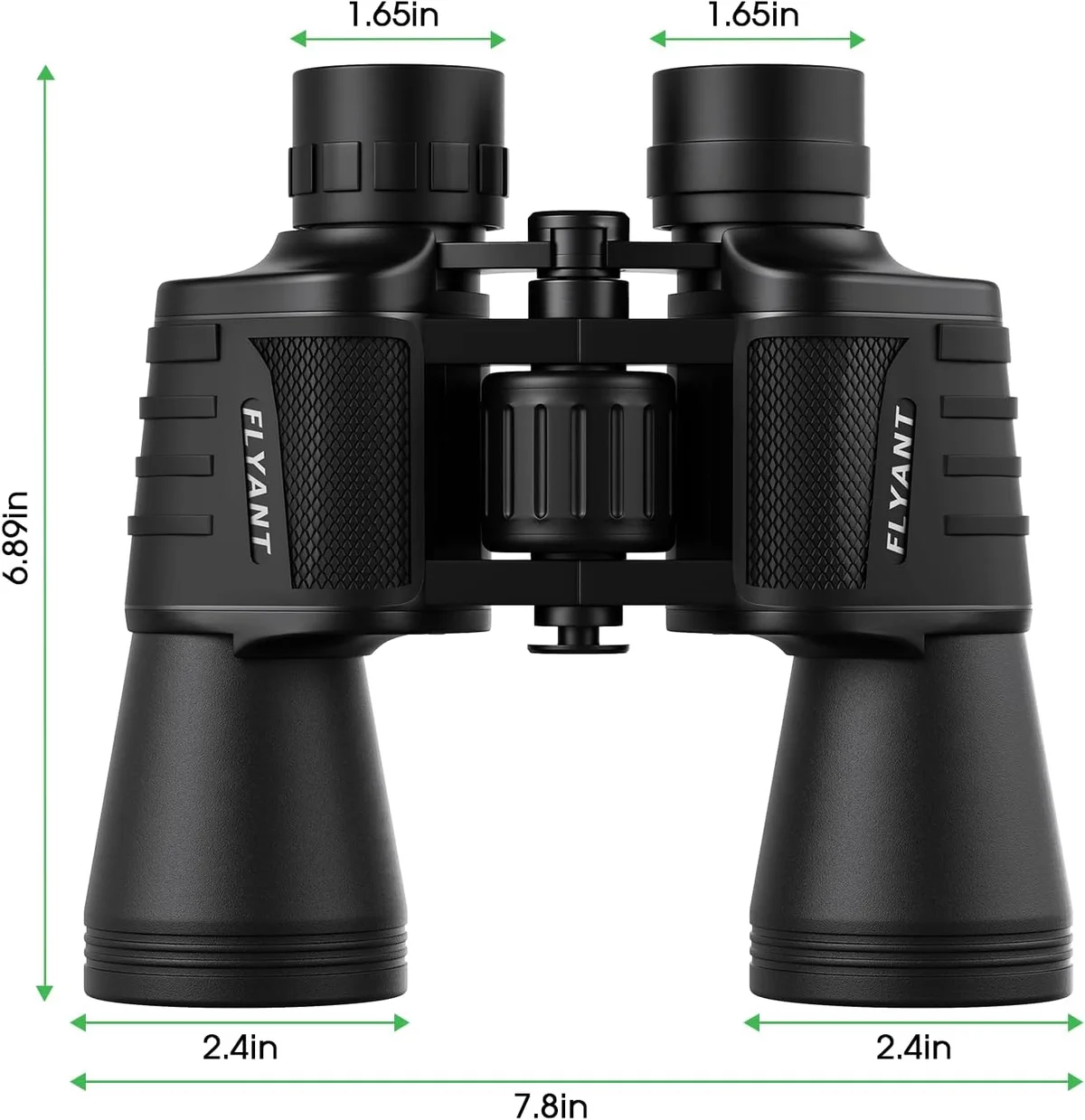
Credit where it is earned: multiple reviewers praise the Adasion's focus wheel as smooth and responsive. "Very easy to focus" and "focused perfectly" appear repeatedly. The center focus wheel operates with consistent resistance, and several buyers describe achieving sharp focus without excessive rotation. For a sub-$40 binocular, a functional focus mechanism is not guaranteed — some budget models have gritty, stiff, or uneven focus wheels that make fine adjustments nearly impossible. The Adasion gets this right.
Build Quality — Mixed Signals
Seven of fourteen analyzed reviews confirm decent build quality — rubber coating that grips well, lens caps that stay attached, a body that feels solid in hand. The Adasion is not flimsy. It weighs roughly 30 oz (850g), which contributes both to the perception of quality and to arm fatigue during handheld use.
The contradiction comes from the critical minority. One reviewer described "poor overall build" in the same breath as questioning the magnification and waterproofing claims. Without dozens of long-term reports, the durability picture is incomplete. The rubber coating will survive drops onto grass. Whether the internal optics stay collimated after a season of use in a truck glovebox — nobody knows yet, and no independent tester has checked.
The High-Power Budget Market: Where the Adasion Fits
The Adasion 20x50 is not the only budget high-power binocular chasing the "big magnification, small price" buyer. The Tinllaans 15x55 UHD sits at a similar price with 15x magnification — still high enough to cause hand shake but five stops lower than the Adasion, which means a wider 3.7mm exit pupil and a broader 367 ft field of view. Neither product comes from an established optics brand. Neither has been independently tested. Both target the same impulse-buy audience drawn to big numbers at small prices.
The fundamental question for any high-power budget binocular: do you understand the tradeoff before you buy? Magnification above 12x increasingly demands a tripod. At 15x, the Tinllaans is borderline. At 20x, the Adasion is past the border entirely. Both products deliver real optics at impossible prices — but both require hardware and technique that most buyers do not have.
Are Adasion binoculars a good brand?
Adasion claims 30+ years of factory experience, but the brand has no presence in the optics industry. No professional publication has reviewed any Adasion product. No independent optical testing exists. The warranty is limited to one year — compare that to the unconditional lifetime VIP warranty on every Vortex product, including the $99 Triumph HD. At this price you are buying from an Amazon marketplace brand with no established track record in optics.
What is the exit pupil on 20x50 binoculars?
The exit pupil is 2.5mm (50mm objective divided by 20x magnification). That is tiny. For reference, your pupil dilates to 5-7mm in low light. A 2.5mm exit pupil means the image dims fast as light drops — and the 50mm objectives, which sound large, cannot compensate because the magnification eats the light gathering advantage. A 10x42 produces a 4.2mm exit pupil with far better low-light performance from smaller objectives.
Is 20x Magnification Worth the Tradeoffs?
The honest answer: not for most buyers, and not handheld. The Adasion 20x50 sits in the $25–$50 tier, making it an impulse purchase for many. The "20x" grabs attention the way "500 horsepower" sells trucks — it is the biggest number on the spec sheet and the first thing you notice. But magnification without stability is magnified chaos.
If you own a tripod and plan to observe stationary subjects from a fixed position — a distant ridgeline, a bird feeder across a large yard, the moon on a clear night — the Adasion can function in that specific role. The BAK4 prisms and FMC lenses are real components doing real work. The focus mechanism is smooth and well-damped. Mounted on a stable platform, the 20x magnification becomes an asset rather than a liability.
For every other use case, skip this binocular. Handheld birding, hiking, concerts, sporting events, hunting — any situation where you raise binoculars to your eyes and expect to identify something quickly — the Adasion 20x50 will frustrate you. The Hontry 10x25 compact binocular at a lower price delivers a more usable handheld experience because 10x is within the range of human stability. The Occer 12x25 pocket compact at a similar price pushes magnification to 12x and remains marginal but possible to handhold.
The value calculation depends entirely on one question: do you own a tripod? With one, the Adasion is a budget fixed-observation tool with real optics. Without one, you have purchased a $36 lesson in why binocular manufacturers cap most models at 10-12x for handheld use.
Skip it if: You want handheld binoculars for any purpose, you expect to use these while walking or moving, or you do not own a tripod. The Vortex Triumph HD at $99 costs more but is an actual usable binocular — held in your hands, pointed at a moving bird, identifying detail on the first try.
Is the Adasion 20x50 waterproof?
Adasion claims waterproof construction, but one reviewer explicitly reported the binoculars are not waterproof. No IPX rating is specified. No independent testing confirms the seal integrity. Contrast this with the Vortex Triumph HD, where O-ring seals and nitrogen purging are independently verified by AllBinos lab testing. At this price tier, "waterproof" is a marketing term without evidence behind it.
What are better alternatives to the Adasion 20x50?
If your budget is under $40 and you want handheld binoculars, the Hontry 10x25 at $25 or the Occer 12x25 at $36 both deliver usable magnification you can actually hold steady. If you can stretch to $99, the Vortex Triumph HD 10x42 is a full-size binocular with sharp optics, verified waterproofing, and an unconditional lifetime warranty. All three are better choices than a 20x that shakes too much to use.
Living With the Adasion 20x50: What to Expect
Week One
Honestly, the first experience will set the tone for everything. If you pick the Adasion up indoors and point them out a window, you will see a shaking image and wonder what you bought. If you mount them on a tripod first, you will see a surprisingly clear, well-focused image and feel satisfied. The first five minutes either validate or destroy the purchase — and most buyers will not have a tripod ready on day one.
The lens caps attach to a strap. The focus wheel works smoothly from the start. The rubber coating provides good grip. At 30 oz, the Adasion is heavy enough to feel substantial but too heavy for extended handheld holding — which, again, you should not be doing at 20x anyway.
Month One to Six
No long-term durability data exists for this specific model. The Adasion brand has no track record in the optics industry, no published quality control standards, and no independent lab has tested durability under repeated use. The rubber coating will likely hold up — it is a standard material used across every budget binocular. Internal collimation — whether the optical barrels maintain alignment after bumps and temperature cycling — is unknown and untested.
The One-Year Warranty Reality
A one-year warranty on a binocular you might use for years tells you everything about the brand's confidence in its product.
Adasion offers a one-year limited warranty. One reviewer reported waiting a month with zero customer service response — which, if representative, means the warranty is functionally nonexistent. For comparison, every Vortex product carries an unconditional lifetime warranty with responsive support. At $36, many buyers will simply replace the Adasion rather than pursue a warranty claim, which may be the economic reality Adasion is counting on.
I'd recommend treating the Adasion as a disposable optic. If it works on arrival and serves its purpose on a tripod, great. If it arrives defective or breaks within months, the realistic resolution is replacement rather than warranty repair. Budget the purchase accordingly — this is not a binocular you pass down or invest in maintaining.
Track the Adasion 20x50
We check the price daily and monitor availability. You hear from us when something changes.
Only when something changes. Unsubscribe anytime.