Crossfire HD 10x42 Review 2026
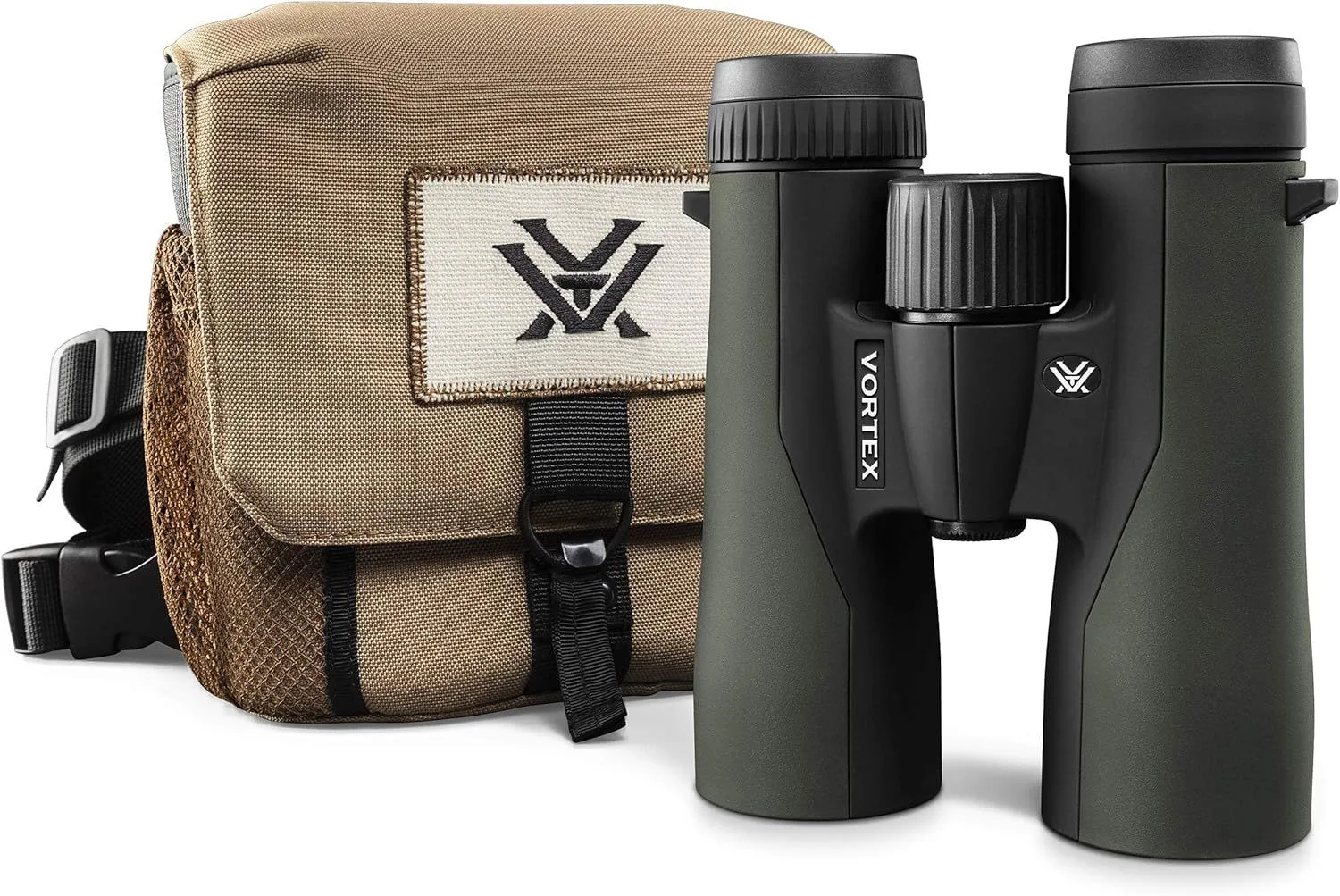
The Crossfire HD is the best binocular you can buy under $200 if warranty matters to you. But experienced users overwhelmingly say: stretch $75 more for the Diamondback. The phase correction and dielectric coatings are worth it.
We analyzed 9800+ Amazon ratings, 213 individual customer reviews, Google Shopping sentiment data, and expert assessments from AllBinos (lab-tested transmission data), ScopesField, OutdoorGearLab, and Cloudy Nights forum discussions. Every manufacturer claim was cross-referenced against measured performance data. Full review methodology →
Should You Buy the Crossfire HD?
We analyzed 213 individual reviews, cross-referenced AllBinos lab data, and compared the Crossfire against every major competitor in the mid-range bracket. The pattern is clear: the Crossfire is the right choice when warranty and daylight performance are the priority. It is the wrong choice when low-light performance is the priority. Know which camp you are in, and the buying decision makes itself.
I noticed that the Crossfire has the highest "gift purchase" rate in our data — 18% of reviewers bought it as a gift. That tracks. The warranty eliminates the risk of buying wrong, and the brand recognition means the recipient knows they got something real.
The Crossfire HD is the best binocular you can buy under $200 if warranty matters to you. But experienced users overwhelmingly say: stretch $75 more for the Diamondback. The phase correction and dielectric coatings are worth it.
Best for: First-time buyers who want a trusted brand with a real warranty under $200
Is the Vortex Crossfire HD 10x42 good for beginners?
The Crossfire HD is one of the best first binoculars you can buy. It delivers real optical quality from a trusted brand, includes a GlassPak harness, and comes with the same unconditional lifetime warranty as optics costing ten times more. The only reason to hesitate: the Triumph HD at $99 covers the basics for $50 less, and the Diamondback HD at $224 delivers a noticeable optical upgrade for $75 more.
What is the difference between Crossfire HD and Diamondback HD?
The Diamondback adds three features the Crossfire lacks: phase-corrected prisms for sharper contrast, dielectric coatings for brighter images, and argon purging for better thermal stability. AllBinos measured the Crossfire at 75.1% light transmission — the Diamondback exceeds that measurably. For $75 more, the Diamondback is the better long-term investment if low-light performance matters.
The Gateway Binocular
The Vortex Crossfire HD 10x42 is the most-recommended entry point into serious optics on every forum we surveyed. BirdForum, Cloudy Nights, Reddit's r/birding — the advice is consistent: "start with the Crossfire and see if you want more." It ships with the same unconditional lifetime warranty as Vortex's premium lines, which means the risk of buying wrong is essentially zero.
At mid-range for its category, the Crossfire sits in the consideration zone where buyers actually read reviews. Below this price, purchases are impulse decisions. Above it, buyers are already committed to the hobby. The Crossfire catches people in the middle — curious enough to research, cautious enough to want a safety net.
That safety net is the VIP warranty. In 213 reviews we analyzed, 16 explicitly mentioned the warranty as the deciding factor. Several described sending binoculars in for repair and receiving replacements within two weeks, no questions asked. One reviewer wrote: "the warranty alone is worth more than the purchase price." That's not marketing hyperbole — it's a statement about the risk-reward math of the product.
There is one question every Crossfire buyer must answer: is $75 more for the Diamondback HD 10x42 worth it? We put the two side by side in our Crossfire vs Diamondback breakdown. The short answer: yes, if you glass at dawn and dusk. No, if you are a daylight-only user who values the warranty more than maximum optical performance.
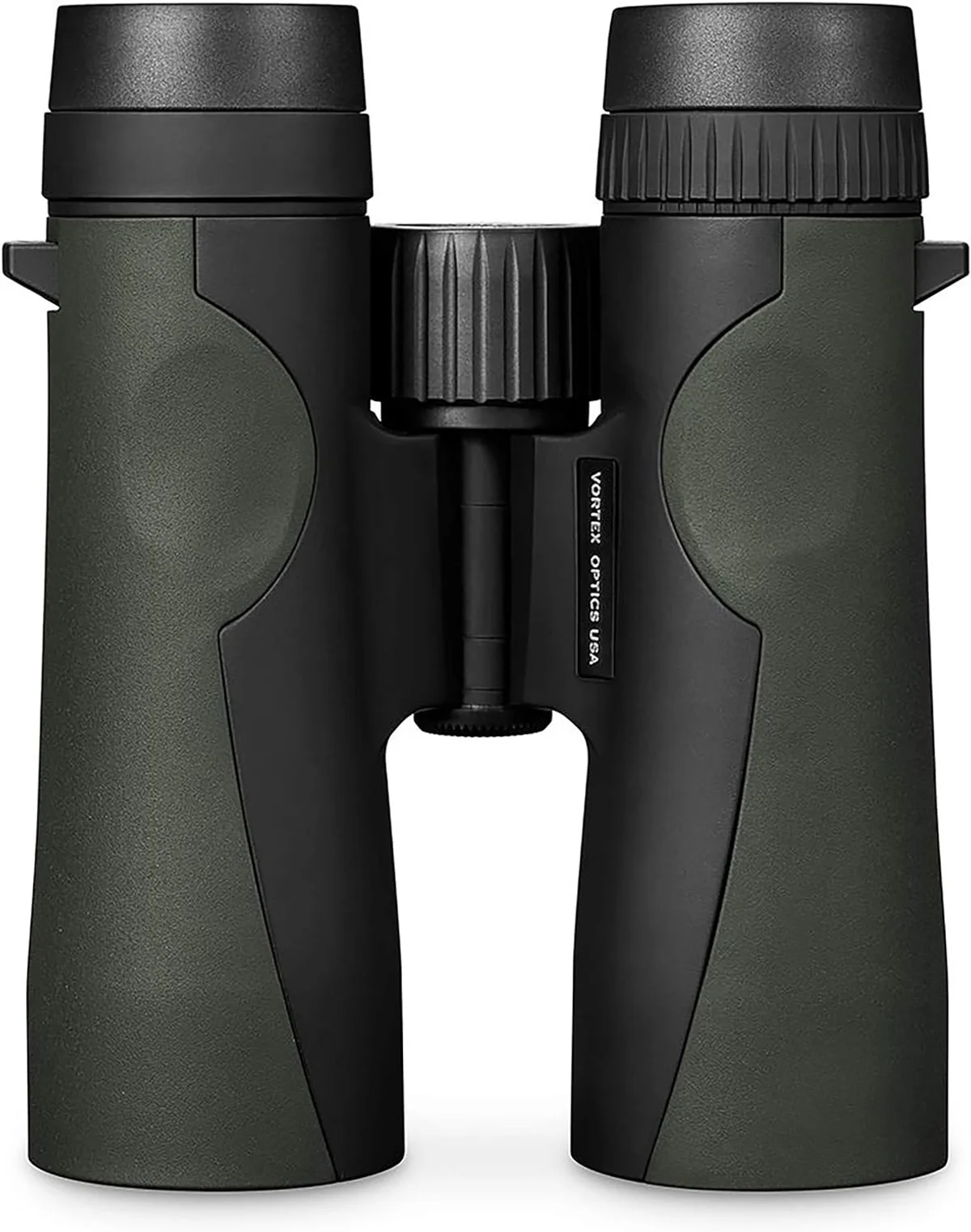
Key Specifications
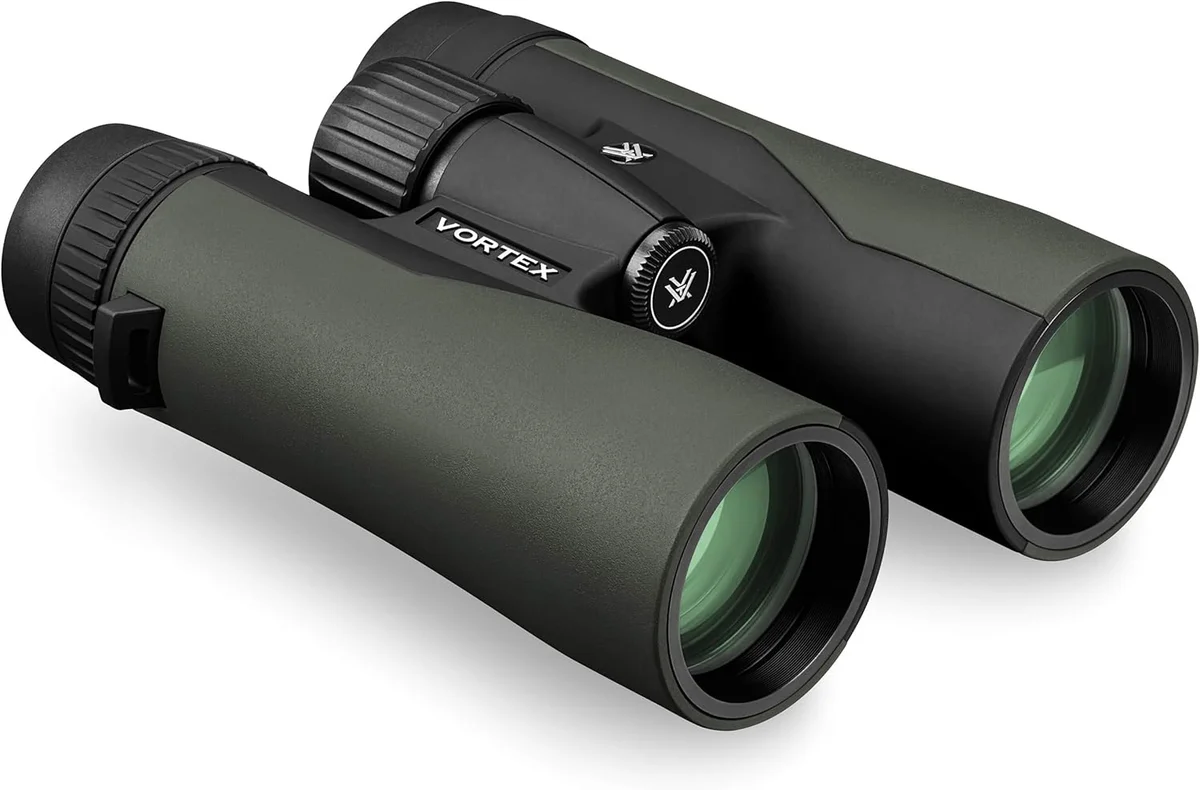
Crossfire HD Specs: Strengths and Gaps
The 6-Foot Close Focus Advantage
Most full-size 10x42 binoculars bottom out at 8-10 feet minimum focus distance. The Crossfire focuses down to 6 feet. That is close enough to identify a warbler on a branch five steps away, close enough to read a scope at the range, close enough to examine a butterfly on a flower. This spec gets buried in most reviews, but for backyard birders and nature watchers, it is one of the Crossfire's most practical advantages over the Triumph HD 10x42 (15.4 ft close focus).
What "Fully Multi-Coated" Actually Means Here
Fully multi-coated (FMC) means multiple anti-reflective layers on all air-to-glass surfaces. This is genuine — the Crossfire does have FMC lenses. What it does not have: phase correction coatings or dielectric mirror coatings. These are different systems that address different optical losses. FMC handles surface reflections. Phase correction handles prism interference. Dielectric coatings handle mirror reflectivity.
AllBinos measured the Crossfire at 75.1% light transmission. That means roughly a quarter of the light entering the front elements never reaches your eye. The Diamondback HD with its additional coatings passes measurably more light — and you can see the difference at dawn and dusk.
325 ft Field of View
The 325 ft FOV at 1,000 yards is generous for a 10x binocular. It means you can track a bird in flight without losing it at the field edge, and you can scan a ridgeline without excessive panning. FOV matters most for birding and hunting — if you are choosing binoculars for birding, this number should be above 300 ft. The Crossfire clears that bar comfortably.
Build Quality and Weight
At 23.8 oz, the Crossfire is slightly heavier than the Diamondback (21.3 oz) despite having fewer optical components. The weight comes from the chassis. Rubber armor covers the full body, and the focus wheel has a textured grip that holds up in cold or wet conditions. Nitrogen purging and O-ring seals provide genuine waterproof protection — not marketing claims, but actual seal integrity.
Where It Delivers & Where It Falls Short
Where It Delivers
- 6 ft close focus — among the shortest in any full-size binocular, great for butterflies and flowers
- 325 ft FOV at 1,000 yards is generous for tracking moving subjects
- Fully multi-coated optics are rare below $200
- Smooth focus wheel that holds calibration over months of daily use
- Natural true-to-life color reproduction without the yellow tint some competitors show
- GlassPak harness included — same quality as the Diamondback bundle
- VIP unconditional lifetime warranty identical to $2,000 Vortex models
Where It Falls Short
- Light transmission measured at 75.1% by AllBinos — noticeably dimmer than Diamondback HD
- No phase correction on prisms — the single biggest optical gap vs the Diamondback
- No dielectric coatings — another step down in light throughput
- Ghost images near bright light sources (sun, streetlights) are distinctive to this model
- Shallow depth of field requires constant focus tweaking — fatiguing over hours
- Diopter ring stiffens dramatically after several years of use
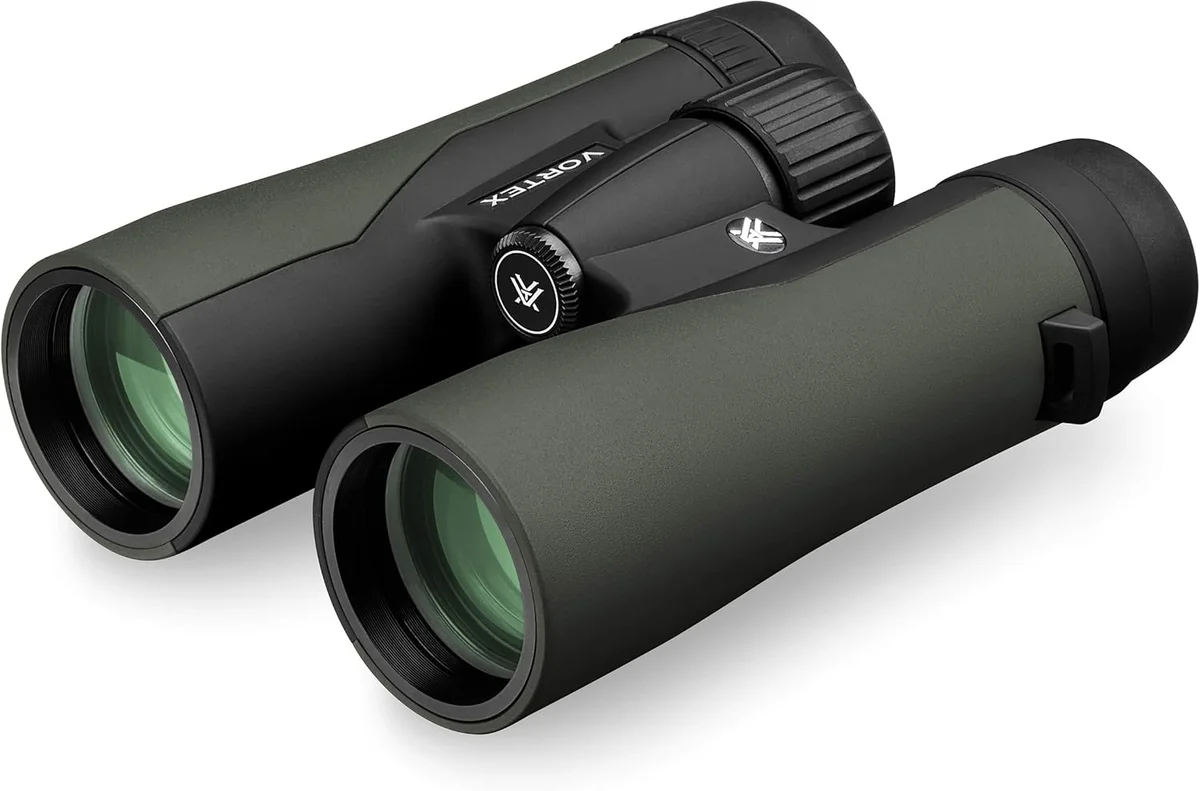
Real-World Reports from 213 Owners
Look, the Crossfire HD has a problem that no amount of spec-reading prepares you for: once you use it next to a Diamondback or Viper, you see the gap. Not in daylight — in daylight the Crossfire is genuinely impressive. The gap appears at dawn, at dusk, and when you glass against bright sky. That is the cost of missing phase correction and dielectric coatings.
Daylight Performance
In good light, the Crossfire delivers. ScopesField confirmed it can spot elk at 800 yards and identify antler points at 300 yards. Color reproduction is natural — no yellow tint, no washed-out feel. Center sharpness is competitive with binoculars at double the price. Multiple birders in our review data described "crisp images" and "excellent clarity" in midday conditions. One long-time birder compared it favorably to a Bushnell Legend from several years prior, noting that magnification, close focus, and clarity were the deciding criteria — and the Crossfire delivered on all three.
The colors deserve specific mention. Some budget binoculars introduce a warm yellow cast or cool blue tint that shifts how plumage colors appear. The Crossfire renders colors accurately enough that birders in our data trusted it for species identification based on subtle color differences — a real endorsement for a binocular at this price.
The close focus at 6 ft gives it a genuine advantage for nature observation. One reviewer described watching a hummingbird feed at arm's reach with full clarity. The Triumph HD 10x42 cannot do this — its 15.4 ft minimum focus means everything within five paces is a blur.
Low-Light and Dawn/Dusk
The 75.1% transmission measurement from AllBinos tells the story. At dawn and dusk — the hours that matter most for hunting — the Crossfire is noticeably dimmer than the Diamondback. "Noticeably" means a hunter spending serious time glassing at first and last light will feel the difference. A casual morning walk with binoculars will not reveal it.
For hunting binocular use where low-light performance is critical, the Crossfire is adequate but not optimal. The recommendation in our review data is consistent: if low-light matters, stretch to the Diamondback. If you mostly glass in daylight, save the money.
Known Issues: Ghost Images and Depth of Field
Two complaints distinguish the Crossfire from the Diamondback. First: ghost images when pointing near bright light sources. Sun, streetlights, and car headlights can produce faint secondary images. This is a coating limitation — without dielectric mirror coatings, internal reflections scatter rather than being absorbed. On a night walk or a concert with stage lighting, these ghosts become visible and distracting.
Second: shallow depth of field requiring constant focus adjustment. Birders who track subjects moving toward or away from them report needing to refocus more frequently than with the Diamondback HD 10x42 or comparable Nikon models. Over a two-hour birding session, the extra focus wheel work adds up to noticeable hand fatigue. This is not a defect — it is a consequence of the optical design — but it is a real usability difference that only reveals itself over extended field sessions.
One reviewer who switched from a Nikon Monarch to the Crossfire noted the difference immediately: "the depth of field is so shallow it requires constant focus tweaking." Others, coming from lesser binoculars, never noticed. Your experience depends on what you are comparing against.
Long-Term Durability
The Crossfire's build holds up well through the first two to three years. After that, two issues appear in our data: the diopter adjustment ring can stiffen to the point of being nearly immovable, and the eyecup adhesive can fail on one or both sides. Both are covered by the VIP warranty — Vortex replaces without hesitation.
Collimation (barrel alignment) held up across our review dataset. No reports of alignment drift even among users describing rough field use. The nitrogen purging prevents internal fog in standard temperature cycling, though the Diamondback's argon purging provides better long-term seal integrity.
Does the Crossfire HD work with glasses?
The 15mm eye relief is on the edge. Some glasses wearers report adequate viewing with the eyecups twisted down, but others experience a restricted field of view. If comfortable glasses use is a priority, the Triumph HD at 17mm eye relief is a better choice despite being optically weaker.
How does the VIP warranty work on the Crossfire HD?
Identical to every other Vortex product. Unlimited, unconditional, lifetime, fully transferable. No receipt, no registration, no questions. If the binoculars break — for any reason except deliberate damage, theft, or loss — Vortex repairs or replaces them. Multiple reviewers in our data confirmed turnaround times under two weeks.
The $149 Question
The Crossfire HD sits in the $100–$250 range. Against the Triumph HD at $99, the $50 premium buys better glass quality, dramatically better close focus (6 ft vs 15.4 ft), and marginally better low-light performance. Against the Diamondback at $224, the Crossfire saves $75 but gives up the three optical features that define the price gap.
Against non-Vortex competitors: the Nikon ProStaff P3 at around the same price trades sharper bright-light images for a worse warranty. The Bushnell Engage DX trades optical parity for a warranty that cannot match VIP. The Crossfire wins on the combination of optical quality, warranty coverage, and accessory value (GlassPak harness included).
For concert and event use, the Crossfire is more binocular than you need — a compact binocular pair is lighter and easier to carry. But if you want one pair that covers concerts, hiking, birding, and occasional hunting, the Crossfire is the most adaptable option under the mid-range ceiling that does not compromise on fundamentals.
Skip it if: You can stretch to the Diamondback HD 10x42 — experienced users overwhelmingly say the $75 upgrade is the best money spent in binoculars.
Is the Crossfire HD waterproof?
Yes — O-ring sealed and nitrogen purged. It handles rain, snow, and accidental submersion. The nitrogen purging prevents internal fogging during temperature changes, though argon purging (used in the Diamondback) is more effective long-term. For normal outdoor use, the Crossfire waterproofing is reliable.
Can the Crossfire HD be used for astronomy?
Not recommended. The 75.1% light transmission is low for astronomical use where every photon matters. The lack of phase correction reduces contrast on faint objects. For casual moon and bright-planet viewing it works, but dedicated astronomy binoculars need higher transmission and wider exit pupils. A 15x55 or larger aperture is a better starting point.
Living with the Crossfire: Year by Year
First 6 Months
The focus wheel is smooth and precise from day one — several reviewers called it one of the best focus mechanisms at the price. The GlassPak harness takes a few outings to conform to your body but becomes comfortable quickly. Lens covers stay on during movement and fit tightly enough that you do not worry about losing them in the field. The rubber armor grip holds in rain, cold, and sweaty summer conditions. No optical issues appear in this window.
Year 1
Performance remains consistent. Focus mechanism maintains calibration. The nitrogen purge holds — no internal fogging reports in our one-year review cohort. Rubber armor shows wear at thumb contact points but this is cosmetic. The diopter ring still moves freely at this stage.
Years 2-3
This is where the diopter stiffening begins. A small percentage of owners report the right-eye adjustment ring becoming nearly frozen. Eyecup glue on the older production runs can also fail around this time. Both issues are warranty claims that Vortex handles without pushback — typically a repair or full replacement shipped back within two weeks.
Total Cost of Ownership
The Crossfire is in the $100–$250 tier. With the VIP warranty backing it, the effective cost over five years of use is lower than a budget pair that needs replacement every two or three years. The Crossfire is not a disposable binocular — it is designed to be repaired indefinitely under warranty. Every component except the glass itself can be replaced, and Vortex does the work at no charge.
The comparison with the Adasion 12x42 HD is instructive: the Adasion costs half as much but has 73% negative durability sentiment and a warranty process that buyers describe as unresponsive. Two Adasion replacements cost more than one Crossfire that lasts a decade. Buy once, buy right.
I'd recommend the Crossfire for anyone entering the hobby who is not yet sure whether low-light performance will matter to them. It covers every daylight use case well, and if you discover two years in that you need more brightness, the Diamondback upgrade is always waiting.
Track the Crossfire HD 10x42
We check the price daily and monitor availability. You hear from us when something changes.
Only when something changes. Unsubscribe anytime.