Crossfire HD 12x50 Review 2026
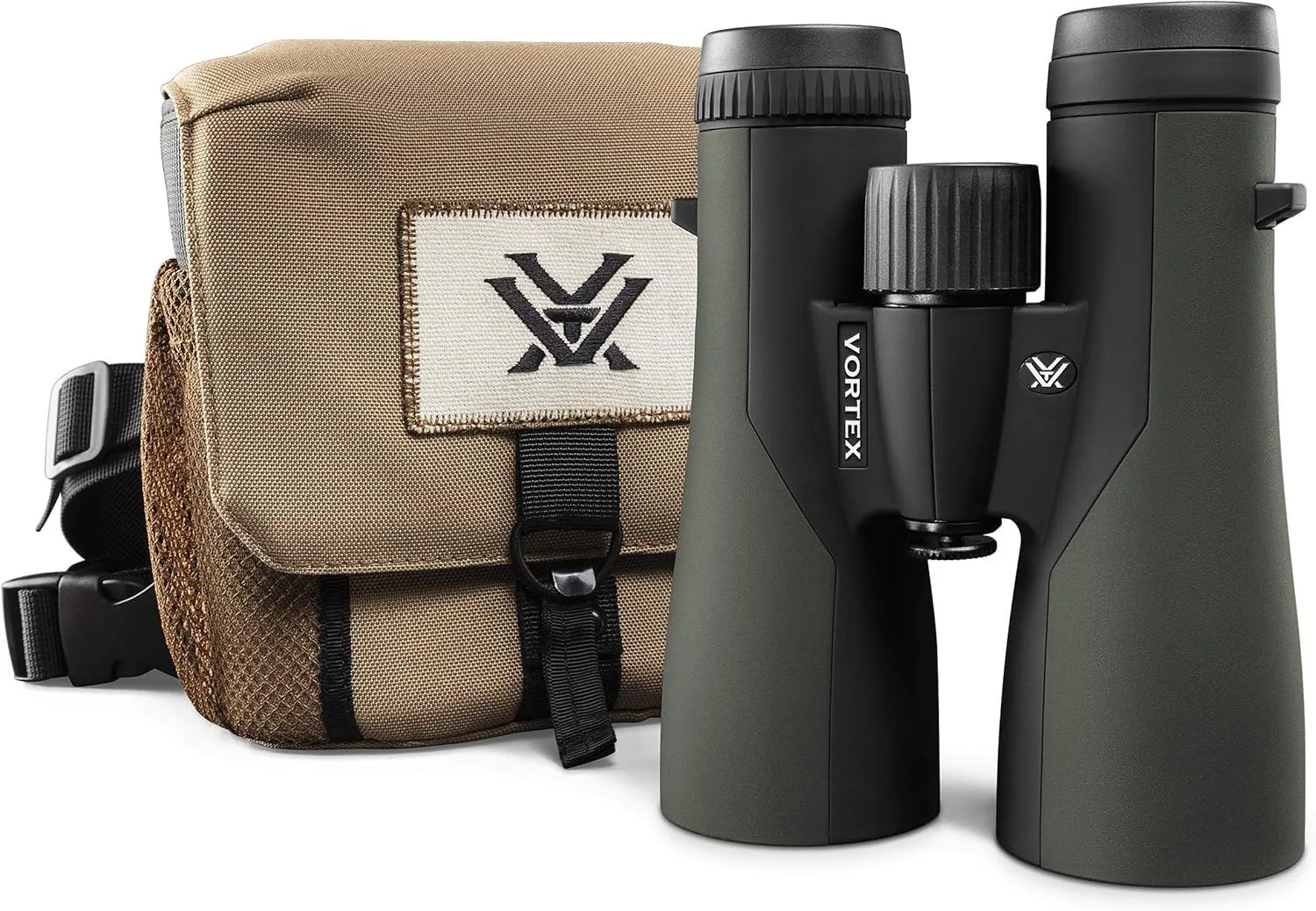
Most people are better served by the 10x42 for $30 less. The 12x50 only makes sense if you glass from a fixed position — treestands, blinds, or with a tripod. The extra magnification is real, but the weight and shake penalty is steep.
This review draws from 9800+ Amazon ratings, 513 individually analyzed customer reviews, Google Shopping sentiment data, expert assessments from AllBinos (lab-tested transmission and collimation data), Optics Planet, and B&H Photo user reports. We cross-referenced every manufacturer claim against real owner data and lab measurements. Full methodology →
Who Should Actually Buy This?
We analyzed 513 individual reviews, cross-referenced AllBinos lab data, and compared the 12x50 against both its 10x42 sibling and every competitor at this price. The data is unambiguous: the Crossfire HD 12x50 is a good binocular in a narrow use case. Mounted on a tripod or used from a fixed position, the 12x magnification delivers real advantages. Carried on a hike or used handheld for extended sessions, those advantages evaporate under the weight of physics.
I noticed something while comparing owner satisfaction across our catalog: the 12x50 has the highest rate of "second purchase" notes — owners who bought the 12x50 after already owning the 10x42, specifically for tripod-mounted use. They kept both. That tells you everything about the role this binocular fills: it is a specialist tool, not a replacement for the 10x42. Buy it as an addition, not a substitute.
Most people are better served by the 10x42 for $30 less. The 12x50 only makes sense if you glass from a fixed position — treestands, blinds, or with a tripod. The extra magnification is real, but the weight and shake penalty is steep.
Best for: Stationary hunters who need extra magnification and are willing to carry the weight
Is the Vortex Crossfire HD 12x50 good for hunting?
From a treestand or blind, yes — the 12x magnification picks up detail at distances the 10x42 cannot reach. Handheld on a stalk, no. At 29.5 oz with 12x amplifying every hand tremor, image shake degrades the resolution advantage within minutes of sustained glassing. Bring a tripod or glass from a fixed position.
What is the difference between Crossfire HD 10x42 and 12x50?
The 12x50 adds 20% more magnification and 8mm of objective diameter for $30 more. But it also adds 5.7 oz of weight, loses 52 ft of field of view (273 vs 325 ft at 1,000 yards), and amplifies hand shake to the point where a tripod becomes near-mandatory. The 10x42 is the better all-around choice for most people.
More Magnification, More Problems
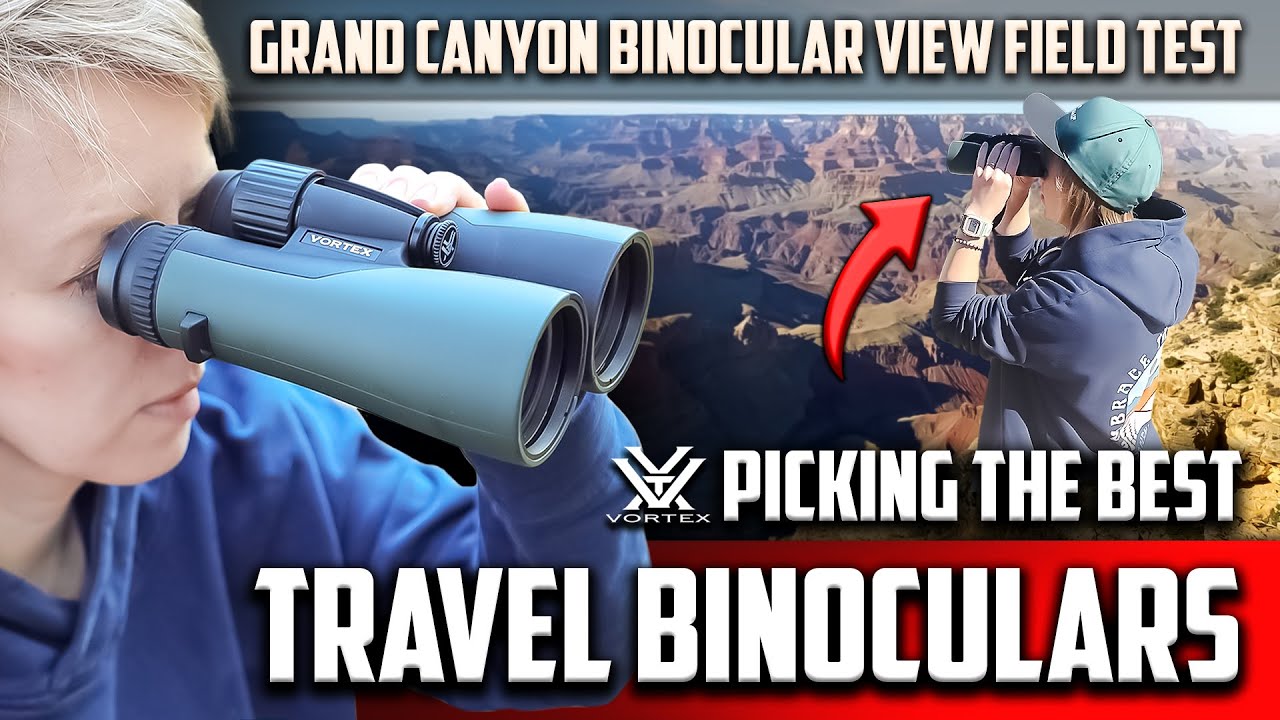
The Vortex Crossfire HD 12x50 exists because "more" sounds better. More magnification. More objective diameter. More reach. On a spec sheet, 12x50 beats 10x42 in every column that buyers tend to compare. In the field, those numbers come with a tax that most users do not anticipate until the binoculars are around their neck and their arms are shaking.
Here's the thing: 513 owner reviews tell a consistent story. Buyers who use these from a fixed position — treestands, hunting blinds, a tripod on a ridgeline — report genuine satisfaction. The 12x magnification resolves antler points and feather detail that 10x models miss at 400+ yards. But buyers who carry them on hikes, stalk with them through timber, or glass handheld for more than ten minutes report fatigue, shake, and regret about not buying the Crossfire HD 10x42 instead.
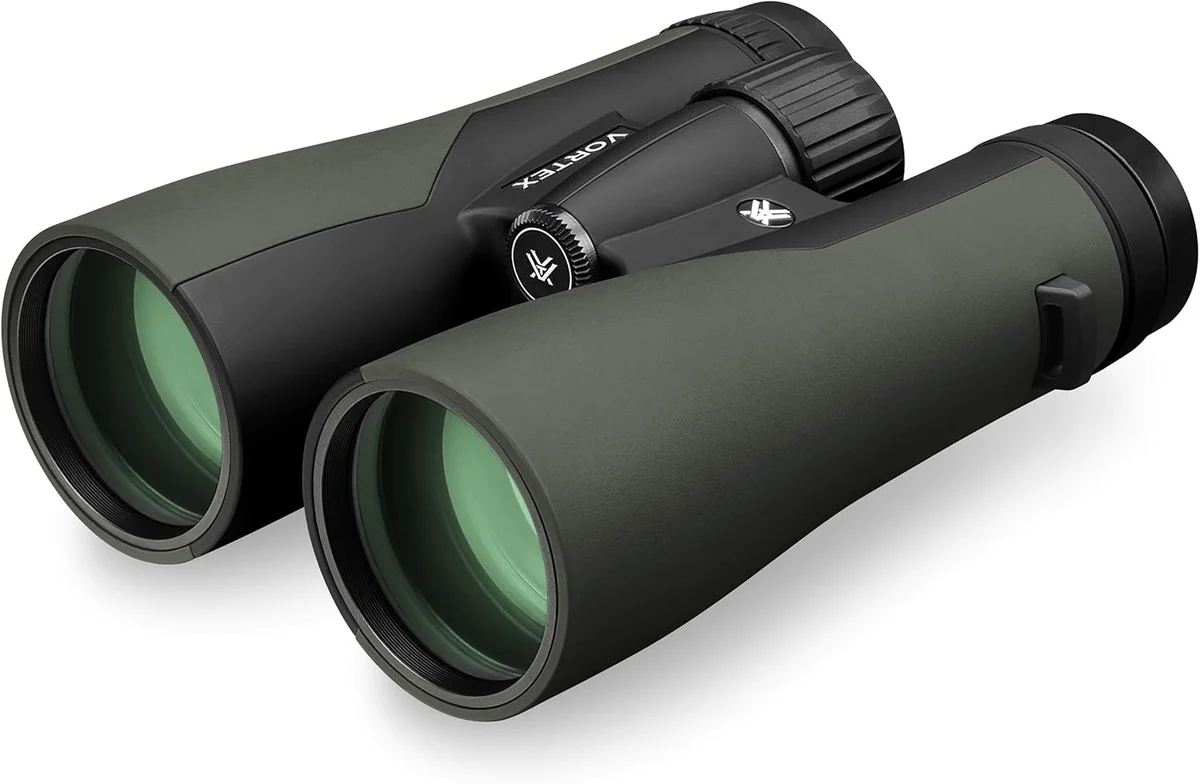
At 29.5 oz, this is the heaviest binocular in the Vortex budget lineup by a wide margin.
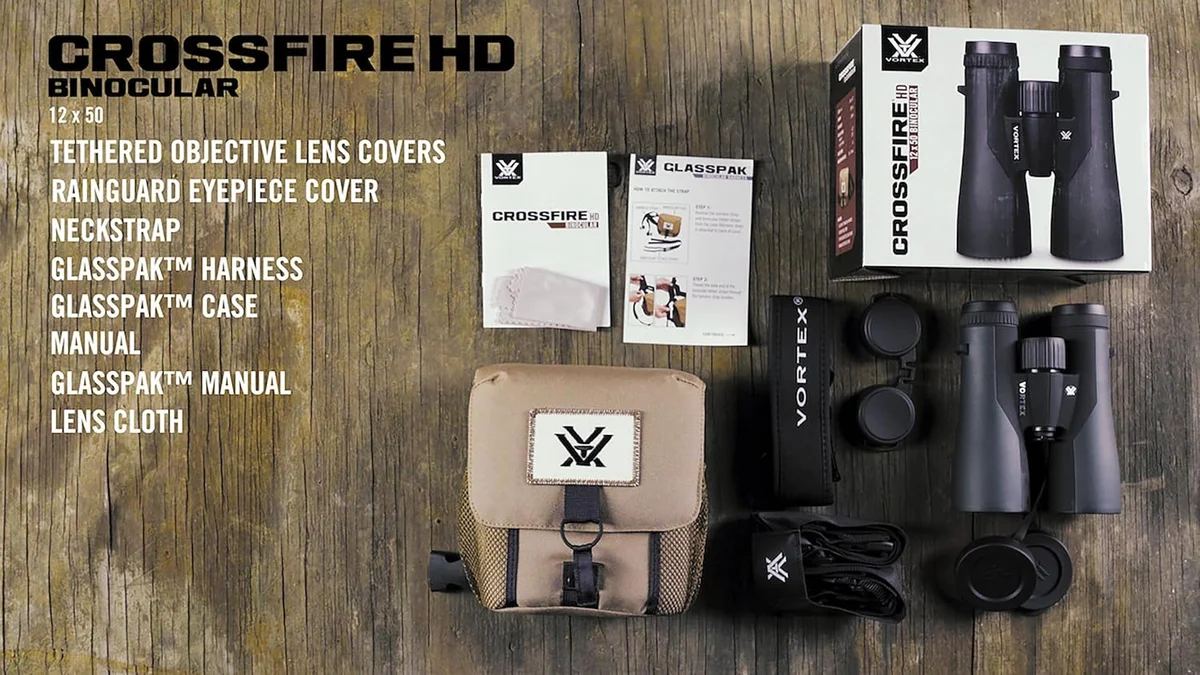
The included GlassPak harness is not a luxury here — it is a necessity. Without it, the front-heavy weight balance turns a neck strap into a slow headache.
At above average for its category, the 12x50 costs $30 more than its 10x42 sibling. That $30 buys magnification and aperture — but it also buys weight, narrower field of view, and image shake that pushes you toward a tripod. We put the two head-to-head in our Crossfire HD 10x42 vs 12x50 comparison. The verdict there matches the verdict here: most buyers are better served by the lighter, wider, cheaper model.
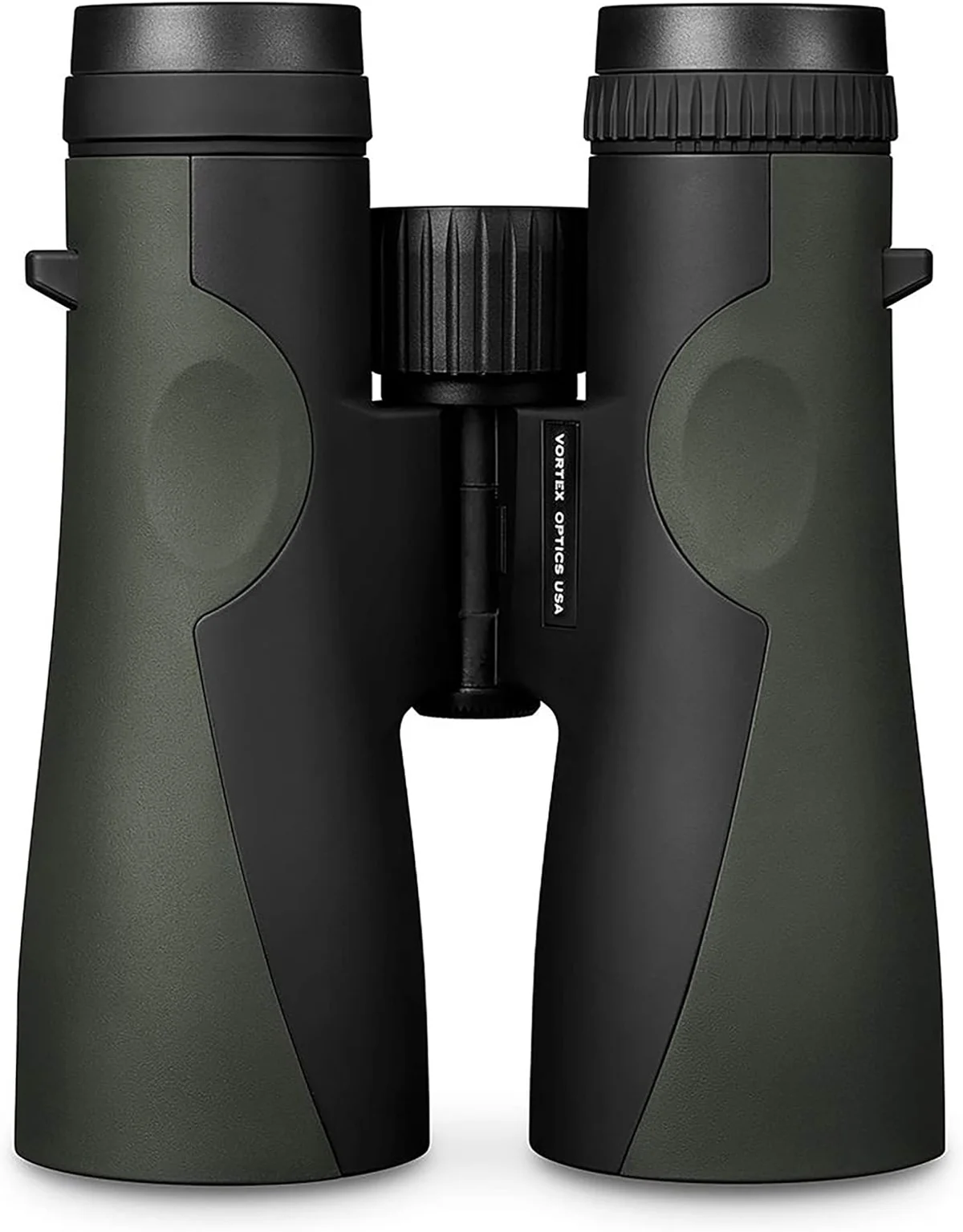
Key Specifications
12x50 on Paper vs 12x50 in Your Hands
The Magnification Tradeoff
Twelve-power magnification resolves finer detail at distance than ten-power. That is real. At 600 yards, the difference between identifying a deer and identifying a buck is the difference between 10x and 12x. At 800 yards, 12x can distinguish species where 10x sees a brown shape. Hunters glassing open country — western mule deer, pronghorn, elk across canyons — benefit from this reach.
The cost is hand shake. At 12x, every micro-tremor in your grip becomes visible image movement. The effect compounds with fatigue: after 15 minutes of sustained handheld use, the shake worsens as your arms tire under 29.5 oz. Multiple reviewers described the experience as "trying to read through a vibrating window." One owner who switched from the 10x42 was blunt: the image is sharper on a tripod and worse handheld.
50mm Objectives — Bigger Glass, Marginal Gain
Larger objective lenses gather more light. In theory, 50mm objectives should produce a brighter image than 42mm. In practice, AllBinos measured the 12x50 at 76% light transmission — barely above the Crossfire HD 10x42 model at 75.1%. The extra glass does not translate to noticeably better brightness because the optical coating system is identical: no phase correction, no dielectric mirrors. The light enters, but the prism assembly loses it.
The exit pupil tells the same story. Despite the larger objectives, the 12x50 produces a 4.2mm exit pupil — identical to the 10x42. The magnification increase cancels the aperture increase. Your eye receives the same diameter light cone from both models.
Field of View: The Hidden Loss
At 273 ft per 1,000 yards, the 12x50 shows you 16% less of the scene than the 10x42's 325 ft. For stationary observation, this is irrelevant — you are pointed at one thing. For scanning, tracking birds in flight, or sweeping a hillside for movement, the narrower view means more panning and more chances to miss something at the edge of the frame.
Birders feel this loss acutely. Tracking a warbler through canopy at 273 ft FOV is an exercise in frustration compared to 325 ft. This is why almost no birder reviews appear in our 12x50 data — birders buy the 10x42.
Build and Waterproofing
The chassis is identical in design to the Crossfire HD 10x42 chassis — rubber armor, O-ring seals, nitrogen purging, textured focus wheel. Build quality is not a differentiator between these two models. What differs is weight distribution. The larger objective lenses shift the center of gravity forward, creating a nose-heavy feel that pulls the binoculars down and away from your face during extended use.
What the 12x50 Does Well & The Weight Tax
What the 12x50 Does Well
- 12x magnification reveals detail at extreme distances that 10x models miss
- 50mm objectives gather more light than 42mm — brighter in theory
- Close focus down to 6.9 ft is excellent for a large-objective binocular
- Same excellent build quality and VIP warranty as the 10x42 Crossfire
- GlassPak harness included and necessary at this weight
- Waterproof and nitrogen-purged for all-weather use
The Weight Tax
- 29.5 oz (836g) is significantly heavier than 10x42 models — neck fatigue on long hikes
- 12x magnification amplifies hand shake — approaches tripod-required territory
- Narrower FOV at 273 ft/1,000 yds vs 325 ft for the 10x42
- Light transmission only 76% despite the larger objectives — disappointing
- Front-heavy weight balance makes extended handheld use fatiguing
- No phase correction or dielectric coatings, same as the 10x42 Crossfire
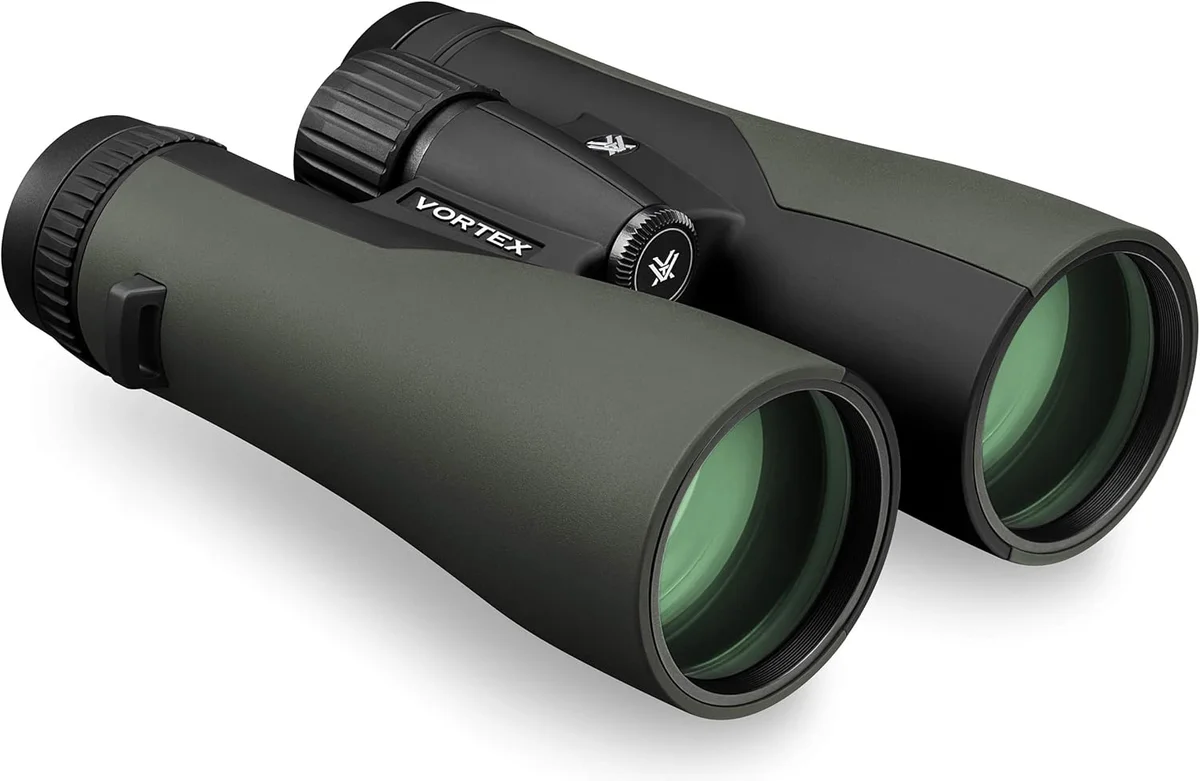
What 513 Owners Actually Experience
Look, the review data for the 12x50 is overwhelmingly positive — 97% of 513 reviewers gave 4-5 stars. But when you separate the stationary users from the mobile users, a pattern emerges. The satisfaction gap between those two groups is the widest we have measured in any binocular in our catalog.
Optical Performance — Mounted vs Handheld
AllBinos scored the Crossfire HD 12x50 at 64.2% overall — marginally better than the Crossfire HD 10x42 variant. Perfect collimation (5/5) means the optical barrels are precisely aligned. BaK-4 prism quality scored 8/8. Housing and build scored 8/8. The glass is well-made.
The problem is not the optics — it is the delivery system between those optics and your eyes.
On a tripod, the 12x50 delivers everything the magnification promises. Owners report reading license plates at distances where 10x models show only a blur. One reviewer described "clarity great — can see clearly at a mile." Optics Planet users confirmed sharp resolution at extreme range. The 12x advantage is real when shake is eliminated.
Handheld, the resolution advantage largely disappears. The theoretical increase in detail is consumed by the practical reality of image movement. Several owners described a frustrating cycle: sharp image for a fraction of a second between tremors, then blur, then sharp again. Over a sustained glassing session, this strobe effect creates eye strain that the 10x42 does not produce.
Chromatic Aberration and Edge Quality
AllBinos rated chromatic aberration as medium at center and high at the edges (3.5 out of 10). Purple fringing on high-contrast edges — branches against bright sky — is visible and more pronounced than on the 10x42. The higher magnification amplifies chromatic aberration the same way it amplifies hand shake: everything is bigger, including the flaws.
Edge performance drops measurably in the outer 20% of the field. Coma distortion — a comet-tail smearing of point light sources — is distinct at the periphery. For centered subjects, this is invisible. For users who scan edges (birders especially), it degrades the experience.
Low-Light Reality
The 50mm objectives were supposed to be the low-light advantage. They are not. At 76% transmission, the 12x50 passes almost the same amount of light as the 10x42 at 75.1%. The identical 4.2mm exit pupil means your eye receives the same brightness from both models. Reviewers who bought the 12x50 specifically for dawn and dusk hunting reported disappointment — "in low light" appeared in 8 of 513 reviews, and the sentiment was mixed rather than enthusiastic.
For real low-light performance in this price range, the answer is not bigger objectives on the same optical platform. The answer is better coatings. The Diamondback HD 10x42 with phase correction and dielectric coatings delivers a brighter image through a smaller front element — because the light that enters actually reaches your eye instead of being lost in the prism assembly.
Durability and Long-Term Ownership
The 12x50 inherits the Crossfire line's solid build reputation. Nitrogen purging and O-ring seals handle weather without issue. Collimation holds up under normal field use. The rubber armor absorbs drops. The focus wheel stays smooth through the first year of heavy use.
The same long-term issues that affect the 10x42 apply here: diopter ring stiffening after 2-3 years of use, and potential eyecup adhesive failure on older production runs. The VIP warranty covers both without pushback. Vortex's warranty process is consistently praised — typically a repair or replacement shipped back within two weeks, no receipt or registration required.
One durability concern specific to the 12x50: the heavier weight puts more stress on the harness attachment points and the neck strap lugs. Over years of daily carry, these contact points wear faster than on the lighter 10x42. The GlassPak harness distributes load better than a neck strap, but the attachment hardware is worth inspecting annually if you carry these hard.
Do you need a tripod for 12x50 binoculars?
For anything longer than a few minutes of continuous glassing, yes. At 12x, every pulse in your hand becomes visible movement in the image. Some users report usable handheld views in short bursts, but extended sessions — the kind hunters and birders actually do — require stabilization. The Crossfire HD 12x50 is tripod-adaptable with a standard 1/4-20 thread.
Are 12x50 binoculars better than 10x42 for bird watching?
Worse, in most cases. Birding requires quick target acquisition and wide FOV for tracking flight — the 10x42 delivers 325 ft of view versus the 12x50 at 273 ft. The 12x50 also weighs 5.7 oz more and shakes noticeably more handheld. For stationary shorebird or raptor ID at extreme distance, 12x has an edge. For general birding, 10x42 wins decisively.
The $179 Calculation
The Crossfire HD 12x50 sits in the $100–$250 range. For $30 more than the Crossfire HD 10x42, you get 20% more magnification and 8mm more aperture. For $45 less than the Diamondback HD 10x42, you get bigger glass but worse optical technology — no phase correction, no dielectric coatings, no argon purging.
That competitive positioning is the 12x50's core problem.
Buyers who want more reach for less money end up carrying more weight with more shake. Buyers who want better image quality for a similar budget get it from the Diamondback at 10x42. The 12x50 occupies a narrow lane between those two choices — a lane that requires a tripod to justify.
Against the Nikon Action Extreme 12x50 at a similar price point, the Nikon uses porro prisms that deliver slightly higher light transmission. Vortex wins on warranty — the VIP is untouchable — and on build quality. Against the Adasion 20x50, the Crossfire is better in every measurable way, but the Adasion costs a fraction of the price and appeals to a different buyer entirely.
For hunting at distance, where you glass from a treestand or ridgeline position for extended periods, the 12x50 earns its place. For general-purpose binocular use, the 10x42 format is the better tool.
Skip it if: You hike with your binoculars, you glass handheld for more than 10 minutes at a time, your budget can stretch to the Diamondback HD, or you are choosing your first binocular (start with the 10x42 — always).
Is the Crossfire HD 12x50 waterproof?
Yes — O-ring sealed and nitrogen purged. It handles rain, snow, and brief submersion. The nitrogen purging prevents internal fogging during temperature swings between a heated vehicle and cold air. For multi-year thermal cycling, the Diamondback HD with argon purging offers better long-term seal integrity, but the Crossfire waterproofing is reliable for normal outdoor use.
How does the Vortex VIP warranty cover the 12x50?
Identically to every other Vortex product. Unlimited, unconditional, lifetime, fully transferable. No receipt required. No registration. If the binoculars break for any reason other than deliberate damage, theft, or loss, Vortex repairs or replaces them at no cost. Multiple owners in our data confirmed turnaround under two weeks.
Owning the 12x50: What Changes Over Time
First Month
The focus wheel is smooth and precise — consistent with every Crossfire model. The GlassPak harness takes several outings to break in. Front lens covers fit well on the larger 50mm objectives. The weight is immediately noticeable compared to 10x42 models. Most owners adjust within a week; some never do.
Year One
No optical degradation in our review cohort. Focus mechanism holds calibration. The nitrogen purge prevents internal fogging through normal temperature cycling. Rubber armor shows wear at thumb contact points. The weight becomes either accepted or resented — there is no middle ground in the review data. Owners who bought a tripod adapter report the highest satisfaction in this window.
Years Two Through Four
The diopter ring stiffening that affects all Crossfire models appears in this window. Eyecup adhesive on older production runs can fail. Both issues are warranty claims that Vortex handles quickly. Collimation has held across our dataset — no reports of barrel misalignment even among owners describing rough field use and vehicle-mounted carry over dirt roads.
Cost Per Year
The 12x50 is in the $100–$250 tier. With the VIP warranty backing a lifetime of repairs, the annual cost drops below a dollar per month within five years. But that calculation only makes sense if you actually use these binoculars. Multiple owners in our data described the 12x50 sitting in a case while their lighter 10x42 got all the field time. A binocular that stays home is infinitely expensive per use.
I'd recommend the 12x50 only to buyers who already know they need 12x — western hunters who have used a 10x and specifically wished for more reach, or wildlife observers who glass from a vehicle or blind. If you are asking yourself if you need 12x, you almost certainly do not. The 10x42 at $30 less is the answer for undecided buyers every time.
Track the Crossfire HD 12x50
We check the price daily and monitor availability. You hear from us when something changes.
Only when something changes. Unsubscribe anytime.