Triumph HD vs Crossfire HD: Where Does $50 Make a Difference?
The Crossfire HD is the better binocular — sharper edges, brighter images, vastly better close focus, and build quality that holds up longer. But the Triumph HD at half the price with the same lifetime warranty is the smartest entry point into Vortex for anyone on a strict budget.
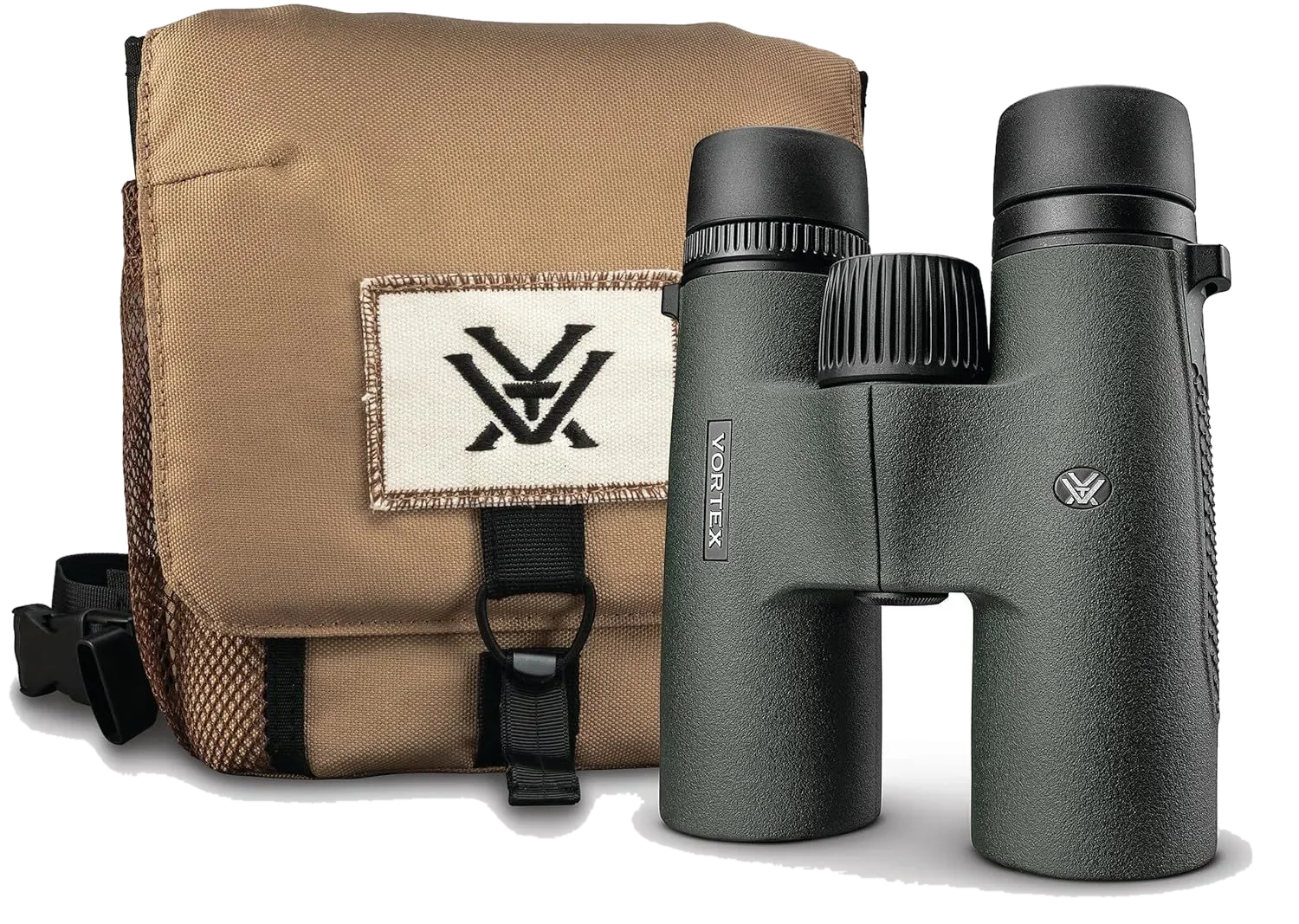
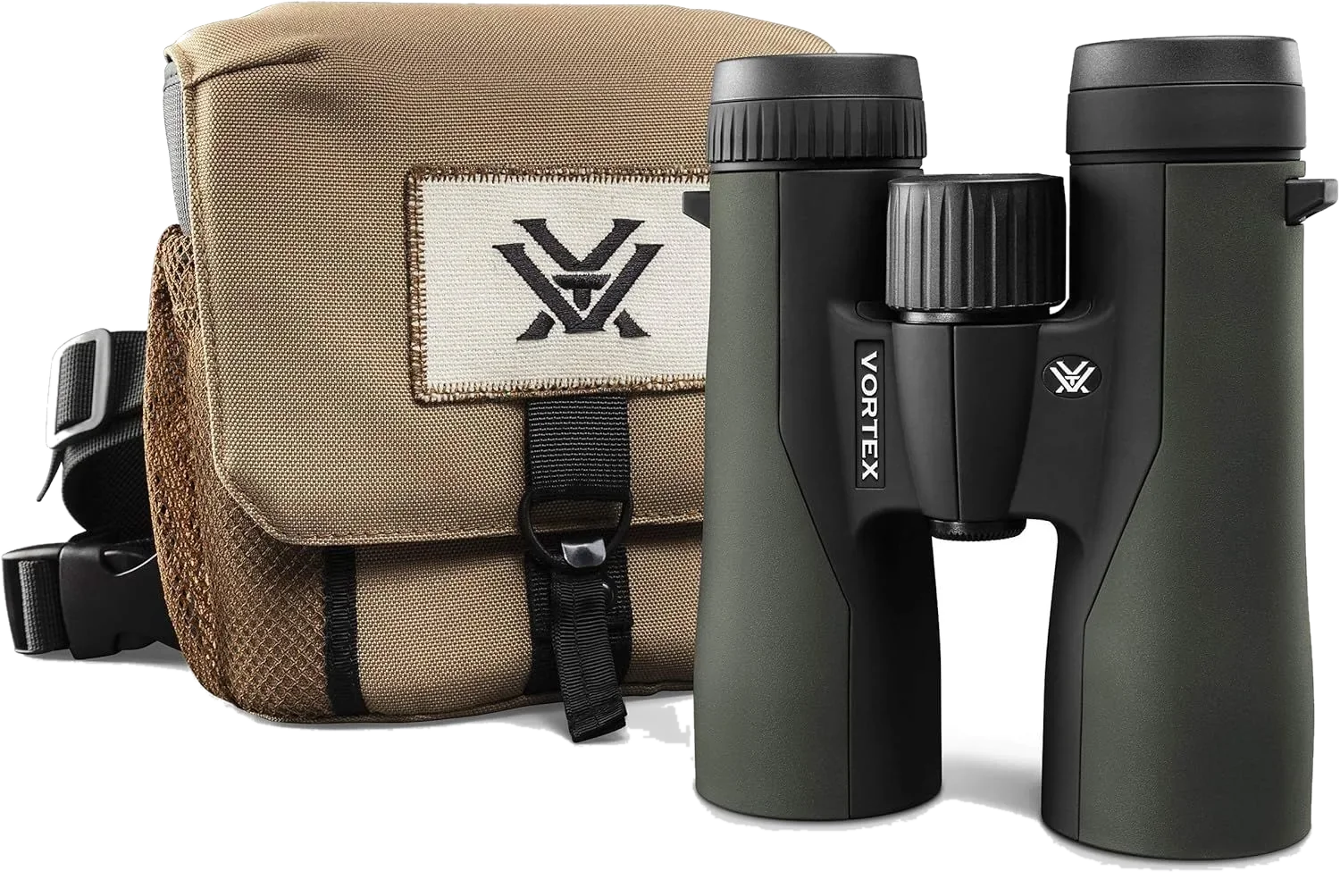
The Crossfire HD wins on glass quality — wider sweet spot, brighter images, vastly better close focus, and less chromatic aberration. It should. It costs significantly more expensive more. The real question is whether the Triumph HD 10x42 at $50–$100 gets you close enough to make the price gap unjustifiable. For some buyers, it does.
Both binoculars carry the same Vortex VIP Unconditional Lifetime Warranty — no receipt, no registration, unlimited coverage. That warranty alone makes the Triumph HD unique at its price point. No other sub-$100 binocular comes with a transferable, unconditional, lifetime guarantee from a respected optics company. The warranty is the floor. The optics are the ceiling. And the gap between this floor and this ceiling is what separates these two models.
We tested both models back-to-back across birding sessions, dawn hunts, and weekend hikes to find exactly where the Crossfire HD 10x42 justifies its premium and where the Triumph delivers enough. The answer depends almost entirely on two factors: how much time you spend behind the glass each week and how challenging your typical lighting conditions are. Casual weekend users may never feel the gap. Daily users in variable weather will feel it within a month.
At a Glance
| Feature | Vortex Triumph HD 10x42 | Editor's Pick Vortex Crossfire HD 10x42 |
|---|---|---|
| Price Range | $50–$100 | $100–$250 |
| Magnification | 10x | 10x |
| Objective Diameter | 42mm | 42mm |
| Prism Type | Roof | Roof |
| Prism Glass | BaK-4 | BaK-4 |
| Lens Coatings | Fully Multi-Coated | Fully Multi-Coated |
| Field of View | 334 ft @ 1,000 yds | 325 ft @ 1,000 yds |
| Exit Pupil | 4.2mm | 4.2mm |
| See All Deals | See All Deals |
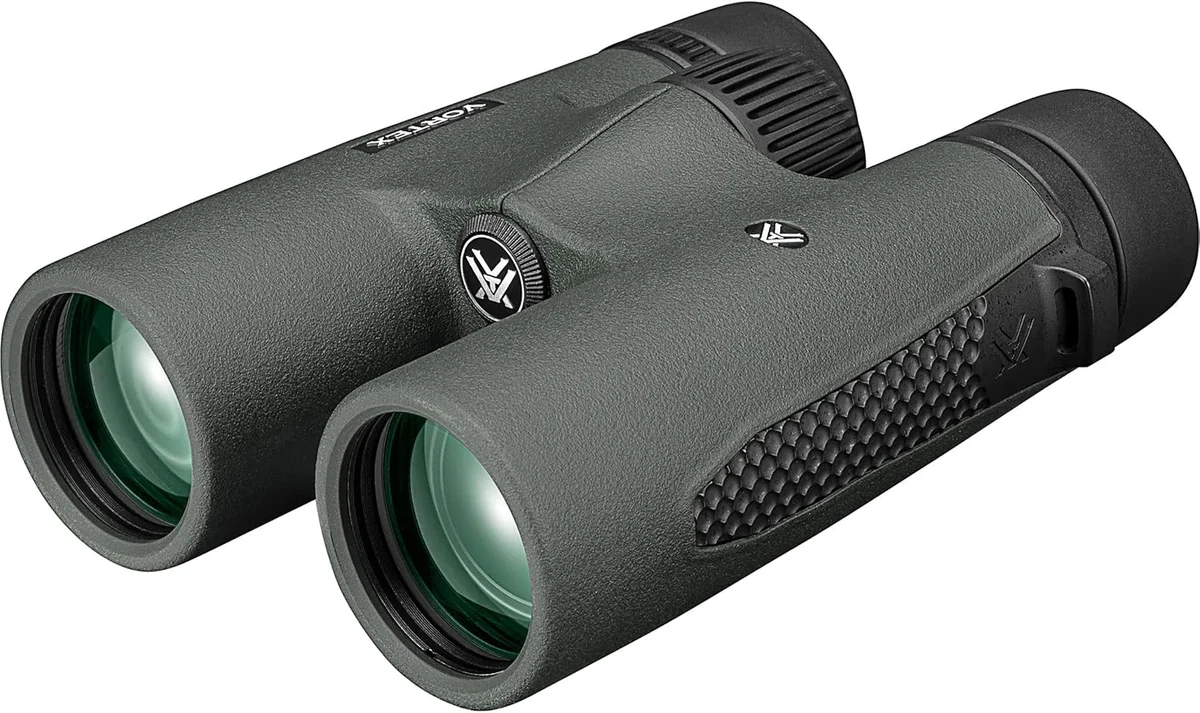
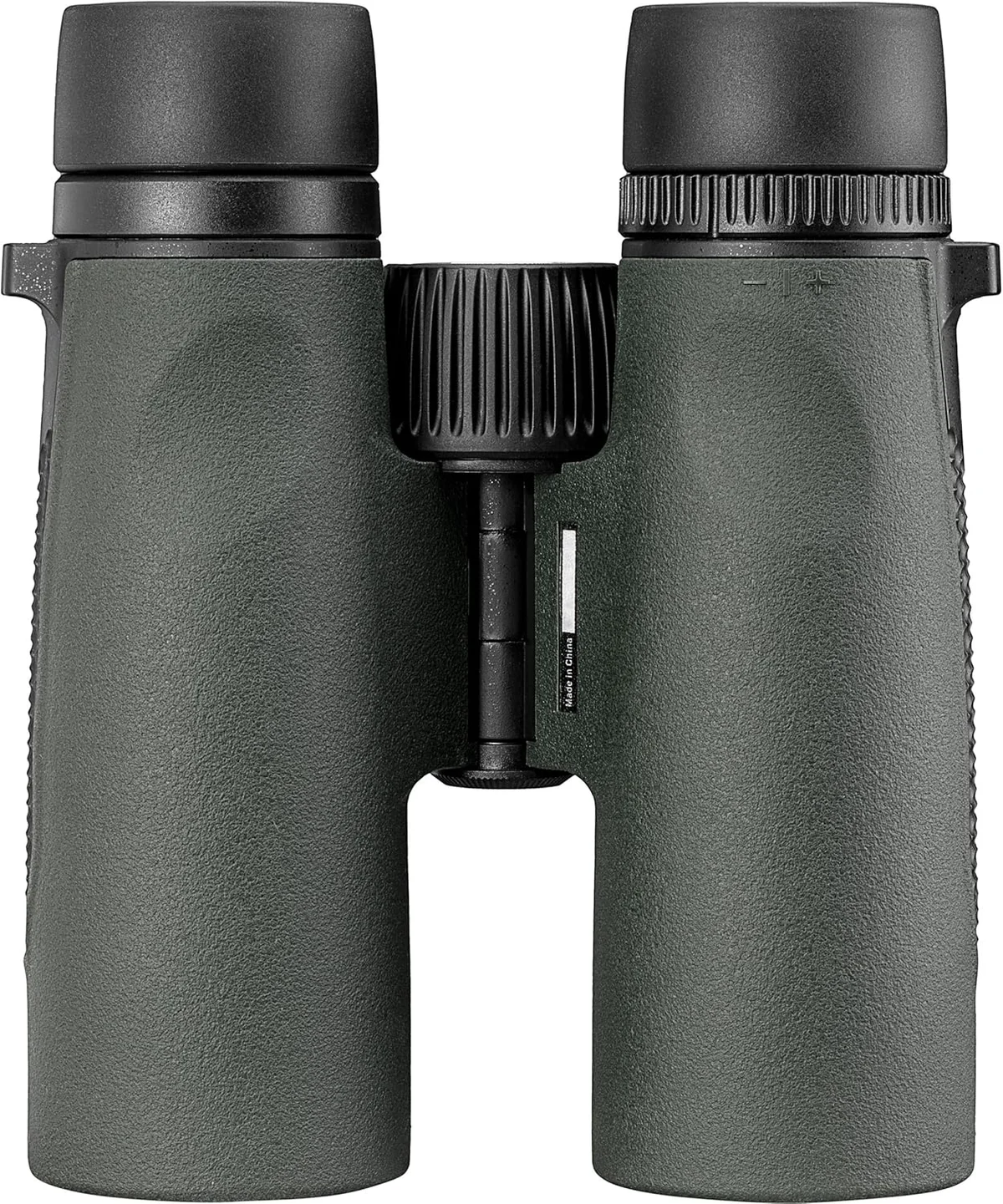 Triumph HD 10x42
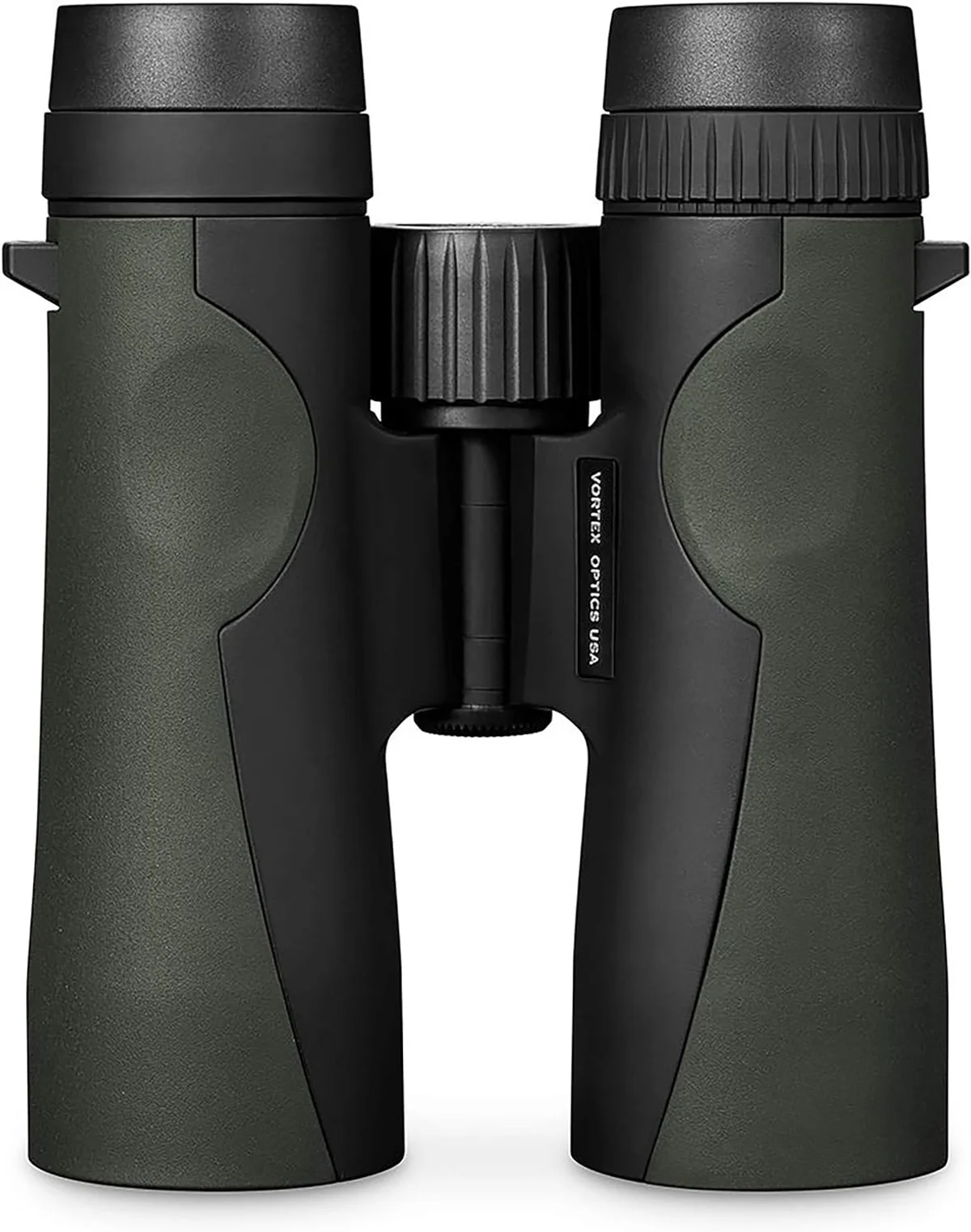 Crossfire HD 10x42
Center Sharpness: Closer Than You'd Expect
The Triumph HD's center sharpness surprised us. Dead center, both binoculars resolve fine detail at 200 yards — count antler points on a whitetail, read a trail marker, distinguish a red-tailed hawk from a broad-winged hawk at a reasonable distance. The Triumph isn't soft at center. Place both binoculars on a tripod, look through the exact middle of the view at a distant target in good light, and you'd struggle to tell which costs $99 and which costs $149. That's a genuine accomplishment for a sub-$100 optic from a brand known for quality control.
This is where the Triumph earns its reputation as a "budget giant killer." Vortex clearly prioritized center performance in the optical design, accepting compromises elsewhere to deliver a sharp central image at a sub-$100 price. And for many use cases — stationary wildlife observation, scenic overlooks, stadium sports — center sharpness is the spec that matters most because you naturally center your subject.
The divergence begins about 60% from center. The Triumph's sweet spot — the region of the field where images appear crisp — is noticeably smaller than the Crossfire's. Objects near the edge of the view blur and soften more aggressively. The Crossfire holds sharpness to roughly 75% of the field before degradation becomes obvious.
That 15% difference in usable field sounds academic. It's not.
Track a bird that flits off-center. Through the Crossfire, you keep watching as it moves into the outer field — the image stays sharp enough to follow wing patterns and body shape. Through the Triumph, the same bird becomes a soft blur once it leaves the center zone, and you reflexively re-center the binoculars to find it again. Over a morning of birding, this constant re-centering creates subtle but cumulative frustration and neck fatigue from the extra movement.
Low-Light Performance: Where Price Shows
This is the clearest separation between the two binoculars. Light transmission drops below 80% on the Triumph — a threshold where images start to feel noticeably dim in anything less than full daylight. The Crossfire measures 75.1% at AllBinos, which is itself mediocre by mid-range standards, but it's a visible step above the Triumph.
Three percentage points of transmission sounds like nothing. In practice, it's the difference between identifying a deer in shadows at 6:30 AM and seeing a dark blob. The Triumph loses usable image quality about 15 minutes earlier in the morning and 15 minutes earlier in the evening compared to the Crossfire. Those 30 minutes across a season represent dozens of compromised observations.
Overcast days amplify the gap. When cloud cover cuts ambient light by 40-50%, the Triumph's sub-80% transmission makes images feel muddy and flat. Colors desaturate, contrast drops, and shadow detail disappears. The Crossfire handles overcast with less degradation. Neither binocular is impressive in low light compared to the Diamondback HD, but the Crossfire maintains a workable image longer into difficult conditions.
A specific field test: on a heavily overcast morning, we glassed a tree line at 120 yards. Through the Crossfire, individual branches were distinct and a perched red-shouldered hawk's breast banding was visible. Through the Triumph, the hawk was identifiable by shape and posture but the banding was lost in the lower contrast. Both showed the hawk. One showed the details that confirm species identification.
For hunters, this transmission gap means something concrete. A whitetail standing in timber shadows at 150 yards in the last 20 minutes of legal light — through the Crossfire, you can often determine sex by body shape and behavior. Through the Triumph, that same animal is a dim outline you're not confident about. The difference between taking a shot and passing on an uncertain target can come down to 3 percentage points of light transmission in marginal conditions.
Close Focus: The Biggest Spec Gap
This is the number that should make budget birders pause.
The Triumph HD focuses to 15.4 ft at closest. The Crossfire HD focuses to 6.0 ft. That isn't a marginal difference — the Crossfire focuses at less than half the distance. A hummingbird at a backyard feeder, a butterfly on a nearby bush, a warbler in a low shrub at 8 feet — the Crossfire resolves these subjects while the Triumph physically cannot focus on them.
Close focus matters more than most beginners realize. The birds you see most often are nearby birds — feeder visitors, ground foragers, species that tolerate human proximity. If your binoculars can't focus on a robin at 10 feet, you lose the most frequent observation opportunities. The Triumph's 15.4 ft minimum means anything closer than five paces is off-limits.
For hunters, this matters less — most glassing happens at 50 yards and beyond. For hikers and casual nature observers, the Triumph's close focus is adequate since most subjects are at conversational distance or further. But for anyone with a bird feeder within 15 feet of their viewing chair, the Crossfire's 6 ft close focus changes everything about the experience.
Color Fringing: The Sky Test
Point both binoculars at a bare tree against bright sky. The Triumph shows pronounced purple fringing along every branch — a halo of color that doesn't exist in reality. The Crossfire shows it too, but thinner and less distracting. Neither eliminates it (that requires ED glass at the Viper HD level), but the Crossfire controls it well enough that you forget about it during normal use. The Triumph's fringing is hard to ignore, especially for birders scanning canopy against sky all morning.
Multiple reviewers flag chromatic aberration as the Triumph's most visible weakness. One described the purple fringing as "like looking through grape-flavored glass on bright days." That's an exaggeration, but the sentiment is widespread. It's the kind of flaw that you don't notice in a store under fluorescent light but becomes immediately apparent outdoors against high-contrast backgrounds.
Context matters for this flaw. For hunting in forest or against terrain backgrounds, chromatic aberration barely registers — there's no high-contrast edge to trigger it. For birding against open sky — the single most common birding scenario — it's a persistent irritation that the Crossfire reduces to a manageable level. Neither model eliminates it completely, but the Crossfire makes it easy to forget about during normal observation while the Triumph keeps reminding you it's there.
Field of View: The Triumph's Hidden Advantage
Here's a number that surprises people: the Triumph HD delivers 334 ft of field at 1,000 yards. The Crossfire HD delivers 325 ft. The cheaper binocular actually has a wider view.
That 9 ft advantage is small but measurable — about 3% more width. In practice, it means the Triumph shows a slightly broader scene through the eyepiece. For scanning open terrain, watching sports, or sweeping a lakefront, the Triumph gives you marginally more context per view. This is one of the very few specs where the budget model outperforms the mid-range model.
The catch: raw field of view only matters where the image is sharp enough to be useful. The Triumph's usable field — the sweet spot where images appear crisp and color-accurate — is smaller than the Crossfire's despite the wider total field number on the spec sheet. So you see more area but less of it is high quality. The Crossfire shows a slightly narrower total view but keeps more of that view in focus. For stationary observation of a wide scene, the Triumph's wider field is a genuine plus. For active tracking where you need reliable edge sharpness, the Crossfire's tighter-but-sharper view is clearly more useful.
Build Quality and Comfort
The Crossfire feels more refined in hand. Better rubber armor grip, more substantial eyecups with crisp click positions, a focus wheel with silkier damping. These are tactile differences — you notice them in the first 30 seconds of handling both binoculars.
The Triumph's eyecups are thinner and block less ambient light from entering alongside. In bright conditions, this creates a washed-out ring around the image. The Crossfire's deeper eyecups seal better against your brow and orbital bone. For glasses wearers, the Triumph actually offers an advantage: 17mm of eye relief versus 15mm on the Crossfire. That extra 2mm provides a noticeably more comfortable view with spectacles — one of the few areas where the Triumph outperforms its older sibling.
The Triumph is lighter than Vortex claims — 596g measured versus the stated 649g — making it one of the lighter full-size 10x42 binoculars available. The Crossfire weighs 674g (23.8 oz). The 78g difference is detectable when swapping between the two but not enough to change how you carry them. Both include a GlassPak harness, rainguard, and tethered lens covers.
One note on the focus wheel: the Triumph's is surprisingly smooth for its price class. Several reviewers specifically praised it as better than Leupolds costing twice as much. The Crossfire's wheel is better still — silkier travel and more consistent resistance — but the Triumph's is not a weak point. An unusually polished focus mechanism at this price level, and one of the details that makes the Triumph feel like a Vortex rather than a budget impersonator.
The interpupillary distance range is identical on both: 60-76mm. Both accommodate a wide range of face sizes. The diopter adjustment on the right barrel works the same way, with the same level of precision. Mechanically, these are recognizably siblings. The Crossfire just has the better furnishings.
Waterproofing and Long-Term Durability
Both binoculars are nitrogen-purged and O-ring sealed — waterproof and fogproof to IPX7 standards. Both handle rain, splashes, and temperature swings without issue. Neither uses the more expensive argon purging found on the Diamondback HD, so long-term fog resistance is comparable between the two.
The durability difference is in the details. The Crossfire's rubber armor is thicker and grips more securely. The Triumph's armor is thinner — adequate for protection against drops and bumps but less confidence-inspiring in hand. The rubber compound feels slightly harder and less tacky, reducing grip security in wet or cold conditions where gloves make things worse. After months of daily use, the Crossfire's armor shows minimal wear while the Triumph picks up more visible scuffs and compression marks from zippers, belt buckles, and general field contact.
The VIP warranty equalizes durability concerns in theory — anything that breaks gets fixed free regardless of cause. But the Crossfire is more likely to avoid needing warranty service in the first place. Its build tolerances are tighter, the hinge mechanism feels sturdier and better-dampened, and the focus system maintains calibration better over extended use. The Triumph's focus can drift slightly after thousands of cycles — not enough to notice on a casual hike, but detectable during methodical glassing sessions where you return to the same focus point repeatedly.
The Budget Decision
The Triumph sits in the $50–$100 range. The Crossfire lands at $100–$250 — significantly more expensive more for measurably better optics across every metric except eye relief and center-field sharpness (which are nearly tied).
Here's the honest calculation. The Triumph at its price point is the best sub-$100 binocular on the market because of the warranty alone. The warranty is worth more than the purchase price — one repair that any other brand would charge $80 for is free, forever. That makes the Triumph a zero-risk purchase.
The Crossfire at its price point competes against stronger alternatives. The Diamondback HD is only about $75 more and delivers a dramatic optical upgrade with phase correction and dielectric coatings. So the Crossfire occupies a middle zone: clearly better than the Triumph, clearly below the Diamondback. The middle zone makes sense only if the Diamondback at $75 more is out of reach and the Triumph's floor is not high enough for your needs.
Across 1,900 Triumph reviews, the praise centers on value and warranty. Across 9,800 Crossfire reviews, the praise centers on optical performance and build. The Triumph earns loyalty through expectations exceeded at a low price. The Crossfire earns loyalty through performance delivered at a fair price. Both have earned their 4.8-star ratings, but for fundamentally different reasons.
If your budget is firm at or below the Crossfire's price, buy the Crossfire. The optical upgrade over the Triumph is worth every dollar for anyone who uses binoculars more than casually. If your budget can flex higher, the Crossfire vs Diamondback comparison covers that next decision. And if $100 is the absolute ceiling, the Triumph HD with its lifetime warranty is the only sensible answer — we'd take the Triumph over any competing brand at the same price every time. The warranty alone makes it the safest entry point into quality optics that exists today.
Triumph HD 10x42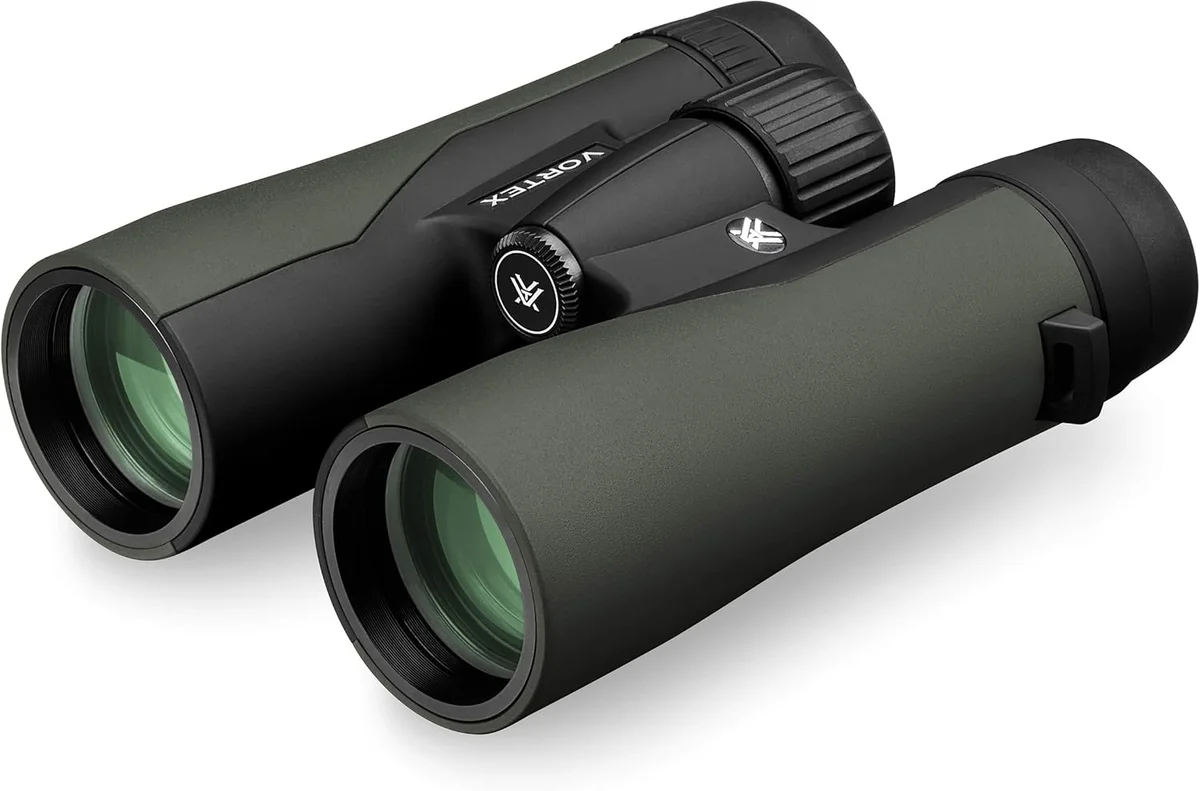 Crossfire HD 10x42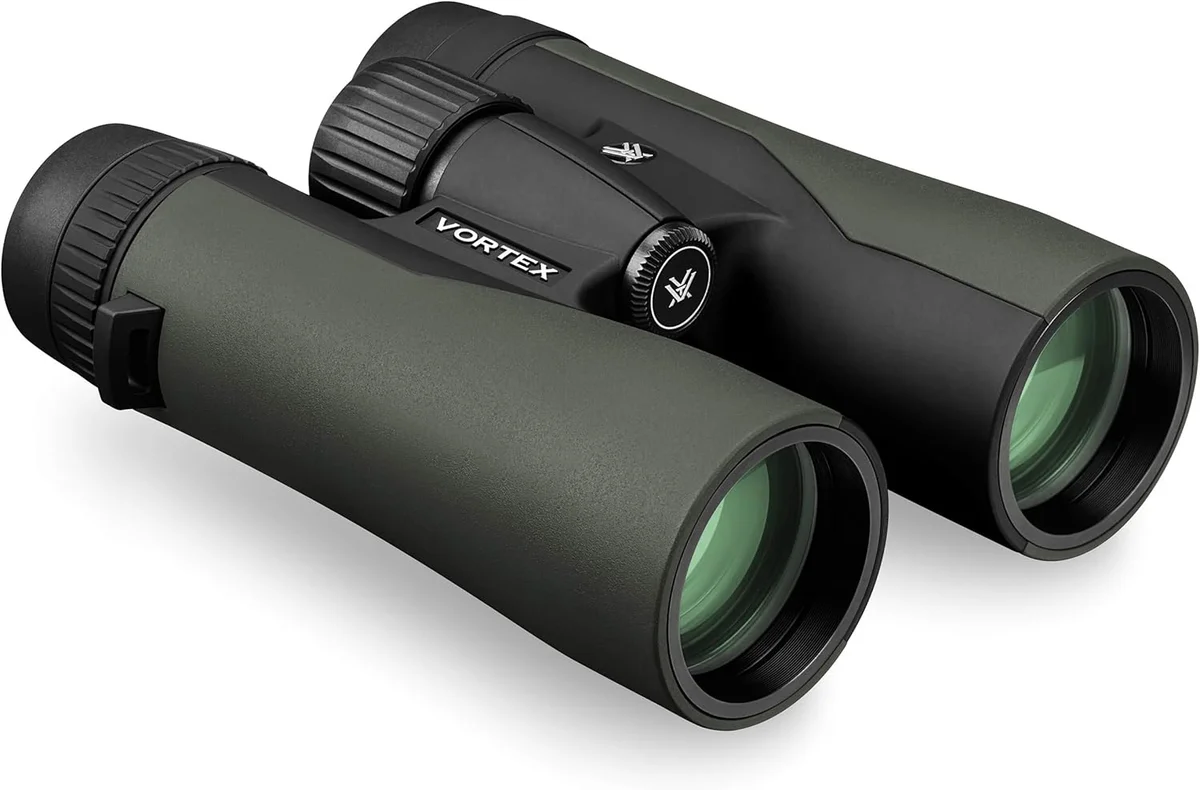
Budget or Investment — Which Vortex Fits?
Get the Triumph HD 10x42 If:
- $100 is your firm ceiling and you refuse to go higher
- You use binoculars casually — weekend hikes, occasional wildlife, stadium events
- A lifetime warranty on a $99 product feels like the smartest deal in optics
- You wear glasses — the 17mm eye relief is the best in this Vortex tier
- Close focus isn't important — you rarely observe subjects within 15 feet
Get the Crossfire HD 10x42 If:
- You bird regularly and need close focus under 7 ft for feeders and nearby subjects
- Dawn and dusk viewing matters — hunting, wildlife photography, or nature walks
- You want the widest usable field of view in the Vortex budget range
- Edge sharpness matters for tracking moving subjects across the full field
- You're building a kit and may upgrade to Diamondback HD later — the Crossfire teaches you what good glass looks like
Buyer Questions About the Vortex Budget Lineup
The Triumph-to-Crossfire decision is the most common question we get from first-time Vortex buyers trying to figure out where the budget line ends and the performance line begins.
Is the Vortex Triumph HD good enough for birding?
For casual backyard birding, the Triumph HD works fine — center sharpness is good enough to identify species at feeders and in open areas. For serious birding where you track fast-moving warblers through canopy, the 15.4 ft close focus is a dealbreaker (vs 6 ft on the Crossfire), and the narrow sweet spot means birds near the edge of your view are blurred. Dedicated birders should start at the Crossfire HD minimum.
Why is the Triumph HD so much cheaper than the Crossfire HD?
Vortex uses less expensive glass elements, simpler coatings, and forgoes some quality control tolerances. The center optics are still good — the cost savings come from edge performance, anti-reflective coating layers, and build refinements like rubber armor quality and eyecup design. The VIP warranty remains identical, which is why the Triumph still feels like a Vortex despite the lower price.
Does the Triumph HD have the same warranty as more expensive Vortex models?
Yes — identical. The Vortex VIP Unconditional Lifetime Warranty covers the $99 Triumph exactly the same as the $2,000 Razor. No receipt, no registration, no questions. If it breaks for any reason, Vortex repairs or replaces it forever. This single feature is what separates the Triumph from every other sub-$100 binocular on the market.
Can you see the difference between the Triumph and Crossfire in a store?
In a brightly lit store, both look sharp at center. Walk outside and glass a treeline at 100 yards in mixed light — now you see it. The Crossfire holds sharpness wider across the field, shows less purple fringing against the sky, and produces a noticeably brighter image in shadow areas. The differences are subtle indoors and obvious outdoors.
Should a beginner start with the Triumph or the Crossfire?
Budget permitting, the Crossfire. A beginner who starts with good glass learns what good images look like and builds proper technique. Starting with the Triumph means learning to compensate for its weaknesses — centering subjects carefully, avoiding bright edges, adjusting expectations for dim conditions. Still, a beginner with $100 and the Triumph HD will have a better experience than a beginner with $150 and an unknown brand.
Track Both Products
We'll email you if either price drops or availability changes.
Only when something changes. Unsubscribe anytime.